

Prof K S Chandrasekar
vc@clujammu.ac.in
“Waheguru Ji Ka Khalsa, Waheguru Ji Ki Fateh,” writes Prof. Karamjeet Singh, Vice Chancellor of GND University, Amritsar. While presenting the author with a book dedicated to the works of Sri Guru Tegh Bahadur Ji, he highlighted the indomitable spirit of the ninth Guru. Having read the book, the author feels that there are several innate lessons that can be deciphered for the entire nation. At a time when management principles are being widely practised in the modern era, the teachings of Sri Guru Tegh Bahadur Ji become extremely important.
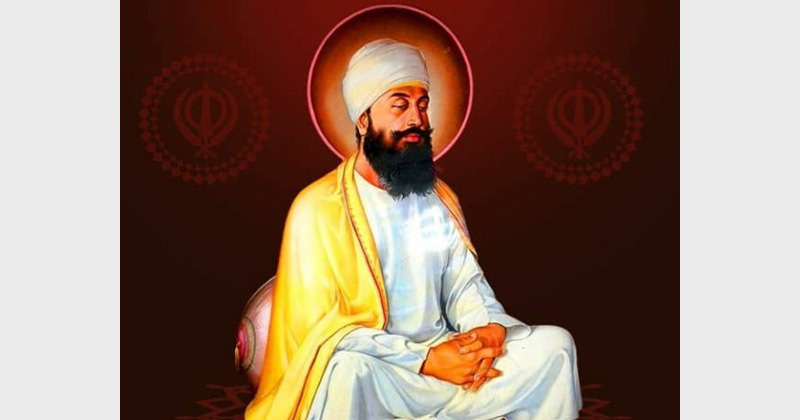
In 1664, Guru Tegh Bahadur Ji succeeded Guru Har Krishan Ji as the ninth Sikh Guru. His guruship came during a difficult period when the Mughal Empire, led by Aurangzeb, was oppressing and killing Hindus, Sikhs, and other religious minorities. When the Kashmiri Pandits faced religious persecution by the Mughals and sought Guru Ji’s help to protect their right to practise Hinduism, he fearlessly undertook the task and travelled to Delhi to negotiate with Aurangzeb and put an end to the persecution.
Despite many attempts by Aurangzeb to convert Guru Tegh Bahadur Ji to Islam, he remained steadfast in his decision and committed to protecting the religious freedom of others. In November 1675, Guru Ji, along with his devoted companions Bhai Mati Das, Bhai Sati Das, and Bhai Dyal Das, was arrested in Delhi because they refused to renounce their faith, and the Guru was publicly beheaded. The teachings and sacrifices of Guru Tegh Bahadur Ji continue to shine as a beacon of hope and justice in a world that yearns for such principles.
Sri Guru Tegh Bahadur Ji’s teachings include fearlessness, compassion, equality, detachment, and spiritual sovereignty. Guru Ji defined wisdom as a dynamic confluence of power and humility, self-respect and compassion. He always advocated inner freedom. “He instils fear in none and fears none himself.” The greatest trait among people is their ability to remain connected to their inner selves and protect themselves through fearlessness. Fear often hides weakness behind authority and enables manipulators to seek control through intimidation.
His teachings centred on the belief that one should never accept humiliation, subjugation, or surrender. Living with dignity is the most important aspect of life, and everyone should follow this principle. His own life was an example of this conviction, as he did not bow before Aurangzeb. In his preachings, it is evident that compassion is not a weakness but the highest form of strength, often refined through divine wisdom and blessings.
Guru Ji also advocated mental well-being and ethical living, which are highly relevant in today’s world. By maintaining balanced mental health, one can truly progress. His teachings for the younger generation emphasise the importance of both physical and mental well-being for ensuring the prosperity of society. The present drug menace is severely affecting the younger generation, and it is time for them to reject such destructive habits and strive towards a better future.
There is also a strong message of empowerment and liberation. Gratitude is essential for an individual’s growth. His teachings show that power corrupts the ungrateful and elevates the grateful. When a person in authority possesses the power to influence others, they should recognise that their ability itself is a manifestation of Hukam. Such recognition makes leadership selfless and compassionate. Gratitude purifies power and transforms it from domination into selfless service.
Guru Ji consistently projected the idea that character moulds individuals. There must always be moral clarity. When truth becomes negotiable, character collapses. Once character is lost, no achievement retains its true value. Those who live by truth will always remain in the hearts of people. Truth may be challenged, persecuted, or even crucified, but it can never be destroyed.
Equality is among the most important aspects of life, ensuring inclusiveness for all. His Bani is an invitation to rise above the boundaries of religion, caste, gender, and nationality. Sri Guru Tegh Bahadur Ji’s defence of the religious freedom of the Kashmiri Pandits was the highest expression of this universality.
Justice and empathy are essential qualities for today’s rulers. Guru Ji reminds the younger generation, especially Gen Z, that the true achievement of civilisation lies not merely in technological advancement but in the individual’s capacity to embrace inclusion, diversity, and mutual respect.
Guru Ji also taught that detachment does not arise from withdrawal from the world but from a deep understanding that the world itself is transient. One must remember that while the world is finite, human aspirations are infinite. If people learn detachment, the world can become a peaceful place of coexistence.
In today’s materialistic society, where a person’s identity is often based on possessions, gadgets, and social status, Guru Ji’s message of detachment assumes even greater importance. When an individual’s happiness is not tied to ownership but to inner contentment, true freedom begins, shaping both the individual and society positively. His teachings remind policymakers that true governance begins with justice and empathy.
Guru Ji’s own life, lived in simplicity at Bakala despite his divine authority, stands as a classical example of self-discipline. In a world driven by endless ambition, his teachings inspire inner stillness and encourage us to live purposefully instead of perpetually wanting more.
The most important aspect of his teachings lies in spiritual sovereignty. Sehaj Avastha represents the divine equilibrium of mind and spirit, while Chardi Kala is the crown of Sikh spirituality. It signifies a state of optimistic faith and inner strength that transforms pain into resilience and hardship into courage.
Prof. Karamjeet Singh notes that the modern mind, trapped between insecurity and constant change, often seeks resilience through external control. Guru Ji, however, showed that true stability emerges from within and through surrender to the Divine Will. “Adversity may test the body, but faith sustains the soul – ever rising, ever resilient, and ever blissful in the wake of spiritual enlightenment.”
His life remains an embodiment of truthfulness, fearlessness, selfless service, humility, compassion, equality, resilience, and above all, the ability to live divinely. In today’s world, torn apart by hatred, aggression, intolerance, and self-centredness, Guru Ji’s example offers a timeless paradigm. Sri Guru Tegh Bahadur Ji’s life harmonised strength guided by love and justice tempered with mercy.
I sincerely feel that the light of Sri Guru Tegh Bahadur Ji’s wisdom continues to inspire and uplift humankind with conscience, guiding the world towards peace and prosperity.
(The author is Vice Chancellor, Cluster University of Jammu)
 Follow our WhatsApp channel
