

Draft minutes just crux of lengthy discussion: CS
Not acceptable: LAB; Tashi says lot of work yet to be done
Sanjeev Pargal
JAMMU, June 1: An important clause which kept head of the Legislature-type body in Ladakh above the Chief Secretary has reportedly been missing from draft minutes of May 22 meeting released by the Union Ministry of Home Affairs and the Leh Apex Body (LAB) has refused to sign them prompting Chief Secretary Ashish Kundra to remark that discussions lasted two and half hours and everything can’t be summed up in one-page.
Follow the Daily Excelsior channel on WhatsApp
LAB co-chairman Chering Dorjay Lakrook told the Excelsior that he was called by the Chief Secretary for signing minutes of May 22 Sub-Committee meeting held in New Delhi in which in-principle agreement was reached that Ladakh will have UT-type elected Legislative body with Legislative, Financial and Executive powers whose executive head will be named in due course of time but the officers including the Chief Secretary will be under him.
However, he said, the particular clause of the officers mainly the Chief Secretary being under the executive head was missing from the minutes of the meeting. All three LAB members, who attended the Sub-Committee meeting, refused to sign the minutes, he added,
“The Government of India shouldn’t backtrack from the in-principle agreement reached in May 22 meeting,” he said.
Click here to watch video
LAB member and climate activist Sonam Wangchuk, who had also attended the Sub-Committee meeting, told media persons that even BJP leader Tashi Gyalson (former CEC Leh Hill Council) and Thupstan Chhewang (ex LAB co-chairman) too had stated after May 22 meeting that the bureaucrats including the Chief Secretary will report to the proposed Executive head of the UT Legislative body.
Tashi Gyalson told the Excelsior that the in-principle agreement has been reached on the issue that Ladakh will have elected Legislative body with Legislature, Financial and Executive powers and seven Councils and it is still at the draft stage.
“A lot of work has to be done by the Central Government. They (the LAB) too have to give their suggestions on nomenclature of the elected body. This is not the end,” Gyalson said, adding the people of Ladakh are happy after the breakthrough.
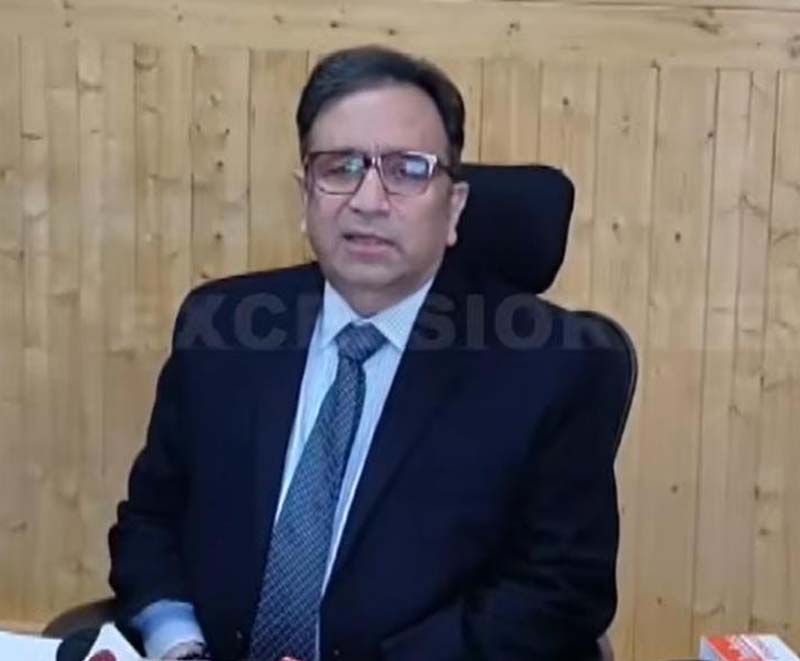
Ashish Kundra, Chief Secretary of Ladakh, addressing the media post LAB press conference in Leh, said minutes of the High Powered Committee (HPC) or Sub-Committee meetings were never released earlier and this was for the first time that the Government released the minutes in good faith so that the stakeholders can study them.
“The Sub-Committee meeting had lasted nearly two and half hours. There was a lengthy discussion. Both sides gave their view points. The minutes are just crux of the discussions,” Kundra said, adding they are not avoiding the talks and that he has been acting as mediator between the Centre and the Ladakh representatives.
He described the May 22 meeting as a “breakthrough” moment for the political dialogue in Ladakh stating that discussions are now focusing on a “customised” constitutional and administrative framework to address the region’s aspirations within the ambit of the Constitution.
“Over the next few months, we may begin moving towards a concrete outcome,” he said.
Asserting that the Centre has asked representatives of Ladakhi groups to prepare and submit a document outlining their proposed framework based on the discussions, Kundra said he believes the discussions were held in a highly constructive and open atmosphere.
“In fact, if I were to describe the May 22 meeting in one or two words, I would call it a breakthrough moment,” he said, adding that for many months, and indeed years, there has been an ongoing process driven by political and democratic aspirations.
“Different groups have been advocating their respective positions and concerns through dialogue and engagement. The May 22 meeting marked a significant step forward in this process, creating an environment where various stakeholders could engage openly and work towards greater understanding and consensus on issues concerning Ladakh’s future”, he said.
Pointing to the difficulties in the dialogue process, he said, “One group would present its views in one manner, while another would put forward its concerns differently, and there was often a lack of coordination or a unified voice.
“The Ministry of Home Affairs was also keen that we move towards a solution within the framework of the Constitution — one that could address the concerns of the people while remaining constitutionally sound. The Centre has asked Ladakhi representatives to prepare and submit a document outlining their proposed framework, while the Government of India will formulate the document after consultations with the Ministry of Law. These documents will serve as the basis for future discussions”, the Chief Secretary said.
“The dialogue must continue, and the process has now reached a very encouraging stage. Over the next few months, we may begin moving towards a concrete outcome,” he said.
According to Kundra, the latest discussions explored whether a new framework under Article 371 could be developed to address Ladakh’s concerns regarding protection of land, preservation of culture and safeguarding employment opportunities for local youth.
He said the meeting examined the possibility of a “customised solution” unique to Ladakh, including the creation of a body with political, executive and legislative powers and strengthening local governance institutions.
“There was broad in-principle understanding among representatives from Kargil, Leh and the Government of India that the framework discussed deserved further exploration,” he said.
Kundra said the Centre acknowledged the aspirations for Statehood but pointed out that prevailing financial and administrative realities did not make immediate Statehood feasible.
“They acknowledged that people have aspirations regarding statehood. However, under present circumstances, the conditions may not be conducive for granting statehood immediately,” he said.
At the same time, he said, the Centre did not reject the aspiration altogether and was instead focusing on practical and constitutionally viable alternatives.
“The question then becomes — if not statehood, what alternative framework could be explored? Discussions have now begun on a customised model for Ladakh, unlike any arrangement existing elsewhere in India,” he said.
He also sought to dispel confusion over reports relating to the meeting, saying that official minutes had not yet been issued and that a draft record shared among stakeholders was only intended to facilitate discussion.
“I am here for them. People should come forward and speak openly. We will certainly convey their views to the Government of India,” he said.
On employment, Kundra said the Centre had introduced a reservation formula for Ladakh that was unique among Union Territories and aimed at addressing local aspirations.
The Chief Secretary also said administrative arrangements for the newly created districts were being streamlined, with proposals relating to Drawing and Disbursing Officers already submitted to the Lieutenant Governor for approval and budgetary allocations planned accordingly.
Emphasising the importance of trust in the ongoing talks, Kundra said the latest round of discussions had generated a new atmosphere of confidence and constructive engagement.
“If both sides continue to move forward in this spirit, more possibilities and solutions will emerge,” he said.
 Follow our WhatsApp channel
