

Emergency Credit Line Guarantee Scheme for MSMEs, airlines
NEW DELHI, May 5:
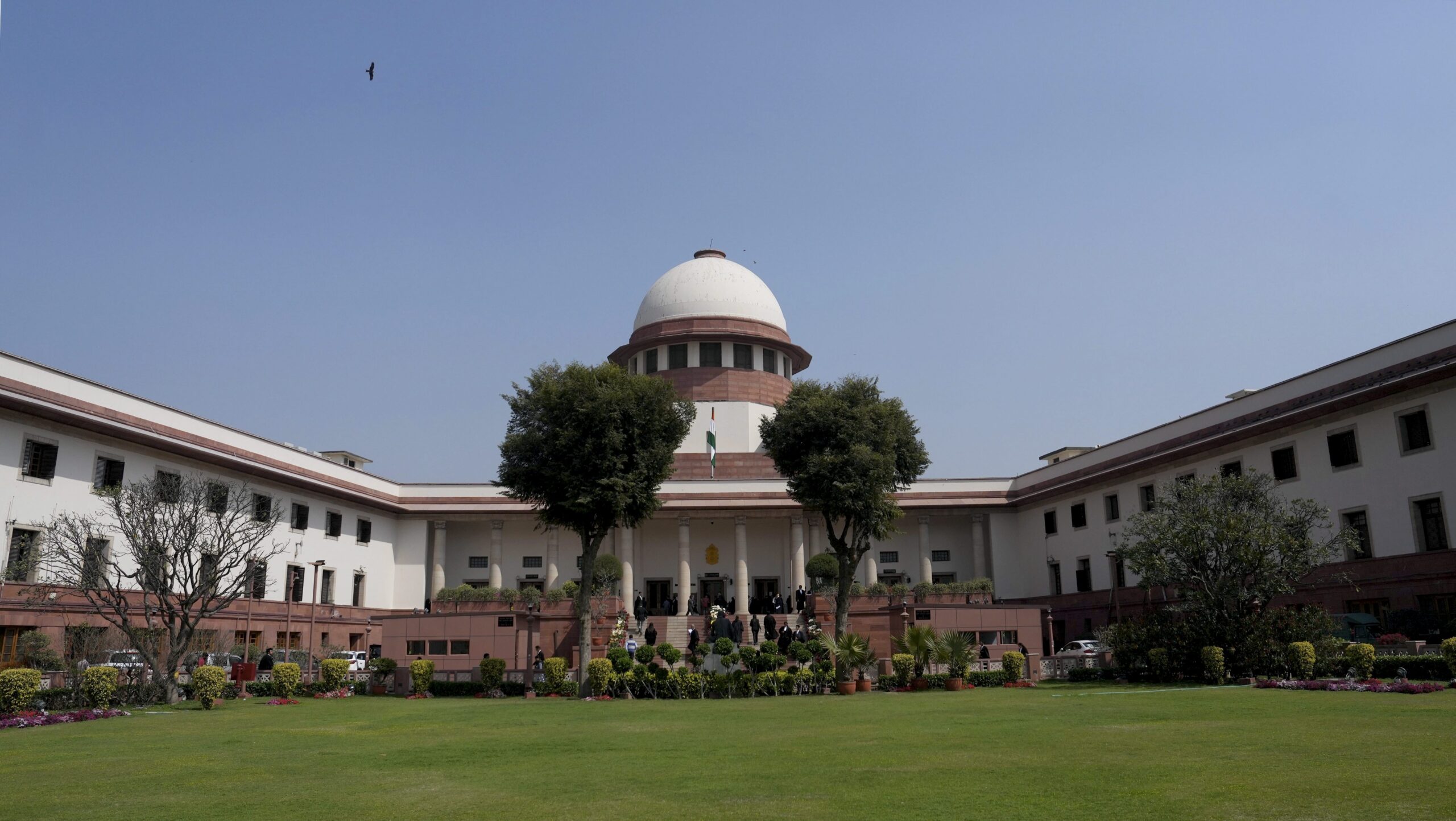
The Union Cabinet today cleared a proposal to increase the strength of the Supreme Court from the present 34 judges to 38, including the Chief Justice of India.
Follow the Daily Excelsior channel on WhatsApp
Union Minister Ashwini Vaishnaw said at present, the apex court has 33 judges and the CJI. A Bill will be brought in the next session of Parliament to raise this strength by four.
Once it is cleared by Parliament, the number of Supreme Court judges will stand at 38, including the CJI.
The Supreme Court (Number of Judges) Act 1956, as originally enacted, provided for the maximum number of judges (excluding the chief justice of India) to be 10.
This number was increased to 13 by the Supreme Court (Number of Judges), Amendment Act, 1960, and to 17 by another amendment to the law.
The Supreme Court (Number of Judges) Amendment Act, 1986, augmented the strength of the Supreme Court judges from 17 to 25, excluding the CJI. Subsequently, a fresh amendment in 2009 further augmented the strength of top court judges from 25 to 30.
The strength of the Supreme Court of India was last increased from 30 to 33 (excluding the Chief Justice of India) by further amending the original act vide The Supreme Court (Number of Judges) Amendment Act, 2019.
Meanwhile, the Government today announced an Emergency Credit Line Guarantee Scheme (ECLGS) with an outlay of Rs 18,100 crore for MSMEs, airlines and other companies to help them meet working capital needs amid the challenges posed by the West Asia conflict.
The scheme — expected to help in providing additional credit flow of Rs 2.55 lakh crore, including Rs 5,000 crore — was approved by the Union Cabinet on Tuesday.
Vaishnaw said the scheme, having an outlay of Rs 18,100 crore, would help airlines as well as MSMEs impacted by the West Asia crisis.
“The scheme has been brought to address the stress in MSME and airline sectors due to the West Asia conflict,” he said.
In an official release, the Government said the scheme aims to enable businesses to tide over the challenges arising from the West Asia conflict.
“Additionally, this is expected to help businesses maintain their operations, protect jobs, and sustain supply chains. The proposed credit guarantee scheme is a major step to help businesses, particularly MSMEs and airline sector, to ensure their additional working capital needs are catered by the banks and financial institutions,” it said.
By providing timely liquidity, the Government said the scheme would sustain the businesses and prevent job losses. It will also promote uninterrupted domestic production and maintain the resilience of the ecosystem.
MSMEs (Micro, Small and Medium Enterprises) as well as airlines have been facing substantial financial headwinds due to the West Asia conflict that started in February.
The Government also announced a five-year mission to increase the productivity of the cotton crop with an outlay of Rs 5,659.22 crore.
According to an official statement, the Union Cabinet, chaired by Prime Minister Narendra Modi, approved “Rs 5659.22 crore for Mission for Cotton Productivity (2026-27 to 2030-31) to address bottlenecks, declining growth, and quality concerns in India’s cotton sector.”
India’s cotton production stood at 291 lakh bales of 170 kg each during the 2025-26 crop year (July-June), according to the Government’s latest estimate.
The mission aligns with the ‘5F vision’ (Farm to Fibre to Factory to Fashion to Foreign), and would focus on enhancing cotton productivity, the statement added.
The cotton yield will be improved through the development of high-yielding variety (HYV) seeds resistant to disease and pests, scaling up of existing and latest crop production technologies through state Governments, Krishi Vigyan Kendras, and State Agricultural Universities (SAUs).
There would be large-scale promotion and adoption of the latest crop production technologies. The mission seeks to ensure a least contaminant cotton supply to the industry and promote high-quality cotton exports.
“The Mission envisages to accomplish the production of 498 lakh bales (170 kg lint each) of cotton by enhancing lint productivity from 440 kg/hectares to 755 kg/hectares by 2031,” the statement said.
About 32 lakh farmers will benefit, leading to self-reliance.
The Mission, which was announced in the FY26 annual budget, will be implemented by the Ministry of Agriculture and the Ministry of Textiles, involving 10 institutes of the Indian Council of Agricultural Research (ICAR), one institute of Council for Scientific and Industrial Research (CSIR), and 10 centres of All India Coordinated Research Project (AICRPs) on cotton operating in different state agricultural universities (SAUs) of major cotton-growing States.
The Government has also raised the minimum price that sugar mills must pay to sugarcane growers by Rs 10 to Rs 365 per quintal for the 2026-27 season beginning October.
The Cabinet Committee on Economic Affairs (CCEA), approved the Fair and Remunerative Price (FRP) for sugarcane at its meeting here.
“The FRP will be Rs 365/quintal for a basic recovery rate of 10.25 per cent,” Union Minister Ashwini Vaishnaw told reporters after the meeting.
The approved FRP is 2.81 per cent higher than the current 2025-26 season rate of Rs 355 per quintal.
For every 0.1 per cent increase in recovery above 10.25 per cent, the FRP will rise by Rs 3.56 per quintal, incentivising higher sugar recovery by mills.
With a view to protecting the interests of farmers supplying cane to mills with recovery below 9.5 per cent, the Government has decided that there will be no deduction in FRP in such cases. Farmers supplying to such mills will receive Rs 338.3 per quintal in the 2026-27 season.
Meanwhile, the Cabinet Committee on Economic Affairs also approved three projects costing about Rs 23,437 crore of the Railway Ministry.
These projects include construction of third and fourth line between Nagda–Mathura, Guntakal–Wadi and Burhwal–Sitapur.
“The increased line capacity will significantly enhance mobility, resulting in improved operational efficiency and service reliability for Indian Railways. These multi-tracking proposals are poised to streamline operations and alleviate congestion,” a Government press note said.
Vaishnaw said that these sections are part of high density railway network routes and these new lines will enhance operational efficiency between major cities and towns.
“The projects are in line with Prime Minister Shri Narendra Modiji’s vision of a New India which will make people of the region ‘Atmanirbhar’ by way of comprehensive development in the area which will enhance their employment/ self-employment opportunities,” the Government said.
It added, “The projects are planned on PM-Gati Shakti National Master Plan with focus on enhancing multi-modal connectivity and logistic efficiency through integrated planning and stakeholder consultations. These projects will provide seamless connectivity for movement of people, goods and services.”
These three projects covering 19 districts across the states of Madhya Pradesh, Rajasthan, Uttar Pradesh, Karnataka, Andhra Pradesh and Telangana will increase the existing network of Indian Railways by about 901 km. (PTI)
 Follow our WhatsApp channel
