

Excelsior Correspondent
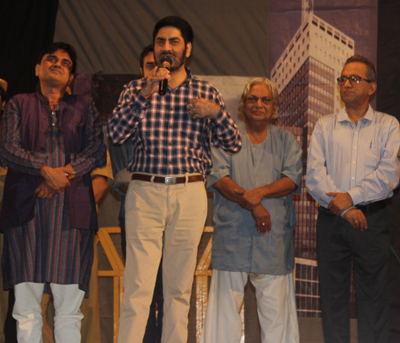
KOLKATA, Sept 2: Natrang Director Balwant Thakur made it to the biggest theatre festival of India ‘Kolkata Theatre Festival’ and presented a lecture on the contemporary theatre scene of Jammu and Kashmir. Organised by East Zone Cultural Centre, Ministry of Culture Government of India, 135 plays are being featured in this festival which is going to be a record number of participation in any festival of the Asia. Apart from featuring 135 plays, the Kolkata Theatre festival invited 50 Great Masters of Indian Theatre and organised exclusive interactions with them. Balwant Thakur was also one of them who had the honour to be showcased as one of the Great Masters of Indian Theatre and interacted with the elite of Kolkata Theatre fraternity and shared his creative journey of theatre with particular reference to the contemporary theatre scene of Jammu & Kashmir. Balwant Thakur was also felicitated on the occasion by Dr. Om Prakash Bharti, Director East Zone Cultural Centre, Kolkata in presence of eminent theatre director Probir Guha and thousands of theatre lovers of West Bengal. Interestingly there are huge number of fans of Balwant Thakur in Kolkata and most of Natrang plays like ‘Bawa Jitto’ ‘Ghumayee’, ‘Mahabhoj’, ‘Mere Hisse Ki Dhoop Kahan hai’, ‘Aap Hamare Hain Kaun’ ‘Saiyan Bhaye Kotwal’ and ‘Suno Eh Kahani’ have been repeatedly outshined in Kolkata and other parts of West Bengal on popular demand. When asked to draw the comparison with both the places, Balwant Thakur informed that compared with the theatre of West Bengal, the artists and theatre of Jammu and Kashmir are struggling for its very existence. The actors of traditional Jatra in West Bengal get any amount between two to three lacs of rupees a month whereas the artist in J&K are not able to make their living out of arts practice in the absence of state and public support. Only in Kolkata there are over fifty fully equipped functional auditoriums whereas in Jammu we have only one auditorium and the same is under renovation since last five years.
 Follow our WhatsApp channel