

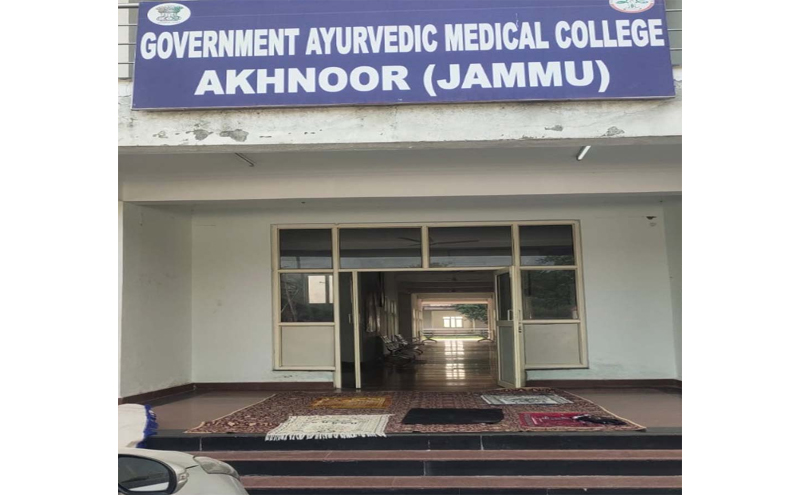
The Lieutenant Governor of Jammu and Kashmir, in a proclamation of utmost significance, declared a substantial augmentation in the seat allotment at Ayurvedic Medical College Akhnoor, elevating the quota from 60 to a commendable 100. Simultaneously, he disclosed a prospective escalation in bed capacity within the precincts of the Ayurvedic Medical College Akhnoor, soaring from the existing 60 to an impressive spectrum of 150 or potentially 200, contingent upon the exigencies and the occupancy dynamics.
Under the current administration, robust endeavours are underway to resurrect the erstwhile eminence of the Indian System of Medicine. Undeniably, our medical science, akin to other disciplines, once stood at the pinnacle of advancement, predominantly rooted in the profound wisdom of herbs and various medicinal plants, along with their extracts. Over the past few decades, even Western nations have grasped this concept. Exemplifying this assimilation are herbal toothpaste products, where multinational corporations have not only adopted but actively promoted these Ayurvedic-inspired offerings.
Within a decade, owing to the unwavering efforts of the Government, Ayurveda has experienced a resurgence, reclaiming its prominence. A pivotal facet of this sustained revival is the establishment of Ayurvedic hospitals, each serving as a testament to the system’s efficacy. Ayurveda, with its specialised medicines for particular ailments, distinguishes itself, and the inherent beauty of its treatment lies in the minimal side effects associated with its medications. Consequently, individuals increasingly favour this holistic approach to healthcare.
Recognising the scarcity of genuine Ayurvedic practitioners, the Government has devoted the last decade to the establishment of Ayurvedic medical colleges, paving the way for well-qualified Ayurvedic doctors. This concerted effort not only addresses the dearth of skilled professionals but also aligns with the digital era, enabling students to become well-versed in Ayurvedic medicines. The resultant benefit is palpable, with patients reaping substantial advantages. Ayurvedic hospitals, functioning in tandem with their allopathic counterparts, offer vital support to the overall healthcare landscape. These medical facilities represent a parallel and robust healthcare infrastructure, yielding substantial dividends over the long term. The Indian System of Medicine is rooted in the principle of addressing the root cause of ailments rather than merely providing temporary relief. While immediate alleviation might not be apparent, patients undergo comprehensive treatment over an extended period.
The landscape is replete with evidence of the transformative power of Ayurveda, affirming the exponential growth trajectory of these ventures.
The Government, cognizant of the significance of these Ayurvedic institutions, vigilantly monitors their performance. The burgeoning preference for Ayurvedic medicines among patients has precipitated a commendable surge in demand for medicinal plants. Farmers, guided with precision, are now reaping lucrative returns by cultivating these botanical treasures. This supplementary source of income holds immense value for the agrarian community. The profound impact of Ayurveda is unmistakable, and the dividends yielded from the Government’s unwavering efforts and steadfast faith in this traditional system of medicine are now abundantly evident.
 Follow our WhatsApp channel
