

ISLAMABAD, Jun 1: Any temporary understanding between the US and Iran must be followed by deeper talks about Tehran’s nuclear stockpile and other critical issues, a top European Union official said on Monday while offering the 27-member bloc’s contribution to a sustainable and peaceful resolution in West Asia.
Kaja Kallas, European Union High Representative for Foreign Affairs and Security Policy, also said that Pakistan has been the main mediator between the US and Iran, and Islamabad’s diplomatic efforts have helped prevent a return to full-blown war.
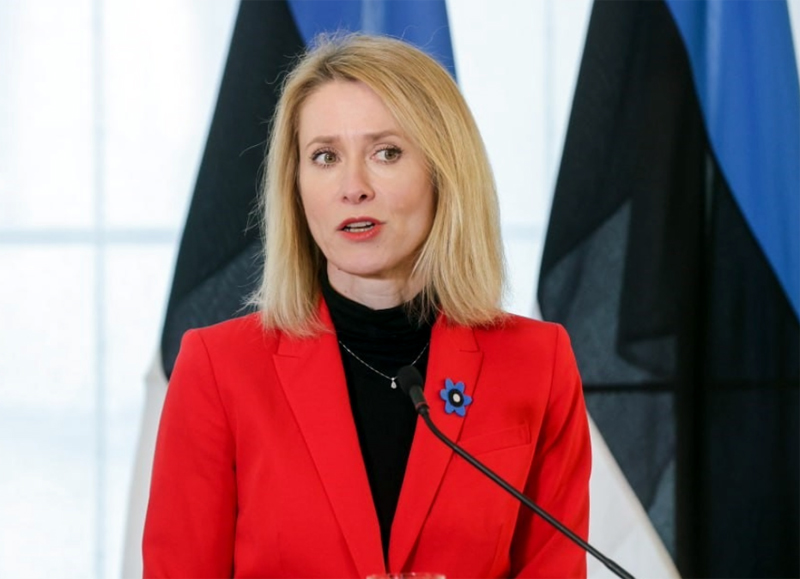
Speaking at a joint press briefing after her talks with Deputy Prime Minister/Foreign Minister Ishaq Dar here, Kallas said her visit came at an important moment amid global and regional changes, noting that both sides had reaffirmed their commitment to strengthening cooperation.
She said both sides also discussed global developments, including the West Asia situation.
The US and Israel launched coordinated attacks on Iran on Feb 28, killing Iranian Supreme Leader Ayatollah Syed Ali Khamenei and several top commanders. Iran tightened its grip on the crucial Strait of Hormuz and made use of it to build pressure on the US to end the war against it.
Kallas said that there is a “tenuous diplomatic opening to extend” the fragile ceasefire between Tehran and Washington, and to reopen the Strait of Hormuz.
“Yet any temporary understanding between the US and Iran must be followed by deeper talks about Iran’s nuclear stockpile and other critical issues,” she said.
She said that the EU was ready to contribute to a sustainable and peaceful resolution. “We bring economic leverage, hard-won nuclear expertise, longstanding relationships with Gulf partners, and direct engagement with Iran itself,” she added.
She also talked about the Pakistan and Afghanistan tension, warning that recent fighting had “grave humanitarian consequences” and could fuel instability and radicalisation. She urged both sides to exercise restraint and seek de-escalation.
Kallas said that Pakistan is a major regional power and an important partner for the EU, and added that the strategic dialogue had underlined a shared resolve to deepen ties further.
She said that the EU and Pakistan had seen strong momentum in trade relations, stressing that the EU remains Pakistan’s largest export destination, “larger than China and the US combined.”
She also said that Pakistan was a leading beneficiary of the EU’s GSP+ scheme, but added that continued access depends on progress in implementing several international conventions.
Pakistan was accorded the status in 2014, which has now been extended until 2027. The country enjoys duty-free or minimal duty on exports to the European market.
Kallas also said that both sides were expanding cooperation in “climate resilience, digital infrastructure, clean energy, migration and mobility”.
On his part, Dar called for more structured engagement between Pakistan and the EU while acknowledging bilateral communication channels during the Pakistan–India tensions last year and the ongoing US–Iran situation.
He said both sides were reviewing progress under the Pakistan–EU Strategic Engagement Plan 2019, covering “trade, investment and development, human rights and rule of law, migration and mobility, and security and counter-terrorism.”
Dar also referred to what he described as “unprovoked Indian aggression” last year and raised the Kashmir issue.
Referring to security concerns, he highlighted militant activity from Afghan territory, saying such attacks remain a “top concern” for Pakistan.
Earlier at the delegation-level meeting, the two sides sought to deepen ties.
Kallas said the EU and Pakistan should work towards strengthening ties in the coming year. “The momentum of 2026 is to develop EU-Pakistan relations into a more forward-looking footing,” she said. (PTI)
 Follow our WhatsApp channel
