

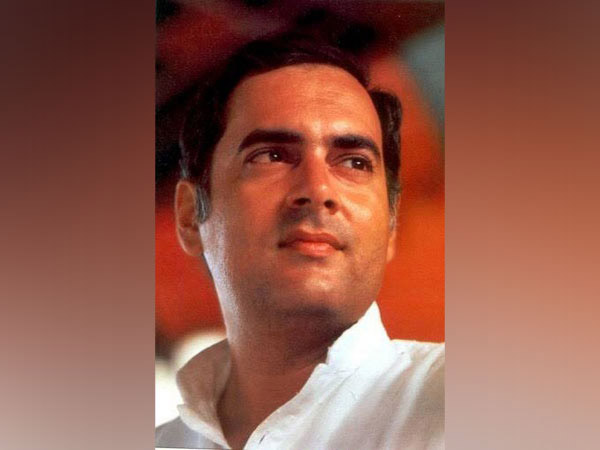
Ashok Bhan
India remembers Rajiv Gandhi not merely as a former Prime Minister, but as a visionary who sought to prepare the nation for the challenges and opportunities of the twenty-first century. His life, leadership and sacrifice continue to evoke reflection across generations. At a time when India stood at the crossroads of tradition and modernity, Rajiv Gandhi represented youthful energy, technological optimism and a sincere desire to transform governance into an instrument of empowerment for ordinary citizens.
Rajiv Gandhi entered public life under extraordinary circumstances. He was not initially inclined towards politics and was known for his quiet and reserved personality. Yet history placed upon his shoulders immense responsibility following the tragic assassination of his mother, former Prime Minister Indira Gandhi, in 1984. In the face of grief, turmoil and national uncertainty, Rajiv Gandhi stepped forward to lead the nation with dignity, composure and determination.
As the youngest Prime Minister of India, he brought with him a fresh perspective and a modern outlook. He understood early that the future of India would depend upon science, technology, communication and education. Long before the digital revolution transformed the world, Rajiv Gandhi recognised the importance of computers, telecommunications and information technology in reshaping India’s destiny. Today, when India stands as a global technological power, one cannot overlook the foundational role played by Rajiv Gandhi in encouraging technological advancement and modern infrastructure.
His efforts to expand the telecommunications network and computerisation initially faced resistance from many quarters. There were apprehensions that technology would displace employment and widen social inequalities. Yet Rajiv Gandhi remained steadfast in his conviction that technology would democratise opportunities and connect India internally and globally. The seeds sown during his tenure eventually grew into the robust information technology and digital ecosystem that has transformed India’s economy and society.
Rajiv Gandhi also believed deeply in decentralisation and democratic participation. His commitment to strengthening Panchayati Raj institutions reflected his conviction that democracy must reach the grassroots. He envisioned empowered local self-governance where ordinary citizens, women and marginalised communities could directly participate in shaping development and public policy. Many of the reforms that later strengthened local governance carried the imprint of his vision.
Equally significant was his concern for the youth of India. Rajiv Gandhi understood that India’s greatest strength lay in its young population. He sought to create opportunities through education, innovation and institutional reforms. His emphasis on scientific temper and modern education reflected a broader aspiration to build an India that was confident, rational and globally engaged while remaining rooted in its civilisational ethos.
Rajiv Gandhi also shared a deep emotional and political connection with Jammu and Kashmir and its people. He regarded Kashmir not merely as a territorial or political issue, but as an integral part of India’s pluralistic civilisation and composite culture. He often spoke of the beauty, diversity and cultural richness of Kashmir and expressed genuine concern for the welfare, dignity and aspirations of its people.
His engagement with Kashmir reflected empathy, outreach and a desire to preserve communal harmony in the Valley. Rajiv Gandhi believed that the people of Jammu and Kashmir deserved peace, democratic participation and development. He recognised the importance of maintaining the region’s unique cultural identity while strengthening its bonds with the rest of the nation. During challenging times, he consistently advocated dialogue and reconciliation rather than alienation and hostility.
Many Kashmiris recall Rajiv Gandhi as a leader who listened with sensitivity and warmth. His interactions with the people of the region carried a personal touch and reflected his belief that emotional integration was as important as political integration. He understood the historical and emotional complexities of Kashmir and sought to address them within the framework of democracy, constitutionalism and national unity.
For the Kashmiri Pandit community as well, Rajiv Gandhi’s period in public life represented a time when the ethos of Kashmiriyat — rooted in coexistence, mutual respect and shared heritage — still found recognition at the national level. His vision for Kashmir was anchored in inclusiveness and the preservation of the Valley’s centuries-old pluralistic character.
Rajiv Gandhi’s leadership also reflected an earnest desire for peace and national reconciliation. Whether addressing challenges in Punjab, Assam or other regions experiencing unrest, he attempted political dialogue and negotiated settlements aimed at restoring normalcy and democratic stability. While the complexities of these issues often exceeded the possibilities of immediate resolution, his efforts demonstrated faith in dialogue and constitutional engagement rather than perpetual confrontation.
In the sphere of foreign policy, Rajiv Gandhi projected India as a nation capable of engaging confidently with the world while safeguarding its sovereignty and strategic autonomy. He sought stronger relations with major powers, neighbouring countries and the developing world alike. His international outlook was informed by the belief that India must participate actively in shaping global discourse rather than remain confined to defensive postures.
Like all political leaders, Rajiv Gandhi’s tenure was not without controversy or criticism. Democratic life naturally involves debate, disagreement and scrutiny. Yet history often judges leaders not merely by controversies of their time, but by the larger direction they attempted to provide to the nation. Rajiv Gandhi’s enduring legacy lies in his efforts to modernise India, bridge the divide between tradition and technology and prepare the country for a rapidly changing world.
What perhaps distinguishes Rajiv Gandhi most profoundly is the sense of promise associated with his leadership. He symbolised a generational transition in Indian politics — a movement towards modern governance, efficiency, transparency and future-oriented policymaking. He inspired many Indians to believe that the country could move beyond bureaucratic inertia and embrace innovation with confidence.
His assassination on 21 May 1991 was not merely the loss of a political leader; it was a national tragedy that shocked the conscience of India. Violence claimed the life of a man who consistently spoke of peace, national unity and democratic progress. His untimely death deprived the nation of a leader whose political journey was still evolving and whose vision remained unfinished.
Today, as India continues its journey as a vibrant democracy and emerging global power, the relevance of Rajiv Gandhi’s ideas remains visible in many spheres. The digital transformation of governance, the expansion of telecommunications, the empowerment of local institutions and the aspirations of India’s youth all carry traces of the foundations laid during his leadership.
Remembering Rajiv Gandhi is therefore not merely an exercise in nostalgia. It is an opportunity to reflect upon the values of courage, modernity, democratic faith and national service. In an age increasingly marked by polarisation and division, his emphasis on unity, dialogue and inclusive development offers enduring lessons.
As we pay tribute to Rajiv Gandhi, we honour a leader who dared to imagine a modern India long before such transformation became visible. His life reminds us that leadership is not only about political power, but about the ability to envision the future and inspire a nation to move towards it with hope and confidence.
Rajiv Gandhi’s memory continues to live in the democratic consciousness of India — as a leader of vision, as a symbol of youthful aspiration and as a patriot who dedicated his life to the service of the nation. May his contributions, his affection for Kashmir and its people, and his sacrifice continue to inspire future generations to work towards an India that is progressive, compassionate, united and strong.
Rajiv Gandhi shared a deep emotional and political bond with Jammu and Kashmir and its people. He viewed Kashmir not merely through the prism of politics or security, but as a priceless symbol of India’s pluralistic civilisation, cultural diversity and composite heritage. Rajiv Gandhi often expressed admiration for the Valley’s rich traditions, spiritual legacy and ethos of coexistence. He believed that the people of Jammu and Kashmir deserved peace, dignity, development and democratic participation, and he consistently advocated engagement, reconciliation and dialogue to address the region’s complexities.
Rajiv Gandhi also recognised the importance of preserving Kashmir’s centuries-old tradition of heritage communal harmony and Kashmiriyat. He would homely in Kashmir he frequently visited as a pilot,a leader and as Prime Minister and also as opposition leader.His interactions with the people of the region reflected warmth, empathy and sensitivity towards their aspirations and concerns. For the Kashmiri Pandit community, his period in leadership represented a time when the Valley’s inclusive and pluralistic identity still found acknowledgment at the national level. His vision for Kashmir was anchored in emotional integration, mutual respect and the strengthening of bonds between Jammu and Kashmir and the rest of India while safeguarding its unique cultural identity.
Author is a noted Senior Advocate
 Follow our WhatsApp channel
