

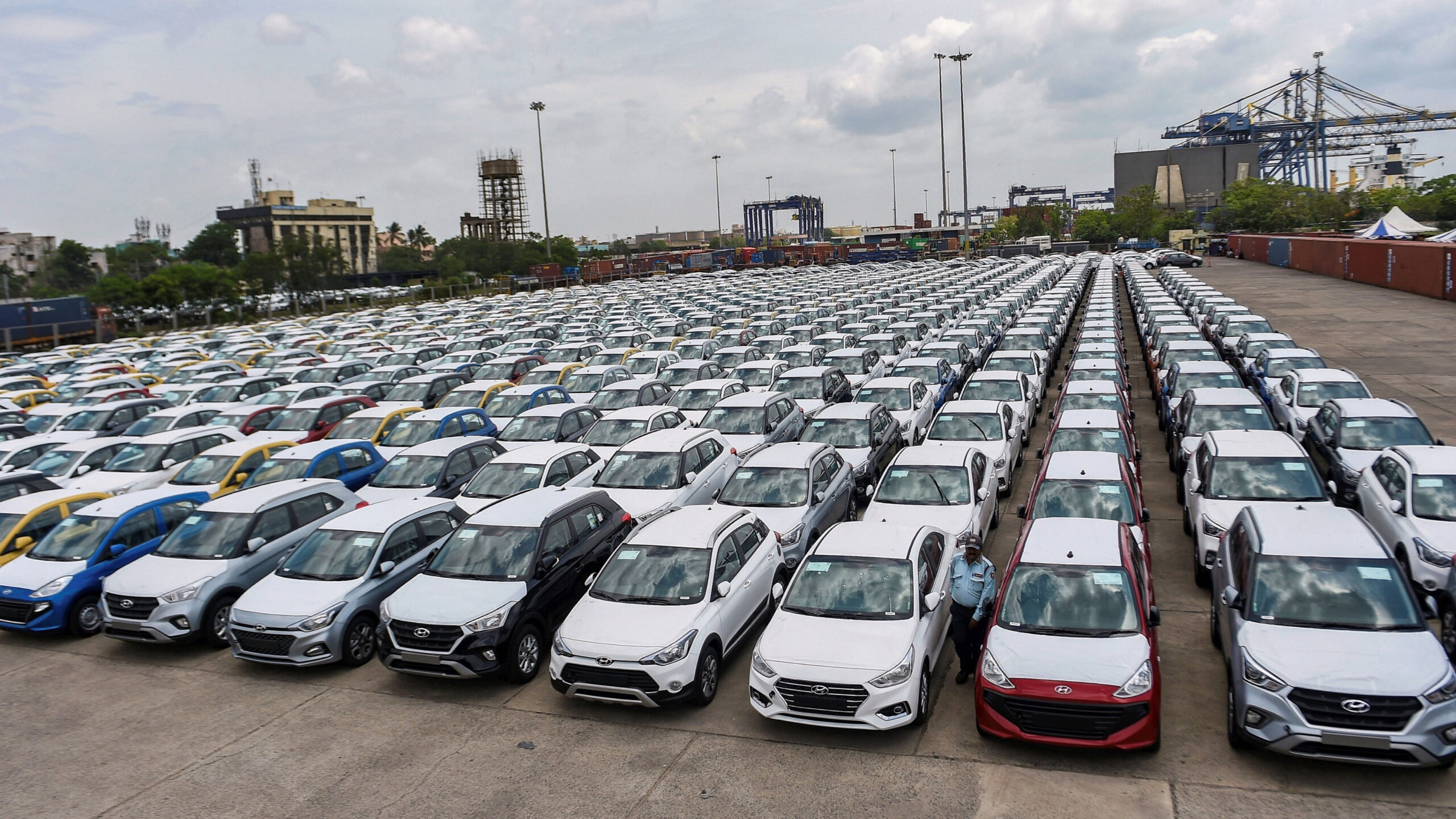
NEW DELHI, June 8: The total automobile retail sales in India registered an on-year growth of 9.55 per cent to a record 25,31,067 units in May despite fuel-price revision, the Federation of Automobile Dealers Associations said on Monday.
The cumulative automobile retail sales in India stood at 23,10,451 units in the same month last year.
The retail sales performance reflects all-time best May for three-wheelers, passenger vehicles and tractors — a strong outcome for what is seasonally a lean month.
Dealers reported a visible rise in enquiries for fuel-efficient and alternative-powertrain options, reflected in the two-wheeler EV share climbing to 9.25 per cent from 6.11 per cent a year ago.
According to data released by FADA, Passenger vehicles (PV) retail sales were at a record 4,02,591 units last month as compared to 3,26,656 units in May 2025, a growth of 23.25 per cent.
Two-wheelers also clocked best-ever monthly numbers at 18,44,947 units in May this year as compared to 17,15,581 units in the same month a year ago, a growth of 7.54 per cent.
FADA further said three-wheeler sales stood at 1,11,526 units last month as compared to 1,07,688 units in May 2025, up 3.56 per cent.
Commercial vehicles also witnessed a growth of 5.29 per cent to a record 83,823 units last month as compared to 79,614 units in May 2025, it added.
“Overall, the outlook for June 2026 appears measured but cautiously optimistic, with monsoon progress and rural cash flows expected to provide the structural support even as near-term cost pressures persist,” FADA stated.
Looking ahead to June 2026, dealer sentiment is measured: 50.52 per cent of dealers expect growth, 39.90 per cent anticipate a flat market, and only 9.59 per cent foresee a decline, according to the Association.
Dealers attributed the steady participation from commuters and rural buyers to marriage-season buying and continued affordability under the GST 2.0 framework, even as heat wave conditions dampened showroom walk-ins in several markets and selective model-wise supply gaps tempered momentum.
FADA President C S Vigneshwar said: “As anticipated in our April 2026 release, the watch-outs we had flagged — an above-normal heatwave, fuel-price pressure and the evolving West Asia situation — did come into play during May 2026, and yet Indian auto retail has held its growth trajectory with May’26 registering the best ever May across 3W, PV, Tractors and Overall registrations”.
The industry retailed 25,31,067 units during the month, a 9.55 per cent YoY expansion, with Passenger Vehicles at 23.25 per cent and tractors at 11.17 per cent leading the way, followed by two-wheelers at 7.54 per cent, commercial vehicles at 5.29 per cent, and three-wheelers at 3.56 per cent, while wheeled construction equipment declined 17.51 per cent on a high base, he shared.
“The sequential softness of 6.75 per cent MoM reflects the customary post-April seasonal moderation and a delayed south-west monsoon, keeping May largely a pre-sowing month across much of rain-fed Bharat. That growth held through this confluence of pressures underlines the resilience of the underlying demand,” Vigneshwar said.
With the South-West monsoon having set in over Kerala on 4 June and beginning its northward advance, demand expectations are anchored in the progress of the monsoon, early Kharif sowing preparation, and the tail of the marriage season, supported by a stable financing environment after the Reserve Bank of India held the repo rate at 5.25 per cent in its June review, FADA said.
In the two-wheeler segment, improving rural cash flows and the shift in enquiries towards fuel-efficient EV options are expected to provide support, though continued heat and elevated fuel prices remain a drag in some markets, it added.
According to FADA, passenger vehicles are likely to draw on healthy booking pipelines especially in EV category and new launches, even as June settles into its usual seasonal rhythm, while commercial vehicles should stay steady on goods movement and infrastructure-linked activity.
Persistent heatwave pockets, the trajectory of fuel prices and the West Asia situation, with its pass-through to freight and input costs, remain the principal factors to watch. (PTI)
 Follow our WhatsApp channel
