

Saga of GOP’s chequered history
Anil Anand
a.anil.anand@gmail.com
Picking up from what one had written months back in this column on the endangered but truly-portrayed Nehruvian model, based on plurality, secularism and multiculturalism, in demoted and disintegrated erstwhile state of Jammu and Kashmir, the developing circumstances warrant further delving into the matter. There is a circumstantial transition, from then to now, with shifting of roles from the Narendra Modi Government authoring the shake-up in the constitutional scheme of things, in fulfillment of their political and ideological agenda, to focus on the misdemeanours of Congress.
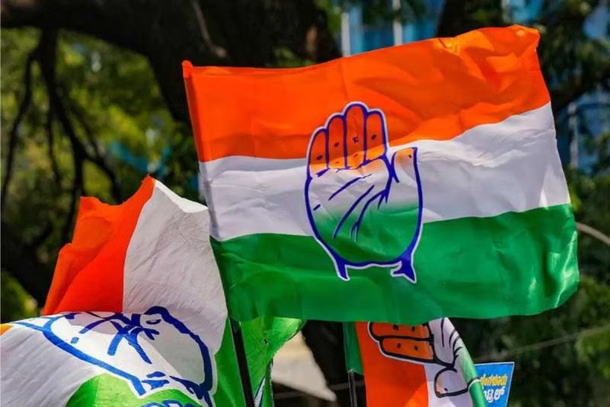
The Grand-Old-Party (GOP) which should have stood ground to safeguard the Nehruvian model in the sensitive and strategic Union Territory of Jammu and Kashmir has not only dithered, faltered and fallen flat, the All India Congress Committee and its spearheads are much to be blamed alongside the PCC leadership of time to time. Significance of J & K (read Kashmir) was much high in the Nehruvian scheme of things which despite having some grey areas and controversial aspects saw democracy strengthening in the ultra-diverse state with three distinct regions- Jammu, Kashmir and Ladakh.
The manner in which the GOP and its much fancied high-command has played with the interests of the Congress is, perhaps, a unique example of its own. Right from the 1975 Indira Gandhi-Sheikh Abdullah accord which led to the rehabilitation of the Sher-e-Kashmir (as the Sheikh is popularly called in Kashmir) with Congress pulling down its own Government, chief minister Syed Mir Qasim resigned to make way for a Sheikh-led government of National Conference, has no parallel in the history of Indian democracy.
No doubt, the national interest under the gaze of the Nehruvian model, must have been the guiding force behind rehabilitation of the Sheikh, without any doubt the tallest leader of Jammu and Kashmir. It spelt disaster for Congress which the party strategists not only failed to contain but followed it up with disastrous approach coupled with fueling factionalism, egged on from New Delhi.
Even the tallest of the leaders such as Mufti Mohammed Sayeed, who subsequently parted ways with the party as result of factionalism, and Mr Ghulam Nabi Azad, despite their towering stature, turned a blind eye towards protecting the Nehurivan model or arresting the factionalism. Instead, the leaders played their games to achieve personal milestones. The Congress suffered all this while and is continuing to do so.
After the 1975 model, the two developments taking place three decades later, were a direct reflection of the mindset of the decision makers in the Congress’s higher echelons and exposed the inner weaknesses of the party in terms of leadership. First the appointment of Prof Saif-u-Din Soz, who had his political roots in National Conference, as PCC chief, and more recently Mr Tariq Hamid Karra, who came from Peoples Democratic Party (PDP). This happened at the cost of the party’s indigenous leadership.
The results are for everyone to see with Congress having lost its grassroots character, in Jammu to BJP and in Kashmir to National Conference and PDP. The lack of credible leadership, either due to over-arching influence of the veteran leaders of the yore who checked this growth, or attempts by a coterie to dominate and not give space to new leadership, has become the Congress’s bane.
Leader of Opposition in Lok Sabha, Mr Rahul Gandhi’s Bharat Jodo Yatra (from Lakhanpur-bordering Punjab to the cool climes of Kashmir) evoked a tremendous response among the people cutting across regions. It kindled a hope for the Congress’s revival not only in Jammu, where it still has pockets of influence and following, but also Kashmir. The subsequent mishandling of the party affairs (timing and choice of PCC presidents) and total lack of interest by the AICC in containing factionalism, has pushed the Congress in J & K to the crossroads.
Both Mr Soz and Mr Karra, coming from different political backgrounds and without any mass-base of their own, thrived on the backing of the Gandhi family. However, both of them failed to command the organization for different reasons and capping the factionalism. This led to, as is the case under current PCC chief Mr Karra despite full backing of the top leadership, total demoralization in the organization.
What has made the matter worst is approach of the central leadership, including the AICC in-charges appointed from time to time, to perpetuate the ineffective system and not disturb the incumbent UT PCC chief so as not to antagonize his source of power in Delhi. Least the present AICC in charge Syed Naseer Hussain could have done was to convince the PCC chief to carry everyone along. The vested interest in the Jammu and Kashmir Congress, which many these days are calling as the sleeper cells of BJP and PDP, has thrived while the Congress burst at the seams.
A fresh round of “open-war” has ensued between factions claiming to be in the vanguard of saving the Congress ideology based on the Nehruvian spirit, and those far removed from it. The sudden appointment of Mr Karra, on the eve of 2024 assembly elections replacing Mr Vikar Rasool Wani, who has since launched the latest tirade seeking central intervention, wrong selection of candidates (allegedly at the behest of some influential local Congress leaders with the patronage of the then AICC in-charge Mr Bharat Sinh Solanki) and mishandling (it is still to be ascertained by whom as charges are already flying thick on high thereby blaming each other with the AICC being totally indifferent), has pushed the UT Congress to the throes of serious crisis.
The one big fallout is that despite being a partner in the ruling alliance with National Conference, though giving outside support, Congress is not in the reckoning of the Omar Abdullah Government. Latest example of this was the convening of a meeting of the ruling alliance MLAs to which the Congress legislators were not invited.
At stake in Jammu and Kashmir is the core of the Nehruvian ideology and model. And the Congress is morally bound to protect whatever of it is left by seriously taking its organizational matters. There is no space for further experimentation as it has, coupled with personal whims and fancies of the leaders, already considerably harmed the party which has an important role to play not only nationally but in Jammu and Kashmir as it is the only party with a pan-J & K spread.
Since a perceived Rahul Gandhi-acolyte is in the centre of the storm, and, perhaps, no one dare advise him on J&K Congress affairs, he must come out and act decisively. The vested interests seem to be using his name as a shield to allow the system to perpetuate. It is not too late for Mr Gandhi to order an internal probe into the ticket distribution during 2024 Lok Sabha and later J n K assembly elections which might give him interesting insights. More importantly the AICC in-charges should be appointed, in all states and UTs, with a strong message of accountability.
Congress has a vital role to play in Jammu and Kashmir to balance the current mode of politics based on BJP’s (with its ever expanding but frustratingly saturated domain) communally divisive framework, and unabashed fanatical regionalism of the regional parties such as National Conference and PDP. No scope for delay or else new and more-divisive and regional forces are threatening to raise their ugly head.
 Follow our WhatsApp channel
