

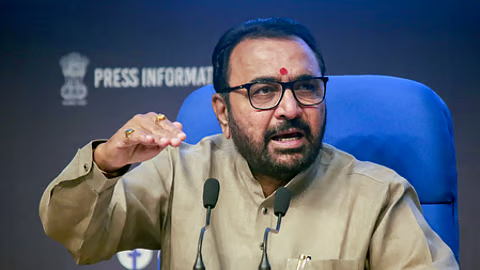
NEW DELHI, June 7: The focus on health ageing in this year’s International Day of Yoga reflects one of the most pressing global health priorities as countries grapple with rapidly ageing populations and a growing burden of lifestyle-related diseases, Union Ayush Minister Prataprao Jadhav has said.
The main International Day of Yoga celebration on June 21 this year will be held in Kolkata with the theme of ‘Yoga for Health Living’.
Jadhav said the focus must now shift from merely increasing life expectancy to ensuring healthier, more active and dignified lives.
“The theme ‘Yoga for Healthy Ageing’ reflects one of the most pressing global health priorities today. As life expectancy increases across the world, the focus must shift from merely living longer to living healthier, more active, and dignified lives,” he told PTI.
The minister said yoga offers a holistic approach to physical fitness, mental well-being, emotional balance and preventive healthcare throughout the ageing journey.
Highlighting the choice of Kolkata as the host city, he said the city represents India’s rich cultural and intellectual legacy.
“The choice of Kolkata as the host city is equally significant. Kolkata embodies India’s rich cultural, spiritual, and intellectual heritage, making it an ideal venue to showcase yoga as a timeless tradition that continues to address contemporary health challenges,” Jadhav said.
He noted that the world is witnessing a major demographic transition, with the elderly population growing rapidly, even as stress-related illnesses, non-communicable diseases and lifestyle disorders become increasingly prevalent.
“The world is witnessing a major demographic transition, with the elderly population growing rapidly. Alongside this, lifestyle disorders, stress-related illnesses, and non-communicable diseases are becoming increasingly prevalent,” he said.
According to the minister, yoga offers a simple, accessible and cost-effective solution that promotes mobility, flexibility, mental resilience and overall wellness.
“Through this theme, we seek to encourage citizens to adopt yoga as a lifelong practice that supports healthy and active ageing,” Jadhav added.
Regular Yoga practice helps improve balance, flexibility, strength, respiratory efficiency, and cardiovascular health, Jadhav said.
It also supports mental well-being by reducing stress, anxiety, and loneliness.
Scientific studies increasingly demonstrate yoga’s positive impact on cognitive health, emotional stability, and quality of life among older adults.
“I would encourage every senior citizen to embrace yoga as a companion for healthy and graceful ageing. One does not need to perform difficult postures to experience its benefits. Simple asanas, breathing practices, and meditation can significantly improve physical health, mental peace, and confidence Yoga empowers individuals to remain active, independent, and engaged with life,” he said.
On the Ayush ministry’s preparation for IDY 2026, Jadhav said the ministry has initiated extensive preparations through awareness campaigns, training programmes, institutional partnerships, and community outreach activities, 100 days of countdown.
“We are also leveraging digital platforms to ensure wider engagement and greater accessibility for people across India and abroad,” he stated.
On the role the ‘Yoga 365’ initiative plays in this year’s celebrations, he said “Yoga 365 is designed to transform yoga from a one-day event into a year-round movement. Through continuous engagement, training programmes, and public participation initiatives, Yoga 365 encourages citizens to integrate yoga into their daily lives”.
Preventive healthcare is a key pillar of our healthcare strategy.Yoga helps reduce the risk of many lifestyle-related conditions by promoting physical activity, stress management, healthy habits, and mental well-being. By encouraging regular yoga practice, IDY 2026 reinforces the idea that maintaining health is often more effective than treating disease after it occurs, Jadhav stated.
On Yoga’s impact internationally, he said since its adoption by the United Nations in 2014, the International Day of Yoga has evolved into one of the world’s largest wellness movements.
“Today, yoga is practised across continents, transcending cultural, linguistic, and geographical boundaries. IDY has strengthened India’s role as a global ambassador of holistic health and wellness while promoting the universal message of harmony between mind, body, and nature,” he said.
This year, special emphasis is being placed on inclusive participation, community engagement, and creating sustainable yoga ecosystems.
The ministry has strengthened platforms such as the Yoga Sangam Portal and the Yoga Park initiative to expand outreach and facilitate greater public participation. These efforts will help build long-term yoga infrastructure and encourage regular practice among citizens.
In addition, the ministry has launched 10 yoga protocols for Non-Communicable Diseases (NCDs) and target groups, designed to address the specific needs of individuals across different age groups and health conditions. These evidence-based protocols reinforce yoga’s role in preventive, promotive, and integrative healthcare.
Another notable initiative is the “Yoga for Air Travel” protocol, a specially designed five-minute routine comprising seated yogic practices, breathing exercises, and brief meditation. (PTI)
 Follow our WhatsApp channel
