

Arun Kumar Gupta
arunsukriti89@gmail.com
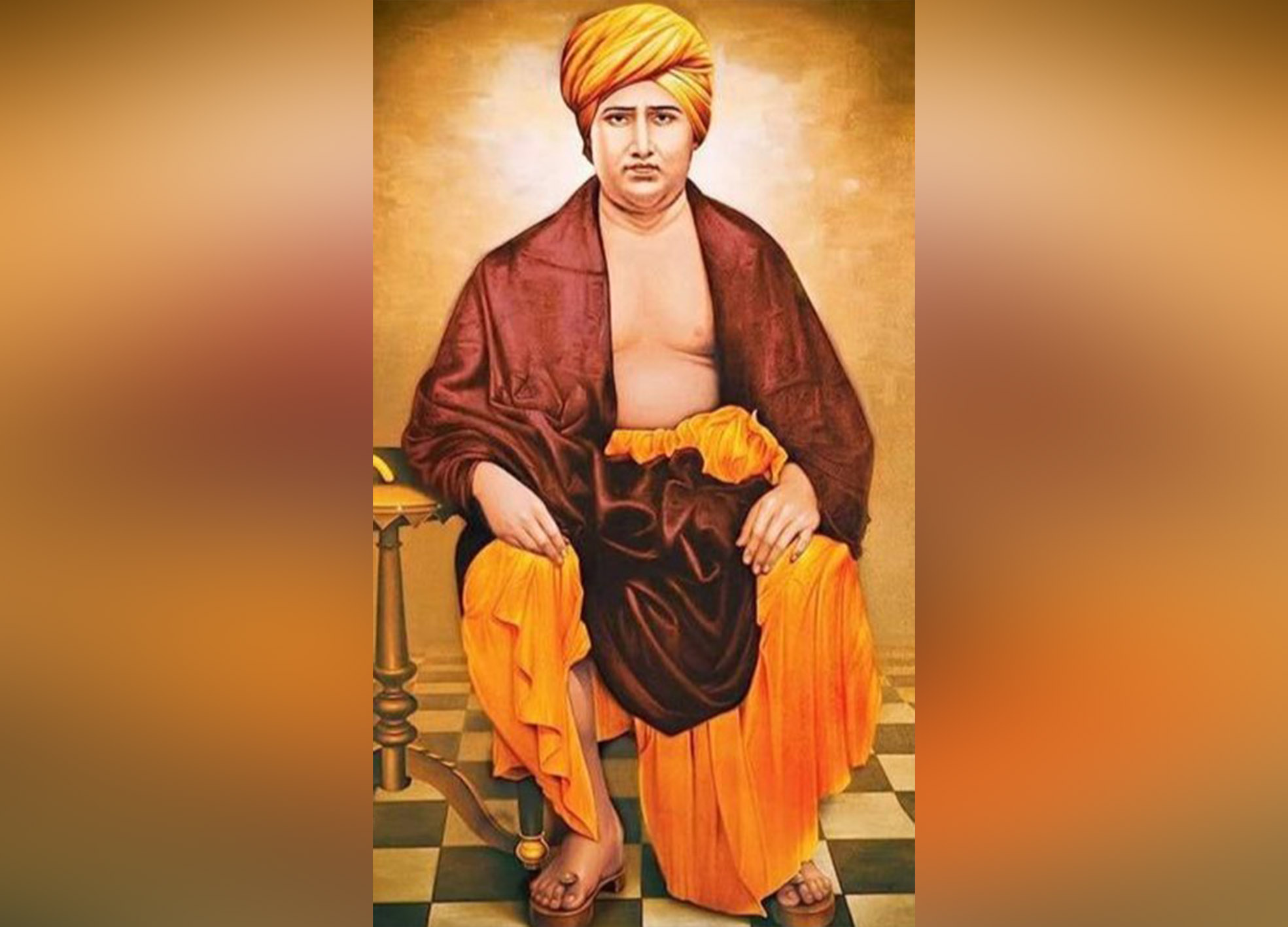
In the vast continuum of India’s intellectual and spiritual evolution, certain figures emerge whose lives transcend the boundaries of their era and become enduring sources of reflection for generations to come. Maharshi Dayanand Saraswati is one such figure. He is remembered not only as a reformer and a scholar, but as a thinker who combined philosophical depth with a clear commitment to social upliftment. His life represents a continuous pursuit of truth, guided by reason, discipline, and a strong sense of responsibility toward society. His contribution lies not merely in the ideas he articulated, but in the clarity with which he approached fundamental questions about knowledge, belief, and conduct.
Born in 1824 in Tankara in present-day Gujarat, Dayanand Saraswati, originally named Mool Shankar, grew up in a deeply religious household. His early exposure to traditional practices introduced him to structured forms of worship and ritual. However, even in his youth, he demonstrated a tendency to question and seek explanations. Accounts of his early life indicate that he was not content with accepting ideas without understanding their meaning. This inclination toward inquiry gradually shaped his intellectual direction and set him apart from many of his contemporaries. His decision to leave home in search of deeper knowledge marked the beginning of a long period of study and reflection.
During his travels across different parts of India, Dayanand engaged with scholars, ascetics, and teachers from various traditions. These interactions allowed him to study diverse interpretations of philosophy and religion. His search eventually led him to Swami Virajanand in Mathura, under whom he received formal training in Vedic literature and Sanskrit grammar. This phase of disciplined learning had a lasting impact on his thought. It strengthened his conviction that the Vedas should be studied directly and interpreted with clarity, rather than being approached through layers of later commentary without examination.
A defining feature of Dayanand’s intellectual position was his emphasis on the Vedas as foundational texts containing universal knowledge. He held that these texts should be understood through reason and careful analysis. His approach did not reject tradition but sought to interpret it in a manner consistent with logic and ethical principles. This perspective found expression in his major work Satyarth Prakash, first published in 1875, where he addressed a range of religious and social questions. The book presents his views in a structured manner and remains an important source for understanding his philosophy.
In 1875, Dayanand Saraswati founded the Arya Samaj in Bombay (now Mumbai), marking a significant step in translating his ideas into organized action. The Arya Samaj aimed to promote the study of the Vedas and encourage practices aligned with what he considered their original teachings. It also emphasised truth, education, and moral living. Over time, the organisation established educational institutions and became associated with efforts to expand access to learning. Its work contributed to a broader movement focused on social awareness and reform during the late nineteenth and early twentieth centuries.
Education occupied a central place in Dayanand’s thought. He believed that knowledge should not be limited to a specific section of society, but made available to all. In his view, education was essential for developing independent thinking and responsible conduct. He supported the establishment of schools and encouraged learning in both traditional and modern subjects. His views on women’s education were particularly notable for the time, as he emphasized that the development of society required the education of both men and women. This perspective aligned with his broader belief in fairness and social responsibility.
Dayanand Saraswati was also known for participating in public discussions and debates on religious and philosophical issues. These engagements were aimed at clarifying ideas and presenting arguments based on reasoning. His method relied on explanation and interpretation rather than assertion. Through these discussions, he sought to encourage a culture of inquiry and understanding. His participation in such exchanges reflects his confidence in dialogue as a means of examining and refining ideas.
His views on society included an emphasis on evaluating individuals based on their qualities and actions. He spoke about the importance of fairness and ethical standards in social organization. His ideas contributed to conversations on reform and social structure during a time when many thinkers were reflecting on the direction of Indian society under changing circumstances. While his interpretations were specific to his understanding of Vedic principles, they formed part of a wider effort to address social issues through intellectual engagement.
The period in which Dayanand lived was marked by significant transitions, including increased interaction with new systems of education and governance. Within this context, his work represents an attempt to respond to change by revisiting foundational ideas and presenting them in a coherent framework. He neither withdrew from contemporary realities nor accepted them without reflection. Instead, he sought to create a balance between continuity and adaptation, emphasizing that progress should be guided by knowledge and ethical clarity.
He passed away in 1883 in Ajmer, but his ideas continued to influence subsequent generations. The Arya Samaj expanded its activities, particularly in the field of education, through initiatives such as the Dayanand Anglo-Vedic (DAV) institutions. These institutions combined modern education with an emphasis on cultural and ethical values, reflecting aspects of his vision. The continued presence of such institutions indicates the lasting impact of his work.
The relevance of Dayanand Saraswati’s ideas extends into contemporary discussions on education, ethics, and the interpretation of tradition. His emphasis on understanding foundational texts through reason remains significant in contexts where questions of belief and practice are actively explored. His focus on education as a means of empowerment continues to be widely recognized as essential for social development. By encouraging inquiry and responsibility, his approach provides a framework that remains applicable in changing circumstances.
Maharshi Dayanand Saraswati’s personality can thus be understood as a combination of inquiry, discipline, and commitment. He approached knowledge with seriousness, engaged with society with responsibility, and maintained consistency between thought and action. His work reflects a methodical effort to examine ideas and apply them constructively. Rather than presenting definitive answers for all contexts, he encouraged a process of understanding that could adapt to new situations while remaining grounded in principles.
The legacy of Dayanand Saraswati continues to be studied and discussed in various contexts, including education, philosophy, and social thought. His ideas have been interpreted in different ways, but their core emphasis on truth, learning, and responsibility remains consistent. As society continues to evolve, his work offers a perspective that encourages thoughtful engagement with both the past and the present.
The life of Dayanand Saraswati remains an important part of India’s intellectual and social history. It illustrates how a commitment to truth and understanding can shape both individual thought and collective progress. His emphasis on education, ethical conduct, and reasoned interpretation continues to offer guidance, making his legacy both significant and enduring.
(The author is President of Arya Samaj Dayanand Marg, City Chowk, Jammu)
 Follow our WhatsApp channel
