

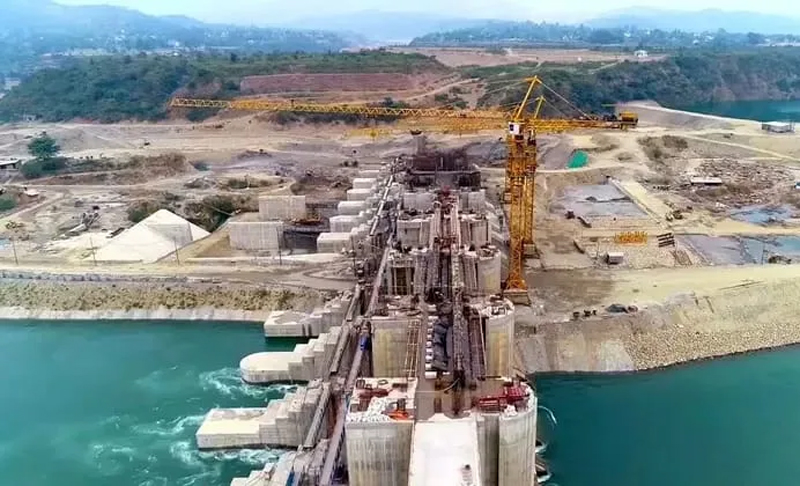
The recharging of the Main Ravi Canal with waters from the Shahpur-Kandi dam after more than four decades is not merely an engineering milestone – it is a moment of long-overdue justice for the farmers, communities, and aspirations of the Jammu division, and particularly the historically underserved Kandi belt. For a region that has watched decades slip by in the shadow of interstate wrangling, bureaucratic inertia, and incomplete projects, the sight of water flowing through those reinforced channels carries a weight that statistics alone cannot capture. The human cost of delay has been enormous. The Kandi region – that vast semi-arid tract stretching across Rajbagh, Marheen, Hiranagar, Samba, Vijaypur and beyond – has long suffered from the cruel paradox of being geographically proximate to a major river system yet chronically starved of irrigation. Generations of farmers have lived at the mercy of erratic monsoons and expensive lift irrigation, their potential locked behind a project held hostage to the Punjab-J&K water dispute. Every season of delay was a season of lost income, stunted growth, and broken livelihoods.
Credit must be given where it is due. The Jal Shakti Department’s decisive intervention – strengthening 25 vulnerable points along the canal corridor under the UT Capex programme, enabling the initial discharge of 200 cusecs – demonstrates what focused administrative will can accomplish. The projected saving of Rs 75 lakh per month in electricity costs alone vindicates the shift from energy-intensive lift schemes to gravity-fed irrigation. More importantly, the department’s forward-looking posture – with a DPR before the Central Water Commission for full-capacity restoration – signals that this is a beginning, not a conclusion.
The broader context also demands attention. With the Indus Waters Treaty now in abeyance, India has both the compulsion and the moral mandate to ensure that not a single drop of its entitled river waters flows unutilised into the sea. The Ravi’s waters, historically constrained by treaty provisions, must now be maximised for the benefit of J&K and Punjab alike. This is precisely where greater bilateral cooperation between the two regions becomes imperative. What political disputes denied for decades, practical collaboration can now deliver – shared canal infrastructure, coordinated water management, and mutual agricultural prosperity.
 Follow our WhatsApp channel
