

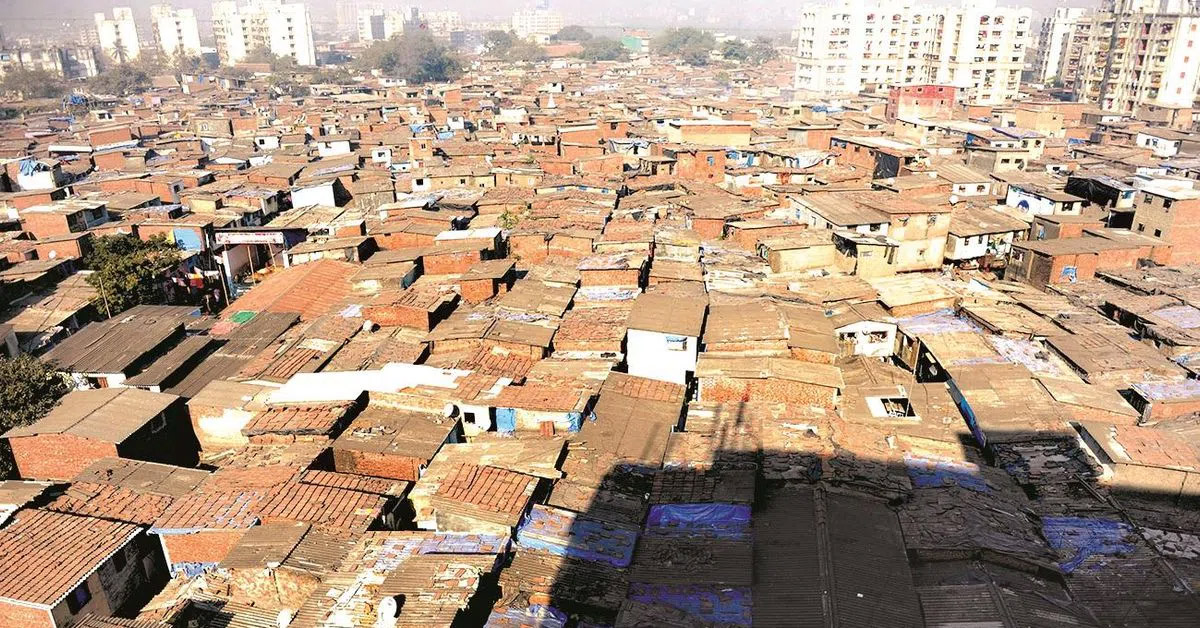
MUMBAI, May 3: Eligibility for upper-floor residents under the Dharavi Redevelopment Project (DRP) is contingent in part on the status of ground-floor occupants, with affidavits accepted only if the lower unit qualifies, officials said.
A Government resolution dated October 4, 2024, extends benefits to upper-floor residents who can prove occupancy before a November 15, 2022, cut-off, offering 300 sq ft homes outside Dharavi but within the Mumbai Metropolitan Region. Beneficiaries can opt for a hire-purchase model, paying nominal rent for 25 years before ownership transfers, or choose early ownership by paying a pre-approved sum.
Officials said the policy marks a departure from past slum rehabilitation schemes, which typically excluded upper-floor occupants.
Eligibility is determined through a hierarchy of documents, including electricity bills, registered rent or purchase agreements, and government-issued IDs showing the upper-floor address prior to the cut-off date.
Affidavits – classified as the lowest priority – require certification from an eligible ground-floor resident. If the ground-floor household is disqualified, upper-floor applicants relying on affidavits will also be ineligible, officials said.
“An affidavit will not be considered in such cases,” a DRP official said, adding that a majority of upper-floor applicants are currently applying under this category, indicating limited availability of higher-priority documents.
The project has also received claims involving multiple units on a single upper floor. Officials clarified that each unit must submit separate documentation under higher-priority categories, or collectively file as a single unit under the affidavit provision, subject to ground-floor certification.
The policy allows one home per family and bars multiple claims from spouses or children. Applicants who already own property under other housing schemes in the Mumbai Metropolitan Region are not eligible, the resolution states.
The Dharavi Redevelopment Project is doing what no slum rehabilitation scheme in India has done before, offering homes to upper-floor residents. But whether an upper-floor family gets a home depends, in part, on whether the family living on the ground floor is eligible.
The Dharavi redevelopment project is setting a precedent by including these unit holders, making this the most humane and inclusive urban renewal project of all time, the official added.
Eligibility rests on documentation. The family head must prove upper-floor residency before the cut-off through documents submitted in a priority order as laid out in the October 4, 2024, government resolution (GR).
At the top of the priority list is the electricity bill in the family head’s name, showing the upper-floor address, one dated before the cut-off and one recent.
This is followed by registered rent agreement citing the upper-floor address, one pre-cut-off and one recent, and registered purchase agreement with the upper-floor address plus a notarised consent letter, one pre-cut-off and one recent.
Aadhaar, passport, ration card, driving licence, or voter ID showing the upper-floor address before the cut-off will be at priority no. 4.
At No. 5 will be an affidavit from the upper-floor family head, backed by certification from the eligible ground-floor family head.
Priority 5 is where the ground-floor link comes into play. If the ground-floor unit holder fails to prove his own eligibility and gets disqualified, the affidavit route to own a home closes for the upper-floor resident too.
“An affidavit will not be considered in such a case,” the DRP official said.
He further added that most upper-floor residents are providing affidavits (under Priority 5), which indicates that they do not have any document from Priority 1 to 4, as mentioned in the GR.
The DRP has also received documents from multiple huts on a single upper floor unit mentioned as F1/1 and F1/2.
Clarifying the issue, the DRP official said, “As per the GR of Oct 4, 2024, if there are multiple units on any slum upper-floor structure, the HOH for each such unit must submit documents under Priority 1-4.
“However, if they consider all such units as one single unit, then they can submit documents under Priority-5, which is an affidavit declaring their floor number and time of residency duly certified by the eligible ground-floor resident.”
The GR makes it clear that there would be one house per family, and spouses and children cannot file separate claims for homes. Anyone already holding property under another scheme in the Mumbai Metropolitan Region will not be considered under the Dharavi rehabilitation project scheme. (PTI)
 Follow our WhatsApp channel
