

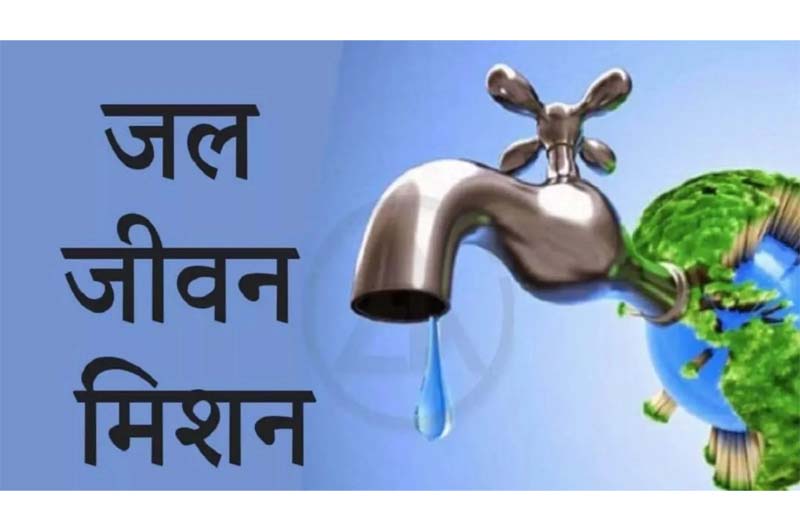
The Jal Jeevan Mission, launched by Prime Minister in 2019, was envisioned as a transformative step toward ensuring that every rural household in India receives safe and adequate drinking water through tap connections. More than six years later, while 11 States and Union Territories have achieved the coveted 100% coverage, J&K continues to lag behind with only 81% of households connected. The recent extension of the deadline to December 2028, announced after the Central Government acknowledged delays and funding constraints, is a stark reminder of how bureaucratic inertia and administrative inefficiencies can derail even the most ambitious welfare schemes.
The UT’s performance is particularly disappointing given the initial target of 2024. The Central Government’s decision to extend the deadline by nearly four years underscores the magnitude of the challenges confronting the Jal Shakti Department in J&K. The revelation in the Assembly that over Rs 6,254 crore are still required to complete ongoing schemes paints a grim picture of both fiscal and managerial shortcomings. The delay in the release of central grants under the Centrally Sponsored Scheme and Union Territory Sector has created a huge backlog of payments to contractors, leading to an abrupt halt in on-ground work. Many contractors, faced with unpaid bills and uncertain project timelines, have withdrawn machinery and labour, further exacerbating delays.
However, funding is only part of the problem. The uneven performance across districts indicates deeper structural and administrative deficiencies. While Srinagar and Ganderbal have achieved 100% coverage, emerging as models of effective implementation, districts such as Jammu (66%), Rajouri (67%), Samba (69%) and Kathua (74%) continue to languish at the bottom. Jammu district’s performance, in particular, is a matter of grave concern. Being the administrative and infrastructural hub of the region, it can offer no valid excuse for its poor showing. The lack of accountability, poor project supervision and sluggish pace of tender finalisation have clearly undermined progress.
The JJM is not just about installing pipes and taps-it is about securing a fundamental human necessity. In many areas, especially in the Kandi belt and hilly terrains, tap water remains a distant dream. These regions experience severe water scarcity during summer months, forcing residents-mostly women-to search for drinking water. The failure to ensure the timely completion of JJM projects in such areas is not merely a developmental shortfall; it is a social injustice. Another pressing issue is that installation alone does not guarantee a sustainable water supply. Many of the existing schemes face operational challenges, including low water pressure, inadequate source sustainability, and irregular electricity supply, affecting pumping operations. Without addressing these core logistical and technical issues, the dream of “Har Ghar Jal” will remain incomplete even after physical infrastructure is laid down. The Jal Shakti Department must therefore go beyond pipe-laying and focus equally on ensuring year-round water availability, especially in areas dependent on seasonal sources.
The Rs 6,254 crore still required for completing the mission in J&K should be seen not merely as an expense but as an essential investment in public health, dignity and equity. The funds must be released in a phased and time-bound manner, ensuring that payments to contractors and vendors are streamlined. At the same time, implementing departments must maintain monthly progress reports, identifying bottlenecks and fixing accountability wherever lapses occur. The absence of a robust monitoring mechanism has allowed inefficiency to go unchecked for far too long.
The JJM is being closely monitored at the national level, and the fact that J&K remains nearly 19% short of universal coverage does not reflect well on administrative coordination. All departments-from the Jal Shakti and Rural Development to the Planning and Finance wings-must now work in complete synergy. District administrations, too, need to take ownership rather than treating the mission as just another scheme. As J&K enters the extended phase of JJM, urgency and accountability must define the next three years. Only with transparent fund flow, strong monitoring, and a sense of urgency can J&K hope to turn its tap water dream into reality by December 2028. Completion before the set time should be the mission now.
 Follow our WhatsApp channel
