

Excelsior Correspondent
LEH, Aug 13: Lieutenant Governor of Ladakh, Kavinder Gupta, has laid out an ambitious roadmap to make Ladakh self-reliant and environmentally sustainable, with a strong focus on expanding polycarbonate greenhouses under the award-winning Ladakh Greenhouse Project.
This flagship initiative, which earned the Prime Minister’s Award for Excellence in Public Administration (Innovation State Category) in April 2022, is aimed at ensuring round-the-year local vegetable production, especially during Ladakh’s severe winter months, thereby cutting dependency on imports from other states.
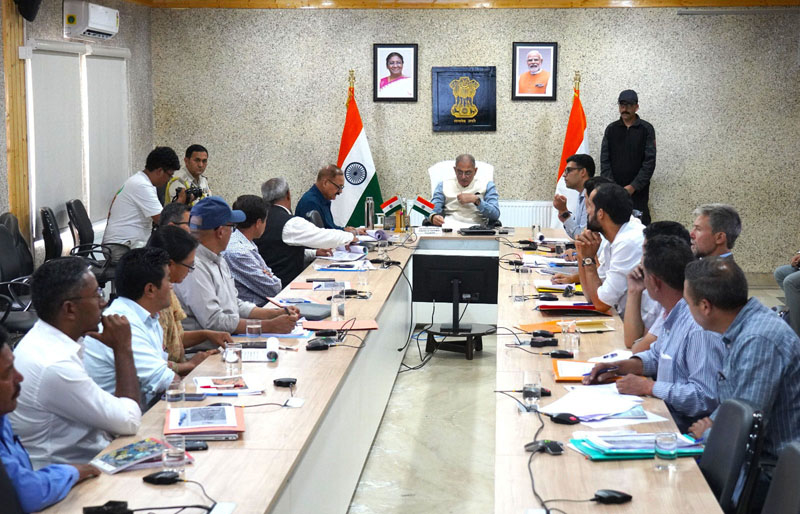
Chairing a high-level review meeting at the LG Secretariat, Kavinder meticulously assessed the progress and implementation of key schemes and projects in Industries & Commerce, Handicraft/Handloom, Geology & Mining, Animal Husbandry & Fisheries, Sheep Husbandry, Horticulture, Agriculture, Cooperative, Transport and Motor Garages Departments.
Administrative Secretary, Rudra Goud PT, briefed the LG on ongoing and upcoming projects, major initiatives, policies, manpower status and challenges. Special emphasis was placed on the promotion of world-famous Pashmina wool and welfare measures for Changthang nomads.
In the post-lunch session, Administrative Secretary, Bhupesh Chaudhary, presented updates on Horticulture, Agriculture, Cooperatives, Transport and Motor Garages Departments, including their 100-day action plans and key challenges.
The LG directed urgent upgradation of existing pashmina kid pens to achieve zero mortality during harsh winters and called for promoting camel milk as a high-value, health-beneficial product. He also instructed a comprehensive dog population census followed by targeted sterilization drives.
Highlighting the economic potential of sea buckthorn, the LG urged commercial plantations along the Indus banks and the adoption of advanced processing and packaging methods for dried apricots to fetch higher returns for growers.
Pushing forward PM Narendra Modi’s vision of a carbon-neutral Ladakh, he emphasized the installation of EV charging stations at intervals of 30 km to accelerate e-vehicle adoption.
 Follow our WhatsApp channel
