

Dr. Shivani Ranjan, Dr. Devraj Dogra
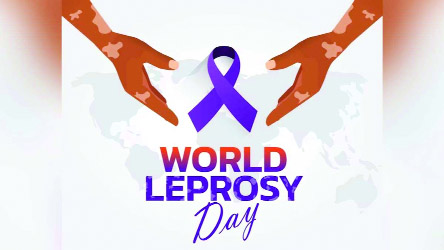
The first World Leprosy Day was observed in 1954 by French philanthropist Raoul Follereau, who dedicated his life to helping those affected by leprosy. World Leprosy Day is observed on the last Sunday of January, every year. This international day is an opportunity to celebrate people who have experienced leprosy, raise awareness of the disease, and call for an end to leprosy-related stigma and discrimination.
In India, World Leprosy Day is celebrated on 30 January, marking the death anniversary of Mahatma Gandhi Ji. Mahatma Gandhi Ji was a firm believer in treating all individuals with dignity and respect, regardless of their illness or status in society. He was deeply moved by the plight of those affected by leprosy and worked towards improving their living conditions and providing them with better healthcare. He believed that every individual has the right to a life of dignity and actively promoted this message through his work.
Leprosy is a neglected tropical disease (NTD) which still occurs in more than 120 countries, with more than 200 000 new cases reported every year, indicating an ongoing concern in the field of public health. Leprosy, also known as Hansen’s disease, is a chronic infectious disease caused by a type of bacteria called Mycobacterium leprae. The disease affects the skin, the peripheral nerves, mucosal surfaces of the upper respiratory tract and the eyes leading to disfiguring skin lesions, nerve damage, disabilities of hands, feet and eyes. It can affect all ages ranging from early childhood to old age. It is not inherited, but it is transmitted via droplets, from the nose and mouth, during close and frequent contact with untreated cases. The disease is highly stigmatized and has a long history of discrimination and social exclusion mainly due to the occurrence of deformities of hands, feet and eyes in its later stages.
Leprosy is curable and treatment during early stages can prevent disability. The currently recommended treatment regimen consists of three drugs: dapsone, rifampicin and clofazimine. The combination is referred to as multi-drug therapy (MDT).MDT has been made available through the World Health Organization (WHO) free of cost to all patients worldwide since 1995.
According to the WHO, most countries with high rates of new leprosy cases are in the African and South-East Asia Regions. India has achieved the elimination of leprosy as a public health problem as per WHO criteria of less than 1 case per 10,000 population at the National level in 2005. Leprosy is endemic in several states and union territories of India.
India achieved Elimination of Leprosy status (Number of cases<1/10,000 population in December 2005. This is a major success story, considering that prevalence of leprosy in March 1981 was 57 cases/10,000 population, which has been brought down to 0.72/10,000 in March 2007. The current prevalence rate of leprosy is 0.4 per 10,000 population in the country.
WHO has released the ‘towards zero leprosy: strategy 2021-2030′ aligned with other neglected tropical diseases road map 2021-2030. This strategy aims for a vision of zero leprosy: zero infection and disease, zero disability, zero stigma and discrimination and the elimination of leprosy (defined as interruption of transmission) as its goal. The Global Partnership for Zero Leprosy is a coalition of individuals and organizations committed to ending leprosy.
National Strategic Plan (NSP) & Roadmap for Leprosy (2023-27) : It is launched to achieve zero transmission of leprosy by 2027 i.e. three years before the Sustainable Development Goal (SDG) 3.3. The NSP and Roadmap contains implementation strategies, year-wise targets, public health approaches and overall technical guidance for the programme. The strategy and roadmap focuses on awareness for zero stigma & discrimination, promotion of early case detection, prevention of disease transmission by prophylaxis (Leprosy Post Exposure Prophylaxis) and roll out of web-based information portal (Nikusth 2.0) for reporting of leprosy cases.
SDG 3.3, as defined by WHO, aims to end the epidemics of AIDS, tuberculosis, malaria and neglected tropical diseases and combat hepatitis, water-borne diseases and other communicable diseases by 2030.
National Leprosy Eradication Programme (NLEP) is a centrally sponsored health scheme introduced in 1983 and it has been implemented with the major objective of reducing the disease burden, prevention of disability and improving awareness among the masses about Leprosy and its curability.
The theme for World Leprosy Day 2025 is “Unite. Act. Eliminate.”. The theme is a call to action aiming to raise awareness of leprosy, highlight the challenges faced by persons affected by leprosy, and inspire collaborative action to eliminate leprosy.
Global Commitment (“Unite”): Eliminating leprosy requires a concerted effort from all stakeholders, including governments, healthcare providers, NGOs, communities and individuals.
Immediate Action (“Act”): Proactive measures, including public education, early diagnosis, prevention programs, prompt treatment, and empowering persons affected by leprosy, are essential to interrupt transmission and eliminate the disease.
A Clear Goal (“Eliminate Leprosy”): Eliminating the disease – the World Health Organizations’ global goal – is achievable with sustained commitment. Current medical interventions and collaborative efforts have brought us closer, but continued investment in diagnostics, innovative treatments, and outreach is essential.
The campaign can also leverage the momentum of World Neglected Tropical Disease Day to raise awareness of leprosy as a neglected tropical disease and garner additional support.
World Leprosy Day is an important event that brings together health experts, community leaders, and legislators to advocate for and take action towards eradicating the illness. This is a day dedicated to commemorating the ongoing challenges in the fight against leprosy and to reinvigorate endeavors towards reaching a world free from leprosy.
A Vision for the Future
As we observe World Leprosy Day in 2025, we envision a world in which leprosy ceases to be a public health issue and those impacted by this condition can lead lives of respect and acceptance, free from discrimination. Through the continuation of our cooperative endeavors and the provision of assistance to global alliances, we can work towards the complete elimination of leprosy and the attainment of equal access to healthcare for everyone. Participate in commemorating this momentous occasion and progressing towards a global society devoid of leprosy.
(Dr. Shivani Ranjan, Asstt. Prof. and Dr. Devraj Dogra, Prof. & HOD, Deptt. Of Dermatology, GMC, Jammu)
 Follow our WhatsApp channel
