

Dr.Mandeep Kaur
dr_mandeep_kaur@yahoo.com
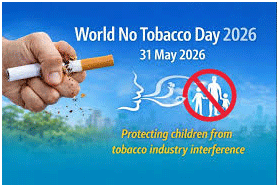
Each year on 31st May, World No Tobacco Day unites governments, health organizations, civil society, and youth voices under a shared mission: to end the tobacco epidemic and secure a tobacco- and nicotine-free future for the next generation. Theme for World No Tobacco Day 2026 is “Unmasking the appeal – countering nicotine and tobacco addiction.
The theme is built around a stark reality: despite decades of progress in reducing traditional tobacco use, the tobacco and nicotine industry has engineered a resurgence. It has done so not by defending cigarettes, but by creating an entirely new product category designed to appear modern, harmless, and even desirable. E-cigarettes come in hundreds of fruit and candy flavours. Nicotine pouches are marketed as clean, discreet, and smoke-free. The industry spends billions ensuring these products reach young people through social media influencers, gaming platforms, and digital advertising channels that traditional tobacco regulations do not cover.
The consequences are measurable. At least 40 million children aged 13 to 15 globally currently use at least one tobacco product, and the nicotine in many new-generation products is deliberately formulated to be more rapidly absorbed and more addictive than traditional cigarettes. These are not safer alternatives.
The 2026 campaign calls on governments, healthcare providers, and civil society to take the following actions:
- Strengthen regulation of new and emerging nicotine products, including e-cigarettes and nicotine pouches
- Ban flavours, digital advertising, and promotional packaging that target young people
- Close policy gaps that allow new products to evade existing tobacco control frameworks
- Invest in evidence-based cessation support that addresses nicotine addiction in all its forms
- Empower young people with the knowledge and tools to recognise and resist industry manipulation
Tobacco’s harm to the human body operates through multiple overlapping biological mechanisms. Tobacco smoke contains more than 4,000 chemicals, of which at least 70 are established carcinogens. When these compounds enter the body, through inhalation, ingestion, or mucosal absorption, they damage the DNA of healthy cells, disrupt normal cellular repair mechanisms, promote chronic inflammation, and over time create the conditions in which malignant transformation occurs. The International Agency for Research on Cancer (IARC) has established sufficient evidence that tobacco smoking causes cancer of the lung, oral cavity, nasopharynx, larynx, oesophagus, stomach, pancreas, liver, kidney, urinary bladder, uterine cervix, and bone marrow.
Major non-cancerous consequences of tobacco use are Chronic Obstructive Pulmonary Disease, Cardiovascular Disease and Heart Disease, stroke, Peripheral artery disease, Diabetes, Tuberculosis and may influence reproductive health.
Warning Signs of Tobacco-Related Illness
- Persistent cough or breathlessness that does not resolve with standard treatment
- Hoarseness lasting more than three weeks
- Difficulty swallowing or speaking
- Oral lesions including white, red patches restricted mouth opening and non-healing ulcers
- Chest pain or tightness
- Persistent fatigue and poor exercise tolerance
- Frequent respiratory infections
Why People Use Tobacco
Nicotine Addiction
Marketing and Media Exposure
Peer Pressure and Social Influence
Mental Health and Stress
How to Quit Tobacco
Nicotine Replacement Therapy (NRT)
NRT delivers controlled amounts of nicotine without the toxic compounds in tobacco smoke or smokeless products. Available forms include nicotine patches, gums, lozenges, inhalers, and nasal sprays. NRT reduces withdrawal symptoms, and eases cravings.
Prescription Medications
Medications have the strongest evidence base for tobacco cessation which acts on nicotine receptors in the brain, reducing both the pleasure of tobacco use and the discomfort of withdrawal. They require a doctor’s prescription and clinical supervision.
Behavioural Counselling and Support Groups
Behavioural counselling addresses the psychological and situational triggers of tobacco use – the moments, emotions, and social contexts that drive the urge to smoke or chew tobacco. Individual counselling, group therapy, and structured cessation programmes all improve outcomes. .
Quitlines and Mobile Applications
India’s National Tobacco Quitline (1800-112-356) provides free counselling support. Several evidence-informed mobile applications offer structured cessation programmes, progress tracking and craving management tools. For individuals in regions with limited access to cessation clinics, digital support represents a meaningful resource.
Lifestyle Modifications
Regular physical activity reduces nicotine cravings by releasing endorphins and reducing stress. Avoiding triggers, environments, social situations, or emotional states associated with tobacco use. Adequate sleep, reduced alcohol intake, and stress management support the cessation process.
On 31st May, global effort is made to save lives and defend health. Smokers are encouraged to quit this habit and people are reminded that their support can make a big difference.
 Follow our WhatsApp channel
