

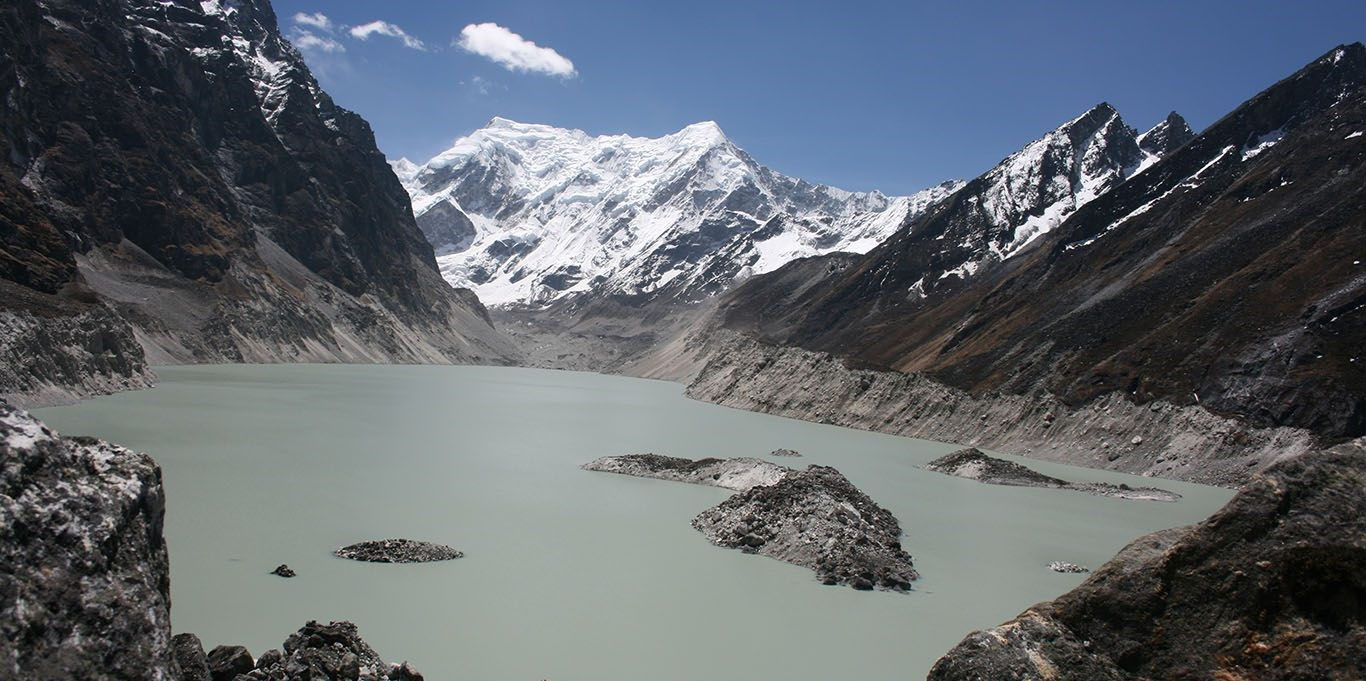
DEHRADUN, May 5: The Uttarakhand Government is going to establish advanced early warning and real-time monitoring systems at sensitive glacial lakes to mitigate the risk of outburst floods, officials said on Tuesday.
They said that the Wadia Institute of Himalayan Geology (WIHG) is developing Vasundhara Lake as a pilot site for these high-tech systems.
The model will eventually be replicated at other vulnerable glacial lakes in the state to strengthen scientific disaster management.
Chief Secretary Anand Bardhan directed WIHG to submit a detailed timeline for proposed activities through 2028. He emphasised the need for structural interventions, including controlled water drainage and lowering lake levels to prevent disasters.
Secretary of Disaster Management and Rehabilitation Vinod Kumar Suman said 169 sensors and 112 sirens are currently operational under the state’s earthquake early warning network.
An MoU signed with IIT Roorkee in February 2026 ensures the maintenance of this system through the current year.
The State Government plans to deploy 500 additional strong-motion sensors in seismically sensitive zones. To enhance alert dissemination, 526 new sirens, including 500 indigenous units, are slated for installation.
New permanent seismological observatories are also proposed in eight locations, including Roorkee, Kedarnath, and Karanprayag. The expansion aims to bolster the existing network managed by the National Centre for Seismology, the officials said.
Regarding landslide risks, authorities have identified 48 sensitive debris flow locations in Chamoli, Uttarkashi, and Pithoragarh districts. These sites, located primarily near drainage channels, have been categorised by risk level for prioritised preventive work.
A committee of technical institutions, including the Geological Survey of India and the Central Building Research Institute, is overseeing the risk assessment. (PTI)
 Follow our WhatsApp channel
