

By Ewa Fronczak
(Expert, Centre Foe International Relations)
Will the escalating tensions involving Iran disrupt the implementation of the landmark US–Saudi agreement on rare earth elements? The question is far from academic. Access to these materials—especially heavy rare earths—is vital for the United States to maintain its technological and military superiority at a time when China dominates global supply chains.
Beijing’s tightening of export controls in 2025 exposed the fragility of US dependence. Rare earth elements are indispensable for advanced defence systems, including the F-35 fighter jet, Virginia- and Columbia-class submarines, Tomahawk missiles, and radar technologies. An F-35 alone requires approximately 410 kg of rare earths; a Virginia-class submarine needs up to 4,100 kg. These figures illustrate the scale at which supply disruptions could affect American military readiness.
The US led global production until the mid-1990s, when China overtook competitors through aggressive industrial policy and cost advantages. According to the Council on Foreign Relations, the US remains fully dependent on imports for several critical minerals and significantly reliant on many more. By 2030, its share of the global market may fall below 2%, while China’s could reach 31%. It was in response to this imbalance that Donald Trump initiated policies aimed at reviving domestic capacity and diversifying supply chains.
Saudi Arabia’s Strategic Pivot
For Saudi Arabia, rare earth development is central to the economic transformation envisioned under Vision 2030, led by Crown Prince Mohammed bin Salman. The Kingdom is rapidly repositioning mining as a pillar of economic diversification, reducing dependence on oil revenues.
Progress has been swift. Exploration investment exceeded $140 million in 2024, while the number of mining licenses surged from 224 in 2015 to over 800 by 2023. The estimated value of Saudi mineral reserves has nearly doubled—from $1.3 trillion in 2016 to $2.5 trillion in 2024—driven by the discovery and prioritization of high-value resources, including rare earth elements. Riyadh aims to become one of the world’s top seven mineral processors by 2030, a shift that could significantly reshape global supply chains and reduce China’s dominance.
A Strategic Convergence
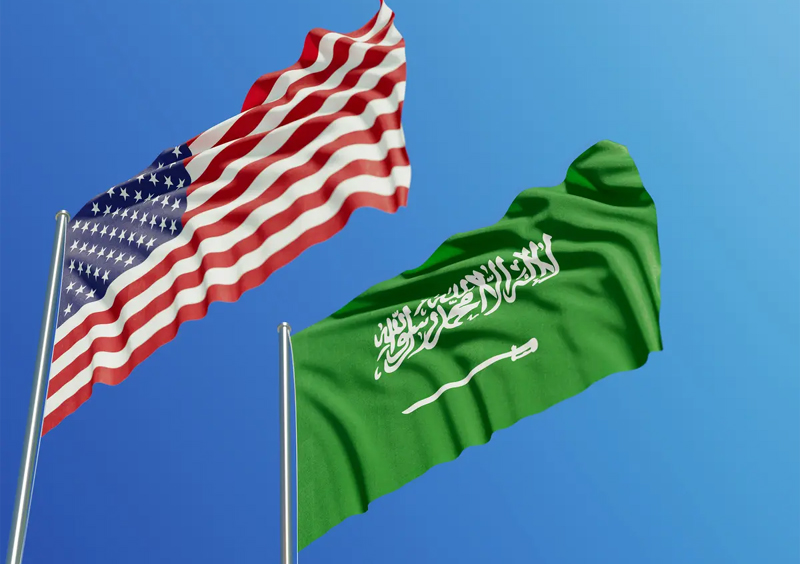
This convergence of American need and Saudi ambition culminated in a significant agreement on November 19, 2025. MP Materials partnered with the US government and Saudi Arabian Mining Company to establish the Middle East’s first rare earth processing facility.
The joint venture reflects a careful balance of interests: MP Materials and the US will hold up to 49% equity, while Maaden retains at least 51%. The arrangement combines American expertise in separation and refining with Saudi Arabia’s structural advantages—low-cost energy, modern infrastructure, and substantial untapped reserves.
Among these reserves, the Jabal Sayid deposit stands out as one of the world’s most valuable, with significant quantities of both heavy and light rare earth elements. Until domestic extraction scales up, the planned facility is expected to process imported ore, including supplies from Brazil, which holds the largest reserves outside China.
Capabilities and Structural Advantages
MP Materials is currently the only fully integrated rare earth producer in the US, operating the historic Mountain Pass mine. Once the global leader, the site closed in 2002 due to environmental issues and competitive pressure from China—a decision now widely regarded as a strategic error. Today, Mountain Pass accounts for about 15% of global production, and the company is investing over $1 billion to expand capacity and rebuild domestic supply chains.
Maaden, by contrast, represents the scale and ambition of Saudi Arabia’s mining sector. With revenues of $8.7 billion in 2024, it is among the fastest-growing mining companies globally. Its investments span phosphates, gold, and fertilizers, including major partnerships with international firms such as Mosaic and SABIC.
Saudi Arabia’s comparative advantage lies in energy and regulation. Rare earth processing is highly energy-intensive—requiring up to 13 times more energy than extraction—yet the Kingdom’s abundant and low-cost energy resources provide a decisive edge. Equally important is its regulatory efficiency: mining permits can be secured within 180 days, compared to 7–10 years in the US.
Geography further strengthens Saudi Arabia’s position. Situated close to mineral-rich African countries such as Malawi, Namibia, South Africa, and Uganda, the Kingdom is well placed to become a global processing hub, bridging the gap between resource extraction and industrial demand.
Geopolitical Uncertainty
Despite strong economic logic, the agreement faces geopolitical headwinds. The recent escalation involving the US and Israel against Iran—raising concerns about instability in the Strait of Hormuz—has complicated efforts to build an integrated supply chain.
The deal is fundamentally geopolitical. For Washington, it is a strategic move to reduce dependence on Chinese-controlled supply chains and mitigate vulnerabilities in critical industries. For Riyadh, however, the approach is more pragmatic and less binary.
Saudi Arabia has shown little inclination to align exclusively with any single power. Instead, it is pursuing a strategy of diversification, maintaining economic and technological ties with both the US and China. Had Washington refused to share technology, Riyadh could easily have turned to Beijing. The US objective, therefore, is not to exclude China entirely but to secure a meaningful share in Saudi Arabia’s expanding mineral economy.
Strategic Autonomy & Regional Dynamics
The broader regional context reinforces this trend. Gulf states are increasingly reassessing their security and economic partnerships amid perceptions of inconsistent US policy. Saudi Arabia’s recent agreement with Ukraine on drone defence cooperation reflects a willingness to diversify strategic relationships beyond traditional alliances.
This approach is not a departure from cooperation with the US but a recalibration. By investing in advanced defence technologies and expanding economic partnerships, Riyadh is seeking to reduce vulnerabilities and enhance strategic autonomy.
The rare earth agreement fits squarely within this framework. It allows Saudi Arabia to develop a high-value industrial sector while positioning itself as a key node in global supply chains. At the same time, it provides the US with a critical alternative to Chinese dominance, even if only partially.
In sum, the future of the US–Saudi rare earth partnership will depend on both geopolitical stability and sustained mutual interest. The ongoing tensions in the Gulf may delay implementation, but they are unlikely to derail the agreement entirely.
If anything, instability may reinforce the underlying logic of the deal. For the US, diversifying supply chains is no longer optional but imperative. For Saudi Arabia, economic diversification and strategic autonomy are central to long-term national objectives.
Even if Washington’s role as the primary security guarantor in the Gulf evolves, its economic and technological relevance is likely to endure. The rare earth partnership reflects a convergence of interests that transcends short-term disruptions. Ultimately, this is not merely a commercial arrangement but a strategic alignment shaped by necessity, competition, and a rapidly changing global order.—INFA
 Follow our WhatsApp channel
