

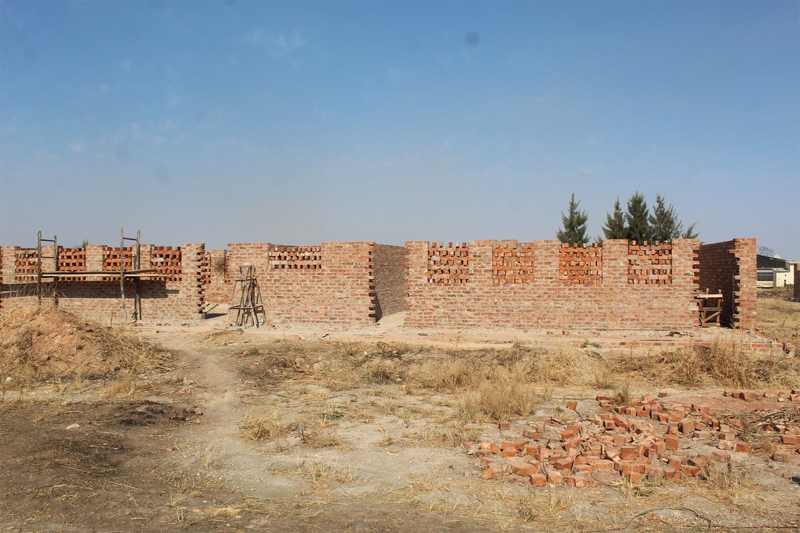
Rules framed last year to bring order to construction activity in rural Jammu & Kashmir went largely unnoticed – until the High Court took a hard look and found them wanting in critical ways. In a pointed judgement, the Division Bench has done what the administration singularly failed to do: ask the hard questions. What use is a set of rules when the institution tasked with enforcing them possesses neither the manpower, the infrastructure, nor the statutory authority to do so? The court’s observations ought to serve as an urgent wake-up call to the Government. The common notion that J&K’s villages are idyllic, slow-moving settlements where construction is self-regulated by generations of custom and tradition is, frankly, obsolete. The ground reality could scarcely be more different. Srinagar and Jammu – already bursting at their administrative seams – are expanding outward with a ferocity that no master plan has adequately anticipated. The cities are full; the peripheries are the new frontier. Villages that once lay at a comfortable distance from the urban sprawl now find themselves swallowed whole, transformed almost overnight into colonies of multi-storeyed structures, commercial establishments, and housing developments. The same story, with local variations, repeats itself across every town of consequence in the Union Territory.
Into this dynamic, the Halqa Panchayats have been thrust-theoretically empowered, practically helpless. The High Court has been unambiguous in its assessment of this contradiction. Halqa Panchayats are not authorised under the existing Panchayati Raj Act to frame building bye-laws for individual constructions, nor are they equipped to prepare zonal or development plans. They have no enforcement machinery, no technical cadre of engineers or planners, and no mechanism to compel compliance. They can, at best, earmark broad zones – residential here, commercial there – but they possess no legal instrument to stop a builder from flouting every norm within those zones. The result, as one sees in village after expanding village, is a free-for-all: construction that proceeds according to individual convenience, with little regard for shared infrastructure, future sewage requirements, road widths, or basic civic amenity.
Compounding this vacuum is the problem of legislative overlap. The Development Act, the J&K Municipal Act 2000, the Municipal Corporation Act 2000, and the Panchayati Raj Act 1989 all occupy the same regulatory space in different, often contradictory ways. The court has rightly pointed out that Section 54 of the Development Act requires fresh amendment to exclude the applicability of inconsistent provisions in overlapping legislation. Where three or four laws claim jurisdiction, the practical outcome on the ground is that none is followed with any rigour. Worse, the ambiguity is actively exploited by builders who play one authority against another and by vested interests that understand that legal grey zones are highly profitable. Litigation, predictably, proliferates. Courts become the de facto planning authority by default, which is precisely where they should not have to be.
The solution the High Court has gestured towards is not complex in principle. The Panchayati Raj Act must be revisited and strengthened with provisions analogous to those in the Municipal Corporation Act-granting Halqa Panchayats genuine regulatory authority over construction within their jurisdictions, backed by qualified personnel and enforcement mechanisms. Simultaneously, Section 54 of the Development Act must be amended to draw clear, unambiguous lines of authority between municipal bodies and panchayats, eliminating overlapping provisions that currently create confusion and invite abuse. A single, clear chain of command – with technical capacity at the panchayat level – is not a luxury; it is the minimum condition for any meaningful enforcement.
Every month of inaction is a month of irreversible construction. Concrete, once done, does not yield easily to belated regulation. The villages encircling J&K’s cities are being shaped right now – their street widths determined, their drainage futures decided, their density locked in – by the absence of the very authority the law was meant to provide. If the Government does not act swiftly on the High Court’s counsel, it will be bequeathing to the next generation not thriving rural communities but a sprawling archipelago of unplanned, underserved, and ungovernable concrete. The choice, as always, is between the inconvenience of governance today and the catastrophe of ungoverned growth tomorrow.
 Follow our WhatsApp channel
