

Diversifying and Balancing the Growth
Prof Bharti Gupta
bharti.ttm@cujammu.ac.in
The Union Territory of Jammu and Kashmir is uniquely positioned within the complex physiographic framework of the Himalayas, encompassing a multi-tiered mountain system that significantly shapes its environmental and tourism characteristics. The region comprises the Shivalik (Outer Himalayas), the Lesser Himalayas (Himachal), and the Greater Himalayas (Himadri), each contributing distinct geomorphological and tourism attributes. The Shivalik range, forming the outermost foothills particularly across parts of the Jammu division, is characterized by low hills, including areas such as Jammu, Udhampur, and Kathua, which act as important gateways for pilgrimage and transit tourism. Moving inward, the Lesser Himalayas and Pir Panjal ranges host scenic hill destinations like Patnitop and Bhaderwah. The Pir Panjal Range falls within the Lesser Himalayas, but it is often treated as a distinct and prominent sub-range because of its significant geographical, climatic, and cultural role-especially in Jammu and Kashmir. In fact, it acts as a major barrier that separates the Kashmir Valley from the Jammu plains. It influences the climate by blocking monsoon winds and shaping snowfall patterns. It defines important passes and routes like Banihal. The Greater Himalayas define the high-altitude landscapes of the Kashmir Valley with their snow-clad peaks and glaciated terrain. This layered Himalayan structure not only determines climatic variations and ecological diversity but also underpins the spatial distribution and diversity of tourism across both the Jammu and Kashmir divisions.
In the Jammu division, the Himalayan foothills and middle mountain ranges host significant destinations. Pilgrimage tourism forms a major component here, anchored by the globally renowned Vaishno Devi Temple in Katra, which attracts millions of devotees annually and substantially contributes to the regional economy. Beyond pilgrimage, Jammu’s Himalayan landscapes offer a range of scenic and adventure destinations that are increasingly gaining recognition. Places such as Patnitop, Sanasar, and Bhaderwah represent emerging and underexplored tourism hubs characterized by meadows, dense forests, and opportunities for paragliding and trekking. Similarly, regions like Kishtwar, Doda, and Poonch remain largely unexplored, despite possessing immense potential in terms of natural beauty, high-altitude lakes, and cultural richness. These areas, embedded within the Himalayan terrain, offer possibilities for diversifying tourism away from saturated destinations and promoting balanced regional development.
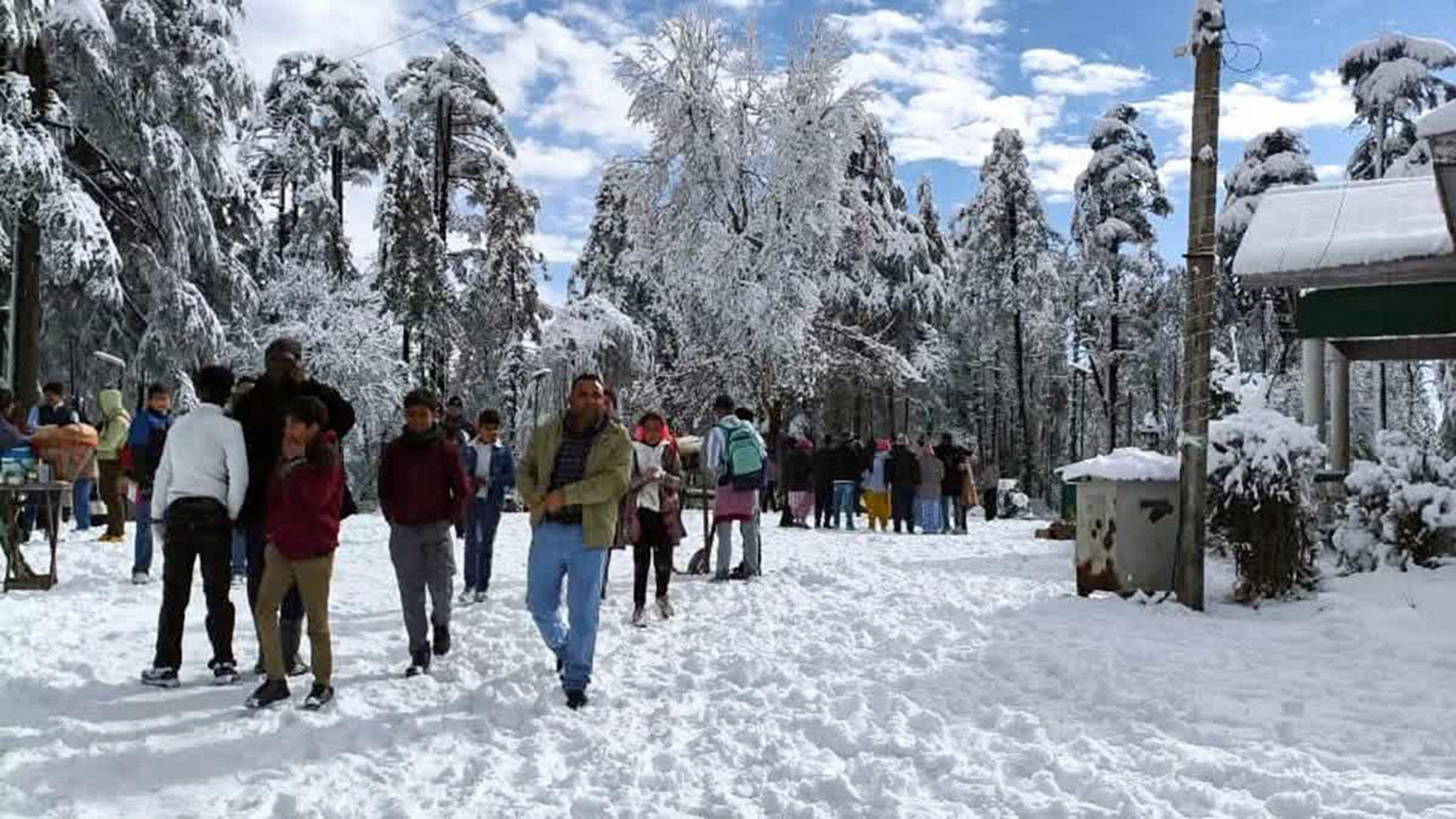
Tourism in the Kashmir division has traditionally dominated the image of the region, with destinations such as Gulmarg, Pahalgam, Sonamarg, and the Kashmir Valley representing well-established and extensively explored tourist circuits. These areas offer a blend of scenic beauty, adventure tourism, and leisure experiences, supported by relatively developed infrastructure. Tourism in Jammu and Kashmir remains heavily concentrated in the Kashmir Valley and the pilgrimage hub of the Vaishno Devi Temple. While the Himalayan setting has endowed Jammu and Kashmir with exceptional tourism assets, it has also exposed the region to significant environmental and socio-cultural challenges. The concentration of tourist activity in highly popular destinations, particularly in the Kashmir Valley and around Katra, has led to issues of overtourism, where the influx of visitors exceeds the ecological and infrastructural carrying capacity. This manifests in the form of traffic congestion, waste accumulation, deforestation, and pressure on water resources. At the same time, the underdevelopment of tourism infrastructure in lesser-known areas of Jammu highlights a spatial imbalance, where economic benefits are unevenly distributed. Climate change further exacerbates these concerns, as the fragile Himalayan ecosystems face glacial retreat, altered precipitation patterns, and biodiversity loss, all of which threaten the long-term sustainability of tourism.
In response to these challenges, the adoption of sustainable, responsible, and regenerative tourism practices becomes imperative for the Himalayan belt of Jammu and Kashmir. Sustainable tourism emphasizes maintaining a balance between environmental conservation, economic development, and social equity, ensuring that tourism does not compromise the ecological integrity of the region. Regenerative tourism goes a step further by advocating for tourism practices that actively restore ecosystems and enhance community well-being, which is particularly relevant in fragile mountain environments. Responsible tourism, on the other hand, calls for ethical behavior from all stakeholders, including tourists, policymakers, and local communities, promoting awareness, waste reduction, and cultural sensitivity. Addressing overtourism requires strategic planning, such as dispersing tourist flows to underexplored and unexplored destinations
The Jammu division, spread across the Shivalik and Lesser Himalayan ranges, offers a wide array of scenic, cultural, and adventure destinations that remain underexplored or largely unexplored. Diversifying tourist flows toward these areas can significantly reduce pressure on saturated destinations while promoting balanced regional development. The Doda-Kishtwar-Ramban Belt is perhaps the most promising yet underutilized tourism zone in Jammu. For instance, Bhaderwah in Doda is relatively underexplored despite its lush meadows, dense forests, and pleasant climate. Nearby areas like Jai Valley and Padri Pass offer immense potential for eco-tourism and trekking. Doda offers pristine landscapes, rich traditional culture, and high-altitude lakes, yet remains relatively underdeveloped in terms of tourism infrastructure and visibility. Similarly Kishtwar is a largely unexplored destination which is ideal for adventure tourism, trekking, and wildlife exploration. Ramban, though a transit district, it has hidden gems like waterfalls, meadows, and trekking routes that remain unexplored. The Rajouri-Poonch region holds immense cultural and natural diversity, but is still on the margins of mainstream tourism. Rajouri is an underexplored district with scenic valleys, historical sites, and trekking potential. Areas like Thanamandi and Budhal are particularly rich in natural beauty. Poonch is also a largely unexplored destination with Mughal Road connectivity, historical forts, and breathtaking mountain landscapes. The Mughal Road Corridor connects Poonch with Kashmir, this historic route passes through high-altitude meadows like Peer Ki Gali and offers immense potential for scenic and heritage tourism but remains underdeveloped.
Further, the Udhampur-Reasi Belt in the Shivalik/ Lower Himalayas remains overlooked beyond pilgrimage tourism. Udhampur, apart from being a transit hub, it has unexplored trekking trails, forest areas, and viewpoints. Reasi, known primarily for Vaishno Devi, but places like Siar Baba waterfalls, Bhimgarh Fort, and rural landscapes remain underexplored for leisure and eco-tourism. Sanasar, though gaining popularity, is still underutilized compared to mainstream hill stations and has potential for paragliding, camping, and golf tourism.
Kathua and Basohli Belt in the Shivalik Foothills represents a mix of cultural heritage and scenic landscapes but remains outside mainstream circuits. Basohli is a highly underexplored destination known for Basohli paintings, the Ranjit Sagar Dam, and serene landscapes. Kathua offers riverine landscapes, historical temples, and proximity to Punjab and Himachal, yet remains largely unexplored for tourism development.
The underexplored and unexplored destinations of the Jammu division, therefore, collectively offer immense potential for tourism diversification within the Himalayan belt of Jammu and Kashmir. Their planned and sustainable development can play a crucial role in reducing overtourism in established hotspots such as Gulmarg and Pahalgam by redistributing tourist flows to less crowded regions. This spatial redistribution would not only ease environmental pressure on fragile ecosystems but also promote regional equity by extending tourism benefits to peripheral and economically less-developed areas. Furthermore, these destinations provide a strong foundation for the promotion of eco-tourism, adventure tourism, and cultural tourism, given their rich natural landscapes and unique socio-cultural fabric. Importantly, their development can foster community-based and regenerative tourism models, wherein local communities actively participate in and benefit from tourism while simultaneously contributing to the conservation and restoration of their natural and cultural resources. However, their promotion must be carefully planned to avoid replicating the problems of mass tourism. Sustainable infrastructure, strict carrying capacity norms, and community participation should form the core of any tourism development strategy in these fragile Himalayan landscapes.
The future of tourism in the Himalayan region of Jammu and Kashmir lies in its ability to transition from a model of concentrated mass tourism to one of dispersed, sustainable, and experience-based tourism. Promoting lesser-known destinations in the Jammu division, alongside the already established circuits of Kashmir, can create a more balanced and resilient tourism economy. Infrastructure development must be aligned with ecological considerations, and community participation should be central to tourism planning. If managed judiciously, the Himalayan landscapes of Jammu and Kashmir can continue to attract visitors while preserving their natural and cultural heritage. However, failure to address the challenges of overtourism and environmental degradation may lead to irreversible damage, ultimately undermining the very foundation of tourism in this ecologically sensitive region.
(The author is from Department of Tourism and Travel Management, Central University of Jammu)
 Follow our WhatsApp channel
