

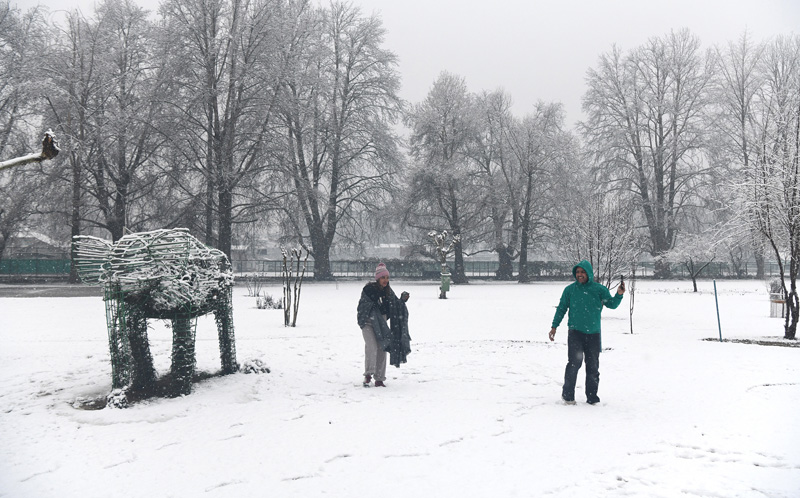
For generations, the story of J&K’s tourism has been told through the same familiar chapters – the snow-dusted slopes of Gulmarg, the dreamy meadows of Pahalgam and the shimmering expanse of Dal Lake in Srinagar. These destinations have served the UT magnificently. But they have also overstretched beyond their capacity. Footfall at these iconic sites has now reached, or is rapidly approaching, saturation point, and both the NGT and the Supreme Court have made it abundantly clear that ecological sensitivities will no longer be sacrificed at the altar of commercial expansion. Infrastructure growth at these destinations is, for all practical purposes, off the table.
It is in this context that NITI Aayog’s recently released anthology, Divya Bharat, carries genuine strategic weight. By spotlighting lesser-known destinations across J&K – from the historically evocative Noori Chamb Waterfall in Poonch and the adventure-ready twin lakes of Sanasar in Ramban, to the serene deodar-wrapped hamlet of Chatpal in Anantnag and the ancient Naranag Temple Complex along the Wangath River in Ganderbal – the national planning body has, in effect, handed the UT a roadmap. What NITI Aayog is proposing is not entirely new to those familiar with J&K’s extraordinary geography; many of these sites are well known within local circles. The significance, however, lies in the institutional endorsement and the prospect of substantial planned budgetary allocations that such recognition typically heralds. Central backing of this nature can unlock funding pipelines that the UT Government alone cannot command. The UT Administration has itself articulated an ambitious target: raising tourism’s contribution to the Gross State Domestic Product from the current 7 per cent to 15 per cent. A Tourism Advisory Committee has been constituted to identify and develop alternative destinations. The vision, on paper, is coherent and commendable. The problem, as always, lies in execution – and here, the record is deeply troubling.
J&K’s Tourism Department has, over the past two financial years, surrendered a staggering proportion of its annual grants. Of the crores allocated across two years, only 56 per cent were used. Tourism Development Authorities at flagship destinations – Gulmarg, Pahalgam, Sonamarg and Patnitop – spent barely half their sanctioned amounts. For lesser-known destinations, which lack even basic infrastructure, the prospect of meaningful development through such a system of chronic under-utilisation is bleak. No accountability has been fixed. No policy corrective has been issued. This culture of fiscal inertia must be confronted directly before any fresh allocation – however generous – is committed to alternative tourism development.
The path forward demands rigour, not spectacle. Organising a two-day cultural mela at a picturesque but inaccessible meadow is not tourism development; it is tokenism. Tourists who brave poor roads, lack sanitation, and have inadequate lodging do not return – and they do not recommend it. A single damaging experience is etched in memory for a lifetime. Sanasar, for instance, has waited decades for a proper metalled road. Chatpal, Daksum, Karnah Valley and dozens of other sites highlighted by NITI Aayog similarly yearn for the most rudimentary connectivity and amenities. Before any destination is promoted to the travelling public, a comprehensive survey must be conducted, followed by detailed, actionable project reports with strict implementation timelines, third-party audits, and genuine accountability frameworks.
There is also the matter of security clearance. Any site proposed for tourist development must first receive unambiguous assurance from security agencies. Investment in a destination that cannot guarantee visitor safety is wasted investment. Fortunately, the security landscape across J&K has transformed remarkably. With terrorism almost eradicated and peace now prevailing across districts that were once inaccessible, the strategic window is genuinely open – perhaps wider than at any point in recent decades.
J&K possesses tourism assets of extraordinary diversity – alpine meadows, ancient temples, Sufi shrines, wetlands teeming with migratory birds, heritage villages and pilgrimage circuits – capable of holding a visitor not merely for a few days but for months. The economic imperative is urgent. Tourism is not a luxury sector for J&K; it is a survival economy sustaining hundreds of thousands of livelihoods. NITI Aayog has pointed the direction. The Central Government must now commit the resources. And the UT administration must deliver what it has consistently promised but rarely achieved – decisive, accountable and sustained action on the ground. The moment is now.
 Follow our WhatsApp channel
