

Prof Garima Gupta, Prof Dushyant Kumar Rai
dr.dushyantkumarrai@gmail.com
The geopolitical conversation surrounding Jammu and Kashmir followed a predictable, well-entrenched script of cross-border sponsored infiltration, urban civil unrest, and the heavy, kinetic counter-insurgency operations of the Indian security grid for decades in the global diplomatic circles, international forums, and Western media. This had established an uneasy equilibrium where the state managed symptoms rather than rooting out the underlying disease.
Today, that conventional framework is completely obsolete. Over the past few years, a combination of a heavily fortified security apparatus, an airtight border fence, and aggressive, intelligence-led operations have managed to achieve a historic objective. They have systematically dismantled the traditional physical infrastructure of terror, drying up the supply of illicit weapons, shutting down cross-border training pipelines, and neutralizing localized leadership nodes. However, it did not perish but survived by adapting, seeking out cheaper, less visible, and more insidious methods of asymmetric confrontation. Denied their conventional mechanisms of violence, anti-India networks have engineered a profound tactical pivot. Within the silent social undercurrents of the Kashmir Valley, a new, invisible, and far more destructive proxy warfare has been unleashed through the mass weaponization of narcotics.
In response to this shifting threat vector, the Central Government has initiated a major institutional and conceptual paradigm shift, elevating what was once viewed as a localized public health crisis into a primary national security threat. The National Anti-Drug Campaign, known locally as the “Nasha Mukt Bharat Abhiyaan” and originally launched by Prime Minister Narendra Modi in 2020 as a standard nationwide social welfare program, has been completely re-engineered for the border territory of Jammu and Kashmir. Driven by the constant administrative supervision of the Union Home Ministry and executed on the ground by the proactive leadership of Lieutenant Governor Manoj Sinha, the Union Territory has transformed a soft civic initiative into a hardline counter-terror operation. This directly targets the modern financial and demographic mutations of militancy into narco-terrorism, moving past the symptoms of addiction to strike at the geopolitical roots of the narco-terror nexus.
The strategy of flooding the valley with illicit narcotics, specifically high-grade synthetic opioids like “Chitta,” or heroin cut with highly toxic chemical adulterants, serves two distinct, ruthless, and deeply intrusive tactical objectives. The first is targeted demographic degradation. By inducing widespread substance dependency among the youth in this sensitive frontier zone, adversarial networks seek to engineer a permanent deficit in local human capital. This effectively neutralizes the population’s capacity to participate in state-led democratic integration, civic institutionalism, and macroeconomic development. The goal is to create a broken, dependent generation that is physically and mentally incapacitated, thereby ensuring they remain permanently alienated from the broader Indian story of progress.
The second objective is the urgent fiscal resuscitation of terror architectures. Following the comprehensive disruption of traditional illicit financial flows, specifically the informal cash transfer networks known as ‘hawala’, cross-border trade rackets, shadow real estate portfolios, and local extortion rings under strict institutional directives from Home Minister Amit Shah, militant syndicates are facing critical financial starvation. Deprived of their traditional capital streams, the dying remnants of these militant groups turned to transnational drug cartels operating out of safe havens across the Line of Control. Narco-trafficking has emerged as the ultimate liquid revenue stream required to sustain basic logistics, fund operational sleeper cells, and pay off the network of over-ground workers who facilitate the movement of resources through local communities.
To shatter this perilous web, the Jammu and Kashmir administration has moved far past the conventional boundaries of passive law enforcement into a phase of active, punitive structural attrition. Law enforcement has transitioned from targeting low-level street dealers to dismantling the entire economic, logistical, and institutional foundations of the cartels. In a concentrated forty-five-day operational blitz, law enforcement registered over 860 First Information Reports, arrested more than 950 traffickers, and utilized the strict preventive provisions of the Prevention of Illicit Traffic in Narcotic Drugs and Psychotropic Substances Act to place fifty-nine major syndicate kingpins under indefinite detention without bail.
The core of this administrative aggression lies in its focus on economic punishment. Authorities have mapped out approximately 160 high-risk drug hotspots across the territory, deploying advanced surveillance and intelligence networks to sever the supply chains before they reach urban centers. Furthermore, to inflict maximum capital damage, the administration has attached 101 illicitly acquired real estate properties and demolished eighty-one narco-dens funded entirely by laundered money. To prevent international flight and deny safe havens, it has initiated mass passport revocations, seized hundreds of transit vehicles, and suspended commercial driving licenses. Crucially, this internal security audit has extended deep within the its own walls. Suspect elements within the security apparatus and the local administrative machinery have been brought under aggressive internal inquiry, making “zero tolerance” a rigid operational reality rather than a political slogan.
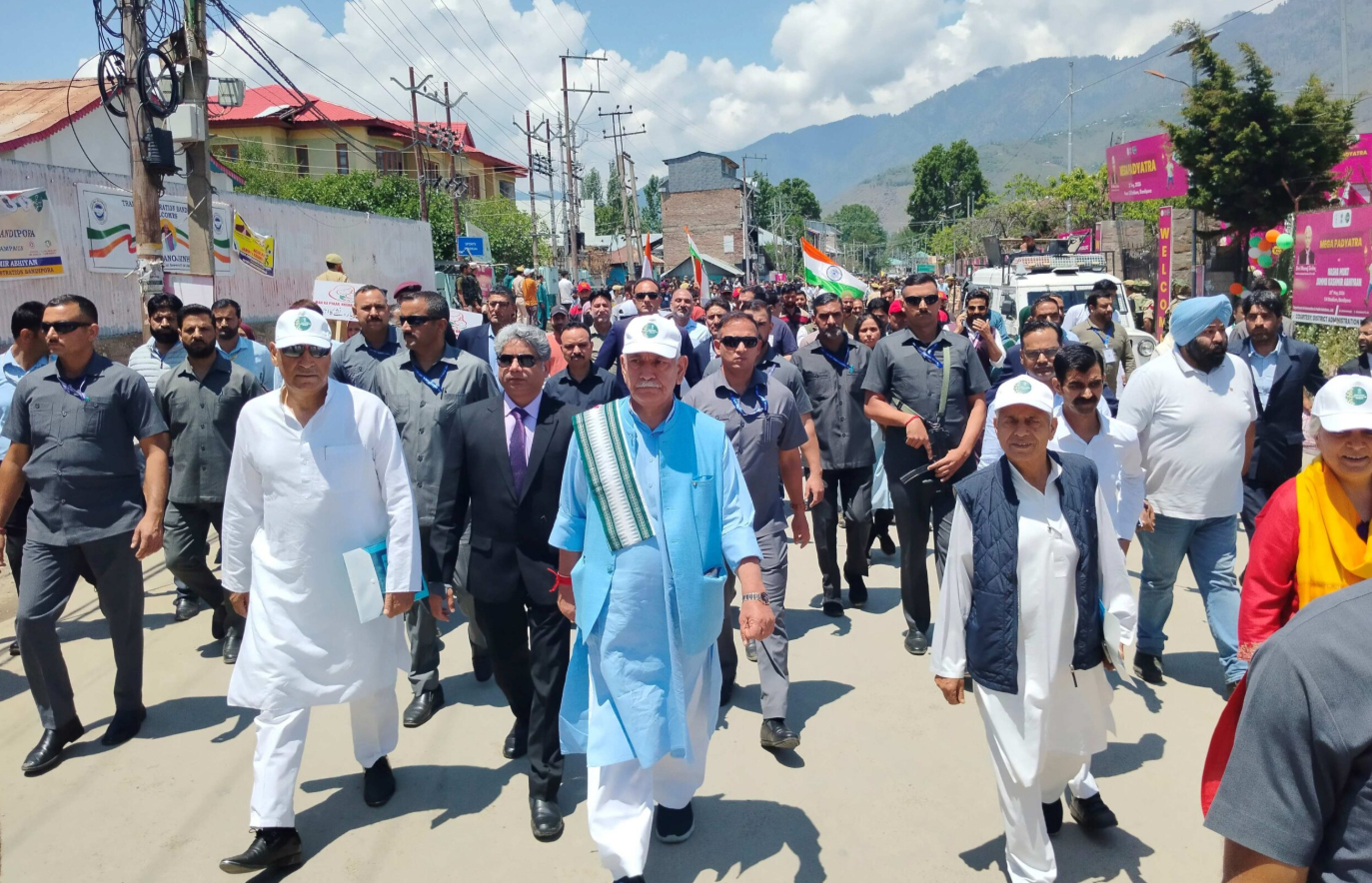
Yet, the ultimate gravity and long-term viability of this strategy rest on its grassroots mobilization, successfully converting a top-down state directive into a genuine ‘Jan Andolan’, or a mass civil movement. The administration recognized early on that it cannot solely arrest its way out of an addiction crisis; a society must be immunized from within by empowering its own inherent resilience. To build this local defense mechanism, the state has established over 7,000 women’s committees to drive early detection, localized surveillance, and social accountability within neighborhoods, alongside nearly 3,000 youth clubs tasked with peer intervention and civic re-integration through local sports initiatives. These local groups act as the essential eyes and ears of the administration, effectively shattering the code of silence that drug cartels rely on to operate.
To mitigate the exceptionally high rates of relapse that typically characterize severe synthetic opioid dependency, the administration has deployed a longitudinal three-year post-rehabilitation monitoring matrix. This comprehensive framework ensures that clinical recovery is paired directly with structural economic incentives. Recovering individuals are not merely discharged back into the environments where they first found addiction; instead, they are integrated into mainstream sports leagues, vocational training modules under the Himayat scheme, and sustainable labor-market placements.
The spontaneous mobilization of thousands of ordinary citizens in Jammu, Srinagar, and other urban hubs during the recent 100-day campaign launched by the Lieutenant Governor, proves that the societal fabric is actively rejecting the narco-feudal nexus. The most striking transformation is occurring in former hotspots of intense secessionist pressure, such as Shopian, Pulwama, and Baramulla, towns whose names were once synonymous with stone-pelting, militant recruitment, and violent shutdowns. Today, the public and highly visible leadership of youth and, most notably, women in these districts signals a historic cultural renaissance and a profound newfound civic confidence.
Jammu and Kashmir stands today at a critical, historic crossroads. Following the steep decline in overt kinetic militancy, the true test of Indian governance lies in making this society structurally healthy, resilient, and self-reliant from within. In a region with a traditionally conservative and insular social fabric, the sight of mothers, sisters, and village elders crossing over their thresholds to speak out publicly for the future of their children represents the definitive victory of this anti-drug strategy.
This comprehensive war against the entire ecosystem of narco-terrorism is both a rigorous test of civic consciousness and a strategic blueprint for forging a secure, prosperous, and stable tomorrow. By systematically attacking both the macroeconomic funding streams of terror and the micro-level vulnerabilities of the demographic base, this multi-layered administrative model offers a compelling, repeatable blueprint for counter-hybrid warfare in complex, border-zone jurisdictions globally. It proves that lasting peace on a sensitive geopolitical frontier is won not merely by silencing the guns, but by securing the health, trust, and future of the people who live there.
(Prof Garima Gupta is Head, Department of Foreign Languages, University of Jammu and Prof Dushyant Kumar Rai is Head, Department of Journalism and Media Studies, University of Jammu)
 Follow our WhatsApp channel
