

Ansh Chowdhari
The identity is always contextual and so are its vivid interpretations, fought with people’s history, culture and languages. This gets more salience in Jammu and Kashmir where the debate regarding identity gets inextricably convoluted, not least for its deep structural variance across multiple societal layers. Here, one can be a Muslim, a Dogra and an Indian at the same time and may also interpret others in the same light but given the historical circumstances in which the state of J&K has seen its cultural evolution- riding on the coattails of political volatility- there’s a myriad mix of identities here that remain in flux at all the times, each negotiating its authentic selfhood within its cultural and social ethos. Consequently, it gives rise to a feeling of recognition and misrecognition within a particular political milieu creating a subtle boundary marker between us and them.
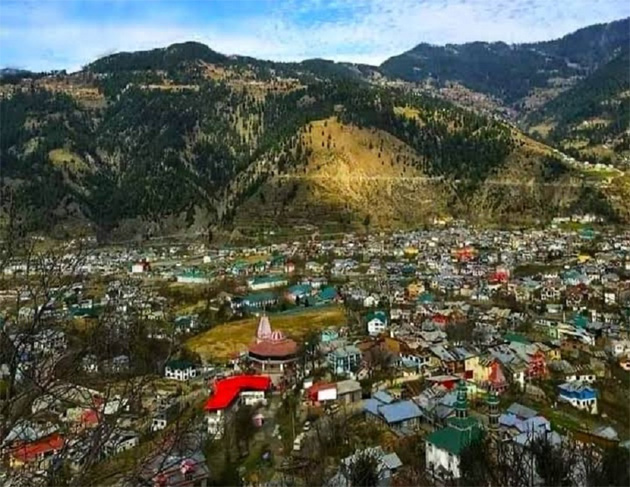
It is in this backdrop that I recently came across a blog written by Mr Anzer Ayoob promoting the identity of being a Chenabi in J&K. At first, I thought that it’s just another literary adornment but once delved deeper, the intent seemed more deliberate and troubling. Imminently, I couldn’t help but forced to question the rationale for such an identity creation when the region of Chenab Valley (as it has been known since atleast the 1930s) is a harlequin of multiple cultural identities-Bhaderwahis, Kishtwaris, Paddris, Sarazis, Dogras- who have amicably coexisted in a common geographical space with a shared history and culture for centuries.
The history has demonstrated that the present region of Chenab Valley has, for many centuries now, remained associated, and at times under the umbrage of Jammu in one way or the other. The indigenous cultural practices of this region are largely in sync with the other areas of Jammu province and Chamba. The Vasuki Nag of Bhaderwah finds his son sitting in Nagrota. The interlinked histories, cuisine, festivals have enriched Jammu and have granted it a multicultural hue, often difficult to find in these times. To place every such identity under a blanket label of Chenabi is deeply reductive in nature, for not only has it been akin to bludgeoning their cultural moorings but also an imposition of a manufactured namesake that remains alien in its conception and appears quite polarizing in nature. The need to manufacture this term apparently is an exposition of author’s own biases which he now wants to impose in the entire region.
I can understand the case to have a separate political recognition of the Chenab Valley, as it has suffered from neglect, caught between the Dogri speaking Jammu and the valley of Kashmir. This large geographical area, hence, suffers from the attention deficit and the developmental woes emerged therefrom. Indeed, in aprevious write up titled ‘Jammu state is a chimera’, I argued for a separate divisional status for this very reason.
This is where ‘Chenabi’ marks a bone of contention for me . It uses a Kashmir centric lens to frame the entire existence of Chenab Valley in a monolithic sense as an extension of the former by negating the existence of these local identities. The author has argued that “Chenabi” is about regional unity, not a single ethnic narrative”. But, regional unity in India and other places have largely been created on the bedrock of culture and such identities have, often, gulped down the minority cultural figments of the region.
This becomes more pronounced as the author himself identifies as a Chenabi Kashmiri-a contradiction in terms: Once you have identified yourself as someone from the Kashmiri ethnicity, ‘Chenabi’ then just remains a geographical addendum. But, if one claims that ‘Kashmiri’ reflects a plural perspective of geography and ethnicity, then entire gimmick of ‘Chenabi’ comes barely to the open and betrays a political motive- the one to symbolically detach this region from Jammu just to score some political brownie points. Additionally, why the non-Kashmiris of this region should use Chenabi to represent their existence, when in fact, they are the aboriginals who have been living in this region sans this tag without any problem per se.
Hence, I’m apprehensive about this term that can seriously develop fissures in the hitherto peaceful communities of this region. The monolithic assertions of identity in a top-down fashion is deeply problematic and reeks of a hegemonic stance, that precludes the possibility of a shared diverse living space and creating a confusing conjured cocktail of exclusion and segregation.
In principle, I have always considered J&K to be one unit with multiple regional and cultural pockets which have had seen themselves linked through a historical phase in the 19th century and bound to share a common future. It’s important that we constantly engage, deliberate and formulate our ideas so that they don’t create unnecessary divisions but foment a growth paradigm that caters to all without any ill will. The identities shall always keep on moving and evolving but to obfuscate their reality by crafting some alien theories is going to alienate the very people whom one is supposedly working to serve.
 Follow our WhatsApp channel
