

Prof (Dr) R K Samnotra, Dr Asha Rani
“A Librarian is not a custodian but a Guide, a Helper, and a Teacher.” Dr. S.R. Ranganathan
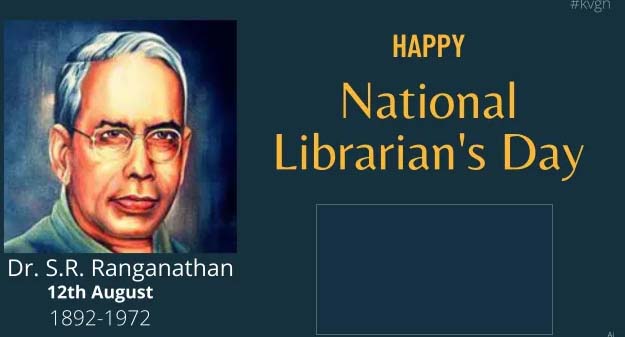
Every year, August 12 marks Librarian’s Day in India- A tribute to Dr. S.R. Ranganathan, the father of Library Science in India, laid down five timeless laws that continue to guide and shape library services globally. At SKUAST-Jammu, these laws are reflected clearly in the design, policies, and services of its library. Here’s how each law can be applied effectively:
FIRST LAW-BOOKS ARE FOR USE
The first law emphasizes that books and library resources are meant to be used, not locked away or preserved unused library the provides the following services for the maximum use of their resources:
Open Access Shelving: Library promotes open shelving systems, enabling users to browse and pick books themselves.
E-resources & Databases: The library provide online journals, e-books, and research databases like Krishikosh, Shodhganga, ONOS, CeRA, NDLI, increasing access to knowledge beyond physical books.
Digital Repository & OPAC: Users can search, locate, and even download materials remotely.
Library Automation: ILMS like KOHA are used for faster circulation and resource availability.
Resources and Facilities Compatible to Users: Library provides Resources and facilities that easily accessible, user-friendly, and tailored to meet the specific needs and preferences of different user groups.
Season Friendly Reading Areas: The existing reading areas of the library have been classified for their best utility as per the adopted study pattern and behavior of the users.
Attitude Based Seating/Standing Posture areas: These areas thoughtfully designed that accommodate users’ physical comfort and preferences to enhance focus, engagement, and user satisfaction.
EVERY READER HIS/HER BOOK
This law implies that the “books are for use of all”. Every reader has the equal right to get the book of his / her interest. Various Customized services are provided to ensure every user finds the resources they need, whether for study, research, or innovation such as:
Analyzes User behavior: Library professionals can track patterns in user behavior and adjusts library services accordingly.
Personalized digital content: Just like how shopping apps suggest products, the Library recommends digital content which are most relevant for particular student/researcher/scientists.
Diversified Study Material: The library provides Diversified Study Material in agriculture and allied disciplines to cater to diverse academic needs.
User Surveys & Feedback: Regular feedback is collected to improve the quality and relevance of services and collections.
THIRD LAW: EVERY BOOK ITS READER
This law desires that every book in a library must find its reader. , The library uses classification systems like DDC 23rd edition and digital tools to ensure books are discoverable.
Improves discoverability: Every digital or physical resource must be discoverable and accessible to those who need it via RFID tagging and semantic search.
Resource Promotion: New arrivals, diversified study material received as gratis from various organizations, and underutilized materials through analytics, databases are promoted through e-mail, Library website, social media, and notice boards.
Information Literacy Programs: The library conducts training on how to use e-resources, access scientific databases, etc.
ILL: Books not available in one Library can be accessed through collaborations with other Campus library.
SAVE THE TIME OF THE READER
The Fourth Law says “Save the Time of the Reader.” The Library provides the following services to save the time of the users as well as library staff:
Smart Navigation: Clearly labeled sections/zones/corner/classification of areas for the convenience of users viz. solace, extrovert, introvert, serene reading corners, season-friendly tranquil zone, Huddle zone, Research Carrel Gallery, Technology equipped discussion-cum-professional practice rooms, floor plans, signage, and staff guidance save time in locating resources.
Reduce User efforts and Time: Automated cataloguing, circulation, RFID & Barcode Scanning technologies/automated operations allow fast check-in/check-out, reducing queue times and improving service efficiency.
Buffer Lobby and a waiting lounge: Established for hassle free functioning of the circulation desk with the increase in the footprints of library users. Aims to offer vital space for rest, study, collaboration, and socialization, enhancing the overall library experience with an overview display of library resource, facilities and achievements through e- media and fostering a sense of community.
Mobile Applications & Remote Access: Students and faculty can access user friendly OPAC and e-resources through Library apps and off-campus login services.
Wi-Fi/Online Libraries & Computer Facilities: Internet-connected terminals help users directly search, download, and print documents.
THE LIBRARY IS A GROWING ORGANISM
A library will grow in terms of documents, readers, and staff.The library should provide adequate space for the present as well as the future. The Library provides the following services in context of fifth Law of Rangathan’s:
Expansion of Digital Infrastructure: Continuous addition of new online journals, e-books, and databases.
Adaptive Intelligent Systems: Conventional-Modern-Automated-Digital-AI as per user demands
Outside boundary wall/Season friendly Open Air Reading Facilities: This Facility is first of its kind in J & K, is well equipped with colorful sitting arrangements with UV harvest orientation in the Green Zones of the Central Library.
AI and Data Analytics: Plans to incorporate AI-based recommendation systems and user behavior analysis for smarter services.
Modern Infrastructure: Development of reading lounges, digital resource centers, and collaborative workspaces.
Sustainable Practices: Adoption of eco-friendly practices like reduced paper usage, solar-powered systems, and smart lighting.
Conclusion
As we celebrate the legacy of Dr. S.R.Rangathan, we realize that his Five Laws are not outdated – they are more relevant than ever before. Let us continue this journey of ensconcing Ranganathan in the digital age – where tradition meets technology and every reader finds not only his book but his future.
 Follow our WhatsApp channel
