

Advanced analytics, ground intelligence to track traffickers
*GPS, drone surveillance to choke supply chains
Mohinder Verma
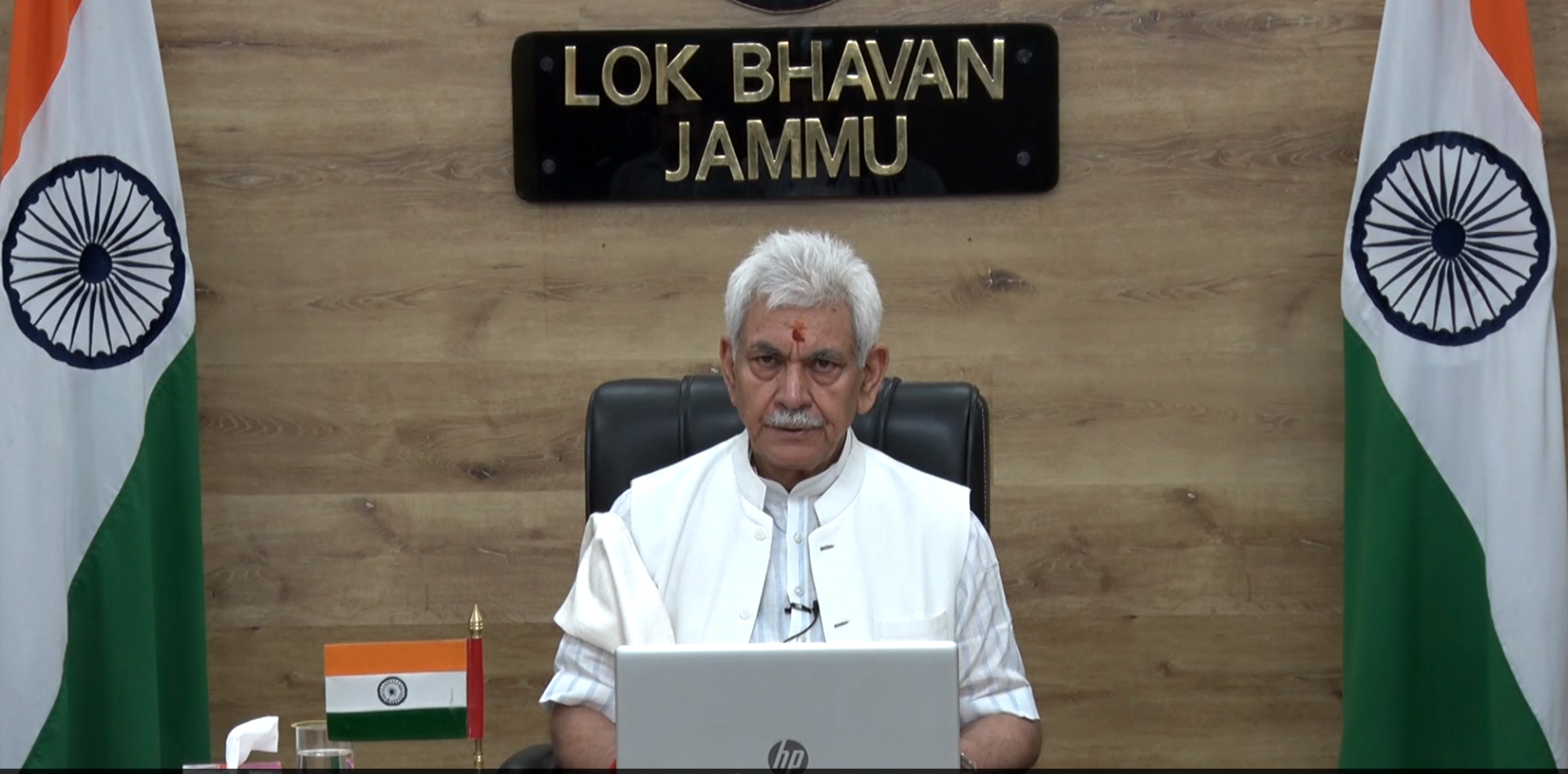
JAMMU, Apr 25: Marking a decisive shift from conventional policing to precision enforcement, a multi-layered anti-drug strategy anchored in surveillance, data analytics and judicial monitoring has been rolled out on the directions of the Lieutenant Governor Manoj Sinha to systematically dismantle the narcotics ecosystem in Jammu and Kashmir.
This has been conveyed to the High Court of Jammu & Kashmir and Ladakh by the Home Department, which in its affidavit submitted that intelligence platforms such as National Integrated Database on Arrested Narco-offenders (NIDAAN) and National Intelligence Grid (NATGRID) are being actively monitored to gather real-time and credible inputs on drug traffickers and their criminal networks.
Follow the Daily Excelsior channel on WhatsApp
The data generated through these national platforms is being used with ground-level intelligence to map supply chains, identify kingpins and expose inter-district and cross-border linkages, the Home Department said, adding “this is assisting in identifying repeat offenders, understanding evolving trends and planning targeted interventions”.
The Home Department further stated that advanced technological tools including CCTV surveillance, GPS-enabled tracking systems and data analytics software have been deployed to detect suspicious movement, monitor vulnerable zones and ensure seamless coordination among enforcement agencies. These tools are helping shift the focus from reactive policing to predictive and preventive action.
The affidavit further disclosed that details of NDPS cases, seizures and accused persons are being systematically digitized to build a dynamic database. This digital profiling is enabling authorities to identify repeat offenders, track behavioural patterns and anticipate emerging trends in drug trafficking, thereby facilitating targeted crackdowns.
The department further informed the High Court that long-pending NDPS cases are being periodically reviewed in coordination with district and sessions courts to ensure expeditious disposal. A centralized repository containing case records, offender profiles and history sheets is also being maintained to support structured investigation and effective legal follow-up.
The High Court has further been informed that coordination with neighboring States has been enhanced for joint operations, intelligence sharing and tracking of accused persons who operate beyond jurisdictional boundaries.
Disclosing that a comprehensive and multi-pronged strategy combining enforcement, prevention and rehabilitation has been chalked out to curb the growing drug menace, the Home Department said, “the strategy includes intensified surveillance through deployment of drones in remote and sensitive areas, GPS tracking of high-risk offenders and expansion of CCTV networks across identified hotspots”, adding “the focus is also on strengthening institutional capacity through regular training of enforcement personnel and streamlining prosecution mechanisms to ensure swift and deterrent legal action”.
On the preventive front, the department submitted that awareness campaigns are being scaled up through schools and colleges, with active involvement of community leaders, youth organizations and NGOs. Simultaneously, efforts are underway to expand de-addiction and rehabilitation services to address the demand side of the drug problem.
The High Court has been informed that Union Territory of J&K is the first UT to have its own drug de-addiction centres. Currently, UT is having 36 State run drug de-addiction centres—22 under Health and Medical Education Department, 4 under Social Welfare Department and 10 under Police Department. Moreover, such centres are being expanded in each district and trained medical professionals and counselors are being deployed to provide continuous care.
The affidavit further emphasized that a robust monitoring and evaluation framework is being institutionalized to periodically assess the effectiveness of interventions, identify emerging threats and recalibrate strategies. The ultimate objective, it stated, is to achieve a sustained and measurable reduction in the supply, trafficking and consumption of narcotics.
To curb and disrupt the drug trafficking networks and financial incentives of those engaged in illegal drug trade as well as reinforcing the rule of law, properties of notorious drug dealers/syndicates worth over Rs 75 crore have been carried out by the Jammu and Kashmir Police.
Moreover, geo-tagging of illicit crop and its destruction is being carried out in coordination with Excise, Revenue and Forest Departments to eradicate the local drug menace in the shape of poppy and cannabis.
 Follow our WhatsApp channel
