

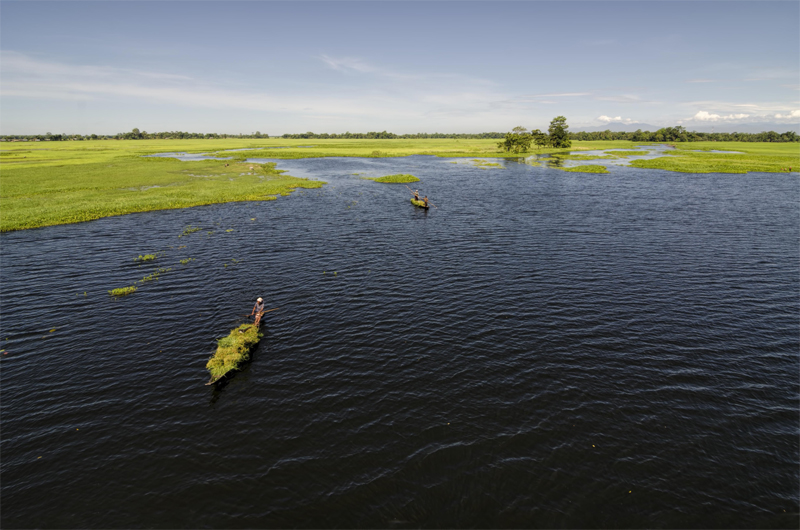
The Centre’s decision to continue and substantially scale up the River Basin Management (RBM) scheme for the 16th Finance Commission period (2026-31), with an outlay of Rs 2,183 crore – a significant jump from Rs 1,276 crore in the previous phase – is both timely and strategic. It signals that India is moving from intent to infrastructure in its pursuit of integrated water security. The previous phase was not without its accomplishments. Surveys, investigations and detailed project reports were prepared for multipurpose projects across some of the most challenging terrains in the northeast and Jammu & Kashmir. The Brahmaputra Board advanced basin master plans and anti-erosion works, shielding vulnerable zones such as Majuli Island from recurring flood devastation. Groundwork was simultaneously laid for hydropower expansion and irrigation capacity building in states chronically dependent on Central support – Sikkim, Mizoram, Manipur and Nagaland among them. These were the quiet but consequential foundations of a larger architecture.
For Jammu & Kashmir and Ladakh, however, the stakes of the new phase are uniquely elevated. India’s decision to hold the Indus Waters Treaty in abeyance has fundamentally recast the strategic calculus around the Indus basin. What was once a diplomatically constrained resource is now an opportunity that demands urgent, disciplined and scientifically rigorous exploitation. The next phase of the RBM scheme must therefore prioritise maximising utilisation of Indus waters – through new storage projects, hydropower schemes and irrigation networks – while scrupulously safeguarding the ecological integrity of the river basin. The goal is not extraction at any cost, but optimal use without irreversible damage.
Encouragingly, the tools being deployed leave little room for complacency or error. Geographic Information Systems, LiDAR, remote sensing and drone-based surveys now form the backbone of project planning. These technologies ensure that topographical complexities, seismic sensitivities and hydrological dynamics of the region are captured with precision before a single shovel breaks ground. They also create a continuous feedback loop – early warning signals can be detected, analysed and acted upon before problems escalate, much as they have been in flood-prone northeast corridors in preceding years. The inclusion of community-based interventions – watershed management, improved water practices in hilly and tribal areas – further reflects a holistic vision that integrates local resilience with national strategy. As the new phase begins, the imperative is clear: translate data into decisions, and decisions into durable development. J&K and Ladakh must now become its most compelling success story.
 Follow our WhatsApp channel
