

Harsha Kakar
harshakakararticles.com
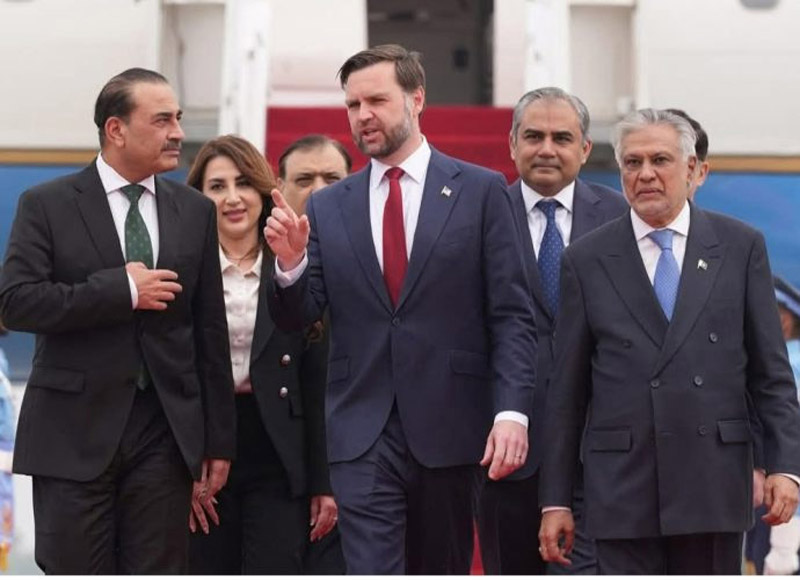
Ceasefire talks facilitated by Pakistan ended after 21 hours of discussion with no agreement. US Vice President JD Vance stated in a press conference, ‘We’ve had a number of substantive discussions with the Iranians, that’s the good news. The bad news is that we have not reached an agreement and I think that’s bad news for Iran much more than its bad news for USA.’ He added, ‘we just could not get to the situation where the Iranians would accept our terms.’
The Iranian side had their own version. The Iranian foreign minister Seyed Abbas Araghchi tweeted, ‘In intensive talks at highest level in 47 years, Iran engaged with U.S in good faith to end war. But when just inches away from “Islamabad MoU”, we encountered maximalism, shifting goalposts, and blockade.’ With vast differences in the US’s fifteen-point and Iran’s 10-point agendas, expecting an agreement in one sitting was being naïve.
Despite both sides needing an agreement, neither can be the first to blink. It would take additional discussions, toning down of demands by talks involving experts on both sides, before common ground can be reached and the top leadership meet again. Both nations have their own concerns.
A few subjects which Iran would never agree to include limiting ranges and numbers of its missiles, as it would open doors to unilateral attacks by Israel whenever it chooses, while leaving Iran defenceless. It could surrender its control over Hormuz, which is its trump card, in case its frozen funds are released. It needs them for reconstruction. It could also alter its stand on building nuclear weapons. It had accepted the same in Feb.
While the US holds the military stick, Iran holds the geographical advantage. Rising oil and gas prices, resulting in lowering of ratings of Trump in the US, forced him to consider a ceasefire. Added were damages to infrastructure of its allies in the Middle East, which could possibly result in the creation of a new security architecture in the region, without the US.
In addition, the US was left isolated in the war as not a single NATO ally was willing to participate, claiming the war was not theirs. All European nations had considered Israel PM Benjamin Netanyahu a war criminal for his actions in Gaza. Participating in the conflict implied fighting alongside a war criminal. The war also rendered Trump’s much touted Board of Peace a failure with almost no funding.
The scenario has been made more complicated by Pakistan, which as talks began, moved approximately a division strength and a squadron of F 16 aircraft to Saudi Arabia as part of their mutual defence pact. Pak was given the option, either deploy forces as per the pact or repay loans. Its deployment resulted in Saudi Arabia and Qatar providing it an additional USD 5 Billion in deposits. It also signalled to Iran that in case it attacked Saudi Arabia, they could join the conflict. Any such action by Pak would not only open a new front but also end its role as a mediator.
Iran conveyed from the beginning that it was not the nation desperate for talks, however would come prepared. It placed riders on Lebanon being included in the ceasefire and release of its frozen assets prior to the talks. Its arrival schedule was announced much after the US delegation landed, though they were just neighbouring states. This also countered the US narrative that Tehran was desperate for an agreement.
The Iranian delegation comprised of over 70 personnel, including experts in diplomatic, military and economic. They had the ability to take decisions without referring to Tehran. On the other hand, Vance mentioned, ‘we were talking to the president consistently. I don’t know how many times we talked to him, a half-dozen times, a dozen times over the past 21 hours.’ The question being asked is whether Vance was sent to fail as the individual responsible for negotiations is Marc Rubio, who was watching a UFC match with Trump.
The stumbling block for peace remains Netanyahu. Despite prodding by the US, he refused to stop his attacks on Lebanon. He did offer a ceasefire to Lebanon, unwilling to link it to talks in Islamabad. It is also likely that he could once again recommence his attacks on Iran, breaking whatever little talks have achieved. He recently stated, ‘The campaign is not over yet.’ For Netanyahu continuing the conflict serves his personal interest. It keeps him in power as also away from his corruption cases. It appears that there is little that Trump can do to reign him in.
Threats of re-commencement of conflict are dominating the narrative flowing out of Washington. The US military build-up continues. While additional troops would open opportunities for decision-making for Trump, boots on the ground appear to be the last option. Most likely would be enhanced economic pressure, a blockade to prevent flow of oil, sanctions on nations trading with Iran as also encouraging global pressure on Iran to accede its control over Hormuz.
A naval blockade has commenced. For the blockade to be effective will take time. Iran’s exports to Pakistan and Afghanistan and possibly other nations in the region avoid the sea route. China exploits both, land and sea routes. It is unlikely that US ships would board China bound tankers. Trump went as far as threatening China with additional tariffs if it provides Iran with weapons.
The last time Trump threatened sanctions on China, it was forced to backtrack as both economies are intertwined as also China could stop export of rare earth minerals to the US. These actions would impact the US far more than China. Nothing has changed, rather with Europe enhancing ties with China, the US could be further isolated.
An economic blockade may have some impact, but not enough to force Iran to surrender aspects which concern its security. The US’s best solution is seeking another mediator and continuing talks. There has to be give and take prior to an agreement being reached. A single round of talks, after a stalemate in war, will never produce results. Patience and time are the need of the hour, which Iran displays but Trump appears to lack.
The author is Major General (Retd.)
 Follow our WhatsApp channel
