

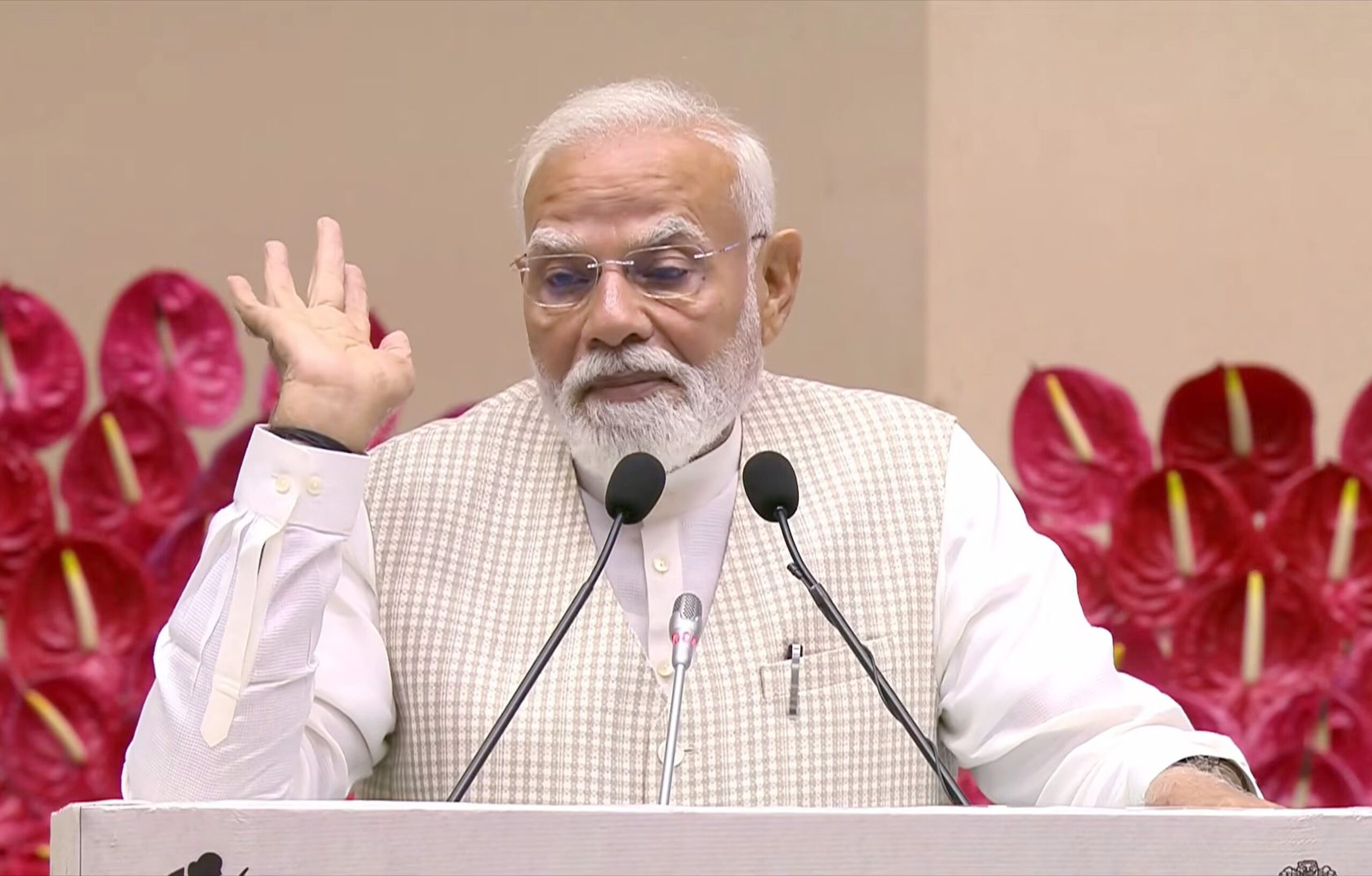
NEW DELHI, Apr 18 : Prime Minister Narendra Modi on Saturday delivered a combative address to the nation, turning a significant legislative setback into a political rallying point by casting the failed Women’s Reservation push as a broader moral and ideological battle between his government and what he described as an “anti-reform” Opposition.
Speaking a day after the Constitution (131st Amendment) Bill, 2026 fell short of the required two-thirds majority in the Lok Sabha, Modi accused Opposition parties of betraying women and warned that their stance would carry electoral consequences.
“A woman may forget everything, but she never forgets her insult,” the Prime Minister said, invoking themes of dignity and self-respect to frame the bill’s defeat.
He described the proposed Women’s Empowerment Amendment-popularly referred to as the Naari Shakti Bill-as a “great mission” aimed at giving “wings to women across all states” in the 21st century, arguing that its rejection amounted to a direct affront to women’s aspirations.
Modi named parties such as the Congress, DMK, Trinamool Congress and Samajwadi Party as having opposed the bill, accusing them of “taking women’s power for granted” and acting out of fear rooted in “family-based politics.”
In one of his sharpest attacks, he said the Opposition had “snatched women’s rights and then thumped desks in self-congratulation,” calling it “an attack on women’s dignity and self-respect.”
He further alleged that the Congress and its allies had been “unmasked” and were politically “feeding off their state partners like a parasite.”
The address signals a strategic pivot by the government, which is seeking to reframe the parliamentary defeat not as a legislative failure but as a political opportunity to consolidate support among women voters-a demographic that has grown increasingly influential in electoral outcomes.
Modi asserted that “100 percent of the nation’s women power” stood with his government and pledged to “remove every obstacle” in the path of women’s reservation, indicating that the issue will remain central to the ruling party’s campaign narrative.
The bill’s failure followed a polarised debate over its linkage with delimitation and the proposed expansion of the Lok Sabha to 816 seats, provisions that drew scepticism from Opposition parties wary of their political implications.
Critics argue that tying women’s reservation to a future delimitation exercise created uncertainty over implementation timelines, while the government maintained that the framework was necessary to ensure equitable representation across states.
The impasse ultimately prevented the bill from securing the supermajority required for a constitutional amendment.
Modi’s speech largely sidestepped these procedural complexities, instead leaning on emotive and political messaging.
“Every citizen of India is watching how the dreams of our women have been crushed,” he said, warning that “every woman will remember this.”
He accused the Opposition of committing a “grave mistake” and even a “sin” by opposing the measure, asserting that they would “face consequences” and that women would deliver a “befitting reply.”
The rhetoric also reinforced a broader ideological framing, with the Prime Minister portraying the confrontation as a fight against what he termed the Congress’ “anti-reform mindset,” which he said had historically “caused great harm to the country.”
By linking the present dispute to a longer narrative of stalled reforms, the government appears to be positioning itself as the primary driver of structural change while casting its opponents as obstructionist.
Politically, the address points to escalation rather than reconciliation, with little sign of renewed consensus-building efforts in the near term. Instead, the government appears poised to take the issue directly to the electorate, banking on the resonance of gender representation and dignity as campaign themes.
Whether this strategy translates into broader support or deepens political divides will likely shape both the future of the women’s reservation debate and the wider electoral landscape in the months ahead.(UNI)
 Follow our WhatsApp channel
