

Brig Dr Vijay Sagar Dheman
motivatedvijay128@gmail.com
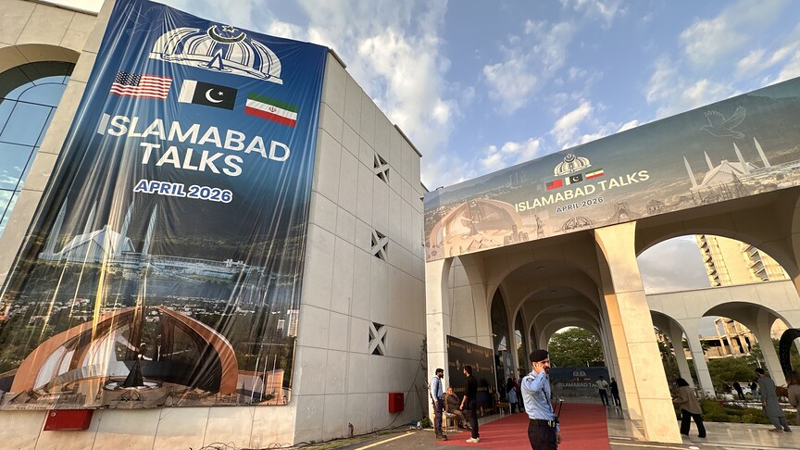
As Islamabad hosts this significant diplomatic event, experienced observers remind us that beneath the formal talks, there’s a carefully planned dance, one that’s aimed not just at peace, but at managing the timing carefully.
Why Pakistan? It’s a question that has puzzled diplomats from Cairo to Ankara ever since it was announced that Islamabad would host and mediate high-stakes negotiations between Iran and the United States. The choice breaks away from the usual diplomatic expectations. Pakistan isn’t a major regional power in the traditional sense, nor does it have the long-standing neutrality of countries like Egypt or the strong institutional presence of Turkey. Instead, the truth is that what Pakistan provides is something more practical: plausible deniability and political flexibility.
The choice of Islamabad marks a thoughtful shift from usual patterns. Unlike traditional mediators such as Egypt, Qatar, Oman and Turkey, which each have their own agendas, influence, and audiences to answer to, Pakistan offers a different kind of support. Currently, Pakistan is navigating complex economic challenges tied to the IMF and balancing the competing interests of Washington and Beijing, making it a dependable partner. In terms of realpolitik, it acts as a “rentable” venue, an ideal space where the U.S. can pursue its goals without risking too much of its own reputation.
According to most reports, the Sharif government entered into this arrangement fully cognizant of its subordinate role. Evidence indicates that Islamabad has operated in close coordination with Washington, with its diplomatic stance reflecting American preferences, thereby demonstrating less independent judgment and more adherence to the structural pressures of a state reliant on financial assurances. For Pakistan, this arrangement provides a rare opportunity for geopolitical visibility; for the United States, it serves as a strategic buffer. Should the negotiations conclude without success, the resulting fallout can be attributed to the host country’s inability to facilitate discussions, rather than a failure of American policy.
The Arithmetic of a Deliberate Pause
When you look beyond the official announcements and well-rehearsed handshakes, what’s left of the Islamabad process is often seen by analysts as a “logistic pause”, a kind of diplomatic breathing room created more to support military and economic goals rather than to genuinely reach the resolution it’s supposed to aim for.
For Iran, the interval is invaluable. Months of sustained pressure have depleted capabilities and morale. The pause allows for recuperation, reorganisation, and, according to multiple intelligence assessments, re-armament. Reports from the region indicate that while delegations exchange proposals in Islamabad’s conference rooms, China has been supplying Tehran with advanced materiel, man-portable air-defence systems (MANPADS), precision-guided munitions, and satellite intelligence that would meaningfully enhance Iran’s battlefield situational awareness in any future confrontation.
Washington’s motivations, though differently packaged, are no less transactional. The Trump administration faces a domestic economy under mounting inflationary strain. Oil price stability is not a luxury of foreign policy; it is a political necessity. A genuine rapprochement with Iran would complicate the administration’s relationship with its most consistent regional ally, Israel, and inflame powerful domestic constituencies. The talks, in this reading, offer the aesthetic of progress without the substance.
The Strait That Holds the World to Ransom
The Strait of Hormuz is a crucial factor in these negotiations, as about one-fifth of the world’s oil supply passes through this narrow strait between Oman and Iran. According to the United Nations Convention on the Law of the Sea (UNCLOS), the Strait is recognised as an international waterway, meaning its passage can’t be legally blocked by territorial claims. However, Iran’s close proximity to the Strait has historically been its most powerful strategic advantage.
Tehran has considered the idea of taking control over transit, whether by adding fees, conducting inspections, or even restricting passage, as a way to negotiate. While international law under UNCLOS makes such claims difficult to win in courts. Legality and actual ability are different things. Iran has the means to mine the Strait, use autonomous watercraft loaded with explosives, and disrupt traffic in ways that could cause chaos in oil markets. The United States has enough naval and special operations capabilities to stop these threats, but the real question is the cost in money, lives, and the ripple effect on the global economy, of taking action.
Iran’s primary objective is the unfreezing of approximately $120 billion in assets currently held in reserve, as well as the dismantling of the comprehensive sanctions framework that has impeded its economic development for over a decade. The Strait functions not as a demand but as a strategic bargaining instrument, employed to remind the United States of the considerable stakes involved should diplomatic negotiations falter.
Twenty Issues, No Map
Even the most hopeful outlook on our current process reveals a challenging truth. Its scope is unprecedented and possibly even daunting. The 2015 Joint Comprehensive Plan of Action, the last significant agreement between the P5+1 and Iran, focused on just one set of issues related to nuclear enrichment and had taken two entire years to negotiate. Today, the Islamabad agenda covers more than twenty different areas: ballistic missile development, regional proxy networks, steps toward Iran’s normalisation within the Gulf’s diplomatic landscape, and the future oversight of Iranian nuclear infrastructure by the International Atomic Energy Agency.
The wide scope of this agenda has even led seasoned diplomats to wonder privately whether the talks are truly meant to succeed. The arrival of a massive 300-person American delegation, an impressive logistical feat, has actually intensified this scepticism. Rumours suggest that many in the delegation are more interested in exploring business opportunities after sanctions are eased- like rebuilding Iran’s energy facilities, bridges, and roads- rather than negotiating peace. In this view, commercial interests seem to be leading the way before diplomatic efforts.
What a Deal Might Look Like and Why It Won’t Come
There is a credible off-ramp available, at least in theory. Iran’s civilian nuclear programme, carefully overseen by the IAEA, provides a pathway that could be seen as separate from weapons development. Joining the Abraham Accords, the normalisation deals that have reshaped the Arab world’s diplomatic landscape, would be a remarkable shift in Iran’s regional position. The outline of an agreement is clear to those willing to see it.
The problem is that neither delegation seems to have come to Islamabad with a genuine desire to reach an agreement. Iran joins the talks while still rearming, with hardline factions resisting any deal that limits the country’s strategic stance. Meanwhile, America faces the challenge of balancing domestic electoral politics and an Israeli government that is wary of any move to rehabilitate Tehran. Israel itself keeps up its ongoing campaign against Hezbollah in Lebanon, which operates completely outside the diplomatic efforts of the Islamabad process.
The most probable outcome. A temporary pause presented as progress, enabling all parties to discreetly pursue their undisclosed objectives under the diplomatic guise of ongoing negotiations. West Asia, despite the intensity of this period, is unlikely to attain a lasting resolution in this context.
What Islamabad may ultimately offer the world is not a treaty but a mirror, a clear reflection of the mechanisms by which great powers manufacture the appearance of peace while preserving the conditions of conflict.
( The author is a Geopolitics Analyst and Convenor IIJSA Jammu.)
 Follow our WhatsApp channel
