

LOS ANGELES, Apr 23: Media watchdog the Gay & Lesbian Alliance Against Defamation brought out some big names in Hollywood over the weekend including American sweetheart Betty White to honor movies, TV shows and performers. At the annual GLAAD Media Awards on Saturday night, the group gave one honorary trophy to transgender activist and celebrity Chaz Bono, the child of superstar Cher and Sonny Bono, for promoting equal rights in the media. The makers of documentary “Becoming Chaz,” Randy Barbato and Fenton Bailey, earned another trophy for their film about his transformation. (AGENCIES)
University of Colorado clamps down on “pot fest” but many light up
BOULDER, COLO, Apr 23: The University of Colorado sought on Friday to clamp down on a huge annual marijuana fest, but after initially restricting access to the school, police later stood back and watched hundreds of people light up in a campus field. Three protesters who crossed police lines at the Boulder campus were arrested for trespassing and about 11 others cited, but a confrontation thought possible between protesters and police never materialized.
(agencies)
FDA says focused on tracking drugs after approval
ATLANTA, Apr 23: The US Food and Drug Administration said on Saturday it now spends as much effort and resources on surveilling a drug after it is approved as it does in the pre-approval process. The FDA was responding to critics who say the agency is toothless when it comes to tracking the safety of drugs already on the market, when industry funds that supported pre-approval reviews tend to dry up. (AGENCIES)
UN accused of softening criticism of Morocco in Report
UNITED NATIONS, Apr 23: The UN Security Council has reached a deal on a draft resolution to renew the mandate of the peacekeeping force in the disputed territory of Western Sahara this week, envoys said, but the Polisario Front independence movement and South Africa are disappointed.
The renewal of the mandate of the peacekeeping force, known as MINURSO, marks an annual battle in the council between Morocco, backed by France, and African nations supporting Polisario.
The African countries have repeatedly called for U.N. peacekeepers to be given the task of monitoring alleged human rights abuses.
Morocco and France, its former colonial master, have resisted the idea that the peacekeepers should report on rights abuses in Western Sahara, a sparsely populated tract of desert that has phosphates, fisheries and, potentially, oil and gas.
Former British diplomat Carne Ross, who heads the Independent Diplomat, a group that advises Polisario, wrote in the Guardian newspaper last week that Western Sahara is the “forgotten first source of the Arab Spring.” He was referring to the Moroccan authorities’ deadly crackdown on protests there by the Saharawi population in late 2010.
While the Security Council has never formally assigned the peacekeepers the role of human rights monitoring, Morocco has faced pressure to allow language on human rights in the resolutions on Western Sahara. Rabat insists the territory should come under its sovereignty, but the Polisario contends it is a sovereign state.
The latest draft calls on both sides to respect human rights and welcomes Morocco’s decision to set up a national council on rights and grant access to the Geneva-based U.N. Human Rights Council. Previous resolutions had made only a vague reference to the “human dimension” of the conflict.
The Polisario, which represents the Saharawi people, waged a guerrilla war against Moroccan forces until the United Nations brokered a ceasefire in 1991 with the understanding that a referendum would be held on the fate of the territory.
The referendum was never held and attempts to reach a lasting deal have floundered.
The new draft resolution has the council “stressing the importance of improving the human rights situation in Western Sahara and the Tindouf camps, and encouraging the parties to … To ensure full respect for human rights.”
(AGENCIES)
Hope ‘makes people happier’
WASHINGTON, Apr 23: It’s official. Hope makes people happier, say researchers.
Two studies, conducted in Australia and China by an international team, led by the University of Queensland, have found that having high expectations for the future is the key to being happy in the present day.
Prof Paul Frijters, one of the authors of the two studies, said a sample of over 10,000 Australians over nine years showed that people seemed to be better off if they expected good things to come.
“People systematically over-estimate how rosy the future should be and this is crucial for their wellbeing.
“People are much less affected by regret than previously thought, and they do not tend they tell themselves the future will be bad so that the future will turn out to be a pleasant surprise,” he said in a university release.
The researchers found that Australians over 35 and women tended to place more importance on “future imagined health” than men and under-35s. For the latter, future imagined health was not seen as important for happiness.
The study also surveyed over 17,000 Chinese people in 2002, on happiness and optimism for the future.
“We found that the poorest group was the happiest. People in the countryside had incomes less than a third of that of people in the cities, but still 62 per cent of the rural respondents said they were happy or very happy, while only 56 per cent of the urban respondents were at least happy.
“The most miserable group in China were the migrants who had come to the cities from the countryside. While they were earning more than double what those ‘back home in the countryside’ were earning, 44 per cent of them were happy.
“Despite this, on average, the Chinese were about as happy as individuals from a European middle-income country like Croatia,” Prof Frijters said, adding the most important factor behind the high levels of happiness in China could be attributed to “extremely high” expectations of future incomes.
The findings are to be published in an upcoming edition of the ‘Journal of Economic Psychology’. (PTI)
‘Shooting of Indian student in Boston not hate crime’
NEW YORK, Apr 23: A 24-year-old Indian student, who was found dead near the Boston University campus, was not a victim of hate crime and his killing appears to be an isolated incident, a prominent Indian-American organisation has said.
Odisha native K Seshadri Rao, a student at Boston University’s Graduate School of Management, was shot in the head and leg in the early hours of April 19.
He was pronounced dead on the scene by Boston police.
Telugu Association of North America Executive Vice- President Mohan Nannapaneni said Rao’s killing was not a hate crime, as is being speculated in some sections of the media.
“It is absolutely not a hate crime. It is an isolated incident. We do not yet know who did it and why but it is definitely not a hate or targetted crime,” Nannapaneni told PTI over phone from Boston.
The police has some good leads in the case and any speculation about the cause of the shooting could jeopardise the investigation, he said.
No arrests have yet been made in the case.
Nannapaneni said students from across the world come to study at Boston University and he has not heard of any incident where a student has been targetted because of his race.
He termed as false and incorrect some reports that said Rao was “dragged” from his apartment and shot because of his race.
Nannapaneni said he had spoken to Rao’s roommates who denied that the young student was dragged from his rented house or that they were under attack because of their Indian background. (PTI)
Will encourage private sector to participate with Grants
WASHINGTON, Apr 23: US President Barack Obama will issue an order today to allow imposition of sanctions on foreign nationals who use new technologies such as cell-phone tracking and Internet monitoring to help carry out human rights abuses, The Washington Post reported on Monday.
The newspaper quoted a senior administration official as saying that the executive order was designed to target companies and individuals assisting Iran and Syria, but future orders could expand the list.
It paper said the order noted that while social media and cell phones had helped democracy advocates organize in the Middle East, they had also enabled security services of autocratic nations such as Syria and Iran to conduct surveillance of dissidents and block access to the Internet.
The order will acknowledge these dangers and the need to adapt US national-security policy to a world being remade rapidly by technology, the Post quoted the official as saying.
It said Obama would announce the move in a speech at the US Holocaust Memorial Museum in Washington. The newspaper noted it comes at a time when his policy toward Syria—where a year-long government crackdown has killed thousands of civilians—has been criticized by Republicans seeking the party’s nomination for the Nov. 6 US presidential election.
The Post said Obama would say that he had asked for a first-ever National Intelligence Estimate – a consensus view of all US intelligence agencies – to include an appraisal of the potential for mass killings in other countries and their implication for U.S. Interests.
As part of the initiative, the president will also create a high-level panel to serve as a clearinghouse for real-time intelligence, policymaking and other issues related to mass killing.
He will also encourage the participation of the private sector through a program of grants to encourage firms to develop technologies to help people vulnerable to mass killings better detect and quickly alert others to impending dangers.
The Post said the White House would announce new sanctions against both Syria and Iran on Monday. It said these would include a visa ban and financial restrictions on two Syrian “entities,” one Syrian individual and four Iranian “entities.”
Administration officials did not identify the targets of the sanctions and say the term “entities” describes both government agencies and private companies in Iran and Syria.
The Washington Post said Samantha Power, the National Security Council’s senior director for multilateral affairs and human rights, would chair the Atrocities Prevention Board, a panel whose creation was announced in August.
(AGENCIES)
A journey in the lap of Himalayas
Amit Gupta
Amidst this grand spread of vivid beauties, the mountains, the  streams, the meadows and the snowline of Himachal are a true spectacle that can inspire many a artist – be it poet, painter or philosopher. A drive on the Manali Keylong Leh route passing through the high altitude of Lahaul and Spiti district of Himachal Pradesh offers a blend of all this and much more. A travel on this route is nothing but a poet’s delight and a photographer’s heaven.
Given the adverse road conditions and unfavorable weather, one needs a passion to venture into this one of the most challenging roads of the country. It is advisable to carry full winter gear in all weathers. The first encounter with unpredictable weather can start as early as Solang valley, barely 10 km out of Manali when the bright, radiant Sun can be overshadowed by a dark cloud within seconds.
Travelers generally take the first halt at Marhi, which, besides being a chai-pakora station, is also the reporting centre for all vehicles plying on Manali Leh route. After a hot cup of tea and paying obeisance at a local temple, one moves ahead on the most mesmerising ascent of the journey – the gigantic Rohtang Pass which stands tall at 3979 metre on east Pir Panjal range. Gorges and colossal rocks scare the challenge the travelers on one side while a gigantic Himalayan range casts a spell on the other! Maneuvering many needle-shaped turns, with slopes exceeding 40 degree, and encountering lonely stretches, much hustle and bustle awaits the visitors atop Rohtang. The Pass, which in Tibetan means a pile of corpses, leaves everyone awestruck with its grandeur and humility!!
The Himalayas, which look gigantic upon ascent, bear a plain look at the Pass. Altitude is the sole indication of enormity. The mountain, though huge, remain humble before humans atop! The Pass, notorious for its unpredictability, is also known for Beas Kund – a spring – the source of river Beas, which originates subtly underneath a blue and grey closed structure. A few serene moments at the Beas Kund convey that rivers, however fiery, have a humble origin!
Humility is best taught there than elsewhere!
A few turns later, one encounters a place with many flags. At 4111 metre, this is the highest point of Rohtang. Vendors often crowd there with stalls for chana-kulchas. Who can resist these hot, nee warm, snacks in the biting cold and chilly breeze? Alongside, one can also enjoy ride on the newly introduced all weather bikes, giving a feel of a mini adventure sports arena.
The real beauty begins beyond Rohtang, where the nature unfolds its mystique, virginity and purity! The lofty Himalayas seem to be kissing the sky. Due to high altitude, the Sun gets so close that the shadow of clouds can be clearly seen on mountains – a rare spectacle, that deserves to be aptly captured. One can witness the distinct change in vegetation. The tree-line gets away, making way for small bushes. The mountains become naked, sandy and rocky. In the absence of thick forestry and reduced distance between ground and the sky, the sharp glare of the Sun makes the donning of goggles inevitable.
A few kilometers later, one enters Khoksar, the first village of Lahaul Valley. The stopover, at the bank of river Chandra, present a typical hill side atmosphere – a river bank, a suspension bridge, a giant naked rocky mountain, bad road, a PWD Rest house alongside and small roadside shops offering paranthas, noodles, momos, rice and Siddu, a local dish. One ought to push in something, as this is the only major stop on this road, before reaching Keylong.
As one moves deeper into the Lahaul valley, the terrain becomes so beautiful that one forgets the displeasure of travelling on unmetalled roads. At many places, mountain streams flow over the road whereas at many other places, the pot holes, accumulated rainwater, landslides, bumpy tracks are the only signs of what we call a ‘road’. Unmindful of this, one must enjoy the grandeur of Himalayas, interspersed with waterfalls, streams, rocks and gorges. Wild roses and alpine flowers deck the slopes in an unforgettable feast of colours. Suspension bridges add excitement to adventure. Atop one such bridge, one can see the beautiful Sissu fall cascading over the cliff from a high valley between two mountains. Crossing another bridge takes one to Tandi – the confluence of rivers Chandra and Bhaga. From here, the two rivers travel in unison as ChandraBhaga. The meeting point, with rocky ranges and a plain village Ghoshal in the background, is so spectacular that it appears in promotional photographs for this region.
Mountains, rivers, plains, greens all meet at one point and create a breathtaking display of the richness of nature. After humility, unity is another lesson taught by Nature on this route!
Legends add feather to this natural crown of Tandi. It is believed that the marriage procession of Lord Shiva, passing through the tall mountains, had left sinusoidal imprints, visibly distinct from other impressions on this range. There are other mythological stories relating to Draupadi and Rishi Vashishta. Tandi is said to have come from two words ‘Tan Di’, i.e. Rishi Vashishta is said to have relinquished his body at this point.
Travellers need to top up their tanks at Tandi, which has the last fuel station before Leh, another 365 km from this place.
Spending moments of leisure at Tandi, one drives ahead for Keylong – a name that ignites passion and challenge; a name that epitomizes undaunted human spirit of living in frozen conditions and virtual solitude.
For travelers looking to go beyond, Keylong is the ideal place for a night halt, as it is headquarter of Lahaul and Spiti district. Besides a HP Tourism Hotel, Keylong has many private hotels. One can visit nearby Udaipur valley or proceed towards Leh, through the beautiful Jispa valley and the famous Darcha valley. Keylong town also has a small monastery besides a local market (called as The Mall – akin to any other hill station!) which sells items such as woolens, handicrafts and olive oil.
Whichever direction one takes the next morning, one cannot afford to miss the eternal charm of a dawn in Lahaul.
A gleam of light peeps through the curtains and wakes up the tourists quite early. Pulling open the curtains can leave everyone, and not just a nature-lover, overwhelmed. The morning Sun is golden and glaring. The meadows are shining and splendid. The cattle graze quietly and birds chirp politely. The moments are full of cheerful calm and radiant resonance. It is a unique experience to wake up to such a serene yet extravagant morning, which echoes Dickinsons’s verse,
“Nature’s first green is gold, her hardest hue to hold; her early leaf’s a flower, but only so an hour.”
One can look forward to the journey beyond, fully overcome by the Mystical nature – indeed incredible and unfathomable!
He behaves like leader of opposition: Kamaal UMER MAQBOOL Smaller Default Larger Srinagar, Apr 22: Accusing the State Congress president Prof Saifuddin Soz of trying to destabilize the coalition government led by Omar Abdullah, the firebrand National Conference leader Dr Mustafa Kamaal Sunday said that he (Soz) is behaving like the leader of opposition and his “veiled threats” to NC-led government are against the “interests of entire country.” Reacting to the statement of Soz that National Conference was creating hurdles in empowerment of Panchayats, Kamaal said going by the utterances of Soz, it seems as if he is the leader of the principal opposition party and his behavior is against the coalition dharma. “It does not behoove the leader of Coalition Coordination Committee (CCC) to speak publicly against the ally and it tantamount to destabilizing coalition government,” he said, adding that Soz’s announcement of launching movement for empowerment of Panchayats is “not only against the interests of coalition government and people Jammu and Kashmir, but detrimental to the interests of entire country.” Terming coalition of NC-Congress as an uneasy alliance, Kamaal said, “Soz should have raised the issue of empowerment of Panchayats in the Coordination Committee. Why he did not got the issue raised in last Legislative Assembly session, if he is so much sincere about the subject.” “The utterances also reflect his unhappiness over the functioning of coalition government,” he added. The NC leader said that incorporating of 73rd amendment in State Constitution was not something urgent and Soz should have waited for next Assembly session. “There is no need of bringing ordinance for amending Panchayati Raj Act at this juncture,” he added.
Onkar Singh
 World heritage is the shared wealth of human kind. Protecting and preserving this valuable asset demands the collective efforts of the international community. The world heritage Day is an opportunity to acknowledge the diversity of cultural heritage that is shared by human kind. The day raises public awareness around the efforts that are required to protect and conserve world heritage, by drawing attention to its vulnerability. Each year the International Day for Monuments and Sites celebrates a different aspect of our collective heritage. The 2012 theme has been chosen to mark the 40th anniversary of the UNESCO world heritage convention which was adopted in 1972.
On 16 November 1972 the General Conference of UNESCO adopted the “Convention Concerning the Protection of World Cultural and Natural Heritage” – commonly known as the World Heritage Convention – . The Convention included both cultural and natural heritage in a single document, and consecrated the idea that there are properties whose significance and values exceed the boundaries of the country where they are located, and whose loss or deterioration would imply the impoverishment of the humanity as a whole. The recognition of a property to be of world heritage significance implies the awareness of a shared inheritance and common engagement for its conservation and legacy to future generations; in this sense, the Convention can be considered a tool to foster respect for cultural diversity, international cooperation and understanding, and peace among nations. In the World Heritage Day 2012, the focus is on “World Heritage and Sustainable Development: the Role of Local Communities”. ICOMOS makes a number of suggestions on how to celebrate the World Heritage Day, which include:
* Visits to monuments and sites, and restoration works, possibly with free admission;
* Articles in newspapers and magazines, as well as television and radio broadcasts;
* Hanging banners in town squares or principal traffic arteries calling attention to the day and the preservation of cultural heritage;
* Inviting local and foreign experts and personalities for conferences and interviews;
* Organizing discussions in cultural-centers, city halls, and other public spaces.
* Exhibitions (photos, paintings, etc)
* Publication of books, post-cards, stamps, posters
* Awarding prizes to organizations or persons who have made an outstanding contribution to the conservation and promotion of cultural heritage or produced an excellent publication on the subject.
* Inaugurate a recently restored monument
* Special awareness raising activities amongst school children and youth
* Promotion of “twinning” opportunities, defining areas for co-operation; exchange of speakers; organization of meetings and seminars, or the editing of joint publications.
The World Heritage Convention is considered the most successful of all the UNESCO conventions: it has been ratified by 188 States Parties, and the World Heritage List currently includes 936 properties located in 153 States Parties, which comprise 725 cultural sites, 183 natural sites and 28 mixed sites.
There are 27 world heritage Properties in India out of which 22 are cultural properties and 5 are natural properties. These include Taj Mahal, Ajanta, Elora and Elephanta Caves, Konark temple, Statue of Lord Mahavira at Mahabalipuram, Khajuraho Temples, Darjeeling Himalyan Railway, Kaziranga National Park, Koelkaro National Park, Bodhgaya, Sundarbans National Park and, Manas Wild life sanctuary among others.
Jammu and Kashmir has 5 such sites which include Wular Lake, Tso Moriri and Surinsar-Mansar Lakes. The state has at least 28 monuments and sites that bear testimony to our rich cultural heritage. These include Mughal arcade and spring at Verinag, Kartanda Sun temple, Bumzuva cave and temple, all in Anantnag district, Ancient Stupa excavated remains, Sankaragaurisvara temple, Ancient stupa, Chitya and monastery, Mosque and other ancient remains on the Wular lake Island, all in Baramula district, Fort at Akhnoor, Buddhist ancient site at Ambaran, Ancient Fort and palaces at Ramnagar, all in Jammu district, Rock cut sculpture in Kargil district, Ancient temple of Harihara at Billawar, Rock carving of Devi Riding a Loin at Basohli, Vishesvara and other cave temples at Basohli, all in Kathua district, and Buddhist monastery at Lamayuru in Leh district.
There are many more which need inclusion, like Forts at Hiranagar, Jasrota and Basohli and magnificent gate of red sandstone at Mansar Lake. Sadly baring a few, all the monuments and sites have been neglected and are crying for renovation and protection. For weather and current development paradigm are proving ruinous to them.
World heritage sites are facing severe challenges related to resources extraction and developments in their surrounding areas. “Heritage, observes Iriana Bokoya, Director General of UNESCO, “stands at the crossroads of climate change, social transformation and processes of reconciliation between peoples. Heritage carries high stakes for the identity and belonging of peoples, for the sustainable economic and social development of communities”,
Apparently, we need to strive towards the effective conservation and protection of natural and cultural heritage. While aware of the development needs at the local, regional and global levels, we need to establish and maintain a dialogue with all the stake holders and provide sustainable conservation solutions for everyone involved. For that to succeed, the current development model needs a rethink.
(The writer teaches geography at the G.D.C Kathua)
The ignored Paradise
J R Aryan
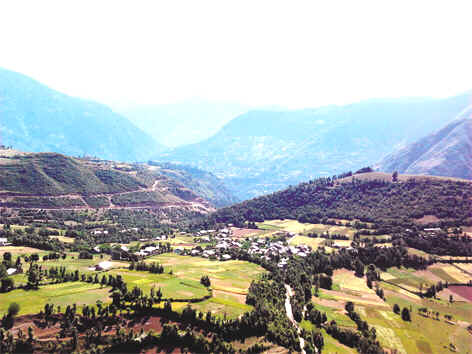 With an area of about 8000 kms amidst almost mountainous and hilly topography like that of Kashmir, Himachal or Ladakh region, district Kishtwar has its boundaries touching the valley on its north-west side and Ladakh region on its north-east with lahul spiti valleys of Himachal in the south-east and Doda district on south-west. The entire district is full of hills and mountains, forests & vegetation. The population or demography is mixed. Hindus, Muslims SCs, STs, Sikhs and Bodhs are reside herewith amity and brotherhood. The population is found settled upto an altitude of 9500 ft. above MSL in the hilly and upper regions. The district has four tehsils namely Marwah, Padder, Chhatro and Kishtwar with respective Hqrs at Navpachi, Atholi, Chhatroo and Kishtwar, respectively. Almost entire district receives snowfall during a good winter. The climate is similar to that of valley of Himachal.
With a high potential for tourism the district is full of hidden charm, wonderful sites and alluring, spots, health resorts, attractive tourism locations, famous historical and religious places, sacred shrines and monuments. The forests are full of mineral wealth, variety of timber and trees of highest quality, drugs and herbs and other medicinal shrubs and plants like mushroom, chilgoza, black zeera, artemisia, saffron besides the other forest resources of tremendous utility. Mineral wealth if properly explored and extracted can become a boon to generate revenue particularly the huge sapphire reserves mines of Machail Padder.
Tehsil Kishtwar with HQ at Kishtwar extends upto Galhar in the east, Palmar in the north, Thakrai etc. in the west and Sarthal Saroor, Bunjwa in the south-east. At Sarthal the prominent holy famous temple of Mata Asht-Dash-Bhuja” i.e. Goddess with 18 arms i.e. Mata Sarthal Dev ji is located where people and devotees come round the year to pay their obeisance and get blessings. At Rakna Palmar there is famous holy Ziarat as also at Bhanderkote where sacred temples of Lord Shiva and Durga Mata are also located where people throng to pay their obeisance. At Saroor, Bimal-Nag and in Bunjwa a charming spot Devigole are the Centre of Tourism attraction for their enormous beauty and grandeur worth seeing. At proper Kishtwar, we have a holy Gurudwara where many Sharadhaloos come to have blessings.
Tehsil Paddar with H.Q at Atholi is 62 kms away from in the east of district H.Q. Kishtwar and has much of its own to offer. From Atholi 1 km away on the other bank of river Chenab is located the other famous spot Gulabgarh where many Govt. offices are located. The confluence point of river Chenab and tributary Bhote-Nallah is really very fascinating which none can afford to miss. The most religious and sacred Shrine of Mata Chandi is located at an altitude of 9500 ft. at Machail where lacs of yatries and devotees come to pay their obeisance every year during famous Machail Yatra during August.
One can’t and must not afford to miss the chance of visiting. Gumpas of Bodh religion which happen to be 3 kms away from Machail and has much of its own to offer. All the foot journey form, Padder Gulabgarh to Machail of 40 kms length is a treasure of a nature’s glimpses, attractions, expeditions, enroute temples, caves, art and gallery, bubbling streams, springs, lushing greenery snow clad peaks and even naked mountain peaks.
The nature’s smiling creativity in the two magnanimous waterfalls of the entire volume of Bhote river provides a very thrilling experience and a feast of excitement to every passer-by which no camera eye can afford to miss. The Govt must channelize its all energy to complete the construction of road from Gulabgarh to Machial on war-footing basis to boost tourism and provide easy access to the sacred shrsine of Chandi Mata the holy glimpses of the sapphire mines. A famous hot-water spring at Tata Pani (Kundal) has its own importance where streams of people rush to have a bath to get rid of joint pains and skin disorders.”
Similarly Chhatroo tehsil with its H.Q. at Chhatroo has a charm of its own amidst its topography, geography, landscape, bubbling streams, meadows, valleys green fields and forest ranges. Chingam is really fascinating and thrilling location, where natural beauty and providential touch has its own say. The work on Kishtwar – Sinthan road is nearing completion and in due course of time this shall throw open a historic journey for the tourists to enter into the valley or leave the valley with a new thrilling experience through a new landscape, routes and peoples to have sweet memories of the trip.
Marwah-Wadwan and Dachhan area of tehsil Marwah has unique charm of its own to attract tourists. The green lush meadows of the region amidst thick and natural forest ranges makes one forget the earlier landscapes one would have come across and makes one feel that the nature does smile in the interior cut-off isolate places for serenity and that the providence has descended itself here to settle in this charming and fascinating land surrounded by forest wealth. The green meadows bubbling streams and lushing water falls together with hot water spring at Rinie Nallah and the wild life sanctuary in the area provide a feast of attraction to the visiting eyes which no camera can afford to miss from its focusing lens. The area is still un-connected from the district H.Q. Kishtwar and the work of connectivity is very slow and calls for immediate attention of the Govt. to open out this beautiful landscape to tourist community at the earliest.
Commanding an altitude of 5300 ft. above M.S.L. the district H.Q. Kishtwar 231 kms NE of the winter capital Jammu connected by NHIA – NHIB and about 180 kms S.E. of summer capital Srinagar also connected by a highway is situated majestically on a plateau formation stretching over a length of 6 kms and a width of about 2 kms amidst wonderful picturesque mountain ranges with the mightly river Chenab following at its foot forming a semiloop to provide a dimension of additional attraction to its location.
The population of the district H.Q which is also the tehsil H.Q comprising town, mandal & other localities including NHPC colony and its complex is about 65 thousand. The Dul-Hasti Power Project of 390 MW Power generation with its HQ campus at Kishtwar and colonies at headsite Dool and damsite at Shalimar has been a boon to develop the area and its activities.
With mountain ranges all around and lush green fields lulling the area, the District HQ if caught in the camera eyes from a height or through an aerial view appears a paragon of beauty. Amidst all this Kishtwar district H.Q. has a great privilege of heaving a flat, smooth stretch of ground (Plateau) locally known as Chowgaan which has a natural grass turf that transforms it into a soft green carpet as if a God given gift and a blessing in disguise reminding one and all to preserve its originality its configuration its dignity and charm for all times to come. It is, in fact, the face of Kishtwar the grace of Kishtwar and the praise of one and all. Right from Moughal period kings, princess, historian, people of all shades by the tourists, trekkers, sportsmen or outsiders all have eulogized its grace and importance. It is of historic, religious, social, cultural and educational significance. At its one end is located the famous holy Ziyarat of Shah Asar-ud-Din Sahib while at the other end is the famous red Gori-Shanker temple.
Many religious social and cultural, ceremonial, educational and even sports functions are held here in this ground throughout the year besides political and administrative functions. One the northern end of this Chowgan there is an aerodrome of about 1 km length where Aeroplanes like Dacotta 7 other types have been landing since early 50s at the time of need and helicopters very often. There is full scope for regular air service provided the Govt. gives attention to this vital aspect. At district HQ Kishtwar and in its close neighbourhood there are a dozen of attractive spots like Tund, Aarsi, Tailmuchi, Bharnoyan, Drab, Cheer-Har, Indra Nagar and Bhanderkote the confluence of river Chenab and Marsudhar river; Sarkoot lake, Chhar-Chinar etc. which if properly taken care of and developed by the Tourism Deptt. Or by the Kishtwar Development Authority in the real earnest, can serve as the best feast for the tourist culture.
So there is not an iota of doubt that Kishtwar is an ignored treasure of tourist pleasure seeking kind attention of Chief Minister and the Tourism Minister to come out open heartedly without any reservations to boost the tourism potential of Kishtwar and other such areas of the State which need Govt’s utmost attention to bring them on tourist map. It is appealed to the CM and the Tourism Minister to deliver justice by bringing all the historic, scenic of the religious sacred shrines of Kishtwar.”