


Excelsior Sports Correspondent
JAMMU, Apr 16: Jammu and Kashmir Police (JKP) XI trounced Kashmir Cricket Club by 4 wickets in a thrilling contest and lifted the Baisakhi Premier League T20 Cricket Cup at MA Stadium, here today. This was the third championship trophy for Jammu and Kashmir Police XI this season as they have already won Christmas Cup and Diwali Premier League.
Dilbag Singh, IGP Jammu was the chief guest on the valedictory function, while Kiran Wattal, Secretary J&K State Sports Council was the guest of honour. The chief guest and the other dignitaries distributed prizes among the winners and runners-up teams.
Earlier, in the summit clash, Kashmir Cricket Club won the toss and elected to bat first and scored 129 runs for the loss of 9 wickets in the stipulated 20 overs. Puneet Wattal top scored with 29 runs including 5 fours, while Zeeshan Akram contributed 26 runs to the total. Aman (23), Muddasir (15) and Kuldeep (12) were the other contributors.
Shamsher Singh Manhas was the pick of the bowlers, who took 3 wickets, while Raman Dutta and Sunil Sharma claimed 2 wickets each and Shashi picked one for JKP XI.
In reply, JKP XI needed 8 runs in the last over of the match and clinched victory on the fourth ball in an exciting contest. Shashi played a magnificent innings of 50 runs in 41 balls including 5 boundaries, while Farooq (32), Raman Dutta (13) and Naresh (11) were the other notable contributors.
For Kashmir Cricket Club, Muddasir and Aman claimed 2 wickets each, while Satish bagged one.
Shashi was adjudged man of the match for his brilliant half-century, while Rajesh Gill and Anand Tripathi were declared man of the series and best batsman respectively. Kuldeep Kumar and Shamsher Singh were adjudged joint winners for best bowler award.
Earlier, in the semifinals, Kashmir Cricket Club defeated Simula XI by 2 runs in a thrilling contest, while JKP XI drubbed Aircel XI by 9 wickets.
In his address, IGP lavished praise for the organizers for conducting the event smoothly and successfully and said that Jammu and Kashmir Police would develop the MA Stadium ground, which is used by police and other agencies for organizing various tournaments, to such an extent that it serves as a perfect ground for budding sportsmen to hone their skill up to the maximum level. He also praised the role of sports council for providing available facilities in the stadium and supporting the every organizer to conducting different cricket tournaments at M.A.stadium.
The tournament was organized by JK Police in collaboration with JK Sports Council and Simula software under the supervision of IGP, Jammu. The Co.Sponsors of the tournament were Bharti Infratel , Aircel , Atman Sports Club,and Ishar Sports Club,
The matches were officiated by Sudhir Sing, J.D.Singh, Yogesh Sharma, Amit and Farooq.
The organizing secretary of the tournament was Rajesh gill while Rajesh Dhar was the convener technical committee.
Shamsher’s 3-wickets haul guides JKP XI to lift
Hot on Headley’s trail
Pakistan- born American, James Headley surfaced in the course of investigation of 26/11 Mumbai carnage. In fact he was nabbed by the American agency on board an internal flight in the US while he was attempting to take out some explosive device from his socks. Further investigation by the US sleuths revealed that he had been responsible for providing very useful infrastructural details to the culprits of the carnage in Pakistan. US authorities have come to the conclusion that Headley had established connection with Hafiz Saeed, the then chief of Lashkar-e-Toiba, (LeT), and the organization which took upon itself the assignment of striking in Mumbai.
LeT was founded by Hafiz Saeed on the prompting and support of some senior officers of ISI in 1990. The reason for formation of the terrorist group was that the ISI decided to have a super terrorist group to take up insurgency in Kashmir and sideline the Liberation Front because it believed supporting the Front could damage Pakistan’s interests. In due course of time, and even today, the LeT says that its essential assignment is that of detaching Kashmir from India. When the US, UK, European Union and Australia declared LeT a terrorist group, Hafiz Saeed changed the nomenclature Al Dawa wal Irshad, the mother organization into Jamaatu’d-Dawa, which he heads today. With that he claimed that he had nothing to do with LeT. He is reported to have said that not a single person affiliated to leT is a member of JD. Hafiz Saeed is reported to have been a colleague of late Osama bin Laden when he was studying in an institution in Saudi Arabia for some time and their association braved all weather till Osama was liquidated in Abbotabad.
Headley worked with full dedication to provide logistical support to the handlers of 26/11 whether affiliated to LeT or to ISI. Hot on the trail of Headley, National Investigation has tumbled on a source that could be highly useful in establishing his contacts with Hafiz Saeed. Headley’s estranged wife named Faiza Outalha lives in Morocco and she could give information about Headley-Hafiz Saeed conspiracy since the NIA wants to provide concrete proof about the role of Saeed in Mumbai attack. Reports are that Outalha had met Hafiz Saeed in Pakistan and she had gone to the US Embassy in Islamabad to register a complaint against Headley saying that he had established contacts with terrorist organizations like LeT and Harakatu’l-Jehad-i-Islami, an Afghanistan-based terrorist organization with close links with Al-Qaeda. Outalha had married Headley in 2007 but was divorced only after a year.
Indian agencies believe that she can be very useful in giving insights into the life and role of Headley particularly in tracing his connections with Hafiz Saeed who has been dodging the Pakistani authorities when asked to explain his role in 26/11. Outalha had visited India twice and stayed in Taj Hotel of Mumbai during her first visit and at Oberoi Trident during the second. She had visited Shimla and Kufri also. In a report Press Trust of India said that knowledgeable circles believe that Outalha told the American Embassy that Headley had built links with a number of women and besides that he also had links with some Bollywood actors, prominent party hoppers of Mumbai and socialites. This information, though only in piecemeal as yet, could be built up into a cohesive one to shed full light on the entire conspiratorial links and activities of the culprits of Mumbai carnage. External Affairs Ministry has directed its mission in Rabat to approach the Moroccan Government for recording the statement of Headley’s estranged wife which could be produced later on as solid proof for extradition of Hafiz Saeed in Mumbai case. It has to be remembered that India has been unrelenting in bringing pressure on Pakistan to bring the perpetrators of Mumbai carnage to justice. Pakistan has begun to feel the heat of India’s demand because it is proving difficult to normalize relations unless major irritants like Hafiz Saeed are booked. Hafiz Saeed has become the epicentre of terrorism in Pakistan as he is much more popular in whole of Pakistan than any other leader of that country. He has a vast establishment of educational institutions and branches of his organization and with enormous funding from supporters within and outside Pakistan he has built a theocratic empire which is a combination of rabid religious indoctrination and muscle power.
Taliban retaliate
Taliban has claimed responsibility for a series of coordinated attacks in Kabul and other Afghan provinces. The Taliban said they and other militant groups were behind a coordinated assault in the Afghan capital, Kabul, on Sunday which included attacks on the British and German embassies in the heavily guarded, central diplomatic district. The Taliban also said they were carrying out attacks in several Afghan provinces. A series of explosions followed by sustained gunfire shook the Afghan capital on Sunday in attack by militants on three neighbourhoods frequented by Afghan government officials and their international allies. Taliban spokesman Zabiullah Mujahid claimed responsibility for the assault in a text message to The Associated Press. He said a group of armed suicide bombers have launched an attack on NATO forces headquarters, parliament and a number of diplomatic residences in Kabul. There were also attacks in two other eastern cities – Jalalabad and Gardez.
These attacks in the capital city expose the vulnerability of the targets of Taliban legions. It shows that they have made it possible for them to enter the heart of the city and not remain banished to the outskirts as is generally claimed by the NATO troops. The series of attacks have taken place simultaneously with behind- the- curtain negotiations going on between the Taliban, Saudis and Americans for some sort of settlement of Afghan crisis. It has to be remembered that the Haqqani group of Taliban has for long been patronized by the ISI and Hekmatyar is closely linked to ISI right from the days when he was staying in Pakistan. The US and affected embassies in Kabul will certainly demand an enquiry into the large scale series of attacks and will try to find out the truth behind these attacks. It will be remembered that Indian Embassy in Kabul was also attacked some time back and India had given proofs of ISI’s links with the assailants.
Centre to firmly tackle terrorism: PM

No conflict on NCTC: PC
NEW DELHI, Apr 16:

Reaching out to states complaining over NCTC, Prime Minister Manmohan Singh today favoured joint and coordinated efforts to deal with challenges of terrorism whatever its origin, whether internal or external.
“There is no question that the burden of the fight against terrorism falls largely on the states’ machinery. The Centre is ready to work with the states to put in place strong and effective institutional mechanisms to tackle this problem,” he said.
The Prime Minister, who inaugurated the annual conference of Chief Ministers on internal security, did not dwell on the proposed National Counter Terrorism Centre, saying it will be discussed on May 5 in a separate meeting as suggested by some Chief Ministers.
Non-Congress Chief Ministers as also UPA ally Trinamool Congress chief Mamata Banerjee have raised objections to the provisions in the NCTC, contending that it will upset the federal structure and encroach on the powers of the states.
The Prime Minister warned that threats from terrorism, Left wing extremism, religious fundamentalism and ethnic violence persist in the country.
“These challenges demand constant vigilance on our part. They need to be tackled firmly but with sensitivity. The forces behind them must not only be contained but should also be effectively rolled back,” he said.
“Like other internal security matters, we need joint and coordinated efforts to deal with the challenge of terrorism, whatever be its origin, whether internal or external, and whatever its motivation,” Singh said.
Seeking a “holistic” approach in tackling the problem, he said, “This is a struggle in which we cannot relax. When we see turbulence in the region and growing factors of instability around us, we must strengthen our defences against terrorism.”
Singh said “today, terrorist groups are nimble, more lethal than ever and increasingly networked across frontiers.”
The Prime Minister described the internal security situation in the country has by and large been “satisfactory” since February last year for which the efforts of the states and the Centre need to be commended.
“But I am sure all of us would agree that much more is required of us. Serious internal security challenges remain. Threats from terrorism, Left wing extremism, religious fundamentalism, and ethnic violence persist in our country,” he told the conference being attended among others by Narendra Modi, Jayalalithaa, Nitish Kumar and Naveen Patnaik. Banerjee had deputed her Finance Minister Amit Mitra for the meet.
Terming the task of dealing with the security challenges as a “complex and onerous”, Singh said it is an endeavour that requires the united effort of everyone.
“Internal security is a matter in which the States and the Centre must work together, hand in hand, and in harmony,” he said.
Talking about Jammu and Kashmir, he said there has been a perceptible improvement in the security and law and order situation.
“As a result, the State witnessed the highest inflow of tourists and pilgrims during 2011. The Panchayat elections were successful and were more proof of the people’s desire to be able to lead normal lives free from the shadow of violence and terrorism,” the PM said.
On Left wing extremism, he said 2011 was better as compared to 2010 in terms of the number of deaths caused by Naxal violence.
“But we still have a long way to go, both in terms of including people in the affected areas in our growing economy and society, and in terms of providing them with adequate account of security,” he said.
The so called “protracted people’s war” waged by Left wing extremists against the State and society continues to target civilians and security forces, and economic infrastructure such as railways, mobile communications and power networks.
In the recent past, Naxalites have also resorted to abducting foreign nationals, he said in an apparent reference to Italian hostage crises in Odisha which was recently resolved.
Stressing that accurate and timely intelligence was a prime necessity for defeating terrorism, Singh said some progress including strengthening intelligence gathering apparatus and establishing of NATGRID have been made.
He said the situation in some of the North-Eastern states have remained complex. “There was some improvement in terms of incidents of violence, but there is no question that much remains to be done to restore calm and eliminate extortion, kidnapping and other crimes by militant or extremist groups on the pretext of ethnic identity.
“The pilferage of development funds by militant groups is hurting our efforts to improve the lives of the people of the region. Inter-factional clashes, such as those in Tirap and Changlang, are another source of insecurity,” he said.
Singh said the answers to these problems lie in strengthening the law and order capabilities of the states concerned and in reasserting and rebuilding normal democratic, political and developmental processes.
Meanwhile, under attack from several Chief Ministers, including UPA ally Mamata Banerjee, on NCTC, Home Minister P Chidambaram today said there was no conflict between the central and state agencies and they worked together on the ground to deal with terrorsts.
Addressing a conference of Chief Ministers on internal security, Chidambaram said in 2011, 18 terror modules were neutralised and 53 persons arrested and in the first three months of 2012, three modules were neutralised and 11 persons arrested.
“I wish to underline the fact that one-half of the cases were cracked through the joint efforts of the central agencies and state police concerned. This…Is the reality. At the operational level, there is no conflict between the central agencies and the state police forces.
“They work together, consult each other, share intelligence and, when necessary, mount joint operations to apprehend the suspects. In my view, such silent and invisible work of neutralising terrorist modules deserves as much praise as solving the terrorist cases,” he said.
The Home Minister’s remarks bear significance as several non-Congress Chief Ministers including Banerjee, Odisha’s Naveen Patnaik, Tamil Nadu’s J Jayalalitha, Gujarat’s Narendra Modi and Bihar’s Nitish Kumar, have opposed the Centre’s plan to set up anti-terror hub National Counter Terrorism Centre.
“..I would once again like to underscore my firm belief that, bound by the Constitution of India and working together, we can make this country safe and secure; ensure peace and harmony; and create an environment that will promote faster and more inclusive growth,” he said.
The Chief Ministers have claimed that the NCTC would infringe on the powers of the State Governments and hurt the country’s federal structure. The central government, they have stated, has not taken the states into confidence before going ahead with the plan.
Conceding their demand for discussion on the NCTC issue, the Centre has decided to hold a special meeting of Chief Ministers on May 5 to deliberate on the controversial issue threadbare.
Referring to various projects undertaken by the Centre, the Home Minister said the National Security Guards (NSG) has moved into its permanent headquarters at the four hubs and soon the NIA will set up new offices at Mumbai, Kochi and Lucknow.
“Other elements have to be put in place to complete the security architecture and I earnestly seek your cooperation and support in that regard,” he told the Chief Ministers without mentioning the NCTC issue. (PTI)
Omar for removal of 24 more CRPF bunkers, AFSPA withdrawal
CM opposes amendment in BSF Act
Excelsior Correspondent
New Delhi, Apr 16: Stressing on “progressively” decreasing the footprints of security forces in Jammu and Kashmir, Chief Minister Omar Abdullah today said conciliation and dialogue will always remain the best medium for seeking a solution to all contentious issues.
Omar spoke on a variety of issues at the Chief Minister’s conference here, including Indo-Pak relations vis-a-vis Kashmir, withdrawal of Armed Forces Special Powers Act and removal of 24 bunkers from Srinagar city in coming months.
He also sought a telephone connection between Jammu and Kashmir and Pakistan-occupied-Kashmir for strengthening the trade between the two sides.
In his speech, Omar said after three continuous summers of discontent, the State saw a peaceful 2011, which to a great extent, erased the painful memories of two decades of turbulence and unfolded the promise of a new beginning.
“I am hopeful that peace dividends achieved in the year 2011 will continue to percolate to the people, and usher in a new era of peace and development in the State,” he said.
About the policies of the National Conference-Congress government, he said “it has been our firm belief that agitations and confrontations are no means to resolve the issues involving contrary positions. Conciliation and dialogue has, and will always remain, the best medium of seeking solution to all the contentious issues”.
Welcoming the recent talks between Prime Minister Manmohan Singh and Pakistan President Asif Ali Zardari, he said “the State has been emphasising on the need for initiating the dialogue process and has welcomed the initiatives taken by the Central Government in this behalf.”
Omar said that as the situation was fast improving, the footprints of security forces need to be decreased progressively so that people can feel the impact of the changed security scenario.
“As many as 12 battalions of BSF and CRPF have been withdrawn from the state since 2009. 24 bunkers are being removed from Srinagar city in the coming months in addition to the 39 bunkers which have already been removed”.
On cross-LoC trade between two sides of Kashmir, Omar said while a number of steps have been taken to ease travel and trade across the LoC, there was a need to further ease it so that the benefits trickle down to trading partners.
“There is a need for restoration of telephonic links between Jammu and Kashmir and PoK and putting in place a proper institutional arrangement by replacing the current barter system of trade which will also address the security concerns”.
He requested Home Minister P Chidambaram to take up the matter with the concerned ministries so that cross-LoC trade can flourish in real terms.
Speaking on the contentious issue of AFSPA, he said he was of the firm belief that the Act had played a useful role in providing much-needed legal protection to the Army and para military forces while dealing with insurgency.
“However, now that there is a distinct change in the security environment in the State, there is a good case for reviewing the continuation of AFSPA. I am not advocating the withdrawal of AFSPA from districts and areas which are still infested with militancy, but a beginning can be made by withdrawing AFSPA from areas and districts which are not affected by the insurgent and terrorist activities.”
Presenting the militancy figures, Omar said there was a constant decline of more than 30 per cent of such incidents as compared to 2010. Against the 488 terrorist-related incidents in the year 2010, there were only 340 such incidents in 2011 and as against 47 civilians killed in 2010, 31 civilians were killed during 2011.
“Strict surveillance of our borders by the Security Forces and their tireless efforts in neutralising terrorists has resulted in considerable reduction in infiltration bids. About 45.26 per cent decline has been registered in Net Infiltration during 2011. The Net Infiltration during 2010 was 95 as against 52 in 2011,” he said.
“Thanks to the cooperation of the people, commitment and professionalism of Security Forces and Jammu and Kashmir Police and adoption of the newly-framed Standing Operating Procedures (SOPs) to control serious law and order disturbances, the overall security scenario during the year 2011 has shown remarkable improvement,” he said.
However, there was a word of caution from the Chief Minister, who said even though there has been an improvement in the overall security situation, the threat to peace has not completely vanished.
“I must caution here that the progressive improvement in security situation should not lead us to complacency. We have to continue to maintain constant vigil and alertness and ensure, at the same time, that the fundamental rights and civil liberties guaranteed to our citizens by our Constitution are scrupulously maintained and respected.
“Therefore, while tackling the remnants of militancy with a stern hand, the State Government is committed to a policy of zero tolerance vis-à-vis the infringement of human rights,” he said.
He also referred to the report of Group of Interlocutors appointed by the Centre and urged the Centre to take effective and immediate measures for implementing the recommendations made by them.
The Chief Minister also spoke about Rehabilitation Policy announced in 2010 and said that 1034 applications have been received from the parents and relatives of the prospective returnees under the Policy. “Of these, 67 cases have been recommended in high level committee meetings. A decision on these is required to be taken at the earliest”, he said calling for a mechanism to ensure safe return of these to the State to facilitate their transaction for leading peaceful lives, rejoining the national mainstream and contributing towards peace, prosperity and progress of Jammu and Kashmir and the Country.
Omar said that the coalition Government in the State has been single mindedly pursing the agenda of bringing governance closer to the people to enable them participate in decision making. He referred to panchayat elections conducted peacefully in the State and said that the Government is committed to the empowerment of local self governing institutions. He said process of election to block development councils has been initiated which will be followed by election to district councils.
“Side by side efforts are afoot to hold elections to urban local bodies so as to complete the process of establishing urban and rural self governing institutions across the State”, he added.
The Chief Minister said that after three continuous summers of discontent the State witnessed peaceful 2011 which has unfolded the promises of new beginning. “I am hopeful that peace dividends achieved in the year 2011 will continue to percolate to the people and usher a new year of peace and development in the State”, he said mentioning the cooperation of people in maintaining the tranquility.
Mr Abdullah also underlined the commitment and professionalism of security forces and J&K Police and the adoption of newly framed Standing Operating Procedures (SPOs) to control law and order disturbances. “The overall security scenario during 2011 has shown remarkable improvement and all indices of violence have shown a declined trend. The number of terrorist incidents declined”, he said adding that strict surveillance of borders by the security forces and their tireless efforts in neutralising the terrorists has resulted in considerable reduction in infiltration bids. However, he opposed the amendment to the Sections 4 and 139 of BSF Act 1968 aimed at giving BSF powers of arrest, search and seizure.
The Chief Minister said that Kashmir valley witnessed a record number of tourist arrivals in the year 2011. He said that the number of pilgrims to Shri Amarnath Ji was registered at more than 6.3 lakhs. He said the number of yatris to Mata Vaishno Devi also crossed one crore mark during the last year. He gave credit for this to people of Jammu and Kashmir and also mentioned phenomenal role of various law enforcing agencies. “The peaceful summer also witnessed increased cultural and social activities, reminding us of the tranquillity which prevailed prior to the breakout of turbulence in 90’s and thereafter”, he added and said that even though there has been an improvement in the overall security situation the threat to peace has not completed vanished.
“I must caution that the progressive improvement in the security situation should not lead us to complacency. We have to continue to maintain constant vigil and alertness and ensure, at the same time, that the fundamental rights and civil liberties granted to our citizens by the Constitution are scrupulously maintained and respected. Therefore, while tackling the remnants of militancy with stern hand, the State Government is committed to a policy of zero tolerance viz-a-viz the infringement of human rights”, the Chief Minister asserted.
He said that while the State Police has achieved an enviable level of expertise in handling militancy and terrorist related incidents, it is still in the process of transaction in the handling of law and order situations of the kind now being seen in Jammu and Kashmir. “Five
Battalions have been specially trained for law and order maintenance duties”, he said urging the Centre Government for providing the necessary assistance to further upgrade the skills of the State Police so that it is able to handle law and order situation more effectively and take over the responsibility of law and order gradually.
Underscoring the need for enhancing honorarium of Special Police Officials (SPOs), the Chief Minister said that SPOs have been playing an important role in assisting the Police in fighting militancy in the State. “An SPO is being paid an honorarium of Rs. 3000 per month. Keeping in view their contribution there is a need to enhance their honorarium so as to boost their morale and motivate them for better delivery”, he added.
Omar extended his gratitude to the Prime Minister, Dr. Manmohan Singh and UPA Chairperson, Mrs. Sonia Gandhi for liberal assistance to the State for holistic development. He also mentioned the assistance provided to the State under PMRP and launch of special industry initiative aiming at providing employability to youth of Jammu and Kashmir.
The Chief Minister complemented the Ministry of Home Affairs for making these conferences an annual event adding that the deliberations and exchange of ideas in these meetings have made a huge difference in making internal security apparatus more effective. He expressed the hope that the deliberations of present conference will prove instrumental in devising a strategy in addressing the issues related to the internal security across the Country.
Govt for running 6 hospitals in PPP mode
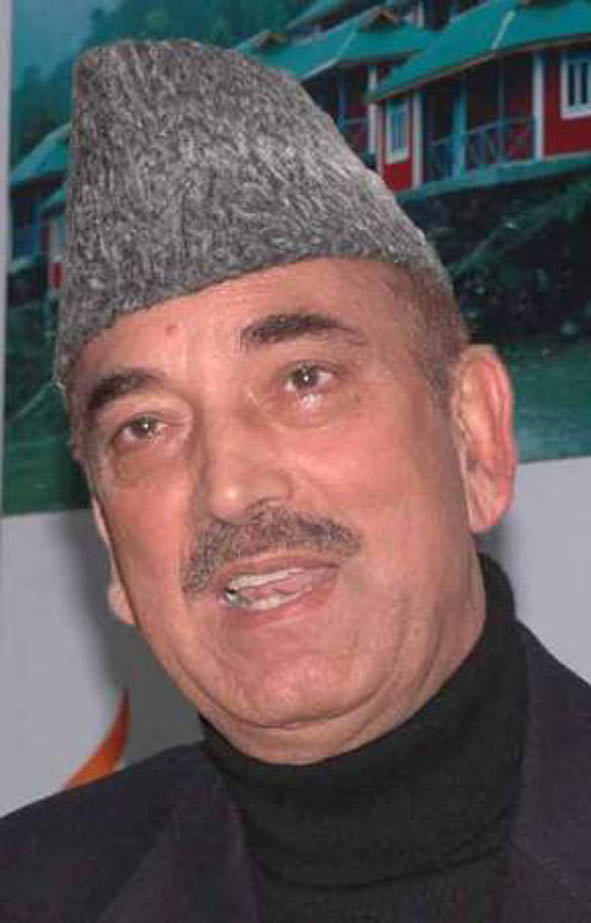
Azad say no to privatisation of SSH Jammu
By Sanjeev Pargal
JAMMU, Apr 16: The State Government has mooted a proposal to run six prominent hospitals-three each in Jammu and Srinagar–under Public Private Partnership (PPP) including upcoming Super Specialty Hospital (SSH) of Jammu. However, Union Health Minister Ghulam Nabi Azad, a former Chief Minister of Jammu and Kashmir has shot down the proposal to hand over SSH Jammu to a private party for running on the ground that it would badly affect the poor patients in getting medicare.
However, for running five other hospitals in PPP mode, the Government has formed a high level committee to examine the proposal, work out their terms and conditions and other formalities.
Meanwhile, due to delay in construction of three Integrated Module Theatres (a very advanced version of operation theatres), the commissioning of Super Specialty Hospital of Jammu has been further delayed. The advance theatres are to be constructed by M/s Hindustan Latex Limited, a Public Sector Undertaking of the Union Government.
Six hospitals, proposed for privatization under PPP mode by the State Government, included SSH Jammu, Chopra Nursing Home of Government Medical College, Jammu and District Hospital, Gandhi Nagar, all three in Jammu region, Maternity Hospital, Sanat Nagar, Srinagar, Jawahar Lal Nehru Memorial Hospital, Srinagar and Kashmir Nursing Home, Gupkar Road.
Four of these hospitals fell under the Medical Education Ministry and two under the Health Ministry.
Official sources told the Excelsior that since the SSH Jammu had been constructed with the funding of the Central Government, the State Government had written to Union Health Minister Ghulam Nabi Azad seeking his permission to allow the State to run it under the PPP mode on the ground that the State on its own was finding it difficult to manage infrastructure to commission and run the hospital.
However, sources said, Mr Azad has rejected the proposal on the ground that it would deprive poor people of the State of treatment as private parties would levy charges for all kind of healthcare including surgeries and tests etc.
The Government has decided to approach Mr Azad again with the similar proposal citing that Karnataka Government has been permitted to run the SSH in PPP mode.
According to sources, the Union Government’s permission was not required for running five other hospitals under PPP mode and, therefore, the State Government has constituted its own Task Force to work out modalities of switching over to PPP mode for these hospitals.
“The proposal was lying with Planning Department after which it would be examined by an official expert committee to be appointed by the Chief Secretary to work out all modalities and terms and conditions for running five hospitals under PPP mode”, they said.
Under the PPP mode, the patients had to make payments for all the services availed by them in the hospitals.
The hospitals were handed over to private parties with condition that they would provide free treatment to a certain percentage of BPL patients. However, it has been seen that the poor patients were not being given treatment by the private hospitals, which had availed land at nominal charges from the Government with the condition of providing free treatment to 25 per cent patients.
Sources claimed that terms and conditions of the PPP mode would be devised in such a way that it didn’t hit the poor patients much.
According to sources, Chopra Nursing Home has been closed down by the authorities after ban on private practice of the doctors as the patients had to pay fees to doctors and charges for surgeries, fixed by the Government, for availing facilities in the Nursing Home, which was run by the GMC Jammu.
The Government has decided to approach the Supreme Court to allow it to file a petition in the High Court against its order imposing ban on private practice of the doctors. Till then, Chopra Nursing Home would remain closed.
According to sources, there was a majority view that the Government hospitals and Nursing Homes run by it should not be given to private parties under the PPP mode as it would adversely affect the poor patients and deprive them of medical facilities in good City hospitals and Nursing homes at both Jammu and Srinagar.
“Despite handing over six hospitals to private parties under PPP mode, the major share would remain with the Government”, sources said but admitted that the people had to pay charges for the facilities including surgeries, tests etc, which hitherto were being conducted either free of cost or with very nominal charges.
Meanwhile, commissioning of Super Specialty Hospital in Jammu has been further delayed as HLL was yet to start construction work on three Integrated Modular Theatres.
“The Integrated Module Theatres were highly advanced operation theatres in which the doctors could even seek opinion of their colleagues within the State, country or even abroad through video conferencing while performing surgeries”, sources said, adding that the task of construction of new theatres had been assigned to the HLL.
“As construction of three advanced theatres was yet to begin, the commissioning could take a lot of time”, official sources said and added that the Hospital without Modular Theatres would have no meaning as the very purpose of Super Specialty Hospital would be defeated.
The State Government and Medical Education Ministry were putting a lot of weight behind commissioning of the Super Specialty Hospital to lessen burden on Government Medical College (GMC) Jammu.
Six Super Specialties, which would be commissioned in the new hospital coming up at Resham Ghar, adjacent to the GMC Jammu, were Cardiology, Cardio Thoracic Vascular Surgery (CTVS), Neurology, Neuro Surgery. Nephrology and Nephro Surgery.
When contacted, Medical Education Minister, RS Chib said the construction part of SSH Jammu was executed by Central Public Works Department (CPWD) while provisioning was being done by HLL. He added that till the Modular Theatres were constructed by the HLL, the commissioning of the hospitals was not possible.
The Super Specialty Hospital was announced in February 2004 for many States including Jammu. A lot of time was consumed for identification of the site for its construction. Finally, the construction was taken up at Resham Ghar as it was close to existing GMC Jammu.
Sources said majority part of construction of Super Specialty Hospital excepting three Modular Theatres has been completed. With construction of advanced theatres and recruitment of staff, the hospital would be commissioned.
SERC approves average 6.2 % hike in power tariff
PDD flayed for being slow in improving performance
Excelsior Correspondent
JAMMU, Apr 16: All categories of the electricity consumers in the State will have to shell out more money as the State Electricity Regulatory Commission (SERC) has approved around 6.2 per cent average hike in the existing power tariff. However, this hike is far less than that proposed by the Power Development Department (PDD) in its tariff petition.
Authoritative sources told EXCELSIOR that Power Development Department had proposed an average tariff of Rs 4.10 per kilo watt hour (unit) for the current financial year (2012-13), an increase of about 18.5 per cent of the average existing tariff. However, the SERC re-worked the proposed tariff hike to be 19.44 per cent instead of 18.5 per cent with respect to reworked sales at the existing tariff.
The Commission has approved the energy sales for 2012-13 financial year by considering the average tariff for un-metered consumers same as the average tariff arrived at for the metered consumers within each consumer category and by considering increased sales by virtue of 10 per cent Transmission and Distribution loss reduction target set for PDD from the T&D loss levels of 56.76 per cent in financial year 2011-12, sources said, adding the Commission has approved T&D loss level of 46.76 per cent for the financial year 2012-13.
“The average tariff at existing rates for 2012-13 as determined by the Commission is Rs 3.64 per kilo watt hour and it has allowed an average tariff of Rs 3.86 per kilo watt hour for 2012-13 financial year, which is an increase of around 6.2 per cent in comparison to the average existing tariff”, they said.
For the domestic consumers, power tariff has been hiked to Rs 1.82 per unit as against existing rate of Rs 1.66 per unit. Similarly, for non-domestic/ commercial consumers, the tariff has been hiked to Rs 3.49 per unit as against existing Rs 3.22 per unit. For State/Central Government Departments, power tariff has been hiked to Rs 6.07 per unit as against existing rate of Rs 5.78 per unit. For agriculture consumers, the tariff has been hiked to Rs 1.68 per unit against existing rate of Rs 1.60 per unit.
Against the proposed total revenue demand projected at Rs 2,006.75 crore (at 95 per cent collection efficiency) by the PDD, the Commission has approved total revenue demand at Rs 2,238.58 crore (at 100 per cent collection efficiency) at the approved tariffs (effective from April 1, 2012).
The SERC has approved higher tariff hike for the un-metered consumers within the domestic, non-domestic and agriculture consumer categories in comparison to the metered consumers in the same categories, they said, adding “in order to promote metering in the State, the Commission will continue to allow steeper increase in tariffs for un-metered electricity consumers till PDD completes its metering process”.
While reviewing the performance of the PDD, the Commission observed that despite various directions, the Department has been slow to improve its performance in various aspects primarily due to lack of adequate planning.
The Commission said: The Department needs to ‘Plan to Execute’ especially in the areas of consumer indexing, feeder metering, distribution transformers metering, energy auditing of feeders and DT, deployment of IT tools for loss measurement and analysis, metering of un-metered consumers, HT meter replacement and cubicle installation, LT CT meter and service line replacement, re-conductoring of feeders, transformer augmentation in case of overloaded transformers, reduction in HT:LT ration to the level of 1:1, deployment of High Voltage Distribution System (HVDS) in areas with losses above 25 per cent, capacitor installations on HT and LT industries, reduction in transformers failure, spot billing especially in urban areas, disconnection of defaulters, anti-theft enforcement drives and data recording and reporting procedure.
“Considering the current level of power losses, there is a dire need to address the problem and tackle it in a time-bound manner and drastically reduce the loss level-at least by 10 per cent of the existing levels every year till the losses are brought down below 15 per cent”, the Commission said, adding “this can be achieved by various interventions such as HVDS, SCADA and Database Management, Energy Audit and 3rd party verification of technical and financial data, incentive and disincentive scheme linked to performance on loss reduction”.
Fai’s conviction a major setback for separatist movement
Excelsior Special Correspondent
JAMMU, Apr 16: Those seeking extradition of the Washington D.C-based Kashmiri American Council (KAC) founder, Sayyid Ghulam Nabi Fai, are clearly doing a disservice to the nation they claim to be serving. This 1,000 million-strong nation is under little illusion as the administration of justice in India has proved to be an advantage for anybody seeking to destabilize this country’s sovereignty and integrity. Generations have seen how all the icons of rebellion in this country have built their strengths more on the weaknesses of a democratic set up than the masses they claim to be their followers.
For Fai, staying as a citizen of the United States of America had its advantages as well as disadvantages. Coming from a strong Jamaat-e-Islami background, his intimate relationships with Students Islamic Movement of India, Rabita Aalam-e-Islami and Motamar-e-Aalam-e-Islami made him the strongest contender for ISI’s Kashmir franchise in America. For years, he enjoyed monopoly in “representation of the Kashmir cause” from America to Europe. It was years later that he got a European counterpart in the form of Dr Ayyub Thakur, who settled and operated in London. Men like ‘Barrister’ Abdul Majid Tramboo and Nazir Shawl joined the caucus much later.
All that Government of India could assert against this brazenly ISI-sponsored axis was that Fai was booked in a minor offence under Public Safety Act (PSA). The warrant was never executed in the last 32 years. Interestingly, the man who deserted his ordinary Kashmiri wife without even divorcing her and settled with a new Chinese spouse in Virginia, emerged as Kashmir’s strongest ‘human rights activist’ overseas.
There are credible media reports that two of J&K’s Ministers of Tourism enjoyed hospitality of Mr and Mrs Shawl in London and even facilitated Mrs Shawl’s visit to the Valley. Police records suggest there are no FIRs against late Dr Thakur, Shawl or Tramboo. It is this group of activists that kept the Kashmir pot boiling with ISI’s money everywhere from Europe to America. None of the successive governments, either in New Delhi or in Srinagar, did ever initiate an action against these operators of so-called Kashmir Centres of London and Brussels. Neither the Indian High Commission in London nor the Indian Embassy in Washington D.C. did ever issue a statement, let alone initiating a diplomatic procedure against late Thakur or Fai. It was decades later that Fai first realized the disadvantage of living in USA. Nobody, however influential, could save him from the conviction a district court pronounced on him last fortnight.
Had the KAC supremo stayed in J&K or New Delhi, he would have grown like hardliner Syed Ali Shah Geelani and others of the ilk did over the decades. Firstly, there would have been no prosecution. Even if there was one, there would have been no Thana Munshi to record evidences against him, no Investigating Officer to interrogate him, no Public Prosecutors to push his offence for conviction and no judge to send him to jail. He would have come clean of all charges, if any ever leveled against him. Not only that. National Conference and PDP would have been vying with each other to earn his good will and blessings and an ‘elected separatist’ from Kupwara district would have threatened self-immolation on implementation of the judgment, if one came by mistake against him.
Much like his protector-crusader Mirwaiz Umar Farooq, Fai would have been enjoying the status of a Chief Minister with the Government providing him bulletproof cars, hordes of personal security officers, house guards and escort personnel. He would have been taking pride in telling fellow villagers of Soibug that the Government had been spending on his security more money than his entire residential belt in Budgam had paid as electricity fee for a year. On his minor ailment, helicopters burning taxpayers’ money as fuel would have flown him to the country’s best hospitals to get him the kind of treatment Manmohan Singh and Atal Behari Vajpayee are entitled to.
Had he decided to also earn some money as Professor at University of Kashmir, he would have been preaching separatism as comfortably as another of his saviour-crusader, Dr Hameeda Nayeem, has been since 1990. Like her, he would have visited the entire world and spewed more venom against India than he did while staying in USA. Had he chosen to function as a journalist like yet another of his saviours in Jammu, he would have been rubbing shoulders with Governors, Chief Ministers and Ministers in the Union Cabinet and hurled more virulent invectives on the “terror state” like Vedji, Gautam Navlakha and Arundhati Roy. He would have been appearing on the Indian television channels and singing songs for Azadi and Pakistan. Money would have been uninterruptedly flowing to him from Pakistan and other foreign countries and he would have been running enviable businesses in Dubai like his luckier Valley-based colleagues. But, his bad luck was that he chose to live in America—the country that never compromises insult to its law.
While almost all of Kashmir’s separatist leaders are enjoying the best of freedom in globetrotting at their will—deciding what country they should visit when, where they should pursue a Ph D and where they should set up a business— poor Fai is going to languish in an American jail for the next two years. Notwithstanding their letters to the Virginia judge in Fai’s support, they are now complaining privately that the “poor Jamaat guy” has discredited entire separatist movement by getting himself labeled as “ISI’s agent promoting Pakistan’s policy on Kashmir” . This really serves as an unprecedented setback for the cause they call ‘azadi’.
Draft of 12th Five Year Plan for J&K prepared, Cabinet to discuss shortly
Rs 67,800 cr Plan size proposed, 8% growth in economy projected
By Mohinder Verma
JAMMU, Apr 16: The draft of 12th Five Year Plan for Jammu and Kashmir has been prepared as per the approach paper and Guidelines for Classification of Expenditure issued by the Planning Commission of India and the same will be placed before the State Cabinet very shortly for discussion and approval.
Authoritative sources told EXCELSIOR that exercise for preparation of 12th Five Year Plan (2012-2017) for Jammu and Kashmir, which was started in the month of December last year by the Planning and Development Department of the State Government, has now been completed strictly in accordance with the approach paper and Guidelines for Classification of Expenditure issued by the Planning Commission of India.
Disclosing that presentation vis-à-vis draft of 12th Five Year Plan has already been made before some top officers of the Government including the Chief Secretary, Madhav Lal, sources disclosed that draft would be placed before the State Cabinet very shortly for discussion and approval, adding Planning Commission of India has already asked the State Government to get ready for making presentation on the 12th Five Year Plan of the State on a date to be finalized and conveyed by the Commission in near future.
Sources disclosed that size of 12th Five Year Plan (2012-2017) has been proposed at Rs 67,800 crore. This includes Rs 8,630 crore revenue component and remaining capital component. It has also been proposed that one-fifth of the committed revenue expenditure should be transferred to the non-plan every year during the plan period.
As per the draft, all the works which were started during the 10th and 11th Five Year Plan would be completed during the 12th Five Year Plan. For the new works and schemes during the 12th Five Year Plan, an amount of Rs 20,000 crore has been proposed.
“In the draft, power, road connectivity, education, health, irrigation and rural development have been declared as priority sectors”, they informed, adding “major portion of the Plan Investment would be spent on the productive sectors like agriculture, horticulture, dairy development and industries”.
Stating that during the 11th Five Year Plan the growth rate was 6 per cent, sources said that average growth of 7.5 per cent during the entire 12th Five Year Plan period has been projected in the draft, adding starting from 7 per cent in 2012, the growth rate would reach up to 8 per cent in 2017, the last year of the 12th Five Year Plan.
As far as employment avenues are concerned, around 6.40 lakh additional job opportunities are likely to be generated during the 12th Five Year Plan. These includes 1.20 lakh salaried jobs, 4.40 lakh self employment and 80,000 casual labourers, sources said quoting the draft.
For the Mahatma Gandhi National Rural Employment Guarantee Scheme (MGNREGA), an amount of Rs 13,000 crore has been proposed for the 2012-2017 period during which 36 crore mandays are likely to be generated, sources said.
In the draft, integration of NREGA works programme with line departments particularly in respect of road connectivity, flood protection and irrigation works has been suggested to maximize the achievement, sources said.
About the energy sector, which has always been flagged as priority area in the State, the draft has proposed Rs 17,235 crore while as for the social services sector an amount of over Rs 20,000 has been proposed for the 12th Five Year Plan. “In the social services sector, there will be massive hike during the 2012-2017 period as during the 11th Five Year Plan, the allocation was Rs 834 crore”, sources said.
Similarly, as against Rs 1696 crore allocation during the 11th Five Year Plan, an amount of Rs 2947 crore has been proposed during the 12th Five Year Plan for the irrigation and flood control sector, sources said while disclosing that for the first time creation of State Innovation Fund has been proposed for e-governance and transparency initiatives.
It is worthwhile to mention here that 13th Finance Commission has already sanctioned Rs one crore for each district of the State for e-governance.
Even Kandi Development Programme has been proposed to be introduced during the 12th Five Year Plan with the allocation of Rs 400 crore. The allocation for the Tribal Sub-Plan and special component for welfare of SC/ST has also been worked out in the draft of the 12th Five Year Plan, sources said.
It is pertinent to mention here that for the preparation of the draft of 12th Five Year Plan, the Government had engaged two experts– S Mahajan, former Secretary, Planning and Development Department, and G A Qureshi, former Director General, Economics and Statistics Organization.
47 killed in Kabul siege
KABUL, Apr 16:
Afghan forces today regained control over parts of the capital Kabul after killing all the 36 Taliban militants – some wearing burqas – who unleashed the biggest wave of coordinated suicide attacks in a decade.
The brazen 18-hour attack on the city was brought to an end this morning after militants holed up in two buildings near Parliament were killed by heavy gunfire by Afghan security forces and air assaults from NATO helicopters.
“A total of 47 people were killed in the attacks which also left 65 wounded,” Interior Minister Bismillah Mohammadi told reporters here.
He said the figure included 36 Taliban militants, eight Afghan security guards and three civilians.
“Some of the Taliban suicide bombers came wearing burqas and carrying flowers to their intended targets which included a number of embassies and the Parliament building, before casting it off to unleash their lethal weaponry,” he said.
For the first time, Afghan security forces took the lead in beating back the Taliban assault, a NATO spokesman said, adding that their helicopters had provided air support to obliterate some of the militant held areas.
The response of the Afghan security forces was hailed by top US commander Gen John Allen and the US ambassador to the country Ryan Crocker.
The attacks raised fears over the precarious security situation in the country as NATO prepares to withdraw the bulk of 130,000 troops from the war-torn country by the end of 2014 and hand over responsibility to the Afghan army.
The Afghan forces flushed out insurgents from the central diplomatic area and killed the last gunman who was fighting near Parliament in the west of the city, a senior police official said.
Earlier today, residents of Kabul woke up to a second day of explosions and the crackle of gunfire as Afghan forces hit the two spots where militants were holed up overnight with heavy guns to bring an end to multiple sieges clearly designed to undermine confidence in NATO and Afghan military gains.
After the last of the militants was smoked out, silence fell on the city whose roads were littered with bullet shells.
“The battle is over in Kabul… All the three places in Kabul were cleared and all the militants were killed,” Afghan Interior Ministry spokesman Siddiq Seddiqi told.
“The fighting ended at 7:20 Kabul time (this morning) and all the roads are open now,” he said.
Kabul and three other Afghan cities were hit by a wave of suicide attacks yesterday, with embassies and NATO bases coming under fire in what Taliban said was the start of their “spring offensive.”
The US, British, German and Japanese embassy compounds also came under fire in the first major attack on the city in more than six months, but no Indian target was attacked.
All the staff in the missions were reportedly safe.
As in the earlier attack Taliban militants took over half built buildings and used them to fire down on nearby embassies and military bases.
They attacked Kabul Star Hotel in Wazir Akbar Khan area of the capital and some tried to storm the Parliament firing rockets but were engaged by security forces and driven back.
The Parliament was in session and some MPs joined security forces in fighting them.
The militants also struck at cities in three provinces – an airport in Jalalabad, Logar and Paktia.
Taliban spokesman Zabihullah Mujahed claimed responsibility for the attacks and warned that the strikes were the beginning of the “spring offensive”.
Afghan officials said they have also arrested two would-be suicide bombers, who intended to kill the second Vice-President, Mohamed Karim Khalili. (PTI)
Farooq admitted in AIIMS
Excelsior Correspondent
JAMMU, Apr 16: Union Minister for New and Renewable Energy and National Conference president, Dr Farooq Abdullah was today admitted in All India Institute of Medical Sciences (AIIMS) in New Delhi following complaints of pneumonia.
Dr Abdullah, who had yesterday gone to Amritsar to pay obeisance at Golden Temple, returned to New Delhi this afternoon.
He was admitted to the AIIMS this afternoon following pneumonic infection.
However, his condition was stable, doctors said.
“Dad is in hospital with a pneumonic infection in the lungs. Few days rest needed’’, Chief Minister and Farooq’s son, Omar Abdullah tweeted late this evening.