

Konchok Dorjey and Tsewang Rinchen
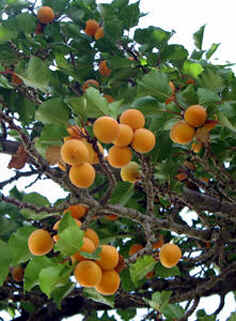 Apricot (Prunus armeniaca), locally known as “chulli,” is one of the most nutritive, delicious and commercially important fruit crops of Ladakh. It has a wide range of distribution in different parts of Ladakh with particularly abundance in Sham areas (lower Ladakh) including Dha-Hanu, Garkhon, Skurbuchan, Domkhar, Wanla, Khaltse and Timosgang. Apricot in Ladakh, is believed to have been introduced a century back either from China or Central Asia. Since then, apricot has become one of the most preferred and commercially cultivated fruit crop of Ladakh and has become an integral part of the people there.
Apricot, being a unique, tolerant and highly stable plant, can grow exuberantly in wide range of jagged sandy soil, having very low nutrient and moisture content, in the Cold desert of Ladakh. Luxuriously adapted in the extreme environment here in Ladakh, the apricot tree can attain a height of about 4-7m bearing heart shaped leaves, and produces flowers in spring and friuts in summer. With the onset of breezy spring, these trees overcome the long terrible winter dormancy and start producing young healthy leaf buds, and by the month of April-May they produce beautiful white or pinkish flowers that not only ensures the continuity of their population but also give a unique look to the sandy desert of trans-Himalaya. By the month of August-September, they start producing yellow-orange, rounded or oval shaped fruits that are juicy, sweet taste with peculiar apricot flavour.
There are many varieties of apricot grown in Ladakh, which differ from one another in taste (sweet, bitter, sour), size, shape and physical appearance. Some of these varieties include Halman, Laktse-karpo, Safaida, Khanteh etc. Halman and Laktse-karpo are the most preferred one for commercial purpose. Both, the fruit and kernel of apricot is believed to be highly nutritive and consumed as either fresh or dried. They are known to possess a good amount of vitamin-A, vitamin-C, potassium, calcium, iron, carbohydrate, amino acids and sugars. Apricot has been consumed by the people of Ladakh for decades. It has became an integral part of the traditional culture of people here. Local people serve dried or fresh apricot as an excellent dessert, particularly on traditional festival occasions. During the chilly winters, when people prefer to remain indoor, dried apricot fruits make an excellent eatable that compensates the long cold winter, especially for children who use to fill their pocket with dried fruits and enjoy themselves.
In entire Ladakh, a farmer practices one of the best and oldest method of fruit preservation and storage by open sun drying. The local people, particularly women and children, collect the fully ripend apricot in a large traditional basket (locally known as Tsepo) and wash them under running water to remove the dusts, and then spread on the roof top for drying under open sun light. The fruit are dried either as whole fruit (locally known as Fating) or seed are separated before drying, and the dried fruit without seed are called Chulli skampo. During the sun drying process, the fruit loses its natural colour and turns dark brown. This is the major drawback of traditional method of sun drying in Ladakh. However, at present, the Ladakhi farmers have adapted several improved methods of drying including treatment with sulphurdioxide and use of polyhouse apricot drier. These methods are believed to reduce or prevent the browning of fruits.
From the commercial point of view, apricot has been the major source of income for many Ladakhis who are engaged in cultivation and marketing of this fruit. Halman and Laktse-karpo are the two prime varieties that have a good demand in the market and are profitably sold @ Rs 200 – 250 per kilogram. Besides, the kernel of apricot is also consumed and marketed by locals. The seed with sweet kernel is consumed as dry fruit and make a good market price of Rs 100-150/kg while the seed with bitter kernel are used for oil extraction. The apricot oil (locally called tseghumar) is a multipurpose oil with a peculiar apricot flavour and is sold at a remarkable price of Rs 300-500 per litre. Traditionally, the oil is extracted from the semi-roasted kernels by crushing them in a large wooden mortar (locally termed as Thorn), followed by heating and compressing them with few drops of water on a flat stone(called as Tsigg). Besides, several other products such as apricot jam, squash, jelly and cake are being produced for commercial purposes.
This is worth mentioning here that Ladakh is one of the major producer of apricot in India, but, at present almost 90% of the fresh apricot being produced in this cold arid region go waste and its market value stands abysmal. The prime reason for such debacle is the lack of proper network for processing and supplying apricot products in Ladakh and elsewhere in India. The local apricot growers, though, have the knowledge of cultivation and drying, but, they are devoid of any modern technical skills for proper preservation, storage, transportation and marketing of apricot products. This results in a huge less not only to the poor farmers but also to the economy of Ladakh in general.
Keeping in view the major challenges of apricot processing and marketing, the people of Ladakh particularly farmer and young generation needs a deep understanding and awareness of apricot production and commercialization. Defence Institute of High Altitude Research (DIHAR) has made a significant research on apricot propagation, processing and commercialization in Ladakh. In fact, several such scientific research is needed to overcome the major obstacle faced by apricot growers and marketers. . If this God gifted natural resource of Ladakh is to be commercialised and made a potential source of income for thousands of poor Ladakhi farmers, then the local government and non-government agencies, who seem to be complacent, needs to recognise the potential of apricot and go hand in hand with farmers.
Ladakhi Apricot
Vanishing vultures in J&K
Dr. Dhirendra Kumar, Dr. Vikas Mahajan,
Dr. R. K. Taggar and Vibha Raj Shanti
 Parrots melodious sound, Pea fowls dancing step and Sparrow chirping has been entertaining every one since long. But what about Vulture? They neither have an attractive look nor melodies sound. But it has a great ecological significance in maintaining sustainable ecosystem. During the course of time, this bird has been neglected in such a way that their population has declined drastically and now population remain within sixty thousand only. Vultures in India are reeling under the threat of extinction, but seeing of a central Asian scavenger Steppe eagle in the Jammu region has brought many hopes to wildlife experts and environmentalists. The local vultures, though decreasing in number, seem to have offered the well-known Indian hospitality to the guests Vulture. It high time for this Jammu region that Steppe Eagle (guest bird) is finding a favorable environment in this region to reside and breed.
There are many reasons which led to decline in the number of population of this bird, which are as follows:
Urbanization
Environmental pollution.
Rampant use of pesticide in agricultural field. Changing habitat.
Despite all, the main culprit is diclofenac. Diclofenac is a drug which is widely used for the treatment of Animal. The residue of diclofenac remains in the body of animal after treatment. When animal dies and vulture feed on animal carcass and they dies due to urinary failure. The mortality of vulture is very high among those which feed on the carcass that had been treated with diclofenac. Due to this very one reason the population of vulture has declined sharply.
Vulture and Ecosystem: Vulture is great scavenger which feed on dead animal carcass. Carcasses which are rotting are the main source of disease spread. Vultures clean the environment by eating the carcass. It not only prevents the disease spread among the animal but also to the human being. During natural calamity like flood, drought etc. it cleans up the putrid carcasses. Major decline in population has disturbed the local environment or the ecological system.
Vulture Breeding: Vulture is slow breeder and usually lays only one egg in a year. According to expert, there is no cross group mating among vulture in one area. In turn, inbreeding reduces survivalist and fertility. Heavy use of pesticide in the field, ultimately go to the vulture which leads to reproductive disorder causing reduced breeding capacity.
Captive Breeding – Some Vulture are kept in captive and breeding is being carried out. Breeding Center’s are operating at Pinjore in Hariana, Rajabhathawa in West Bengal Rani in Assam. Experts are studying the infrastructure and protocols to replicate the breeding success of Pinjore at zoos of Junagarh (Gujrat), Nehru Zoo (hydrabad) and Van Vihar (Bhopal). Artificial Incubation has improved the breeding success of captive vulture. During incubation of eggs the temperature is maintained by the air conditioner and in the same line humidity is also maintained. Balance temperature and humidity is essential for breeding success.
Vulture Safe Zone – To safeguard vulture population, environment ministry has coined the concept named Vulture Safe Zone. It would be zone where the use of drug diclofenac not to be use in the treatment of livestock. Other reasons that also lead to the disappearance of vulture will be prohibited.
Plan for Vulture Conservation – Now the vulture is listed in the Red List of IUCN (International Union for Conservation of Nature) as critically endangered. Therefore, a planed effort is needed in this regard, which may be as follows:
A. Removal of Diclofenac
I. Notification of ban on veterinary use.
II. Search for alternate drugs.
B. Population Survey
I. Data Collection
II. Conservation Strategies
II. (a). In Situ Conservation Methods
In-situ conservation, the conservation of species in their natural habitats, is considered the most appropriate way of conserving biodiversity. Conserving the areas where populations of species exist naturally is an underlying condition for the conservation of biodiversity. That’s why protected areas form a central element of any national strategy to conserve biodiversity.
II. (b). Ex Situ Conservation Methods
Ex-situ conservation is the preservation of components of biological diversity outside their natural habitats. This involves conservation of genetic resources on a diverse body of techniques and facilities. Some of these include:
* Gene banks, e.g. sperm and ova banks, Embryo freezing banks.
* In vitro animal tissue and microbial culture collections.
* Captive breeding of birds and artificial propagation with possible reintroduction into the wild habitat.
Ex-situ conservation measures can be complementary to in-situ methods as they provide an “insurance policy” against extinction. These measures also have a valuable role to play in recovery programmes for endangered species. Ex-situ conservation provides excellent research opportunities on the components of biological diversity.
C. Establishment of Vulture Care and Management Center
D. Establishment of Captive Breeding Center
E. Awareness campaign should be carried out considering
a. Significance of Vulture in ecological balance.
b. Ban on use of diclofenac on Animal.
Ujahai Bawali
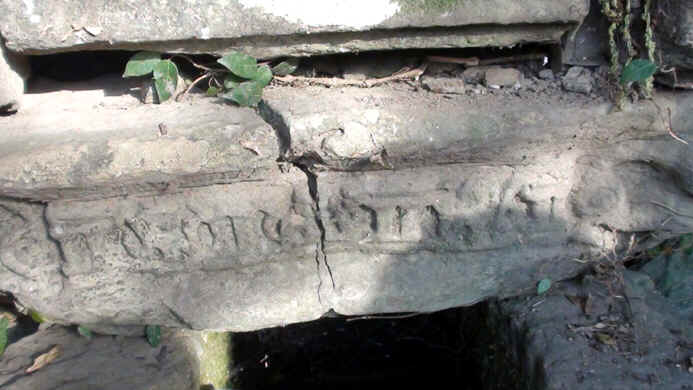 Ujahi Bawali (Natural Spring) of pre-historic time is located in a very attractive spot in the village Sangla of tehsil Surankote, District Poonch. It is about 37 kilometers in the north of Poonch town. This is one of the most springs with fine quality of inscriptions of pre historic period. These sculptures were carved on stone plates and panels which were fitted in the side walls of the Bawali. The natural spring or Ujahai Bawali is jutting out from the base of Ranjatti hill. The water in huge quantity gushes from spout type long stones projected in the middle of the back wall which is known as (Narra). After passing from a hallow stone pipe, the water falls in the Bawali.The Narra is fitted on 6’ x 2 ‘ x ¾’ long stone plate. The Mantras in sharda language are engraved on this stone plate which is still intact. This is the only such stone with Sharda inscription available in Poonch region. Below this engraved stone, the series of stone plate 2′ x 1 ½ ‘ x ¾ ‘ carved with figures and sculptures of gods, goddess and votaries were fixed alongside the walls above the Bawali. These stone plates with and figures decorate the Bawali from all sides except the frontal portion. These stone plates with the images of gods and goddess were considered very sacred by Hindu devotees who were the original natives of this area. The fluted columes and pendimental niches indicate the influence of Kashmiri Hindu art on these sculptures. Below the series of engraved stones, the Bawali is constructed with 6′ x 2’ x ½ ‘ long rectangular stone.
These sculptures display very fine type of art and workmanship and were the finest pieces of art of pre historic period in Poonch. The Muslim natives preserved this Bawali in its original shape upto 1850 AD. After 1850, Poonch became the principality of Dogra Hindu Raja Moti Singh.He and his descendants ruled Poonch upto 1947 AD. During this period Hindu traders of western Punjab migrated to the villages of Poonch principality and established their venture. Such Hindu traders had also settled in the village Gonthal, Lathong, Gundi and DandiDahara which are surrounding Ujahai Bawali. These Hindu families had again started visiting Ujahai Bawali to have dip in the sacred water of the Bawali and offer prayers before the deities engraved on the stone plates fitted around the side walls of the Bawali.
In 1947, almost all the Hindu traders of this belt left their native villages due to security threats,but the Bawali along with the idols of gods and goddess were not touched by the native Muslim and they maintained the Bawali intact in its original shape till 1989. However, during militancy days from 1990 to 2003 when this area remained completely under the grip of foreign mercenaries, the fanatic terrorist disturbed the original structure of the spring. They broke number of stone plates engraved with the images of gods and goddess. They were planning to destroy all the stone plates on the plea that they had to encounter these images whenever they passed by this site. Therefore they decided to destroy all these precious art monuments, but the saner elements of local Muslim prevented them from doing so. However the engraved stone plates which were not broken were removed from their original places and dumped near the Bawali like an ordinary stones, which are still lying in a very miserable condition. If these precious engraved stones of pre-historic period period are not preserved by lifting them from Ujahai Bawali to some safe area, these will be ultimately used in the construction of buildings as ordinary stones as has happened in a number of places in such cases. It is surprising that the long stone plate below the Narra with sharda inscription is still intact in its original shape and not disturbed even by the militants.
Presently, only Muslim population is living in this area. There is no Hindu family to look after this heap of precious stone plates which have been dumped near the Ujahai Bawali. Therefore there is a need to remove these precious stone plates and the rectangular stone with sharda inscription from this spring to a safer place. It is proposed that the matter be taken up with the Archeological Deptt. of Govt. of India for the preservation of this heritage treasure of Poonch. This can be done only with the help of Archeological Department. There is also a need to excavate the area around the Bawali for further findings.
Baba Bhed Devta-a spiritual journey
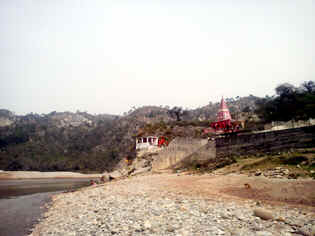 In the local folklore and mythology, Baba Bhed Nag was the most illustrious son of Vasuki Nag the king of Serpents who handed over the rule of Jammu kingdom to Raja Bhed Devta when he brought waters of Tawi from Kali Kundi glacier in Kaplash mountains of Bhaderwah to Jammu with the help of Kaliveer and blessings of Kalika Mata. That is why a large number of Rajput clans who ruled over small principalities in Jammu region consider Baba Bhed Devta as their kuldevta along with Kaliveer.
The legend of Baba Bhed also has a great historical significance as it is believed that in the hoary past Nagas who ruled over north India were serpent worshippers. The legend also has its origin in the Shaivite Hinduism which was prevalent in much of the Jammu and Kashmir state in the ancient times.
The place where shrine is situated is known as Bhed village. The shrine is atop a big rock on the base of which is the gently flowing river Tawi. Due to U turn of the river, a large and deep water body has been created which is locally known as ‘Dawar’ in Dogri. Fish which abound the water body is called as Devta. Devotees offer balls of kneaded flour to the fish. Fishing is strictly prohibited in this stretch of the river which has led to the creation of a sanctuary.
According to limnologists Baba Bhed is an important sanctuary for many a species of fish and other aquatic beings. In the recent times, the environmentalists have come to recognize the important role played by such sacred water bodies and groves in the preservation of the bio-diversity in India. The place also has afforded protection to cormorants, rock pigeons, and other fauna.
Baba Bhed is revered not only in Jammu region but also in Punjab .Every year thousands of devotees throng the shrine to pay their obeisance. According to the local tradition the Brahmins of Largan and Sodha villages act as priests of the shrine. Similarly the Rajputs of Bhed Mandi and Aitham perform the function of the temple sevadars (caretakers) of the shrine.
Though the pilgrimage goes on throughout the year, more arrivals are witnessed on Sundays, purnimas or on those auspicious days when mundan ceremony can be performed. A big mela is organized on the auspicious occasion of Aashad and sharad purnima. On such occasions Gardis, who also calls themselves as Baba Bhed de Balyats, sing Karkas in the praise of the deity and beat drums. Jattar is also performed by the head pujari. Reverence for Baba Bhed Nag brings to the fore the fact that people of this kandi belt generally have suffered from scarcity of water and the abode of the Devta has been symbolic of life giving water and subsequent agricultural productivity.
A platform has been constructed on the rock where devotees worship the deity and present offerings. On auspicious occasions devotees offer saungals also called Chaunda in the name of their Jayesth or eldest son. Those people who do not have ‘Sthan’ or place of worship for their kuldevta at home offer the sacred saungals at the shrine.
The devotees have great reverence for Baba Bhed who is famous for granting boons and fulfilling wishes of the devotees. The devotees on fulfillment of their wishes visit the shrine for thanksgiving. The agriculturists particularly make it a point to offer the agricultural produce like milk, grains etc to the deity. Sometimes a goat is also sacrificed on the occasion of child birth, mundan or any other ceremony.
The shrine of Baba Bhed Devta is situated in the village Bhed which is on the left bank of river Tawi. The shrine can be reached through different routes. From Jammu , the devotees travel to Nagrota where just one km ahead of Kol Kandoli shrine, a road on the right leads up to the village Katal Batal situated on the right bank of river Tawi. From here on after descending to the river bank one has to cross Tawi by a boat service. Once the river is crossed, a welcome Arch welcomes the devotees in Sodha village. A devotee has to trudge a distance of three and a half kilometers through fields, thick vegetation and after crossing a number of brooks to reach the shrine. A part of the trek also involves steep incline paved with stones (Takki) which has to be negotiated on foot with care. However, all the physical exertion is forgotten once the pilgrim reaches the shrine located in the picturesque small valley surrounded by the hills. The other route is from the village Aitham situated on Jammu-Surinsar-Mansar route. Though this route is less frequented but it is equally challenging and has a breath-taking view of the Shivalik uplands and greenery. The, three kilometer long path is arduous and poses a gentle challenge to the pilgrims. It starts from village Aitham and passing through Ladgan village finally reaches the shrine. Enroute the devotees are rewarded with the sight of a train coming out of one tunnel and then disappearing into the other. Little do the devotees realize that a railway tunnel is situated right under their feet!
However due to lack of proper connectivity and infrastructure, the pilgrimage to the shrine remains a challenging task. There is no road connectivity with the rest of the world. Even at Katal Batal the base camp of the pilgrimage there is lack of public utilities like toilets, shelter sheds and resting places. The pilgrims have to depend on boats to cross Tawi which though a unique experience cannot be relied upon during rainy season. Once the Tawi is crossed again the pilgrims have to travel through a fair weather Kutcha road.
It is essential that potential of such a picturesque and religious tourist destination be tapped. Already a foot bridge is under construction over Tawi and it is hoped that public utilities shall also be provided at the shrine which is facing the problem of filth and insanitation. To improve connectivity, it is imperative that the alternative jungle track from Aitham village be also converted into a well maintained bridle path. The potential of religious tourism is immense in Jammu and opportunities galore. The shrine can be brought under the Mansar-Surinsar Development Authority so as to have an all-round development of this holy place revered by the Dogras.
(The author is a KAS Officer)
Affan represented J&K in 29th APR Scout Jamboree
Excelsior Sports Correspondent
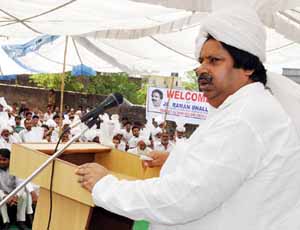 Jammu, Apr 5: Director, Public Relations, Bharat Scouts and Guides, J&K Chapter, Affan Yesvi represented J&K at the 29th Asia-Pacific Regional Scout (APRS) Jamboree held at Sri Lanka recently.
He is the first Scout from the State who met with the International Commissioner Korea Scouts Association (KSA) Mr. Simon Rhee.
On this occasion, Affan gave brief account of the activities of Scouts and Guides J&K Chapter and discussed various issues of youth in introducing them to social cause supported by scouts and Guides on the global level.
It is pertinent to mention here that the 29th Asia-Pacific Regional Scout Jamboree was organized at the historic city of Dambulla in Sri Lanka inaugurated by President of Sri Lanka, Mahinda Rajapaksa.
This was the first-ever international Jamboree organized to celebrate the 100 years of Scouting in Sri Lanka in which over 7,000 youth from 23 countries participated.
Congratulating Sri Lanka for organizing this major event, Chairperson of the World Scouts Committee Simon Rhee said that the Asia-Pacific Region is an important part of world Scouting that has great potential for growth and development of the region. He also called upon National Scout Organizations to make best use of these guys to promote peace.
Vice-President, Bharat Scouts and Guides J&K Chapter, Roma Wani felicitated Affan for his participation in the Jamboree and wished him all the best for future events.
SI Tsewang Dorjay gets “Real Heroes Award”
Excelsior Correspondent

Jammu, Apr 5: Sub-Inspector Tsewang Dorjay of J&K Police was awarded the prestigious ” Real Heroes Award” by CNN IBN-7 and Reliance foundation for rendering extra ordinary services to the society and the nation on its fifth edition at Mumbai. Every year this award is being conferred on 24 unsung heroes from across the nation.
Sub-Inspector Tsewang Dorjey (Shara) has been selected by the news channel for his contribution in the field of education and social works apart from his policing duties. The award was presented by actor Amir khan and will be telecasted on television on April 7.
Besides his hectic policing duty, Dorjay sets an example not only to his small community of Ladakh but to the nation as well. His exemplary service made entire Ladakhi populace and J&K Police proud and the young generation of Ladakh must take a cue from people like Dorjay.
“Every citizen has a responsibility towards their society and rendering social services to my country and my people is my duty” said Dorjay.
He further added that he will utilize the award money of Rs 5 lakh for some social cause.
In his speech, SP Leh, Vivek Gupta congratulated the officer and praised his selfless dedication in discharging his duties.
A Gujjar offering water to a goat while shifting towards upper reaches at Jajjar Kotli in Jammu on Thursday.
A Gujjar offering water to a goat while shifting towards upper reaches at Jajjar Kotli in Jammu on Thursday. -Excelsior/Rakesh
Army chief dubs report as stupid
KATHMANDU, Apr 5:
Breaking his silence, Army Chief Gen V K Singh today dismissed as “absolutely stupid” a report on the “unusual” movement of two army units towards Delhi in mid-January, saying unnecessary attempts were being made to “throw muck” at the government and the army.
Here on a three-day visit, Gen Singh said such reports show that people were unnecessarily trying to throw muck at the government and the army and they need to be taken to task.
“This is absolutely stupid,” he told when asked to comment on the report in the Indian Express yesterday that said the Government was “spooked” on the night of January 16-17 because of the movement of a mechanised infantry battalion from Haryana’s Hisar and a sizeable section of 50 Para Brigade.
“Whosoever is trying to make stories against the army is deplorable.
“And what it shows is that people are unnecessarily trying to throw muck at both the Government and the army and such people should be taken to task,” he said.
The Army Chief is in Nepal to attend a three-day Regional seminar on Natural Disaster Management and Humanitarian Assistance.
In New Delhi yesterday, Prime Minister Manmohan Singh and the defence establishment dismissed the report as “alarmist” and “absolutely baseless”. (PTI)
14 SPOs arrested, weapons seized
Excelsior Correspondent
JAMMU, Apr 5: Police have arrested 14 Special Police Officers (SPOs) and dismissed them from services on the charges of instigating their colleagues, posted in upper reaches of Ramnagar and other places in Udhampur district, for going on strike along with weapons.
The weapons of all SPOs, who had gone on strike yesterday and staged dharna at Ramnagar demanding increase in their wages, have been seized, police said.
While 14 SPOs, who had allegedly instigated the strike, have been dismissed from services and arrested at Ramnagar police station, others have been sent back. However, weapons of all 70 SPOs, who had gone on strike, have been seized.
A FIR has been registered against 14 SPOs under Sections 353, 34, 147, 148 RPC and Police Regulation Act.
Further investigations against all SPOs were going on.
Possibility of dis-engagement of more SPOs and arrests for indiscipline has not been ruled out, police said.
5 LeT militants killed in major operation at Handwara
From Fayaz Bukhari
Srinagar, Apr 5: Five militants of Lashkar-e-Toiba (LeT) were killed in a fierce encounter with the security forces in the Kramhoora forest area of Handwara in the frontier district of Kupwara today.
Superintendent of Police (SP) Handwara, Choudery Aslam told Excelsior that 21 Rashtriya Rifles of army and police launched a joint operation early in the morning in the Kramhoora forests.
The SP said that during the operation militants fired upon the security forces resulting in a fierce encounter that lasted for several hours.
The SP said that firing has stopped but the operation is going on and it may continue tomorrow also as the security forces apprehend that there are few more militants in the area.
Five militants were killed so far and the operation is going on, said the SP. The identity of the militants is being ascertained; he said adding that 5 AK rifles were recovered from the dead militants.
It may be mentioned here that this is the same area where five militants of LeT including district commander of the outfit were killed in last week.
Five AK rifles, 17 magazines and 3 live grenades were recovered from their possession. They were all foreign militants belonging to LeT.
SP Aslam said that the five militants killed today were part of the same group which was killed last week. He said that this group of militants was based in the forests of the Rajwar area and security forces were after them for long time.
He said that around 15 LeT militants were still operating in the Rajwar forests that have dense vegetation and it gave ample cover to the militants.
Aslam said that security forces were planning today’s operation for past three days and security forces parties were moved inside the forest right during the night and the contact with the militants was established in the morning.
The SP said that these militants were operating from the forests at least for last one year. He said that security forces were planning operation against the militants operating in these dense forests for last few months.
It may be mentioned here that Rajwar forest area has dense vegetation and is near the Line of Control (LoC) and militants have hideouts that gave cover to them.
Today’s operation is one of the successful operations after last week’s operation in which equal number of 5 militants were killed. Security forces are planning more operations in the forest area to flush out the remaining militants.