

WASHINGTON, May 5: Leaders of the U.S. House of Representatives said on Friday they reached a bipartisan deal to reauthorize the U.S. Export-Import Bank through Sept. 30, 2014, and gradually increase its lending cap to $140 billion from the current $100 billion.
The deal, negotiated by Republican House Majority Leader Eric Cantor and Democratic House Minority Whip Steny Hoyer came just weeks before the bank’s temporary charter was set to expire.
The nearly 80-year-old government bank provides direct loans and credit guarantees to help U.S. Exporters make sales in oversea markets that private lenders consider too risky. Boeing Co is the bank’s biggest customer and many other U.S. Manufacturers also rely on its services.
Bank officials have warned that without a rise in the ceiling, they could soon reach the current lending cap of $100 billion, forcing them to stop supporting U.S. exports.
Efforts to renew the Export-Import Bank’s charter, which expires May 31, had run into objections from conservative Republicans, who say it is unnecessary government interference in the market. Delta Air Lines had raised concerns, saying it had been hurt by low-interest Eximbank loans to foreign carriers.
The Senate must also approve reauthorization, but the House agreement increase chances a bill reauthorizing the bank will be on President Barack Obama’s desk before the bank’s charter expires later this month.
Last year, the Senate Banking Committee unanimously passed an alternative bill, which was supported by the Obama administration and would have reauthorized the bank for four years while raising the lending cap to $140 billion in one step.
Republicans and business groups praised the House deal.
‘Action on this agreement is necessary to promote American exports and remove a threat to the creation of American jobs,’ Republican Speaker of the House John Boehner said in a statement urging all House members to support the package.
The National Association of Manufacturers, which has backed reauthorization in the past, said the move would boost job growth.
‘Leaders on both sides of the political aisle came together today to prevent the unilateral economic disarmament of the United States on the issue of export financing,’ the group said.
The Chamber of Commerce and the Business Roundtable also issued statements praising the deal.
BUSINESS PLAN
The plan raises the bank’s lending cap to $120 billion through the end of the current fiscal year in September and allows it to rise to $140 billion in equal increments over the next two years as long as the bank maintains a default rate of less than 2 percent, according to a fact sheet provided by Cantor’s office.
The proposed lending cap increases also depend on the bank submitting a business plan to Congress and responding to a review by the Government Accountability Office on its risk management practices.
The bill, in a nod to Delta’s demands, directs the U.S. Treasury Department to initiate and pursue multilateral negotiations for the purpose of reducing and then eliminating government export subsidies for aircraft and ultimately ending all government export subsidies. It requires the Treasury secretary to report annually on progress in those talks until export subsidies are eliminated.
The Cantor-Hoyer bill contains reporting provisions aimed at preventing defaults that would leave the U.S. taxpayer on the hook for bad loans. If the overall default rate equals or exceeds 2 percent, Eximbank must implement a corrective plan and provide monthly updates to Congress. If the situation is not corrected within six months, a third party would be brought in to audit the bank.
The bill also requires the bank to give interested parties the opportunity to comment on any transaction over $100 million in a bid to ensure U.S. Companies are not put at a competitive disadvantage by a particular sale. Delta complains it has been hurt by the bank’s lending to some foreign carriers such as Air India.
Another provision requires all companies that do business with the bank to certify they do not do business with Iran, further isolating that country from the international business community due to Western concerns about its nuclear program.
(AGENCIES)
US House reaches agreement on Export-Import Bank

Be a Physiotherapist
Gauri Chhabra
 Specialities and Streams:
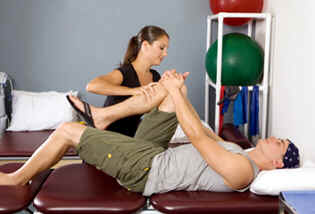
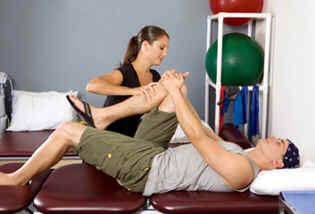
Physical therapy has many specialties including sports, wound care, EMG, cardiopulmonary, geriatrics, neurologic, orthopaedic and paediatrics. PTs practice in many settings, such as outpatient clinics or offices, health and wellness clinics, inpatient rehabilitation facilities, skilled nursing facilities, extended care facilities, private homes, education and research centres, schools, hospices, industrial and this workplaces or other occupational environments, fitness centres and sports training facilities.
Physical therapists also practice in non-patient care roles such as health policy, health insurance, and health care administration and as health care executives. Physical therapists are involved in the medical-legal field serving as experts, performing peer review and independent medical examinations.
Physiotherapy means physiotherapeutic system of medicine which includes examination, treatment, advice and instructions to any person preparatory to or for the purpose of or in connection with movement dysfunction, bodily malfunction, physical disorder, disability, healing and pain from trauma and disease, physical and mental conditions using physical agents including exercise, mobilization,manipulation, mechanical and electrotherapy, activity and devices or diagnosis, treatment and prevention.A physiotherapy course comprises of a broad study in the biological, surgical, physical and medical functioning of the human body. There are many fields in physiotherapy like Cardiopulmonary, Geriatric, Neurological, Orthopaedic, Paediatric, Integumentary and Women’s Health etc.The duration of the course is up to 4 years in addition to an internship of 6 months. Physiotherapy courses are offered all over India and abroad.
Eligibility
Candidates who wish to apply for the course in Physiotherapy must have passed the Common Entrance Test (CET). Once they have passed this entrance examination, they can go for the Bachelor of Physiotherapy course (BPC). The basic qualification required for the admission into the BPC is a pass in class XII or equivalent with PCB and English. A minimum of 50% marks should be scored in all of these subjects. Candidates must be atleast 17 years of age at the time of applying.
Career Cursor:
Candidates can specialize in any of these fields after the completion of their course. After the course is completed, candidates could either go for higher studies or find employment in private or Government Hospitals. Starting own clinic is also an option available. To do this, a physiotherapist should have a B.Sc. degree.
Colleges in Punjab
College of Physiotherapy, Post Graduate Institute of Medical Research, Chandigarh.
Department ofPhysiotherapy, Guru Nanak Dev University, Amritsar.
Department of Physiotherapy, Punjabi University, Patiala.
Adesh College of Physiotherapy, Adesh Inst. Medical Sciences, Muktsar
All Saints College of Physiotherapy, Ludhiana
Lyallpur Khalsa College of Physiotherapy, Jalandhar
Department of Physiotherapy, Punjabi University, Patiala
Gian Sagar College of Physiotherapy, Banur, Dist Patiala
DAV Institute of Physiotherapy & Rehabilitation, Jalandhar
Shree Swami Merzakak Saint and Mystic Poet
Durga Nath Hangloo
 The valley of Kashmir is hallowed by a great many saints, seers, rishis, mystic poets, shaiv acharyas, and vedic scholars since times immemorial. It has produced many men and women of great spiritual eminence. These luminaries were given to renunciation and compassion to attain spiritual glory.Shree Swami Merzakak Ji,popularly known as KAK SEIB was one such personality.
Swami Merzakak Ji was born on Posh Shukla Pratipada in the year 1744 A.D in a Pandit family of PathSwamin Koushk Gotra at a beautiful tiny village Hangalgund falling in Anantnag district of Kasmir. His father’s name was Lassa Pandit who had two sons, the elder one was Bulla Pandit who was a grahasty (married )and had five sons. But Merza Pandit chose to be a bachelor, as from his very childhood he had no liking for transitory worldly pleasures. He had inherent divine tendencies seeking simple and pious life. His formative years passed on in a village at Achan in Pulwama where he was adopted by his Massi but after few years he had to return home after his Massi died.
Kakji was attracted to Jagadamba Devasthan and Jagannath temple adjacent to his fields at Achan where he worked hard to cultivate agricultural land. Initial revelations occurred to him when one day his mother is reported to have failed to carry the usual meal to the fields due to heavy rains .It is said that Jagatamba herself appearing in the form of his mother, produced a “Thali ” of Kheer and fed Kakji herself . After this auspicious moment was over, Swamiji experienced spiritual ecstasy and Divine glory.
After coming back to Hangalgund, Swamiji took to Sadhna somewhere in an island in the stream flowing from Kokernag. He led a life of austerity and deep penance but going ahead on his chosen path without a spiritual Guru.
Realizing his divine love and intense zeal for spiritual pursuits, Swamiji was provided Guru Diksha by one Shridharjoo Ganjoo, a revenue official of Srinagar on the directions of Mata Sharika Bhagwati. Jagatmata appeared in his dream and asked Shridharjoo to leave for Breng Pargana to provide Diksha to her staunch devotee who is awaiting him at Hangalgund . This message was simultaneously revealed to Kakji in the woods of Kokernag by Lalleshori Mata where he was engaged in rearing calves.
Swamiji led a very simple and sober life and he used to keep himself ready to rid people of day to day ailments and troubles. He was a real Karamyogi. During day times he toiled hard in the fields or in rearing cattle in the nearby forests like an ordinary common man but during nights he used to be quite vigilant in his Sadhna. This process continued till he attained Divine Bliss. Though he had no formal schooling of any order, yet he emerged to be a highly learned who possessed full knowledge of Vedas and Shastras.
His Vakhvani knew no limits. Every vakh, though in a concise form, contains material to fill tons of volumes. His flow of vakhs sped up and his disciples used to pen them down.
Swamiji had no appreciation in making Bavishvanies or for occurrence of miracles, marvels and other feats. Infact, he disliked any fanfare about it.
However, on several occasions he exhibited breathtaking miracles. He would put a spoke in person’s wheels daring him show down in assessing the spiritual might. A brief mention of some marvels is as under:
Transference of power during the ruthless and tyrant rule of Pathans in the valley in the beginning of 1820 A.D as per Bavishvani made by him in 1819 AD.
* He would stop entry of cholera at his place and area around distributing some rice grains to one and sundry in inhabitation present during outbreak of such scourage.
* Squeezing himself within two chinar leaves to outdo the so called master pieces feat of a contemporary saint who had hid himself within two earthen plates (takoos).
* Producing several cups of tea from his personal mini Samavar for Swami Ramananda , a great contemporary saint of Umanagari and his disciples whose initial arrangement for serving tea had drawn quite blank.
* Inducing life to dead bridegroom at Banmohalla Srinagar who was a son of one of his staunch devotees.
* 400 years after her Nirvan, Laleshori explained her own Vakh to Kakji and his disciples when they were in Vaakhvani session.
8. He would get hot kulchas from a Nanvai (baker) at Batyar Srinagar for his devotees who were sipping hot tea (Kahwa) at Hangalgund within a few minutes. This shows his spiritual mettle by which he would be at two different places at one and the same time.
Swamiji shed his mortal frame and merged into the Supreme on Zeshta Krishna Dutiya in the year 1830 A.D. at an age of 86, at Hangalgund in the very island where he remained engrossed in his Sadhna.
Shri Swami Merza Kakji Trust came into existence in the village Hangalgund when it was registered in 1983 and the Smadhi renovated. After migration of Bradari members to Jammu and elsewhere, the Trust acquired a piece of land at Nagrota where Smadhi Memorial has already come up in 1998. Further construction programme is going on from time to time in order to give a very grand look to the Asthapan. Birthday and Nirvan Divas of Swamiji is been celebrated at Nagrota Asthapan for the last 12 years by performing a grand yagnya on these occasions and thousands of devotees throng the Asthapan to pay obeisance to this spiritual saint. Traditional Annual “JAG” ceremony is performed at Hangalgund on Zeshta Krishna Dutiya invariably since Swamiji`s Nirvan in the house of Shri. Ved Kak, one of the favourite descendants i.e. nephews of Swamiji.
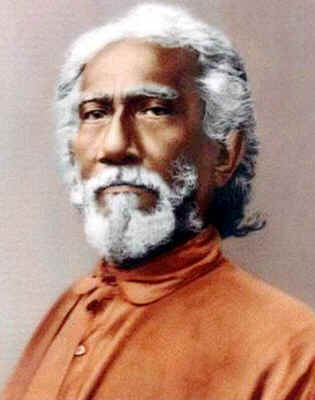
Jnanavatar – Swami Sri Yukteswarji
R.K. Datta
 Adept-ship is achieved by purification of man’s three bodies (physical, astral, & causal). It is also attainable through the grace of the guru.
Sri Yukteswarji was a forerunner of the current explosion of interest in healing of the physical body through yoga precepts of natural living. The great Guru goes on to say that harmonizing the astral body – the energetic forces governing our emotions, attitudes, & behaviour – comes through cultivating “patience in all circumstances”. Purification of man’s consciousness (causal body), Sri Yukteswarji states, is accomplished by yoga techniques of pranayana and communion with Aum.
Swami Sri Yukteswar, an ideal exemplar of India’s ancient heritage of illumined rishis, is venerated as a Jnanavtar (“incarnation of wisdom”) by people all over the world who have been inspired by his life and teachings. He manifested the self-mastery and divine attainment that have been the highest goal of truth seekers through out the ages.
A saint of truly universal outlook, Sri Yukteswarji recognized that a synthesis of the spiritual heritage of the East with science and technology of the West would do much to alleviate the material, psychological, and spiritual suffering of the modern world. His deep conviction that tremendous advances could be made, both individually and internationally, by an exchange of the finest positive features of each culture was crystallized by his remarkable meeting with Mahavatar Babaji – his param guru – the guru of Lahari Mahasaya. Perceiving Sri Yukteshwarji’s great interest in furthering spiritual harmony among all nations, Babaji requested him to write The Holy Science to show the underlying unity of Hinduism and Christianity.
Born Priya Nath Karar in Serampore (near calcutta), on 10th of May 1855, Swami Sri Yukteswarji was the only son of Sh. Kshetra Nath & Smt. Kadambari Karar. His father, Sh. Kshetra Nath, was a wealthy business man, and the family owned several large estates in the area.
Sh. Kshetra Nath Karar died when his son was still a boy. Consequently, at very young age, Priya Nath had to assume the responsibility of managing the family land holdings. In early manhood he was married, but his wife died just a few years later; and their only child, a daughter, passed away as a young woman not long after her marriage.
Swami Sri Yukteswar’s pursuit of Truth led him to the great sage Lahari Mahasaya, who extolled the sacred science of Kriya Yoga meditation as the most effective means of attaining God-realization, and who was the first to teach openly that ancient science in modern times. Through the guidance of Lahari Mahasaya and his own practice of Kriya Yoga, Sri Yukteswar attained spiritual illumination. His strength of principle, boundless compassion, and profound understanding were not the result of intellectual study but of direct perception of reality.
Swami Sri Yukteswarji achieved the supreme spiritual state, in which, as he describes in The Holy Science, “(one) abandons altogether the vain idea of the separate existence of his Self and becomes unified with Him, the eternal Spirit, God the Father. This unification with God is Kaivalya, the ultimate goal of man.”
As the years went by, Swami Sri Yukteshwarji began accepting disciples for spiritual training. His anscestral house in Serampore became his hermitage; later he constructed an additional ashram by the sea at Puri.
It was in 1910 that Sri Yukteswarji met the disciple whom Mahavtar Babaji had promised to send him for disseminating. Yoga in the West: Mukunda Lal Ghosh, on whom Sri Yukteswarji later bestowed the monastic name of Sri Paramahansa Yogananda.
‘All creation is governed by law’, Sri Yukteswarji said. ‘The principles that operate in the outer universe, discoverable by scientists, are called natural laws. But there are subtler laws that rule the hidden spiritual planes and the inner realm of consciousness; these principles are knowable through the science of yoga. It is not the physicist but the Self-realized master who comprehends the true nature of matter’ ”
In 1920 Swami Sri Yukteswarji sent Sri Paramahansa Yogananda to America to carry out the mission spoken of many years earlier by Mahavatar Babaji – to make available to Truth-seekers throughout the world a knowledge of the liberating science of Kriya Yoga. For this purpose Sri Paramahansa Yoganandaji founded Yogoda Satsanga Society of India in India and Self-Realization Fellowship, an international society with headquarters in Los Angeles. During his three decades in the West, he lectured to capacity audiences in most of America’s principal cities; wrote numerous books and prepared a comprehensive series of Yoga lessons (Hindi & English) for home study; and trained monastic disciples to perpetuate the spiritual and humanitarian work entrusted to him by Mahavatar Babaji and Swami Sri Yukteswarji.
In Jammu – The city of Temples – Yogoda Satsanga Dhyana Kendra is rendering Sunday Meditation Service from more than last three decades presently at Muthi- Udeywala.
50% Diabetes reduction by lifestyle changes
Dr. Jitendra Singh
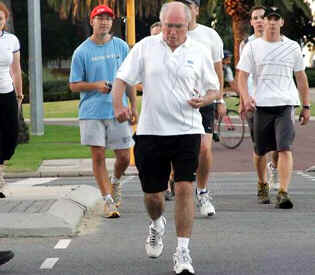 The importance and efficacy of lifestyle changes or modifications in the control and prevention of Diabetes Mellitus has repeatedly reiterated in these columns. The assertion finds testimony in the enormous benefits experienced by those who have seriously adopted suitable healthy changes in their lifestyle. Nevertheless, this is an era of evidence based science and evidence based medicine where each postutation calls for substantiation through hard data and precise statistics.
Currently available scientific evidence and statistics indicate that lifestyle changes could reduce incidence of Diabetes by more than 50 percent in high risk individuals and thus could prove even more effective than any possible preventive medication.
Equally Dffective in All Ethnic Groups
Needless to state that unprecedented rise in prevalence of Diabetes the world over is also accompanied by an alarming rise in the number of people falling prey to some of the debilitating diabetic complications like end stage kidney Disease and irreversible kidney failure. Any measure or programme aimed at preventing diabetes therefore also helps in preventing incapacitation of large sections of population.
The widely published “Diabetes Prevention Programme” was the first to report the effect of atleast 7 percent weight loss and atleast 150 minutes of physical activity per week. The results published by it were amazing. During a period of about three years, lifestyle intervention was found to reduce incidence of Diabetes by around 58 percent compared to around 31 percent reduction achieved by medicinal intervention. Encouragingly, the lifestyle changes seemed to work in all situations in all sections of population irrespective of whichever ethnic group, race or nationality they belonged.
Special Significance for Indians
Diabetes prevention through diligently pursued lifestyle changes has a special significance for Indians for reasons more than one. First , Indians as a race are known to be inherently at a higher risk of developing Diabetes compared to other communities or ethnic groups and the enhanced susceptibility of Indians continues to haunt them even after they migrate and settle outside India. Second, the lifestyle moditifications methods like timely meals, high fibre diet, regular exercise, yoga etc recommended by even the western experts are much closer to the traditional Indian ethos. Third, India being a developing country, the economic burden of diabetes treatment is beyond the means of a larger populace. Lifestyle changes therefore offer a cost-free option, for diabetes prevention and anagement.
In the end, important to realize is that if westerners turn to lifestyle modifications inherent to oriental culture, is it not in the fitness of things for us to reevaluate and revive the lifestyle values which are inherently Indian?
Be vegetarian, if only for the sake of environment
B L Razdan
 About 90 per cent of the Earth’s protective ozone layer resides in the stratosphere between 15km and 50km altitude. Molecular oxygen is broken down in the stratosphere by solar radiation to yield atomic oxygen, which then combines with molecular oxygen to produce ozone. Ozone is destroyed naturally through a series of catalytic cycles involving oxygen, nitrogen, hydrogen and to a lesser extent chlorine and bromine species. The abundance of stratospheric ozone is therefore chemically controlled by the stratospheric abundances of compounds containing hydrogen, nitrogen, chlorine and bromine. Increases in the abundances of methane and nitrous oxide (sources of hydrogen and nitrogen oxides respectively) thus affect the abundance and distribution of stratospheric ozone. Stratospheric ozone is also affected by the abundance of carbon dioxide (CO2), because the rates of the chemical reactions that control the abundance of ozone are temperature-dependent, and the abundance of CO2 plays a key role in determining the temperature structure of the stratosphere. While methane is a more potent greenhouse gas than CO2, there is over 200 times more CO@ in the atmosphere. Hence the amount of warming methane contributes is 28% of the warming caused by CO2.
A United Nations report has identified the worlds rapidly growing herds of cattle as the greatest threat to the climate, forests and wildlife. Livestock are responsible for 18% of the greenhouse gases that cause global warming, more than cars, planes and all other forms of transport put together. Burning fuel to produce fertilizer to grow feed to produce and to transport it – and clearing vegetation for grazing – produces 9% of all emissions of CO2, the most common greenhouse gas. And their wind and manure emit more than one third of emissions of another, methane, which warms the world 20 times faster than CO2.
Livestock belch out or release methane gas as they digest their food. And a methane molecule released into the atmosphere, has a 25 times greater capacity for trapping heat than a carbon dioxide molecule. Rice, meat, dairy products and fish are associated with high methane emissions while wheat, vegetables and fruits contribute to an oxide of nitrogen – another greenhouse gas that has an even greater heat trapping capacity than methane. Bananas had the least global warming potential, according to the research analysis inasmuch as much of the emissions associated with bananas emerge from their transportation from plantations to retail outlets.
In early 1990s, the Indian scientists were caught by surprise when the US researchers had suggested that India’s paddy fields were producing a large amount of methane unmindful of the fact that the livestock industry had a much bigger impact on the environment. This prompted an indigenous research in the subject that showed that the US claims were far exaggerated. The research also led to the assessment of the greenhouse gas emissions during each stage of the lifecycle of various food items from the farm to the dining table viz. production, processing and cooking, so to say, to generate a comparative chart.
The research designed to generate raw data about the global warming potential of Indian food items has determined the Global Warming Potential in gram carbon dioxide per kg thus: Apple (357), Banana (98), Basmati rice (859), Chapati (250), Dosa (729), Fish (756), Idli (682), Parantha (261), Potato (132), Poultry meat (801), Milk (766), Mutton (9149), Rice (712).
The data thrown up as above clearly shows that a kilogram of mutton has a global warming potential 12 times higher than a kilogram of fish. The global warming potential of poultry meat – chicken or duck – is only slightly higher than that of fish. It also makes it abundantly clear that vegetarians are far more environment-friendly than the non- vegetarians. For the sake of the planet earth and for their own sake, the latter can do their bit by eating a little less meat – or better still, shift over to “mock meats” or vegetarian meats, now available in a large number of Washington area restaurants, where the wizardry and skill of counterfeiting meat has become a sophisticated art.
Ray of hope for patients with elbow joint pain
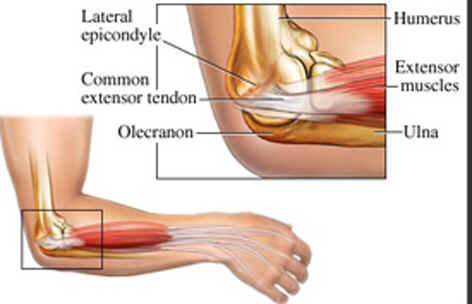 “Earlier, elbow joint replacements have been much rare and complex surgical process than hip or knee replacement surgeries. Elbow patients had a suffering life due to restricted movements and constant pain in elbow joints even after complex surgeries and constant physiotherapy support. More than two decades of clinical research in advanced technologies have now given us simple and precise instrumentations that enable us to achieve greater ease -of-operation and much improved recovery rare.” Explains Dr. Manuj Wadhwa, Director and Head of Orthopaedics and Joint Replacement, Fortis Hospital, Mohali.
What is elbow replacement?
It is a procedure in which the damaged elbow joint is replaced with the artificial one so as to make it a painfree with functional range of motion.
In which cases replacement is needed?
It is most commonly done in arthritic and painful elbow joint which may be due to degeneration, inflammation ( such as in rheumatoid arthritis ) and as a result of trauma. Sometimes it is done to make a stiff elbow mobile.
How much costs involved with such replacement?
Cost of the surgery with the most commonly used and the best available elbow prosthesis( Coonrad Morrey ) is around 2 lacs as a package including surgery, stay, medicines and implant
How long is the recovery time?
The movements of elbow are started 36 hours after surgery and the range allowed is as per tolerance of the patient. The goal is to achieve painfree movements which usually is possible after 3 weeks.
At which places advanced level surgery is available?
Surgery being technically demanding and new in the basket of joint replacements is still done at handful centres across country. It is done as a routine with most advanced technology in Fortis hospital, Mohali. These are also done in few centres in New Delhi, Mumbai and other metros.
What is ‘mobile bearing replacement’ and which kind of patients it is recommended to?
Mobile bearing replacement in the knee uses the polyethylene insert which rotates over the tibia during knee movement. It mimicks the normal knee anatomy and motion ( kinematics). This is in contrast to the fixed bearing in which the insert remains fixed in the same position during knee range of motion. It is recommended to the patients with active loading demands.
How much costs are involved with ‘mobile bearing replacement’?
Same as elbow between 1.90 to 2 lacs
What is the level of expertise in India for advanced level orthopedic surgeries? Where is India in Joint replacement and other orthopedic treatments as compared to developed countries?
India is at par when compared for facilities and expertise available considering we have surgeons here who are trained at best of centres internationally and are doing far higher volumes as compared to international. Considering paients come at a much advanced stage here than west so at times surgical expertise and experience required is even higher.
Infrastructure in leading corporate hospitals is at par with west.
Can the people having heart or diabetes problems go for replacement surgeries?
YES. The replacement surgeries are generally done in 58-75 age group and around 60 % of them have one or more co-morbidities like diabetes , hypertension etc.
What precautions one should take before getting elbow replaced?
There is practically no precautions from the patient side except he/she should be familiar about the type ofsurgery and should understand its realistic goals.
Post-operative precautions, treatment and care?
Post operatively, as explained range of motion is started at 36 hrs under the guidance of our expert physiotherapist. When not exercising, the limb should be elevated and is rested in arm pouch. The patient is encouraged to move fingers and wrist actively. Dress check is done at 48 hrs and then on 5th day of surgery. Intravenous antibiotics are given for five days and then are changed to oral ones. Pain control is taken care of round the clock.
Preventive measures for people to keep body joints fit.
Daily workouts and aerobics keep our joints in a good condition. Maintain and keep a control on your body weight. Yoga may also help in general fitness of the joints.