

Excelsior Correspondent
JAMMU, Jan 15: Coordination Committee of Trade Unions (CCTU) has urged the State Government not to implement the Pension Privatization Bill (PPB) in the State which was recently passed by the Parliament.
In a statement issued here today, the State president of the Committee, Mohammed Maqbool Ganai said that his organization is for the withdrawal of the Pension Privatization Bill as it was against the interests of the working class all over country.
Terming it a draconian Bill Maqbool said that his organization in coordination of other trade unions of the country will launch a nation-wide movement against the Bill. He said already country wide protest was held against the Bill on January 9 at all district headquarters.
Maqbool demanded immediate wage and regularization policy for all temporary workers, minimum wages to Rs 10,000 per month till regularization, withdrawal of recent recruitment policy, filling up of all vacancies in Government departments through statuary appointments and stopping of outsourcing and privatization.
CCTU warns against implementation of PPB
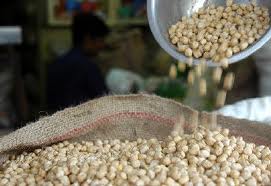
NEW DELHI, Jan 15: Chana prices rose 0.72 per cent to Rs 3,066 per quintal in futures trading today as speculators enlarged positions, driven by upsurge in demand in the spot market.
At the National Commodity and Derivative Exchange, chana for delivery in January gained Rs 22, or 0.72 per cent to Rs 3,066 per quintal with an open interest of 23,100 lots.
Similarly, the commodity for delivery in February traded higher by Rs 13, or 0.42 per cent to Rs 3,124 per quintal in 82,710 lots.
Analysts said speculators enlarged positions, driven by upsurge in demand in the spot market mainly pushed up chana prices at futures trade. (AGENCIES)
NRLM & Social Capital Mustn’t go freebies way
Dr S Saraswathi
The National Rural Livelihood Mission (NRLM) has recently introduced an intensive strategy to implement the Mission’s project for the rural poor. It will focus on social inclusion by identifying the poor through participatory system, and by universal social mobilization in project implementation. The NRLM is to concentrate at the first instance on 12 high poverty States.
The Mission was launched in April 2013 essentially by restructuring the Swarnajayanti Gram Rozghar Yojana (SGRY). It is a poverty reduction programme through building strong institutions of the poor, particularly women, and enabling them to access a range of financial and livelihood services.
The Mission aims at tapping and nurturing the unutilized social capital and activating a resource already hidden in the society by dedicated and sensitive external support structure. This support is expected to induce social mobilization, institution building, and empowerment process.
The strategy involves creating 400 “intensive blocks” for implementation of the NRLM. Out of this, it is proposed to develop 100 blocks as “resource blocks”, where several activities would be undertaken to promote social mobilization and create as well as promote institutions to include the poor and the marginalized in development avenues.
Inclusive development is sought to be achieved through universal access to rights, entitlements, and services, and empowerment of the weak. Key features of the project include training, capacity building, skill learning as well as access to public financial services.
NRLM is considered as a strategy for building social capital and not just another poverty alleviation scheme. For, it provides for inclusion of the poor in all stages of the process including the identification of the poor. The entire process will be transparent. It relies on community self-reliance.
The NRLM is not a sudden development. It has a solid background in public policy on development models. In the past two decades, voluntary movement has been silently growing across the country perhaps as spontaneous reaction to globalization, economic reforms, and market power that were jointly widening the gap between Government and people. Decentralization and collective action for common good are partly answers to political and bureaucratic stranglehold.
The spirit of self-help and self-reliance was roused and a demand for effective, responsive, and responsible Government grew. Their political expression was participatory governance reflected in reformulation of government schemes as people’s programmes. Increasingly, the concept of Government as “facilitator” and not “provider” has come to be accepted. But, recognition of the role of “people” as “participants” by the Government, and assumption of the responsibility of the participants by people who are no longer mere “recipients” takes time in view of the gap between the ordinary, “aam admi” and the Government that has existed all along.
Anna’s movement that has its roots in social activism and voluntary service among people rocked the country for the first time after JP’s movement. It seems to have caused a perceptible change in and outside the Governments, and in political parties and corporate houses to think more seriously about the power of the common people.
The Aam Admi Party’s success in Delhi further emphasizes the presence of people in non-election times also. Whether the party achieves any tangible results are not, it has at least notionally raised the status of the common man and the value of social capital in the sense of communal resources.
Social capital refers to institutions, relationships, and norms that shape the size and substance of social interactions. It can be built only by social cohesion. And it is indispensable for economic welfare and sustainable development. It can no longer be ignored under the delusion of political and financial capital or power.
The term “social capital” has been in use since 1890s. The level of social participation which shows the quantity and quality of social capital was said to be high in American society. That resulted in better working of democracy. Social capital has indeed been linked with the success of democracy and people’s involvement in politics. Social capital is distinct from economic capital, and cultural capital. Anything that facilitates individual or collective action generated by networks of relationships, reciprocity, cooperation, team work, trust, and norms is looked upon as building social capital. The source of social capital is the civil society and not the Government.
Cooperation between mobilized communities and active Governments can achieve a great progress in developmental efforts. Unfortunately, we are still in the process of mobilization for elementary level of development – reducing infant mortality, eliminating illiteracy, and removing poverty, hunger, and malnutrition. Under the circumstances, the NRLM is looked upon primarily as a poverty alleviation programme and it is likely to come under the overarching influence of political parties. The Self-Help Groups in some States have been politicized.
From the stage of fighting inadequacies, the nation has to go forward to achieve the real fruits of social capital. Importantly, social capital and political parties are natural allies. For, both believe and engage in mobilizing people for a common cause. Indeed, there is reason to treat political parties also as social capital.
But, political parties – even those having humble beginning – have grown as elite institutions with the main object of winning elections. The successful ones are not those engaging with people on all public matters and encouraging wide participation in party matters. Political parties seem to believe more in financial power and muscle power than social capital – the power of the people.
It is the age of “new politics of community”. Myriads of associations of people are organized on daily basis; group activities flourish despite individualistic aspirations and competitive spirit. Rights-based approach to development places citizens’ groups at the centre of project formulation and implementation.
In some countries, the welfare policy of a Government is based on the twin concepts of entitlements of the people concerned and their obligations in return. It is a system of mutual obligations. In the Indian context, the stress is more on rights and entitlements than on obligations and duties. This may be due to long history of deprivations and inequalities.
Such justifications have over-lived their usefulness. If the object of the NRLM is to harness the “innate capabilities” of the poor, it should undertake the job of complementing their capacities with necessary information, knowledge, skills, tools, resources, etc., and see to it that the support provided yields lasting results and does not go the way of freebies offered by political parties. (INFA)
Shabir for timely completion of health projects
Excelsior Correspondent
RAJOURI, Jan 15: Underscoring need for time bound completion of under construction hospitals in twin districts of Rajouri and Poonch, the Minister of State for Health Shabir Ahmad Khan has asked the concerned authorities to redouble their efforts for achieving the targets well in time so that the benefits of projects will percolate down to the common masses.
Chairing a high level meeting of the officers of Health Services and District Administration, Rajouri here, today, convened to review the physical and financial achievements registered under health sector in Rajouri- Poonch districts, the Health Minister emphasized the need for effective implementation of National Rural Health Mission (NRHM) flagship programme to ensure universalization of health services in rural and hilly areas of these districts. He also called for close coordination and improvement in information flow at all levels in the Health Department to achieve targets fixed under the programme.
Shabir Ahmad Khan asked the concerned authorities for bringing in more reforms in the department to infuse efficiency, transparency and above all a qualitative change in the patient care at all hospitals. He said improvement of services in terms of patient care, medication and other facilities at hospitals is as important as strengthening basic infrastructure at these health institutions.
The Minister asked health officials to focus on a mission to save girl child and initiate steps for improving the child sex ratio in the State. He laid emphasis on drawing a strategy for improving the child sex ratio and directed officials to proactively check the illegal practice of sex determination if going on there. He asked the officials to conduct regular inspections at Ultra- sonography centers to check sex determination practice.
Meanwhile, the Health Minister visited District Hospital Rajouri and took stock of its functioning. He directed concerned Medical Superintendent to ensure all possible treatment facilities to the patients besides extending maximum benefits of RKS, JSS and other programmes to the deserved patients under National Health Mission.
District Development Commissioner, Rajouri, Director Health Services, Jammu, Mission Director, NRHM and Chief Medical Officers of Rajouri and Poonch districts were, among other senior officers, attended the meeting.
Indo-Pak detente: positive note
K.N. Pandita
Premier Nawaz Sharif’s India policy is a path littered with thorns. It needs courage to walk through at one’s peril. But remember he is the elected leader of his people. India cannot treat him as he treated the Generals who usurped power in Pakistan through military coups.
Before and after general elections, Nawaz Sharif expressed his conviction in bringing about a thaw in Indo-Pak freeze. But it needs two to tango. The message had gone. Implicit wait is for grabbing the opportunity conducive to active reciprocity.
Let us try to understand. A formidable hurdle in Nawaz’s peace prognosis is Pak Army. It stung him twice in the past. Foreign Affairs and Kashmir are the two areas which Pak Army considers its exclusive fief; hence no tolerance of interference by civilian authorities.
Nawaz Sharif waited to bid courteous farewell to General Kayani. He has brought in General Raheel Sharif, the apolitical Army Chief, who supersedes two Generals. The arrangement was very carefully and cautiously finalised to ensure smooth change of guard. Even then sadists tried the spoilsport, albeit unsuccessfully. Both Nawaz Sharif and General Raheel will need time, patience and stage management to familiarise Pakistan Army with the power of a democratic State.
Indo-Pak peace dialogue also implies simultaneous Army-TTP detente, firstly to pull Army brass out of meaningless bloody clashes, and secondly, to indirectly legitimise peace dialogue with a chronic adversary who is also a neighbour.
As covert bilateral peace talk progresses, its impact on rabid anti-India jihadi organizations in Pakistan will become more pronounced. Same will be the case with political hawks in India. Interlocutors are not impervious to this occurrence.
2014 will be crucial for low-key Indo-Pak peace talks. First, we need to sit back and carefully watch the fallout of NATO drawdown in Afghanistan on the region and Pakistan in particular. We will also need to keep a track of Pakistan’s attitude to NATO withdrawal and the contours of her policy in post-NATO Afghanistan. It is closely connected to the shaping of Indo-Pak talks.
Secondly, nothing significant will happen until a new Government takes over in New Delhi after parliamentary elections of April-May 2014. For peace talks it will matter little which party comes to power for the simple reason that Indo-Pak liaison is a national and not party issue. Once the new Government is formed, there will be movement in bilateral talks along the chartered path for which foundation has been laid by the interlocutors on both sides.
Recently, speaking to media, Mr. Sartaj Aziz, Adviser to Pakistan Prime Minister on foreign affairs said that Track II diplomacy was in place and representatives of two countries were in constant touch trying to move forward inch by inch. He even said that progress on talks about Kashmir was part of the exercise.
Kashmir is being talked about. Sartaj Aziz’s recent meeting with Kashmiri separatists in New Delhi was probative and not obstructive in character. The recent split in Hurriyat (M) is a sequel to the meaningful reflections of that meeting. Extremists among Kashmiri separatists are getting sidelined because they fail to read the writing on the wall.
It has to be noted that western powers are uncomfortable with Pakistan giving China a free hand in Gilgit-Baltistan. It impinges upon their security strategy in the region as does to India. For Pakistani official circles it is becoming increasingly difficult official to remain tight lipped on China’s highhanded policy towards the Muslim Uyghur in Xinjiang Autonomous Region.
At the same time, nationalist activists in Gilgit-Baltistan have succeeded to a large extent in mobilising support of western civil society and influential political circles in favour of their struggle for freedom from Pakistani occupation.
In recent days Nawaz Sharif’s brother Shahbaz Sharif was on a short visit to New Delhi. Curiously media gave scant coverage to the visit. It was intentionally kept a low key visit because he was on a sensitive mission. Foresighted Nawaz Sharif is within his right to reach wider sections of Indian policy planners especially when general election is round the corner.
After some hiccups, two Director Generals of Military Operations of India and Pakistan met as follow up to Manmohan-Nawaz meeting in New York. They have agreed to formulate a mechanism of reducing border tension and infiltration of jihadis. However, jihadi infiltration is not still fully under the control of civilian authority in Pakistan. The possibility of new spate in infiltration can happen as the Jihad Council finds Pakistani civilian and military support receding. A wounded tiger becomes more ferocious.
Trade talks between the two countries have resumed. Owing to increase in infiltration attempts and militancy related events, Indian had shown some reluctance to move forward in bilateral trade talks. If in the course of ongoing trade talks, Pakistan indicates her willingness to reiterate giving Indian MFN status, it could increase chances of bringing a wide range of bilateral relations under discussion. That is perhaps what Pakistan would be eyeing at.
Congress’ debacle in Assembly elections in four States has sent a message that the nation wants to wriggle out from stereotypes. Incidentally, the sudden rise of AAP and the euphoria it has created could become a key to ideological change in our country. There is much sense in the new slogan that governance should be divested of its VIP trappings. This is low and inoffensive semantics for social revolution.
How will it impact the policy of conciliation as envisaged by Nawaz Sharif? Gimmicks and gaffe like those coming from wayward leaders of AAP on Kashmir will not be liked even by Kashmir watchers in Pakistan. For any amount of success in bilateral relations, the leadership in India has to be above party politics. It has not only to value Nawaz Sharif’s offer of olive branch but also to understand the delicate and tortuous course of negotiations. Highest level of statesmanship on either side is the key to sustainable peace projection in the region.
Benefits of projects should accrue to people: Sharma
Excelsior Correspondent
SRINAGAR, Jan 15: A meeting of designated officers was held here today under the chairmanship of Principal Secretary, Planning and Development, B.R. Sharma to discuss monitoring and physical verification reports of various executed and under implementation developmental projects and works in Valley under Central and State Plans and NABARD.
The designated officers briefed the meeting about the various implemented and under execution projects through power point presentation.
Mr. Sharma directed the concerned to work in close coordination for timely completion of projects. He asked the concerned to devise and formulate DPRs for developmental projects keeping technical and physical feasibility of the same in consideration to ensure judicious use of funds.
Mr. Sharma said that the Government has taken up the projects like public health centres, approach roads, water and irrigation to provide basic amenities to the people at their doorsteps. He said these schemes need to be completed within stipulated time so that their benefits accrue to the people.
The meeting was attended by Director General, Economics and Statistics Department, Director Planning, PA&PM, Director Accounts and Planning, Regional Joint Director, Planning, ADDCs and DSEOs of various districts of the Valley.
Proposal for skill development of G&B youth under consideration: Sakina
Excelsior Correspondent
JAMMU, Jan 15: The Coalition Government has accorded focussed attention on social, cultural and economic emancipation of under privileged sections of the society like Gujjar & Bakerwals, Pahari Speaking people, SCs, STs and OBCs through a well knit network of hostel and other logistic and financial incentives for students of these communities.
Minister for Social Welfare, Sakina Itoo, said this while chairing a meeting of State Advisory Boards for Gujjar & Bakerwals, Pahari Speaking People, SCs and OBCs here on Wednesday.
Secretary, SWD, M.S.Rathur besides Secretary PSP Board, Showkat Qazmi, Secretary G&B Board, Latif Ahmad Poswal, Secretary OBC Board, Dr. Basharat Hussain, Secretary SC Board, Sham Lal attended the meeting.
The Minister had a detailed account of achievements and working of these boards besides deliberating upon multi-pronged strategies to further streamline functioning of these vital units of the department. She exhorted upon the Board Secretaries to gear up their men and machinery for further accelerating the activities of their respective wings. She asked them to ensure that complete transparency is ensured at all levels so that the real purpose of Omar led Government of extending good governance to its people is met.
It was informed in the meeting that during the present regime 3 Gujjar & Bakerwal girls hostels have been opened in Rajouri, Poonch and Kulgam while 2 G&B boys hostels have been established at Samba and Bandipora. Besides, intake capacity of seven hostels has been enhanced from 50 to 75, 75 to 100 and 100 to 125. A proposal envisaging skill development training programme for G&B youth worth Rs. 6.50 crore has also been submitted to the Centre for approval.
Taking a detailed view of achievements of the PSP Board, the Minister was informed that 7 new hostels including 3 for girls have been made functional during the period. Besides, the Board has now yearly funds of Rs. 18 crore against 1.80 crore in 2008 while against 70,000 scholarships in 2008 we now provide scholarships to 1.60 lakh beneficiaries.
Similarly, the SC Board has constituted an enforcement committee and monitoring cell for effective implementation of reservation rules in the State.
BJP donates wheel chair to handicapped girl
Excelsior Correspondent
JAMMU, Jan 15: On the occasion of Makkar Sankranti State Training Cell BJP organised a programme at Ward No. 55, Deep- Nagar, Kunjwani, near here in which Kr. Rajeev Charak , State Convener, Training Cell, BJP distributed the wheel chair to the handicapped girl namely Miss Rajni Devi.
During this programme people apprised him about the insanitation problem as well as the precarious condition of electrical L.T wires which were touching the roofs of the houses of the local people. They told him that an electrical transformer is located & affixed along with the wall and main gate of a residential house thereby exposing the people to grave risk.
People also informed him about the bad condition of the main road from Gangyal to Deep Nagar, which was constructed before only six- seven months and has been damaged by the rains and the road has become a Nallah.
They said that the Government has not taken any action against the concerned authorities who have constructed the road and looted the State exchequer.
While speaking on the occasion, Rajeev Charak warned the PDD for not checking the conditions of LT wires in the Deep Nagar area. He warned the department against any catastrophe
He demanded the solution of the sanitation problems. Charak also demanded an enquiry into the construction of road from Gangyal to Deep Nagar which got damaged within six months.
AJKL Teachers Federation submits memorandum of demands to DSE
Excelsior Correspondent
JAMMU, Jan 15: A deputation of All Jammu, Kashmir and Ladakh Teachers Federation called on Director School Education Tushar Kanti Sharma and submitted him a charter of demands.
In the memorandum, the Teachers Federation demanded fool proof transfer norms and strict adherence of the same, filling up of all the vacant posts of teachers, masters, lecturers and non-teaching staff in educational institutions, leave encashment for teachers, senior teacher grade to trained under-graduate teachers etc.
The deputation, led by Balwan Singh Jamwal, said that salary grants were not released in time thus causing great inconvenience to the teaching as well as non-teaching staff of the schools, particularly those working under SSA.
Expressing concern over the deteriorating standard of education, the deputation opined that normless transfer policy was the root cause of prevailing mess as teachers have become political instrument in the hands of politicians.
The director gave a patient hearing to the deputation and assured to take up all the issues with the higher authorities for their early disposal.
The deputation comprised of Joginder Singh Manhas, Manga Ram Sharma, Vijay Kumar Sharma, Naresh Choudhary, Daljeet Singh Bhau, Satvir Singh, Mohd Shabir, Suresh Sharma, Mohd Khalid, Pawan Kumar Gupta, Ajay Kumar, Jeet Singh, Shamsher Singh, Satya Bhushan, Tara Chand, Ravi Chander, Sanjivan Singh, Fazal Sheikh, Chaman Lal, Sandal Singh, Yaseen Ahmad, Rakesh Kalgotra,, Jyoti Parkash, Dinesh Singh, Sanjay Gupta and others.
Protests over re-induction of tainted BJP MLAs
Excelsior Correspondent
JAMMU, Jan 15: Dogra Front and Shiv Sena (DF&SS) today held a protest demonstration over re-induction of the five tainted MLAs.
The activists of DF&SS led by its president Ashok Gupta raised slogans aginst the BJP for re-inducting the tainted MLAs, whose names had surfaced in cash for vote scam.
Addressing the gathering, Gupta said that J&K unit of BJP should be appreciated for selling sacrifices of leaders like Shyama Prasad Mookerjee, Pandit Prem Nath Dogra, Tikka Lal Taplu and many other workers.
The whole system is corrupt and present leaders of the party are facing criminal charges under Section 302 RPC, he allaged.
Instead fighting against corruption, BJP is cooperating with the corrupt practices, he said.
BJP State unit has sold out all ethical, moral values and sacrifices. They have open understanding with NC. In a planned manner with the understanding with ruling party they allowed to continue the expelled MLAs in Assembly on the name of BJP and they have brought back expelled 5 MLA’S in a shameful manner. BJP will face worst reaction in forthcoming election from the public.
Among others present were Vikram Sharma, Sukhdev Singh, Bodh Raj, Tony Kumar, Bantu, Rakesh Kumar, Roshan Lal, etc.
Meanwhile, Jammu West Assembly Movement (JWAM) activists led by its president Sunil Dimple also held protest over re-induction of BJP MLAs.