Sunday, April 26, 2026
E-Paper
Home Blog Page 80056

I don’t hanker after awards: Milkha

New Delhi, Jan 14: Legendary athlete Milkha Singh says he does not hanker after awards and is happy with the Padma Shri he received from the government way back in 1958 after winning the Commonwealth Games gold medal.

“I don’t hanker after awards. Everybody knows Milkha deserves more than a Padma Shri, but it is for others, including the federation, to nominate me to the government for higher awards,” Milkha told PTI on the sidelines of a programme here.

“I am happy with the Padma Shri. What difference does it make to me if I am now given a higher Padma Award? The people of India knows my achievements. I did not want to run around for a Padma Bhushan or Vibhushan,” he said when asked about demands for Padma Awards by sportspersons.

A higher category of Padma Award can be conferred on a person only when a period of at least five years has elapsed since conferment of the earlier Padma award. However, in highly deserving cases, a relaxation can be made by the Awards Committee.

Milkha was here to inaugurate Sports Injury Clinic at the BLK Super Speciality Hospital, touted to be the first integrated facility of this kind in the NCR (National Capital Region) by a private hospital.

The ‘Flying Sikh’, who is still the first Indian sportsperson to have won an individual gold medal in Commonwealth Games (in 400m in Cardiff in 1958), does not blame the government for not producing world class track and field athletes.

“The government does a lot, ranging from providing the infrastructure to financial support for training etc. In our time, we didn’t get these facilities. Current athletes are getting all these.

“Yet, another Milkha Singh has not been produced in the country in nearly 60 years after me. I will say that the federation and the athletes were also to take some of the blame. Not all, but some athletes are lacking in commitment,” he said. (PTI)
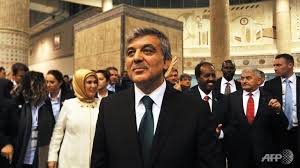
 

ISTANBUL, Jan 13: Turkish leaders met today to try to defuse a row over a controversial move by the Government of embattled Prime Minister Recep Tayyip Erdogan to curb the powers of the judiciary.
The proposed legislation, seen by critics as a bid to head off a widening corruption probe that has rocked the Government to its core, has come under fire from the domestic opposition as well as the European Union and the United States.
President Abdullah Gul has personally intervened to try to end the latest crisis to confront the Government just weeks before the country goes to the polls in municipal elections in March.
But the Government remained defiant, with Deputy Prime Minister Bulent Arinc telling reporters after a cabinet meeting: “It is out of the question that the bill will be withdrawn.”
Gul met Erdogan late today after holding separate talks on the divisive legislation with the leaders of the opposition Republican People’s Party (CHP), the Nationalist Movement Party and the pro-Kurdish Peace and Democracy Party.
“This bill throws 90 years of democratic gains in the garbage,” CHP leader Kemal Kilicdaroglu said after his meeting with Gul.
“We want a judiciary which operates under the orders of conscience not a political authority.”
Erdogan, who has dominated the Turkish political scene for more than a decade, has seen his grip on power shaken by the graft scandal which has targeted several key allies.
Dozens of people including the sons of cabinet ministers, leading businessmen and civil servants were rounded up in a series of police raids since December.
Erdogan has responded by conducting a mass purge of the police and seeking to push through the bill that would increase Government control over the appointment of judges and prosecutors.
Turkey’s top judicial body, the Supreme Board of Judges and Prosecutors (HSYK), has branded the measure unconstitutional.
A debate by parliament’s justice commission on the bill descended into a brawl on Saturday, with politicians throwing punches, water bottles and even an iPad.
The United States and the European Union have both voiced concern over the measure, with EU enlargement commissioner Stefan Fuele calling for Ankara to ensure the proposals are in line with the principles of EU legislation. (AGENCIES)

Devotees take bath at Ganga Sagar on occasion of Makar Sankranti at Sagar Island on Tuesday. (UNI)

Devotees take bath at Ganga Sagar on occasion of Makar Sankranti at Sagar Island on Tuesday. (UNI)

Devotees take bath at Ganga Sagar on occasion of Makar Sankranti at Sagar Island on Tuesday. (UNI)

Singapore to conduct public hearing into Dec 8 riot

SINGAPORE, Jan 14: A Government-appointed committee will start public hearing from next month into Singapore’s worst riots in 40 years, involving South Asian workers, mostly Indians.
Some 400 South Asian workers were allegedly involved in the riots on December 8 night in Singapore’s Little India precinct when an Indian worker was killed in a road accident.
The Committee of Inquiry (COI) Secretariat today said it was inviting those who wish to make representations or give evidence to the inquiry to notify it by February 5. The public hearing will start on February 19.
Little India is an area mostly of Indian-origin businesses, eateries and pubs where the South Asian workers spend their day off.
The committee was appointed on December 13, 2013, after the riots. It has since conducted voluntary interviews with 20 of the 56 Indians and one Bangladeshi workers who were deported.
An investigation team from the Central Narcotics Bureau has also been appointed to conduct investigations into the possible causes of the riots.
The team began investigations on December 26. It has since spoken to various witnesses including police officers, residents and shopkeepers in Little India, as well as the driver of the bus involved in the accident and the bus’ time- keeper.
At the conclusion of the public hearing, the committee would consider the evidence presented before it and submit a report of its proceedings, findings and recommendations to the Home Affairs Minister.
The four-man committee is headed by former Supreme Court judge G Pannir Selvam.
Its other members are former Commissioner of Police Tee Tua Ba, former President of the Singapore National Trades Union Congress John De Payva and Chairman of West Coast Citizens’ Consultative Committee Andrew Chua Thiam Chwee.
Appointing the committee, Deputy Prime Minister and Minister for Home Affairs Teo Chee Hean had said it would submit its report within six months.
Twenty-five Indian nationals are facing riot charges in court. The riots left 39 police and civil defence staff injured and 25 vehicles – including 16 police cars – damaged. (AGENCIES)

Iran must embrace Syria transition to attend talks: UK

LONDON, Jan 13: Iran could attend peace talks on Syria next week if it gives a “strong signal” that it will embrace a political transition to replace the current regime, British Foreign Secretary William Hague said today.
Hague said Iran was still providing support to Syrian President Bashar al-Assad’s Government, and that if it wanted to attend the talks in Switzerland it should instead agree to the principles set out at a first set of talks in Geneva in 2012, including a transitional Government in Syria.
Iran has not been officially invited to the talks by UN Secretary General Ban Ki-moon.
“If you want to come, show very clearly that you’re going to engage on the same basis as the rest of us,” Hague said.
He added that a “signal of support” for a transitional Government would be “a very helpful signal to Iran in getting them to Geneva II”.
Addressing Britain’s parliament, Hague said there was “no objection in principle to Iran in any quarter, certainly in Western nations, coming.”
Russian Foreign Minister Sergei Lavrov and UN-Arab League envoy Lakhdar Brahimi both said earlier today that Tehran should be at the so-called Geneva II talks, but US Secretary of State John Kerry said Iran must first sign up to the Geneva I principles.
The talks are due to start on January 22 in Montreux, Switzerland.
Britain has in recent months resurrected its diplomatic ties with Iran, which were severed after protesters ransacked the British embassy in 2011.
On Syria, Hague said Britain would make a “major further donation” to a UN Syrian aid appeal at a pledging conference in Kuwait on Wednesday.
Hague confirmed that a British warship, HMS Montrose, would also help escort Danish and Norwegian vessels transporting Syrian chemical weapons away for destruction.
He also said Britain would supply specialist equipment for use on a US vessel on which Syrian chemical stocks are being neutralised. (AGENCIES)

Iranians welcome nuclear deal, hard-liners oppose

TEHRAN, Jan 14: Iran’s reformers and moderate conservatives have welcomed an agreement between Iran and six world powers on how to implement a nuclear deal struck in November, saying it will shore up Iran’s sanctions-hit economy. Hard-liners however inside the Islamic Republic remain opposed.
The six-nation group – the five permanent members of the UN Security Council plus Germany – and Iran agreed to start implementing the terms of the historic interim deal from Jan. 20. That will start a six-month clock for a final deal to be struck over Tehran’s contested nuclear program.
Alaeddin Boroujerdi, head of the parliament’s National Security and Foreign Policy Committee, said that enforcing the deal opens new windows for Iran and paves the way for expanding its economic dealings with the outside world.
“By enforcing the deal, there will be some openings for Iran’s economy and restrictions will be eased,” said Boroujerdi, a moderate conservative. “Economic sanctions will reduce and the way will be paved for expansion of economic activities.”
Iran’s hard-liners have called the deal a “poisoned chalice,” challenging moderate President Hassan Rouhani and Foreign Minister Mohammad Javad Zarif with the task of trying to convince skeptics that they are not compromising on key issues of national sovereignty.
Speaking in Beirut, Zarif said that the issue has more to do with a lack of trust inside Iran than the nuclear program itself.
“There is a very serious confidence deficit vis-a-vis the west in Iran. Our people believe that our peaceful nuclear program has been dealt with in a totally unfounded way,” Zarif said. “Hopefully once we resolve this issue we can move forward with better confidence.”
Iran’s Supreme Leader Ayatollah Ali Khamenei, who has the final say on all state matters, has supported Iran’s nuclear negotiating team, calling them “sons of the revolution” and “our own children.”
Prominent political analyst Sadeq Zibakalam said the accord has boosted Iran’s regional might.
“By implementing the deal, tensions between Iran and the West will be eased and the Islamic Republic’s regional stance will be boosted. It will also nullify efforts by Israel and some of Iran’s Arab neighbors to isolate Iran,” he said.
Zibakalam said both Rouhani and Obama have to fight an uphill task with hard-liners who seek to undermine the process.
“We should not ignore efforts by extremists both in Iran and the US to sabotage the process. They are those who benefit from a crisis and will increase pressures on the government as of now. Hardline Congressmen and pro-Israel lobby groups will do the same in the US,” he said. (AGENCIES)

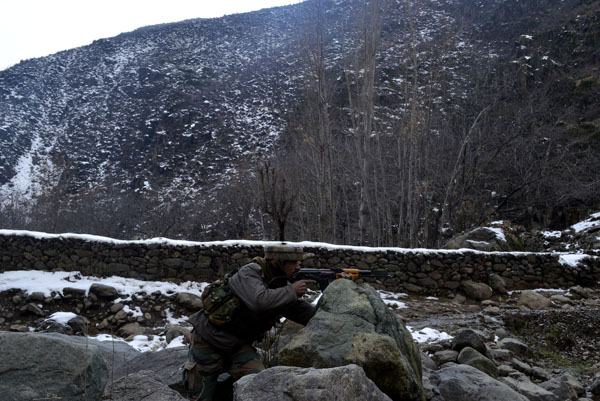
An Army jawan holds vigil at Cherhar forests in Sopore on Tuesday. -Excelsior/Aabid Nabi

An Army jawan holds vigil at Cherhar forests in Sopore on Tuesday. -Excelsior/Aabid Nabi

An Army jawan holds vigil at Cherhar forests in Sopore on Tuesday.     -Excelsior/Aabid Nabi

Turkey leaders meet to defuse row over judicial curbs

ISTANBUL, Jan 13: Turkish leaders met today to try to defuse a row over a controversial move by the Government of embattled Prime Minister Recep Tayyip Erdogan to curb the powers of the judiciary.
The proposed legislation, seen by critics as a bid to head off a widening corruption probe that has rocked the Government to its core, has come under fire from the domestic opposition as well as the European Union and the United States.
President Abdullah Gul has personally intervened to try to end the latest crisis to confront the Government just weeks before the country goes to the polls in municipal elections in March.
But the Government remained defiant, with Deputy Prime Minister Bulent Arinc telling reporters after a cabinet meeting: “It is out of the question that the bill will be withdrawn.”
Gul met Erdogan late today after holding separate talks on the divisive legislation with the leaders of the opposition Republican People’s Party (CHP), the Nationalist Movement Party and the pro-Kurdish Peace and Democracy Party.
“This bill throws 90 years of democratic gains in the garbage,” CHP leader Kemal Kilicdaroglu said after his meeting with Gul.
“We want a judiciary which operates under the orders of conscience not a political authority.”
Erdogan, who has dominated the Turkish political scene for more than a decade, has seen his grip on power shaken by the graft scandal which has targeted several key allies.
Dozens of people including the sons of cabinet ministers, leading businessmen and civil servants were rounded up in a series of police raids since December.
Erdogan has responded by conducting a mass purge of the police and seeking to push through the bill that would increase Government control over the appointment of judges and prosecutors.
Turkey’s top judicial body, the Supreme Board of Judges and Prosecutors (HSYK), has branded the measure unconstitutional.
A debate by parliament’s justice commission on the bill descended into a brawl on Saturday, with politicians throwing punches, water bottles and even an iPad.
The United States and the European Union have both voiced concern over the measure, with EU enlargement commissioner Stefan Fuele calling for Ankara to ensure the proposals are in line with the principles of EU legislation. (AGENCIES)

Kerry, first Catholic Secretary of State to travel to Vatican

WASHINGTON, Jan 14: John Kerry, the first Catholic Secretary of State, would travel to Vatican to meet the Holy See Pietro Parolin, the new Secretary of State of the Vatican.
“This year also marks the 30th anniversary of our diplomatic relationship with the Holy See, and Secretary Kerry is, of course, Catholic, the first Catholic Secretary of State since Secretary Muskie,” State Department Deputy Spokesperson, Marie Harf, told reporters at her daily news conference.
During the meeting at the Vatican today, the two leaders would discuss the foreign policy priorities including the Middle East peace process, poverty, and humanitarian issues.
“The United States values the Vatican’s vital role globally, leading on international issues and peace efforts,” Harf said.
Kerry will also attend the Syria Donor’s Conference in Kuwait City. (AGENCIES)

UN warns will thwart any M23 rebel return in DR Congo

UNITED NATIONS, Jan 14: The United Nations mission in the Democratic Republic of Congo will not “tolerate” a resurgence of the M23 rebel group, the top UN official there said.
In a statement to the Security Council, the UN Special Representative in DR Congo cited “credible reports that the military recruitment of the M23 did not cease” after a December peace deal.
“There are also credible reports of emerging M23 activities in Ituri in northeastern Congo,” Martin Kobler said.
“We should tolerate no military reemergence of the M23,” he said, referring to the latest incarnation of an ethnic Tutsi rebellion.
The group laid down its arms in early November after an offensive by Government troops backed by a special UN brigade.
Kobler insisted there can be “no roll back on what has been achieved so far.”
And he urged “the Governments of Uganda and Rwanda to do everything possible to prevent M23 elements from sheltering or training troops on their territory.”
UN experts have accused Kigali and Kampala of giving military aid to the M23, which both countries have denied.
Speaking to reporters later, however, Kobler sought to minimize the danger “M23 is militarily defeated, the ex-combatants have to be integrated.”
The UN mission in DR Congo should focus on what he called “our first priority” fighting the FDLR, a Rwandan rebel group that includes the remnants of the Hutu militia which carried out Rwanda’s 1994 genocide.
Kobler also encouraged “Congolese forces to do more and to intensify joint planning and execution of operations against the FDLR.”
After clearing several FDLR positions, Kobler said, the UN mission in DR Congo is preparing further operations.
“The (FDLR) leadership must be left with no choice other than surrender,” he insisted, recalling that this is the 20th anniversary since the genocide.
Kobler also said that “military actions against the ADF are expected soon,” naming another armed group active in eastern DR Congo.
Mary Robinson, the UN special representative for the Great Lakes region, told the Security Council “the positive atmosphere” from the December peace talks “has vanished.”
“The region is going through a period of renewed turbulence,” Robinson said via teleconference, referring to a series of attacks against the regime of President Joseph Kabila on December 30 in Kinshasa and Lumumbash.
She also announced plans to organize “in the first half of 2014.” a meeting aimed at attracting private investors to the Great Lakes region. (AGENCIES)