

Subrata Majumder
A twist in India-Japan relation was witnessed with the increase in Chinese assertiveness in East Asia. Hitherto, India-Japan relation was encircled by only economic and commercial sectors. The departure from the earlier stance was noted with Japan introducing new defence guidelines on December 17, 2013, under new Prime Minister Shinzo Abe. The two strategic documents (National Security Strategy and National Defence Guidelines 2014), adopted under Prime Minister Shinzo Abe, identified a number of areas in which Japan would like to strengthen cooperation with India in the near future. This is believed to counter China’s new air-defence information zone (ADIZ) in East China Sea covering disputed islands of Senkakus and Diaoyus, declared a week before.
The new defence guidelines of Prime Minister Shinzo Abe recognized the primacy of India. It noted that “as a result of change in the balance of power due to development of countries such as China and India — multi-polarization of the international community is progressing”. As regards security cooperation with India, it stated that “Japan will strengthen its relationship with India in a broad range of fields, including maritime security, through joint training and exercises as well as joint implementation of international peace cooperation activities.” It sent a clear massage of India’s primacy in Japan’s defence strategies, not only covering maritime security, but also covering other aspects of Japan self-defence security.
India- Japan relation is mired into the tussles between China and Japan. In the pretext of earlier Japan – India Declaration on Security Cooperation signed at Tokyo on 22nd October, 2008, People Republic of China scoffed that “Japan and India forge military alliance to attack China both from front and rear”. With the China influence growing in the region more than USA and China inching towards India for better relation, the People’s Daily of China highlighted the fact that Japan, which already has an alliance with the USA, has chosen India as the second country after Australia for signing a security accord. The relation between India and Japan since then has changed from bipolar to tri -polar with the political relation edging the economic and commercial relation. Therefore, the relation between India and Japan needs to be viewed from multilateral political and economic perspectives, instead of bilateral economic relation, which is a myth now.
The sudden upsurge in India-China relation after the new Chinese President Xi Jinping assumed office in November 2012 and the dashing visit of Chinese Premier Li Keqiang to India in May 2013 before the Prime Minister Manmohan Singh visit to Japan in the same month evoked a new chapter in the India-Japan relation. Chinese Premier visit lofted several questions on the future relation between India and China and its impact on India-Japan relation. The relation between Japan and China, which was deteriorating with China grabbing global economic power and primacy in the Asian politics and the growing palatable relation between India and China, unleashed a triangular relationship between India-Japan-China. It gives a new thought as to how India should tackle these three-cornered relations and move with a balancing tactic for bonhomie relations with both. India needs both Japan and China. India needs China because China has emerged the biggest trading partner of India. China has exhibited its real intension to co-partner with India in BRICS, when it endorsed India’s proposal for BRICS Development Bank and launching of CRA (Contingent Reserve Arrangement) in the last summit at Durban.
Japan has always been playing a true partner for India’s economic development. Even in bad days, Japan extended its full cooperation to rescue India. During drought in 1967-68, Japan was the biggest donor to India. Today, India’s crucial economic problem is widening current account deficit (CAD). In 2012-13 it was 4.8 percent of GDP. This was much above the comfort zone of 1.5 percent to GDP. It created turbulence in the balance of payment and exerted pressure on rupee. Rupee against US Dollar crashed by 11 percent in first nine months of fiscal year 2013-14. This caused spur in import cost, affecting huge burden on oil imports and import intensive exports. Indian economists raised alarm and warned for the renaissance of Asian currency crisis. With the tapering of US Federal bonds buying, the country’s economists warned that not only fresh flows of FII investment from USA would stop, older flows would reverse to USA.
In 2012, Japan was the second biggest foreign investor in the world, after USA. It accounted for 9 percent of world outward foreign investment. India gained prominence in this upward trend in Japan’s global outward FDI. It improved from seventh rank of foreign investors in 2008-09 to 3rd rank in 2012-13. Nevertheless, India’s share in Japan’s global outward investment was paltry. In 2012, it was 2.3 percent of Japan’s global outward investment. Therefore, enough rooms are left for India to attract Japanese investment.
Even though China continues to be the biggest recipient of Japanese investment, there was a sudden slip in the trend in Japanese investment in China since Lehman shock and migration to other Asian countries including India. During five months period of January- May 2013, Japanese investment in China dropped by 25.3 percent. In contrast, Japanese investment in India spurred by 34 per cent during the same period. Another factor diverting Japanese investment to India was that Japan was third biggest country to make acquisition in India, after USA and U.K.
Japanese FDI played significant role in the process of industrialization in India. Japanese firms build up production zone as an extension of their domestic base and helped the less developing countries in industrialization. Thailand was one such country, which was the biggest beneficiary of Japanese FDI in the process of industrialization. Similarly, India too benefitted in developing its automobile industries in totality – with Japanese investment – from parts to assembly.
Japanese investors can play important role in developing India’s NMIZ (National Manufacturing Investment Zone) – a Prime Minister Manmohan Singh’s zeal to make the country a manufacturing hub in Asia. Given the big domestic demand, with the backing of large pool of technology workers and increasing working age population and strong economic fundamentals, India has all factors to edge out ASEAN in manufacturing activities. It can warrant for a better destination for foreign investment. At this point, the visit of Japanese Prime Minister Shinzo Abe to India on January 24 owes dual purposes with political maneovrance to woo India to contain China for the first time and economic expansion, will make a breakthrough in India-Japan relation. To enthuse Japanese investors, who are yet to be nudged by global slump, India should wake up to reduce its red tape and lure the Japanese investors. This will consequently help to reduce CAD also. (IPA)
Japanese PM’s visit India should encourage investment
Livestock beats crop sector
Dr Mandeep Azad and Dr Manmeet Motan
Policy makers in India are finally acknowledging a structural shift in the agriculture sector they have been noticing for a decade. Economic contribution of livestock is today more than that of food grain crops. When in 2002-03, monetary contribution of livestock surpassed that of food grains, policy makers ignored it as a temporary coping mechanism of the poor in the face of sluggish agriculture due to repeated droughts. But livestock contribution has since remained higher by 5-13 per cent. In fact, both livestock and fisheries components have been growing faster than the crops component for a decade. A report for the 12th Five Year Plan accepted this shift by recognising livestock as the engine of agriculture growth.
Livestock now controls a quarter of the agriculture gross domestic product (GDP). In 2010-11, it generated outputs worth Rs 3, 40,500 crore (at current prices). This was 28 per cent of the agriculture GDP and about five per cent of the country’s GDP. “The total output from livestock was higher than the value of food grains (Rs 3, 15,600 crore) and fruits and vegetables (Rs 2, 08,800 crore), and this is going to go up substantially .After livestock, paddy is the next highest contributor to the agriculture GDP. In 2009-10, output from livestock was 2.5 times the value of paddy and more than thrice the value of wheat, as per the Central Statistical Office data.
Livestock output is the fastest growing among the three components. Its contribution to the total output of the agriculture sector increased from 15 per cent in 1981-82 to 26 per cent in 2010-11.This provided a cushion to agriculture growth. The rate of growth of livestock output has however, slowed down. In 1980s, its growth rate was 5.3 per cent-almost twice that of the crops. This declined to 3.6 per cent in 2000s but is still 1.5 times the rate of growth of the crops component.
Importance of livestock as the “draught power” has declined due to mechanisation of agricultural operations and declining farm sizes. Use of dung is also being replaced by chemical fertilisers. At the same time, consumption of livestock products like eggs, milk and meat is increasing due to rise in the income of the booming middle class, both in urban and rural areas. Between 1983 and 2004, the share of animal products in the total food expenditure increased from 21.8 per cent to 25 per cent in urban areas and from 16.1 per cent to 21.4 per cent in rural areas.
Small and marginal farmers, landless labourers and women are more dependent on livestock for supplementing incomes and generating gainful employment in rural areas. Policy makers are taking a serious note of this new economy. It is now seen as a major support for the crops sector to project decent overall agriculture growth. For example, a note of the Economic Advisory Council to the Prime Minister on fiscal outlook for 2010-11, estimated an optimistic agriculture growth based on the growth in the livestock economy. The livestock sector is expected to emerge as an engine of agriculture growth in the 12th Plan and beyond in view of rapid growth in demand for animal food products. Livestock has assumed the most important role in providing employment and income generating opportunities. While crops still employ the maximum people, employment in livestock is fast catching up.
Rise of the livestock sector has implications for poverty. “Rural poverty is less in states where livestock contributes more to farm income,” concludes the Planning Commission report. Punjab, Haryana, Jammu and Kashmir, Himachal Pradesh, Kerala, Gujarat and Rajasthan are a case in point. Mostly, marginal farmers and those who have quit farming are joining the livestock business. About 70 per cent of the livestock market in India is owned by 67 per cent of the small and marginal farmers and by the landless. One way, prosperity is now more dependent on per capita livestock ownership than on farms. “This implies that the growth of the livestock sector would have more effect on poverty reduction than the growth of the crops sector.
But this is not the full potential of the sector. Absence of policy focus has stifled the sector that caters to the poorest. India’s livestock productivity is 20-60 per cent lower than the global average. Deficiency of feed and fodder is the biggest factor responsible for 50 per cent of the total unrealised production potential, followed by inadequate breeding and reproduction, and increasing diseases among animals. As livestock is less prone to global warming and climate change, it can be considered more reliable than rain-fed agriculture. But livestock receives only 12 per cent of the total public expenditure on the agriculture and allied sector and four-five per cent of the total institutional credit flow into the sector. Hardly six per cent of the livestock are insured. Adoption of livestock-related technologies is poor because of absence of animal husbandry extension network. During the 11th Plan it was decided to establish the Indian Council of Veterinary and Animal Science Education and Research. It is yet to take off. The working group for the 12th Plan has repeated the suggestion.
Livestock have a variety of characteristics that make them important contributors to sustainable rural development. They provide marketable products that can be produced by small-scale, household production systems, and are generally of higher value and less vulnerable to critical harvest timing than many crops. As an agricultural product with relatively high income elasticity, livestock are particularly attractive as a means for rural households to participate in urban-based economic growth Many livestock holders can benefit directly from the increasing market demand for livestock products. Demand growth rates of 3 percent for cereals are less than half the demand growth for high value livestock commodities, demand for which is increasing by 6 to 8 percent annually. Furthermore, the poor can also benefit from the fact that livestock development creates demand for labour, supports economic linkages with the feed and processing industries, sustains trade balances, encourages food security through stronger supply and can lead to lower prices for food of animal origin. Livestock are also productive assets, which contribute directly to farm output through animal traction and indirectly as a store of wealth for future investment. Finally, they can contribute to soil fertility and recycling of agricultural waste
The shares of livestock and fruits & vegetables have shown an increasing trend in recent years implying that they have been growing at a much faster rate than the traditional crops sector. Given the rising share of high value commodities in the total value of agricultural output and their growth potential, this segment is likely to drive agricultural growth in the years to come. Being highly perishable in nature, this segment requires faster and better linkages between farms and firms in terms of logistics, processing and organised retailing. This would entail institutional changes that can incentivise entrepreneurs to invest in building efficient and faster value chains that reduce wastages, and increase the incomes of the farmers at the bottom of the chain. Animals are natural capital, which can be easily reproduced to act as a living bank with offspring as interest, and an insurance against income shocks of crop failure and natural calamities.
Syria opposition threatens talks boycott over Iran invite
UNITED NATIONS, Jan 20: A furious Syrian opposition threatened today to pull out of this week’s peace conference and the United States issued a warning after the United Nations invited Iran to the talks.
UN secretary-general Ban Ki-moon said he made the late invitation to the talks in Switzerland from Wednesday after Tehran pledged to play a “positive and constructive role” in efforts to end Syria’s worsening three-year civil war.
But the Syrian National Coalition promptly said it would withdraw from the negotiations unless the invitation to Iran – a key backer of Syrian President Bashar al-Assad – was retracted.
And the United States also weighed in, urging Iran to back calls for a transitional Government in Syria or lose the invitation.
If Iran does go, there will be 40 countries and a group of regional bodies at the opening meeting, which will be the most intensive diplomatic effort yet to end a war that the UN says has left well over 100,000 dead.
Talks between Assad’s Government and the opposition are due to start in Geneva on Friday.
Ban told a news conference he extended a late invitation to Tehran after intense talks over two days with Iranian Foreign Minister Mohammad Javad Zarif.
“Foreign Minister Zarif and I agree that the goal of the negotiations is to establish, by mutual consent, a transitional governing body with full executive powers,” Ban told reporters.
“He assured me again and again that Iran, if they are invited, then they will play a very positive and constructive role,” the UN secretary-general added.
But Louay Safi, spokesman for the Syrian National Coalition, which only decided on Saturday to attend the conference, announced on the group’s Twitter account that the opposition would withdraw “unless Ban Ki-moon retracts Iran’s invitation”.
The threat came only hours after international leaders had hailed the coalition’s decision to take part in negotiations.
The United States and other Western powers had opposed Iran’s attendance at the meeting as long as it refused to accept a communique adopted by the major powers in Geneva on June 30, 2012, calling for a transitional Government in Syria.
Washington made a new call for a clear signal from Tehran, a financial and military supporter of Assad, that it back efforts to set up a transitional Government. (AGENCIES)
No.: 17336
MONDAY, JANUARY 20, 2014
CONGRESS HAS TO WORK HARD TO FIGHT BJP
AAP IS A NEW PLAYER IN 2014 POLL
By S. Sethuraman
There are now three national-level players for the Battle of 2014, the third one a fledgling upstart – AAP -a novelty on the political scene, building on its unexpected electoral triumph in Delhi to aspire for power at the Centre. It is still in experimental stage, notwithstanding the instant response it has evoked among professionals and the young in a climate of rising expectations for a new era of politics.
It is still not clear what form AAP will take at the all-India level and whether it can come out with an organisational charter, its objectives, political, economic and social, and the work programme it can offer to the electorate for the next five years. So far, it is operating with a small inner circle with Mr Arvind Kejriwal, Delhi Chief Minister, as the supreme leader.
There is no doubt, in whatever ways it reorganises itself and gets into battling established national or regional parties, it could certainly win some Lok Sabha seats but more importantly, it could likely cut into the votes of leading candidates in several places and influence outcomes in those constituencies to their detriment.
Both the Congress and BJP, being led into the battle by relatively younger, charismatic Mr Rahul Gandhi and the presumed go-getter Gujarat Chief Miniser and BJP’s Prime Ministerial Candidate Mr Narendra Modi, respectively, will be crossing swords in the weeks ahead with their own claims and counter-claims.
Mr Modi, a self-proclaimed candidate for the highest office and later endorsed by his party as the Prime Ministerial candidate, has already extensively toured the country and positioned himself to take on the Congress challenge. His campaign thus far had been one of attacking the Congress-led Government and degrading the Prime Minister and other leaders on a personal level. Yet, he is credited with having brought about huge swings in favour of BJP across the states.
The outcomes of the high-powered Congress and BJP meetings in New Delhi on January 17-19 hardly make for instant appeal, the former defending accomplishments in its ten-year hold on power while the latter fully exploiting its offensive capabilities having been forced to sit in opposition for ten long years. The Congress rightly decided that this was not the time or in keeping with tradition to designate Mr Rajiv Gandhi as Prime Minister-designate. The winning party has to elect its leader for forming the government.
Predictably, Mr Modi and BJP views the Congress move as admission or recognition of the party’s ”imminent defeat” in the elections. BJP and Mr Modi have heavily relied on slanderous attacks on UPA’s record of governance, apart from casting slur on the reputation of its top leaders. “The misrule, mismanagement, stinking corruption and culpable indifference of the Congress led UPA Government has left India in a situation where the people only suffer and feel insecure. In 2014, Indians await change with hope and excitement” says the BJP political resolution.
The BJP notes with satisfaction the passage of the Lokpal Bill from both houses of Parliament for which, it claims, it had taken “great initiative and made consistent efforts”. The Congress Government sought to delay it on one pretext or other but it is a matter of assurance that the collective concern in the country on massive corruption of the Congress led Government, led to Lokpal institution now becoming a reality.
For its part, the Congress has sharpened its counter-attacks on BJP by pinpointing that “the structures of democracy” cannot be handed to “one single person (Mr Modi) or that they be viciously destroyed”. But Mr Gandhi realises the Congress has arrived at a “turning point” where “packaging and selling policies” would not be giving a “fair deal” to the people based on their choice.
The Congress realises it cannot follow the trodden path and, in the wake of the severe drubbing in state elections, is only half-confident that it could make headway on its own intrinsic strength and on the basis of its own performance record which does not resonate in the country. It is indeed a “turning point” in that the economy is in shambles and growth has to be rerailed and its processes have to become more equity-based with stable prices and deliverable benefits in terms of jobs, social development and human welfare, leading toward a marked and decisive reduction in poverty.
The Congress is yet to come out with its election manifesto but what it would seek to do is well-known – promising better and more effective governance (on existing policies), control over prices and corruption-free administration. The BJP is equally vague on its economic programme and its resolution dwells more on the failures of the Congress regime than offering credible alternatives. It has talked of “holistic” growth, full employment, freedom from rising prices and rooting out corruption.
In short, what the BJP calls for is a “real dose of political leadership to put the derailed economy back on track”. However, Mr Modi has come out in his speech at the BJP session on what he calls “Brand India” based on talent, tradition, tourism, trade and technology. But he has no immediate or short-term solutions ready on offer. His agenda talks of a mechanism to monitor real-time growth of crops and institution of a price stabilisation fund. The only deterrent on promise is special courts to try black marketeers and hoarders.
There is nothing novel in what he has proposed on infrastructure, education or health. Yet, the business and corporate sectors where Mr Modi has already been well-received will applaud his “boldness” on infrastructure, such as building “100 cities”. No Government in India, of any hue, can ignore the fast-growing urban sector and UPA’s dedicated freight corridors, work on which has begun, would be no less inclusive of the new clusters as they develop.
Still, it has to be conceded that there is more high-sounding rhetoric in Mr Rahul Gandhi’s utterances than clear lines of programmes of action – of responding to aspirations of youth and becoming vehicles of unstoppable change. One would have to wait and see if the Congress has a credible platform for the next five years which could command a national appeal.
Economic growth, however critical to nation’s progress, does not commend itself to the mass of voters as would holding the price line, providing quality education and health care, and rural infrastructure. Here is where Mr Modi seems to be scoring well with his repeated claims on arresting inflation, focussing on infrastructure development and widening state’s discretionary powers. .
There may be many developments in the three months ahead which could have a bearing on the election campaigns of parties. For the present, the Congress looks isolated in many states where it could easily work out alliances in the earlier elections. On the other hand, BJP seems to have become more receptive to some of the state outfits as in Tamil Nadu. The regional majors ruling the states seem determined to fight alone and apparently hope to dominate the post-election scene at the Centre. (IPA Service)
Nickel futures fall 0.86 pc on lower global trend
NEW DELHI, Jan 20: Tracking a lower global trend, nickel prices fell by 0.86 per cent to Rs 890.50 per kg in futures trade today as speculators trimmed their positions.
At the Multi Commodity Exchange, nickel for delivery in January fell by Rs 7.70, or 0.86 per cent, to Rs 890.50 per kg in a business turnover of 3,361 lots.
Similarly, the metal for delivery in February lost Rs 7.30, or 0.81 per cent, at Rs 897.20 per kg in 255 lots.
Market analysts said speculators trimmed their positions in tandem with a lower global trend that put pressure on nickel prices at futures trade.
Meanwhile, the metal lost 1.4 per cent to USD 14,494 a tonne on the London Metal Exchange. (AGENCIES)
Silver moves up in futures trade on higher global trend
NEW DELHI, Jan 20: Silver prices moved up by 0.18 per cent to Rs 46,200 per kg in futures trading today as speculators enlarged their positions, supported by a higher global trend.
At the Multi Commodity Exchange, silver for delivery in May rose by Rs 83, or 0.18 per cent, to Rs 46,200 per kg in a business turnover of 40 lots.
Likewise, the white metal for delivery in March moved up by Rs 74, or 0.16 per cent, to Rs 45,210 per kg in 1,935 lots.
Analysts attributed the rise in silver futures to a firm global trend.
Meanwhile, silver climbed 0.3 per cent to USD 20.35 an ounce in Singapore. (AGENCIES)
Soyabean futures gain on global cues
NEW DELHI, Jan 20: Soyabean prices rose Rs 40.50 to Rs 3,802 per quintal in futures trade today on increased buying by speculators in tandem with firm global and domestic markets sentiments.
Marketmen said increased buying against restricted supply in domestic markets and a firming trend in overseas markets mainly supported the uptrend in futures trading.
At the National Commodity and Derivatives Exchange, soyabean prices for January contract advanced by Rs 40.50, or 1.08 per cent, to Rs 3,802 per quintal, with an open interest of 9,600 lots.
Near February contract gained Rs 36.50, or 0.99 per cent, to Rs 3,736 per quintal, clocking an open interest of 1,01,220 lots.
Most active March contracts rose Rs 35.50, or 0.97 per cent, to Rs 3,695 per quintal, having an open interest of 1,09,200 lots. (AGENCIES)
Sugar futures decline 0.40 pc on weak demand, ample supply
NEW DELHI, Jan 20: Sugar prices declined 0.40 per cent to Rs 2,747 per quintal in futures trade today as speculators reduced their positions, driven by a weak demand in the spot market against ample supplies.
At the National Commodity and Derivatives Exchange, sugar for delivery in February declined by Rs 11, or 0.40 per cent, to Rs 2,747 per quintal with an open interest of 18,300 lots.
The sweetener for delivery in March also shed Rs 8, or 0.29
per cent, to Rs 2,753 per quintal in 19,000 lots.
Analysts attributed the decline in sugar futures to a weak demand in the spot market against ample supplies. (AGENCIES)
Crude palm oil futures move up by 0.57 pc on spot demand
NEW DELHI, Jan 20: Crude palm oil prices moved up by 0.57 per cent to Rs 533 per 10 kg in futures market today as speculators indulged in creating fresh positions after pick up in demand in the spot market.
At the Multi Commodity Exchange, crude palm oil for delivery in January moved up by Rs 3, or 0.57 per cent, to Rs 533 per 10 kg in a business turnover of 55 lots.
Similarly, oil for delivery in February edged up by Rs 2.30, or 0.44 per cent, to Rs 528 per 10 kg in 55 lots.
Analysts said speculators indulged in creating fresh positions after pick up in demand in the spot market which mainly led to rise in crude palm oil prices at futures trade. (AGENCIES)
Gold futures rise 0.27 pc on global cues
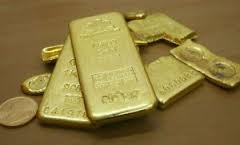
NEW DELHI, Jan 20: Gold prices rose by 0.27 per cent to Rs 29,345 per ten grams in futures trade today as speculators created fresh positions, tracking firm global trend.
At the Multi Commodity Exchange, gold for delivery in February rose by Rs 80, or 0.27 per cent, to Rs 29,345 per ten grams in a business turnover of 952 lots.
Similarly, the metal for delivery in April gained Rs 57, or 0.20 per cent, to Rs 28,701 per ten grams in 88 lots.
Market analysts said speculators created fresh positions in tandem with a firm global trend where gold rose to six-week high that led to rise in gold prices at futures trade.
Meanwhile, it rose 0.5 per cent to USD 1,260.07 an ounce, the highest price since December 11 in Singapore. (AGENCIES)
Mixed trend prevails in foodgrain market
CHENNAI, Jan 20: The prices of thoor dal, urad dal and moong dal increased while gram dal, sugar and wheat decreased in the wholesale foodgrain market here today.
Moong dal and wheat declined by Rs 100 per quintal each to Rs 3,800 and Rs 2,500 from its previous closing rates of Rs 3,900 and Rs 2,600, respectively.
Sugar edged down by Rs 20 per quintal to Rs 2,880 from Rs 2,900.
In contrast, moong dal, urad dal and thoor dal rose by Rs 400, Rs 300 and Rs 200 per quintal each to Rs 9,000, Rs 7,200 and Rs 7,200 from last week’s closing rate of Rs 8,600, Rs 6,900 and Rs 7,000, respectively.
Maida (90 kg) and Sooji (90 kg) prices ruled steady.
Following are the wholesale rates of various agri-commodities today (in rupees per quintal, except where stated otherwise): Thoor Dal Rs 7,200 Urad Dal Rs 7,200 Moong Dal Rs 9,000 Gram Dal Rs 3,800 Sugar Rs 2,880 Wheat Rs 2,500 Maida (90 kg) Rs 2,500 and Sooji (90 kg) Rs 2,600. (AGENCIES)