NEW DELHI, July 30: Over 28,800 new petitions have been filed before Central Information Commission during 2012-13, Lok Sabha was informed today.
Minister of State for Personnel and Training Jitendra Singh said in a written reply that in 2012-13, a total of 28,801 second appeals/complaints were filed before the CIC while in 2011-12 the number of 33,922 and in 2010-11 it was 28,875.
He said there are a number of cases where an applicant has filed first appeal with the first appellate authority in the concerned public authority and second appeal/complaints with the Central Information Commission/State Information Commission, as the case may be.
Singh said such appeals can be filed following– non-receipt of information within prescribed time; denial of request for information; if he/she believes that incomplete/ misleading or false information under this act has been given by the public information officer. (PTI)
NEW DELHI, July 30: In an ambitious initiative aimed at empowering women, the Government has proposed to set up an exclusive bank for women having branches across the country which may see merging of the Bharatiya Mahila Bank launched last year by the UPA Government.
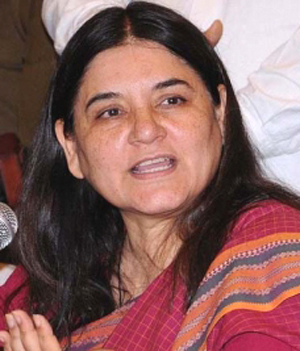
The initiative has been taken by Union Minister for Women and Child Welfare Maneka Gandhi primarily to fulfil the financial requirements of women and ensure their empowerment.
Asked to share details about the proposed bank, she said its broad contours will be deliberated upon in a meeting with representatives of top banks tomorrow.
Gandhi said Rashtriya Mahila Kosh, which was set up in 1993 to empower women, and the Bharatiya Mahila Bank (BMB) may be merged into the new bank to have just one institution to fulfil the funding needs of women.
“We will call it women’s bank. There is already a women’s bank in the Finance Ministry which has not worked and we have Rashtriya Mahila Kosh which too has not worked,” Gandhi told in an interview.
The previous UPA Government had set up the first all-woman bank in November last year as a step towards empowerment of women. The bank was launched with a corpus of Rs 1,000 crore and currently it has around 28 branches across the country.
The Rashtriya Mahila Kosh was set up in 1993 under the Women and Child Welfare Ministry to facilitate credit support to poor women.
Listing empowerment of women as a priority area, Gandhi said setting up of the state-owned bank exclusively for women will be one of the priority initiatives of her Ministry to improve the plight of women across the country.
“Banks should make it easy to lend to women, not just to self help groups,” said Gandhi.
Though the main objective of the RMK was to fulfil credit needs of poor women, Gandhi said her assessment was that it has not been able to deliver effectively.
Elaborating on her priorities, Gandhi said the Ministry was also mulling over a proposal to set up Industrial Training Institutes (ITIs) exclusively for women to impart vocational training.
She said normal ITIs have very few courses for women and that is why her Ministry was moving a proposal to set up such institutes for women.
Gandhi said her Ministry was also planning to streamline the functioning of Anganwadis across the country which provide services like post natal care and supplementary nutrition to both children below the age of six as well as pregnant women under Integrated Child Development Services.
There are about 14 lakh Anganwadi centres across the country.
“This is one system that really needs to be worked out. Because they could be the most powerful weapons that we have against malnutrition and for baby care.
“Over the years, nobody has ever paid any attention to them. Infact, in my own constituency, I have been there for 25 years and I didn’t even know that Anaganwadis existed. It is that bad. Most Members of Parliament don’t know about the Anganwadis,” she said.
The Minister said there are cases of alleged irregularities such as fake tenders and substandard food being provided by Anganwadis and there was a need to put in place a mechanism to check such wrong-doings. (PTI)
NEW DELHI, July 30: After asking taxpayers to validate their personal email ids and mobile phone numbers for online filing of Income Tax returns, the IT department has now urged them to include its official email address in the ‘safe list’ of their inboxes.
The department has suggested taxpayers to validate and include in the ‘white/safe list’ of their respective inboxes the official handle of the department– ‘DONOTREPLY@incometaxindiaefiling.Gov.In’, so that it does not land in the spam or junk folder of the taxpayer.
“What a taxpayer needs to do is to include this email id in the safe list of his or her email recipients. Once an online tax filer validates his or her email id and mobile phone on the department’s online portal, the system sends an auto-generated PIN to complete the secure process and hence this email should not land into the spam folder which can be easily missed by the individual,” a senior IT officer said.
The department has issued the advisory after it found instances of this validation email landing into the spam or junk folder of taxpayer’s inboxes thereby leading to trouble in e-filing.
The online tax filing season is on and as of now the last date is July 31.
Once the email is received from this official handle, the taxpayers can use the PIN to go further with the online filing procedures of their Income Tax Return (ITR).
The Central Board of Direct Taxes, the apex authority of the IT, has recently notified new rules for online filing of ITRs saying taxpayers filing their returns this year (assessment year 2014-15) will have to mandatorily share their personal email ids and mobile numbers with the department.
The aim behind this latest move was to update and stay in touch with the taxpayer each and every time their is a tax related issue.
The CBDT also recently notified taxpayers that the IT department does not send any communication from private email addresses such as gmail, yahoo etc to them.
“Taxpayers are cautioned that they should not respond to such phishing mails and avoid downloading any attachment, which may contain virus or malicious software,” the CBDT had said. (PTI)
NEW DELHI, July 30: Taking positive cues from overseas markets, aluminium futures prices rose 0.25 per cent to Rs 119.65 per kg today as speculators enlarged positions.
At the Multi Commodity Exchange, aluminium for delivery in August gained 30 paise, or 0.25 per cent, to Rs 119.65 per kg, with a business turnover of 107 lots.
The metal for delivery in July also up by 25 paise, or 0.21 per cent, to trade at Rs 118.95 per kg in a turnover of 174 lots.
Marketmen said apart from a better trend in metal at the London Metal Exchange and pick up in demand from consuming industries at domestic spot markets, mainly supported the upside in aluminium prices at futures trade here. (PTI)
Sir,
This has reference to the news item ‘Centre yet to fix timeframe for creation of separate Railway Division for in Jammu’ DE July 29.
The creation of separate Railway Division is a long pending demand of Jammuites. But one does not know why this demand has been ignored by the previous UPA Government, and now by the NDA.
Creation of separate Division is not only going to benefit Jammu alone, but the Railway Department itself. Jammu is emerging a key Railway Centre after rail network is being expanded from Katra to Kashmir. The Railway Minister Sadananda Gowda must look at the case afresh and start working modalities for a separate division. Hope, the Jammuites are not let down by new dispensation at the Centre.
Yours etc…
Vipul Verma
Jammu
Sir,
The NDA Government must resolve the UPSC row at the earliest and to the satisfaction of agitating students. It is quite distressing to see our future civil servants on the agitational path.
The delay on the part of the Government could only worsen the situation and put the future of various candidates at State.
The agitation may hinder their preparation for the forthcoming examination and it would be a great setback to their career in case they fail to qualify the examination due to agitation.
Though Government has assured the nation that the issue will resolved within a week, it should live by its promise.
Yours etc….
Navin Jasrotia
Jammu
Sir,
This is to bring in the notice of the Jammu University authorities that students who have to submit examination and re-evaluation forms with fee face lot of hardship on account of insufficient number of counters. As a result students are jostling with each other to get access to counter to submit their forms. Though separate counters for girls and boys have been set up on one can see students sweating profusely in hot and humid conditions. It is quite terrible for girl students to wait hours together in such conditions. Students who come from far off places are the worst sufferers.
It is quite disgusting that the University authorities could not live the promise of opening of additional cash counters to ease the process of submission of forms.
The university must without delay open more counters to enable students submit forms easily.
Yours etc….
Nisha Sharma
Jammu
Sir,
This has reference to the ‘Intensified Diarrhoea Control Fortnight’ launched by National Health Mission, Jammu and Kashmir.
It is heartening that the Health Department is quite aware of water borne diseases like diarrhoea which take an ugly turn during monsoons when people get contaminated water. The precautionary measures as are advocated to contain this disease are not sufficient in themselves. In rural areas it has been found that people do not have access to potable water. They still depend on old sources of water like ponds and bowlies. This water often contains impurities-suspended or dissolved as it does not receive any treatment at any filtration plant. The water so supplied is responsible for water borne diseases like diarrhoea.To prevent such diseases, it is necessary that the Government works earnestly in providing potable water to people at door steps.
Our elected representatives should ensure that people in their constituencies have access to potable water.
Yours etc….
Pawan Sharma
Purmandal
Brig Anil Gupta
Mian Nawaz Sharif heads a duly elected civilian Government in Pakistan. It was for the first time in the history of Pakistan that the power was transferred directly between the elected Governments. The newly elected Pakistani Prime Minister is trying to flex his muscles to regain total control of the country’s affairs. Despite a hue and cry back home he decided to visit New Delhi to be present during the swearing in ceremony of the new Indian Prime Minister NarendraModi. Some analysts in India considered it as declining influence of the Pakistan Army in the civil-military equation in Pakistan. The relationship between the military and the elected Government in Pakistan has always been very delicate and tenuous. The United States as a matter of policy continues to deal with Pakistan’s military leaders despite the fact that the military handed over power to the civilian Government six years ago.
Since the revival of democracy in 2008 the relationship between the military and the elected Governments has been characterised by mutual distrust. Despite the end of military rule, the Army in Pakistan continues to control the levers of security and foreign policies. The type of relationship with India is determined solely by the military. According to a popular Pakistani joke, “all countries have armies, but here, an army has a country.” The Pakistan Army is an authority unto itself and is unwilling to accept the civilian supremacy. Only deviation from the past has been to shift its emphasis from ‘overt’ rule to an invisible ‘ruler’. Stephen Cohen in his book ‘The Future of Pakistan’ states, “The fear of India drives the Pakistan Army and the Army drives Pakistan.”
After the retirement of General Kayani, Mian Nawaz Sharif appointed his name sake General Raheel Sharif as the new Chief of Army Staff after superseding two other generals. People thought that Nawaz Sharif was trying to display his hold over the Army. But soon the relations between the two Sharifs turned bitter. Nawaz Sharif was keen to extend an olive branch to the Tehrik-e-Taliban Pakistan (TTP) while the army was in favour of military solution to the problem. Despite repeated failure of the peace talks and growing defiance of TTP, the Government did not yield to the army’s advice. Till one day when General Sharif thumped the desk and said enough is enough. It is reported that Pakistan’s powerful Army Chief GeneralRaheel Sharif met the Prime Minister and told him that ” the time for talks with the Taliban was over.” Pakistan’s Interior Ministry issued a clarification quoting the Interior Minister Chaudhry Nisar Ali Khan, ” there was no decision to call off the dialogue process, nor was any such demand made.” Just two days later Pakistan forces launched rare air strikes against terrorists residing in North Waziristan and announced the launch of Operation Zarb-e-Azb. This put the military firmly back at the centre-stage of Pakistan’s security policy much against the wishes of the elected Government.
The other bone of contention that has surfaced in the public domain is the trial of former dictator Pervez Musharraf. The army was reportedly upset about the manner in which Musharraf trial was being used to demean the image of the army and public humiliation of the former Chief. It was conveyed candidly by General Sharif to the Prime Minister and the civilian Government but the ministers continued with their ‘army bashing’ rhetoric and did not pay heed to the army’s reservations. The Army Chief then decided to go public and in a hard hitting speech at Ghazi Base while addressing an elite commando unit (the unit commanded by Musharraf) he warned the civilian Government, “Pakistan Army upholds the sanctity of all institutions and will resolutely preserve its own dignity and institutional pride.” This was contrary to the civilian Government’s claim of army and the Government being “on the same page” on security and foreign policy issues. Will the army have the last laugh in determining the fate of the former dictator? The indications are positive and despite the reservations of the Nawaz Government the issue would be settled on the army’s terms.
The population on both sides of the border is emotionally attached to the issue of Indo-Pak relations. While the moderators pray and hope that with new Governments in place in both the countries things may change for the better and could usher an era of good relations between the two neighbours, the hard liners continue to stick to their old positions. Pakistan’s India policy is undoubtedly scripted by the all- powerful Pakistan Army. Christine Fair, author of “Fighting to the End,” a book on the Pakistani Army’s strategic culture says “The Pakistan military doesn’t have to run the country to have its preferred policy operationalised.” The Pakistan Army is obsessed with its anti-India policy and perceives no deviation from it. Repeated attempts by the civilian Governments in Pakistan to resolve issues bilaterally have met stiff resistance from the army. The army’s strategy is simple, if they can’t restraint their own head of the Government then carry out such an act that forces India to unilaterally withdraw from the negotiations. The Pakistan army abhors Shimla Agreement and its core policy of ‘bilateralism.’ In order to thwart the Vajpayee – Nawaz Lahore initiative, Pakistan Army masterminded Kargil conflict. When Zardari was trying to extend the hand of friendship, the Pak Army rolled the most heinous terror attack in Mumbai on 26 November 2008.
One wonders that even now when the Pakistan Army has its hands full in North Waziristan and in internal security duties why does it continue to repeatedly violate the ceasefire on the line of control (LC) and international border (IB) to which Pakistan interestingly refers as ‘working boundary’? Apart from the reasons of supporting infiltration and pushing in terrorists, the reason most people fail to realise is to keep the public and Government reminded of the fact that their enemy No. 1 is India. The very basis of existence of Pakistan army is anti-India policy. According to Hussain Haqqani, a former ambassador of Pakistan to US, “Pakistan Army still has to embrace the concept that an army exists primarily to face enemies in the battlefield, but the decision of who the enemy is should be taken by civilian leaders.”
India has decided to send her foreign secretary to Islamabad on 25th August for talks with her Pakistani counterpart. It is sanguine that the both would be discussing the issues of cross-border terrorism, ceasefire violations and Pak sponsored proxy war. As I have tried to bring out that in matters of foreign policy, Indo-Pak relations in particular, and security policy the civilian Government generally plays second fiddle to the army. With this background will the talks serve any purpose? Would they yield any results without the nod of Pakistan army. There can be no hope from the Government that does not have the reins in its hands. The talks are doomed and likely to fail. One was expecting that the new Government in New Delhi would refrain from the antiquated Pak policy of the previous Governments and come out with an ‘out of the box’ approach. Alas! It has happened. The wisdom lies in learning quickly from the mistakes and resorting to mid- course corrections. Time has come for us to learn from the Americans and have direct talks with military authorities in Pakistan. A detailed plan needs to be formulated. Beginning must be made with increased military to military contact. The DGMO level meet held recently should not be a one-time affair but converted into a regular feature. Meetings at different levels over a period of time should culminate in a one to one meet between the Chiefs of the two armies. As long as the military continues to be the sole architect of foreign and security policies, talks with the civilian Government would yield no results and no headway can be made. Time has come for India to actively pursue military diplomacy.
(The author is presently a political commentator, security and strategic analyst. The views expressed in this article are entirely personal.)
Pragya Mahajan
This has reference to Rajesh Dhar’s write-up ‘ Administrative anarchy puts ISM in Shambles (DE , July 28,2014) ‘.Your paper has been highlighting these problems in one or the other form since long and now when the attention of Minister for Health & Medical Education has been drawn by your correspondent to the ‘ decades old ‘ problems of ISM department , he in the typical Ministerial style has responded that the ‘ chronic problems will need time to rectify’ and at the same time has stated that ‘efforts are being made to sort out the problems at an earliest to help the department run smoothly’ . Whatever may be the meaning of ‘ at an earliest ‘ in Hon’ble Minister’s dictionary as if six years was not adequate time to make a beginning to check this anarchy and prevent the department from going to shambles , at least he has admitted that the department is not running smoothly and despite all the claims of efficiency and good governance by the present Government , the truth is that this ancient system of Medicine is a victim of neglect and apathy of the Government at its worst.
We all know that there has been enormous development in the field of Medical Science in the past few decades . The knowledge about the human body and various causative factors responsible for the spread of disease has been recognised . New diagnostic techniques and new chemicals to be used as medicines are flooding the health market everyday. More and more hospitals are being opened in the private sector and highly qualified doctors with vast knowledge are working there as well as in the Government hospitals. Lot of money is being invested in research to develop medicines for the diseases which don’t yield to drugs developed so far. There are wonder drugs and equipments in the modern medical science to save the precious lives of those who can afford its cost . The same was not possible some years back.Despite all these advancements , still we find that people by and large are not healthy . Every single person is suffering from one or the other disease , be it gas problems , allergy , joint pains , anxiety,tension,insomnia,blood pressure , sugar and so on and so forth . In fact, there are no short cuts to health and like wealth , health has also to be earned by following the principles of Health as given by ancient seers through Ayurveda , the science of health and longevity and not merely a system of medicine . It stresses daily regimen (Dincharya),Ritucharya (Seasonal regimen) and Sadvrit (Good-conduct). Modern medicine doctors have little or no time to brief the patients about the serious side effects of the drugs being used indiscriminately to control various symptoms of the diseases rather to cure them radically. Serious side effects of the drugs used is the basic reason for the present state of affairs and numerous health problems of the population. Still we can’t ignore millions of lives saved by advancement in modern surgery and their achievements in other fields like eradication of small-pox,polio and prevention of rabies and other killer diseases through vaccination .
The need of the hour is to integrate the best of both the modern and ancient systems of Medicine to benefit the patient as China has done by teaching Chinese medicine to doctors of modern medicine and vice versa . This will also preserve and promote those health traditions which are still relevant in modern times and can help prevent serious side effects associated with modern drugs.It is high time that the Government of Jammu & Kashmir take initiative in this direction and promote integration of both the systems in the interest of patient care and better health delivery system through Modern medicine and Ayush. For this it will have to radically change its policy of discrimination and step motherly treatment towards ISM in general and Ayurved in particular and take all the necessary steps for promoting them.
The author is Secretary, Ayurved and Holistic Health Awareness Society (AYUHAS) Jammu & Kashmir,Jammu