

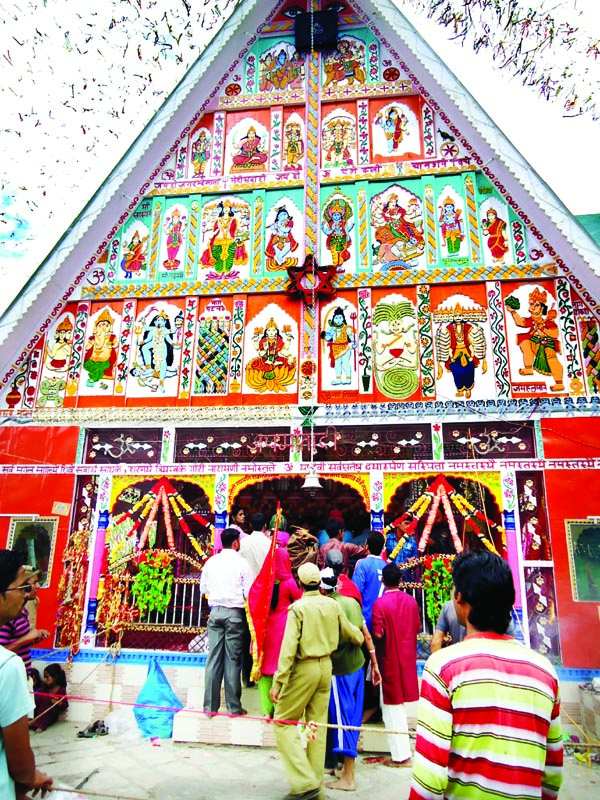
Machail Yatra
Fighting against Hepatitis

Dr Shoket Chowdhary
Dr. Vinay Sambyal
Every year on 28 July, WHO and partners mark World Hepatitis Day to increase the awareness and understanding of viral hepatitis and the diseases that it causes.It includes group of hepatitis viruses A,B,C,D and E.
The theme of 2014 would be “Hepatitis: Think Again “.
WHY WORLD HEPATITIS DAY IS CELEBRATED?
World hepatitis day is celebrated annually to encourage the common public for the early diagnosis, prevention and treatment from hepatitis.
WHAT GOES ON?
The 2014 campaign will focus on the theme Hepatitis: think again.
The message from this theme is that viral hepatitis is being ignored around the world .Viral hepatitis is the 8th bigger killer worldwide .It kills 1.5 million people worldwide each year -that’s as many people as HIV/AIDS.
WHAT IS HEPATITIS?
Viral hepatitis- a group of infectious diseases known as Hepatitis A,B,C,D and E – affects hundreds of millions of people worldwide ,causing acute and chronic liver diseases and killing close to 1.4 million people every year .But hepatitis remains largely ignored or unknown. Hepatitis is the liver inflammation caused by these viruses. A and E type are short term infection and known as acute infection however B,C and D type are long-term infection and called as chronic hepatitis .Hepatitis B,and C can lead to some life threatening complications including cirrhosis means liver scarring, liver cancer, liver failure and so many.
HOW THE DISEASE PRESENTS?
Acute viral hepatitis occurs after an incubation period that varies according to the responsible virus. The prodromal symptoms of acute viral hepatitis are systemic and quite variable.
Constitutionalsymptomslikeanorexia,nausea,vomiting,fatigue,malaise,arthralgias,myalgias,headache,photophobia,pharyngitis,cough,coryza may precede the onset of jaundice by 1-2 weeks. Dark urine and clay-colored stools may be noticed by the patient from 1-5 days before the onset of clinical jaundice. Complete clinical and biochemical recovery is to be expected 1-2 months after all cases of hepatitis A and E and 3-4 months after the onset of jaundice in three quarters of uncomplicated ,self -limited cases of hepatitis B and C (among healthy adults, acute hepatitis B is self limited in 95-99% while hepatitis C is self limited in only -15%)
METHODS OF TRASMISSION
Hepatitis A
* Hepatitis A is a liver disease caused by the hepatitis A virus that can cause mild to severe illness but does not lead to chronic infection.
* Globally, there are an estimated 1.4 million cases of hepatitis A every year.
* The hepatitis A virus is spread by ingestion of contaminated food and water, or through direct contact with an infectious person.
Hepatitis A is a virus that is usually spread through food or water contaminated with fecal matter-even in microscopic amounts. This occurs most often in countries where Hepatitis A is common, especially where there is a lack of safe water and poor sanitation.
Although rare, foodborne outbreaks of Hepatitis A still occur in the United States. Then one can imagine the scenario in India. Contamination of food can happen at any point: growing, harvesting, processing, handling, and even after cooking. The best way to prevent getting infected with Hepatitis A is to get a safe, effective vaccine. In the United States, the Hepatitis A vaccine is recommended for all children at age 1 and adults at risk of infection but vaccination in India is controversial due to frequent chances of re-infection due to poor sanitation.
Hepatitis B
* Hepatitis B is a serious liver disease caused by the hepatitis B virus that can cause both acute and chronic disease.
* Globally, there are an estimated 240 million people living with chronic Hepatitis B.
The hepatitis B virus is spread through contact with the blood or other body fluids of an infected person. Hepatitis B is spread when blood, semen, or other bodily fluid of someone who has it enters the body of someone who doesn’t. An infected mother can pass the disease on to her child at birth. You can also get the disease by:
* Having unprotected sex with an infected partner
* Sharing needles, syringes, or other drug paraphernalia
* Using something that may contain an infected person’s blood, such as a razor or toothbrush
* Coming in direct contact with the blood of someone who has the disease
* Being exposed to blood from needle sticks or other sharp instruments.
Hepatitis C
* Hepatitis C is a serious liver disease caused by the hepatitis C virus that can cause both acute and chronic disease.
* Globally, there are an estimated 130-150 million people living with chronic Hepatitis C.
* The hepatitis C virus is a bloodborne virus.
* There is currently no vaccine for hepatitis C.
Unlike Hepatitis A and Hepatitis B, there is no vaccine available to prevent Hepatitis C. The best way to prevent Hepatitis C is by avoiding behaviors that can spread the disease, such as sharing needles or other equipment to prepare and inject cosmetic substances, drugs, or steroids.
People with Hepatitis C often have no symptoms and can live with the disease for decades without feeling sick. Even without symptoms, liver damage may be silently occurring. Fortunately, new treatments are available that can cure Hepatitis C.
Hepatitis D
It generally co exit with Hepatitis B infection.
Hepatitis E-It is also transmitted by contaminated food and water.
HIGH RISK POPULATION FOR WHICH HBV INFECTION SCREENING RECOMMENDED
a) Household and sexual contacts of persons with hepatitis B
b) Person who are addicted to intravenous drugs.
c) Persons with multiple sexual contacts or a history of Sexually transmitted diseases.
d) Persons with elevated Liver enzymes ( SGOT & SGPT) levels.
e) Persons with HCV or HIV infection.
f) Patients and staff of Hemodialysis ward
g) Pregnant women
h) Persons who require immunosuppressive or cytotoxic therapy ( Cancer patients ) and health care professionals attending them
i) Health care Personnels
J) Persons with hemophilia and other congenital bleeding disorders
PROPHYLAXIS OF HEPATITIS
General (lifestyle modification): Alcohol consumption should be stopped, cigarette smokers should be advised to quit, weight reduction with sound nutritional advice is ideal. Eat plenty of vegetables, legumes and fruits. Take sugarcane (milk thistle), eat plenty of cereals, preferably whole grain, lean meat, fish, poultry, milk, yoghurt, cheese and regularly drink water. Avoid groundnut! Groundnut contain toxins (aflatoxin) that are injurious to the liver.
The author are Head Gastroenterology SSH Jammu and Registrar Gastroenterology SSH Jammu.
Monsoon Make-up

Shahnaz Husain
During the hot and humid season, make-up never seems to last. In no time, foundation becomes streaky and blotchy. The effort is always focused on reducing the oily and sweaty look, making the skin appear fresh and clean. Actually, a natural, matte (non-shiny) look is not only trendy, but also suitable for the humid season. Heavy foundations and shine on the face are a big “no no.” The effort should be to achieve a sheer and translucent skin texture. Look for a matte finish on the skin. I always feel that its best to keep the hair away from the face and neck, in order to feel cool. Put the hair up with accessories and hair bands. Start by looking for make up products that are “waterproof” or “long lasting” and provide a matte finish. This would be ideal for make up during the rainy season.
Stay away from heavy foundations. Go for compact powder. Compact powder is pressed powder and lasts longer than loose powder. Also, it reduces the oily look. If you apply loose powder, press the powder all over the face and neck, with a slightly damp sponge. This helps it to set and last longer. Or, you can apply a matte moisturiser and compact powder. A finishing spray or mist can sometimes help the make up to “set.” It helps to lock in moisture and keep the make up fresh. They help the make up last longer. Compact powders are also ideal for touching up. Carry wet tissues and compact powder in your handbag, to refresh both skin and make-up.
If you must apply foundation, apply an astringent lotion first, using cotton wool. After a few minutes, wrap an ice cube in a clean cloth and apply it on the skin, for a few seconds at a time. This also helps to close the pores. If you can get hold of a light textured primer, it would be good for the monsoons. It would help to absorb oil and sweat and help the foundation last longer. Go for a water-based foundation, adding a drop or two of water for a lighter coverage.
The trend is towards the natural look, with less blush-on. A faint flush would be suitable. Instead of applying blusher, you can use a lipstick to dot on the cheeks and then blend with the fingertips. This would make the blusher waterproof. Powder blushers also help to reduce oil and sweat. Apply on the cheekbones and slightly below it. You can use your finger tips to dot the area with blusher. Then, blend with the brush, outwards and slightly upwards, making sure there are no harsh lines or a blotchy effect.
During the rainy season, waterproof eyeliner and mascara would be better. For the lower lid, apply liner as close to the lower lashes as possible, but start from the middle of the lower eyelid and take the line towards the outer eyes. Apply waterproof mascara, in two coats, waiting for a few minutes after applying the first coat. Waterproof eyeliner and mascara are, of course, good even when you go swimming. Be careful while removing waterproof eye make-up. Always wipe gently, using cotton wool and a cleansing gel containing aloe vera.
Apply foundation on the lips first, to make lipstick last longer. Frosted sheen or glimmer would be good, instead of too much gloss. Colour is good for the monsoons. Go for orange and shades of orange, like amber, coral, apricot and tangerine. Or go for earthy colours. Red and shades of red are also popular, like cherry, rose, plum and red itself. A warm red would be good for the night. Keep your lipsticks in the fridge during the monsoons. In fact, skin tonic can also be kept in the fridge, chilled and ready for use. It can be most refreshing and help to close the pores.

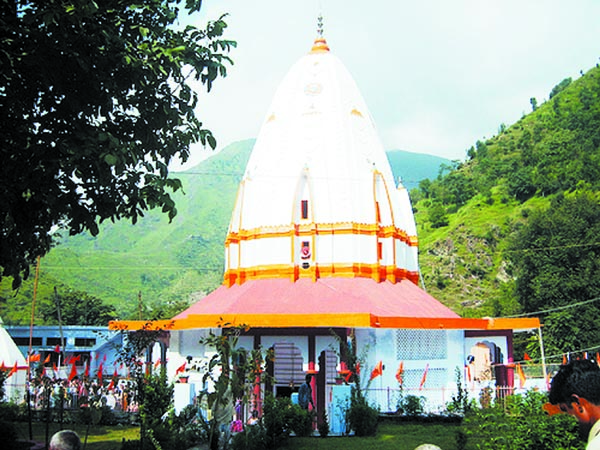

Animal sacrifice

Maneka Sanjay Gandhi
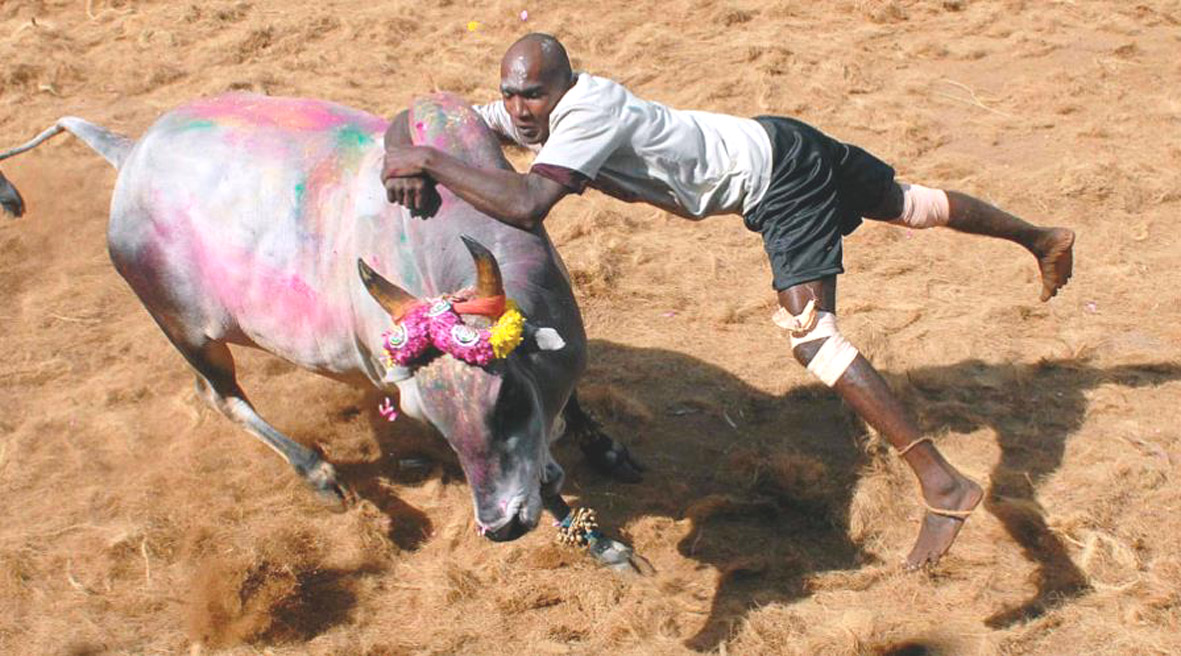
One of the worst festivals in India, that should celebrate animals and yet uses the occasion to torture them, is Jallikattu , a barbaric ritual done during Makara Sankranti or the heralding of the Spring Harvest. This should honour the bull, bullock, cow, buffalo – the beasts of burden who plough the fields , bring in the crop and on whose backs it will be taken to be sold. But instead, Jallikattu in Tamil Nadu became distorted into a rite of cruelty in which bulls were bitten repeatedly while confined in dark chambers, had chillies stuffed up their anuses, were fed alcohol till they were maddened with pain and dizziness and then made to run through jeering crowds of young men who hit them and leapt on them and pulled their horns. Every year both bulls and people died.
Thank god it has now been banned by the Supreme Court. Makara Sankranti in Karnataka was once celebrated by trapping and killing foxes after parading them through the streets in cages. My People For Animals team stopped this about twenty years ago .
Another hideous festival is Naga Panchami. According to religious scriptures, in the month of Shravan, Naagpuja is observed. Food is eaten only once that day. Women paint the rangoli pictures of a snake on the earth. Statues of snakes made of gold, silver, wood or clay are prayed to and mantras chanted asking for the blessings of whichever snakes reside on earth, sky, in sun rays and ponds. Again a harvest festival that should be celebrating snakes because they catch rats and protect the farmers’ crops, it has degenerated into a foul tamasha in which hundreds of snakes are caught weeks before, kept in pots and then pulled and tweaked like ropes. Defanged with hammers that break their jaws, they are displayed to housewives who pour milk down their throats. By evening thousands of snakes are dead from the pulling and the milk which they are allergic to. Their skins are then sold for bags and shoes.
From Koraput comes another dreadful festival: Chaitra Parva. It is also observed in Mayurbhanj, Sudargarh and Keonjhar in Odisha and goes through to Singbhum in Bihar. For the whole month of Chaitra the tribal people sing, dance and sacrifice animals and birds.The men go out hunting and kill whichever animal they can – even jackals. The meat is distributed among all the villagers.
The Bondas of Koraput live on hilltops have a ten day festival known as Sume-Gelirak.
The tribal priest sacrifices animals and birds and propitiates the deities with liquor. After which the young boys of the tribe alternately beat each other with branches and hug.
The Kedu festival of the Kondhs of Phulbani, Ganjam and Koraput started with human sacrifice. The British banned this so now they kill buffaloes in the most hideous manner possible. The animals are tied to trees. Men and women get drunk, dance and then kill the animal by cutting its limbs piece by piece. Then they carry the blood and a piece of meat and bury it in the fields where they produce turmeric.
Other Odisha tribes like the Ho, Oraon, Kisan and Kol celebrate the Magha Parab, which is a harvest festival. The ritual comprises a sacrifice of black fowls before the deity and offering of Mahua liquor.
In Jharkhand hundreds of tribals enter the forests and wildlife sanctuaries in May during the annual Bishu Sendra Parv (hunting festival). Armed with traditional weapons, tribals from Singhbhum and Seraikela-Kharswan districts as well as bordering districts of West Bengal and Odisha swarm all over the forests killing upto 20,000 wild animals and birds in a single day. This festival ceased being a festival many decades ago. It has now been taken over by smugglers and poachers who use the tribals to get trophies and bush meat they can sell.
The same number of animals – roosters, goats and buffaloes – are killed during the SuliaYatra, or the killing festival, in the villages of Bolangir district. Tribals first bathe the animals to be sacrificed and anoint them with turmeric. The animals are then hacked in the presence of thousands of people. The Dehuri, a woman considered an incarnation of goddess Suliya Devi, drinks the sacrificed animal’s blood amidst drum beating and chanting .
The Kharchi festival in July in Tripura is supposed to be an earth worshipping festival. But hundreds of buffaloes, goats and pigeons are killed. The reasoning? King Trilochan brought 14 deities and established them in Tripura. Once, these deities were chased by a wild buffalo and the mother of Trilochan helped kill him.
Dassehra , the annual October harvest festival is now the most bloody of all festivals At Kalighat, Kolkata, amidst drum-beating thousands of sheep are sacrificed resulting in unforgettable “rivers of blood” as lamented by Mahatma Gandhi.
The Durga Pooja/Dassera celebrations include animal sacrifice/bali in many parts of India. Buffaloes, cocks, goats, and sheep are ritually sacrificed in hundreds; their flesh consumed as prasad.
At the Kamakhya Devi Temple near Guwahati in Assam, male animals are sacrificed in thousands.
On Mahashtami Day goats, lambs and cocks are sacrificed at a Durga temple in Sirlo, Orissa.
Animal sacrifices are still happening throughout the year. During October and November it is due to the Dussera and Kali festivals. January to April it is due to harvest season. And then there are many different kinds of “jataras” throughout the year.
Andhra Pradesh has the worst of all sacrifices. To illustrate just one: a piglet, upside-down, is impaled on a spear fixed to the ground and slowly lowered down the spear. The higher the pitch of the animal screams the better they say it is for their village and harvest. In one temple that has six-foot high walls. animals are sacrificed until the level of blood reaches the top of these walls. At Durajpally, Warangal the “priest” has to kill a young goat with one bite to the throat.
Religion is merely a pretext for blood lust and violence. Uttarakhand is the first state in India which has stopped all animal sacrifice. This was done by the BJP government headed by Shri Nishank and the High Court. Police and NGOs, especially People for Animals, worked very hard to achieve this miracle. But next door is Himachal Pradesh which still carries on with its killing.
The new Government can stop this. If Kemal Ataturk could keep the culture of Turkey intact even after modernizing it, why can’t we? One can no longer pander to violence because it is dangerous to all of us. Do a study – as we have done. Many of those that kill animals at these festivals are apprehended at various times during the year for violence on women and children.
Two great women
Sankar Ray
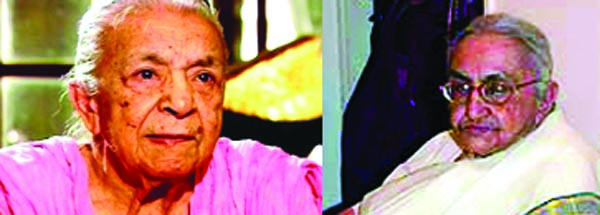
The end of eventful innings of two great women who had lifelong penchant for a just society in early July this year marks the severance of link between the present generation of women’s struggle for social emancipation and elimination of gender discrimination. One was, Zohra Sehgal (born as Sahibzadi Zohra Begum Mumtaz-ullah Khan), who stopped breathing at the age of 102. She was arguably the greatest performing artist of the 20th Century- a dancer of international repute from the mid-1930s when she earned appreciation of discriminating dance critics in Europe while participating under the famous Uday Shankar’s roving troupe (Uday Shankar Ballet Company), an all time -great stage artist and one of the greatest woman actor s on the celluloid. She made a mark as a choreographer too. The other was Vidya Munshi, the first woman journalist of Calcutta in the late 1940s who left the media and plunged into the women’s struggle under the concerned mass front of undivided Communist Party of India. She was 95 when she breathed her last and but she was alert and agile till the end.
Sehgal, fondly called as Zohra Aapa, was literally older than Indian cinema, Zohra Sehgal had a glorious performing career that inspired generations., Born in 1912 in Saharanpur in Uttar Pradesh in a conservative Muslim family, she grew up in Chakrata near Dehradun before moving out to Lahore to pursue her higher education. She studied there at the famous Queen Mary College, meant for daughters of aristocratic families. But higher education for a career was not destined for her although in 1942 she married Kameshwar Sehgal who was a dancer and painter (although the conjugal life lasted for only ten years, and ended tragically when her husband committed suicide, living two children, Kiran and Pavan, for grooming whom Zohra stayed back in England). Before the wedlock, she toured Japan, Egypt, Europe and the USA as a performing artiste of the Uday Shankar troupe.
From a dancer, Sehgal became a stage artist when she joined the Indian People’s Theatre Association (IPTA), cultural front of the CPI, in the 1940s. In no time swhe became the darling of Indian theatre. She was with the Prithvi Theatre of Prithviraj Kapoor. Her debut in cinema was in the first film production of IPTA. Dharti Ke Lal, directed by Khwaja Ahmed Abbas. The script was jointly written by Bijon Bhattacharyya, whose Nabanna in Bengali set a new pace for people’s theatre, and Abbas. The theme was based on Nabanna and Krishan Chunder’s story Annadata. The perspective was the Bengal Famine of 1943 that killed nearly two million people. In the cast were the legendary Sombhu Mitra, Tripti Mitra, another all-time great on the stage, Balraj Sahni, David and the like, each of whom made a name that any actor would be envious of. New York Times wrote “This film proved to be tremendously influential not only to future filmmakers who admired its neorealist-like qualities — but also to intellectuals of India’s left-wing”. After that Sehgal acted for Chetan Anand’s Neecha Nagar, another IPTA film, based on a story of Hayatulla Ansari who was inspired by Maxim Gorky’s Lower Depths. The film got award at the Cannes International film festival in 1946.
Zohra Sehgal never looked back thereafter, made a mark in classics such as like Guru Dutt’s Baazi (1951). Her performance in the dream sequence song of Raj Kapoor’s film Awaara.is unforgettable. She went for a drama scholarship to London in 1962 and appeared there in several TV productions like The Jewel in the Crown, Tandoori Nights and , My Beautiful Laundrette and The Raj Quartet.. She had fond memories of IPTA days.
Vidya Munshi (nee Vidya Kanuga) – known as Vidyadi – whom Rajashri Dasgupta, well-known journalist and a defender of women’s rights, aptly described as one who combined voracious reading, “deep commitment to and involvement in social and political causes” which were inspired by her association with the communists. She was sent to England to study medicine when she was 18. But the career of a physician or surgeon was not destined for her . She came in touch with the Communist Party of Great Britain where the magnetic erudition of Rajani Palme Dutt drew many girl students from India like Renu Chakravartty (nee Roy) who was a CPI MP between 1952 and 1967 and Parvati Krishnan (nee Kumaramangalam), who emerged as a prominent leader of the CPI
Vidyadi’s professional career in journalism began as the Calcutta correspondent of Blitz but her evolution as a scribe with a yearning for social change happened while working at the Bombay headquarters of Student Front, central organ of CPI’s student front, All India Student Federation. There she met, fell in love with and married Sunil Munshi, one of the living doyens among earth scientists.
She was a woman activist of a different strain who combined street fight with social and theoretical thinking, leave alone her lucid oratory. She braved the brutal lathi-charge in February 1954 during the struggle of secondary school teachers under the All Bengal Teachers’ Association.
Vidya Munshi rose to the central leadership of the National federation of Indian Women. She was a member of West Bengal state council for nearly three decades and became a member of central control commission of CPI. “Every debate, every issue of the women’s movement that saw her in the forefront in the streets of Bengal and in solidarity with movements in Vietnam, Cuba or the former Soviet Union, is etched clearly in her memory”, Rajashri Dasgupta wrote profiling her when her book In Retrospect. War-time Memories and Thoughts on Women’s Movement, was released in 2006.”
Gone are Zohra Sehgal and Vidya Munshi – the last remaining links of golden period of left cultural and women’s movement.
Political science- the perennial favorite

Gauri Chhabra
Revival of Humanities
The education landscape has witnessed a tectonic shift over the past few years. The 1980’s and 90’s saw a paradigm shift from knowledge sharing to problem solving and sciences and logic came to the forefront. This resulted in the perceived receding educational value and dwindling student interest in Humanities furthering the decline in the number of bachelor’s degrees in disciplines such as language, history, and the classics so much so that humanities was typically pushed right to the margins.However, the financial Tsunami that hit the world economy in 2009 revived their greater-than-ever relevance – for habits of critical thinking, interpretation, and analysis that are in turn gateways to ethical choice. Today, more and more students are opting for Humanities as a stream and gone are those days when we used to feel that the sciences are the only option for the students who wish to make their mark.
Political Science- the current scenario
The most popular courses this year are humanities courses, leaving behind the traditional favorites such as commerce and economics.According to a news website, Miranda House principal Pratibha Jolly has said seats in Political Science and History (Honors) are filling up fast and there is a possibility that these courses might not have a second cut-off list. Political Science has been the favorite among students who wish to take up Law as a career or those who intend to go in for the UPSC While choosing a career and going through the dilemma of course over college, students have preferred to choose college over course. LSR ‘s cut off for political science shot to 97% this year from 95.25% last year. At 97%, the cut-off for political science at the college is almost at par with the other popular DU course, BComhonours which was 97.5%.
What will you study in Political Science?
Political Science is the study of constitution and different political aspects. As a student of political Science you would be required to study the governmental, non- governmental systems and operations. You would also study the workings of trade unions, corporations or other forms of groups that need not be ‘political’ but have similar complexities of governmental procedures. Besides, you will study international relations, political theories, history, political economy, foreign policies, public administration, Federation, Information Technology and a number of other academic fields.
Skill set
The ability to take criticism, along with skills to solve problems, make decisions, manage teams and the time effectively are also some of the essential traits. Another important aspect is the ability to manage crisis and being emotionally stable and mature.Younot only need to have excellent reasoning and analytical skills, but also fluid communication skills, both oral and written. Furthermore, you would acquire skills in data analysis and data mining.A Bachelor’s degree would lead you to becoming a research assistant. A Master’s Degree and a Ph.D would lead you to teaching. You can also appear for Civil Service Examinations like UPSC, SSC and State Public Service Commission & Joint Public Service Commission (JPSC) or opt for NET or SLET.
Career Opportunities
As a political science major, you would be have a multitude of career options ingovernment administration, politics and campaigns, public policy, non-profit organizations, international relations, business and journalism open before you. It would also prepare you to pursue graduate programs in business, law or diplomacy.
Campaigning
Cyclical events like elections bring with them a lot of excitement and complexities. You can campaign for a political party initially and get a paid position later. Many political parties are using the services of social media managers to campaign and keep a track of their social and political footprint. You can dovetail your experience in IT by creating a perceptual mindspace in the voter’s mind.You can also craft a career in social work, human rights, social or political research and urbanplanning.
Politics
With elections just being over, and politics becoming more and more complex, youngsters are joining politics as a career. Many law students join political parties for their summer internships. You can use your tools of data analysis and market research to conduct surveys to find out people’s opinion on political issues; or use matter to analyze election results, interview relevant individuals and scrutinize available documentation. Some even attend legal proceedings and observe public events. Besides, you could prepare reports anddocumentsafter identifying, researching, analyzing public issues.If you have a flair for writing, you would be writing articles for publications in the newspapers, magazines and journals and advising party high ups on strategic issues.
Teaching and Research
Teaching and research are almost synonymous with each other. You can get a teaching assignment in intermediate colleges, Degree College, or at university graduate departments and management institutes. Many teaching positions, particularly in the universities, Information Technology Institutes, Management institutions require research activities.
Your common topics of research wouldbe relations between India and other countries, the international institutions like the UNO, the political life of nations, and the decisions of the Legislature, Executive and the Judiciary.
You may also use your research and analysis skills in Central, State and local government. You could be an administrator, manager or developer of a program, and engaged in policy analysis or problem-solving. At the state level, you would be engaged in urban planning, health planning and in criminal justice systems using your skills in survey and evaluation research and specialization in fields as aging, criminal justice, demography. This can help you predict the trend of a particular Government policy and its effect on the general population.
You might also cooperate with full time researchers and apply the knowledge of Political Science. Of course these problems would vary depending upon the particular employment setting- they might involve housing, transportation, education, community relations, corporate hiring strategies, health, law enforcement, or other major societal concerns.
Public Relations and media
You can also opt for print, television, or radio journalism, when you can apply your understanding of political systems to create reports about consent events. You might cover elections, conduct interviews, or attend press conferences where you can declaim on strategic topics of national and international significance.However, you need to be objective in your approach and present your stories and reports in a manner that reflects factual information, rather than opinions.
Management
You can couple your political Science degree with an MBA and specialize in Human Resource Management.You would be an expert in increasing productivity, work with physically challenged, and women in the work force, bring about Assistive Technology and also work on improving the corporate culture, group dynamics and organizational development. Your unique skills wouldsolve a wide range of business problems and improve the ROI besides promoting a rich culture of power dynamics and group thinking that leads to synergy.You can use statistical tools to analyze the demographics, do a trend analysis and plan for the future; deal with organizational change and growth using training techniques and organizational and competitive analysis; and increase synergy through team coherence in case of mergers and acquisitions.
The Road Ahead
Politics has such a large surface area that it is all pervasive and can be traced to education, jobs, housing, corporate world and cross cultural interactions between nations and societies. It moves from introspection and self – reflection to a macro level where you are concerned with not only how individuals interact but also how nations interact.If you are ready to ride on the crest of the dynamic world of politics, foreign affairs, and public policy, healthcare, and immigration – pick up the subject of perennial interest, Political science.