

Excelsior Correspondent
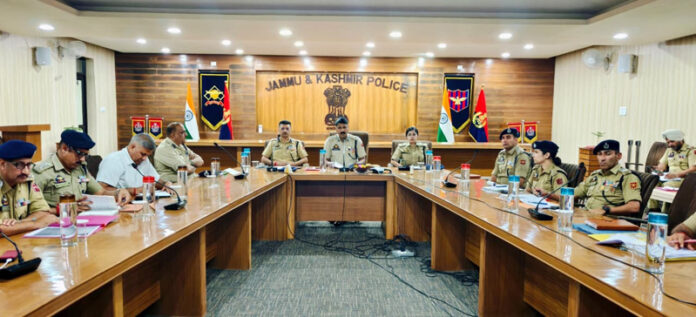
JAMMU, May 4: Deputy Inspector General of Police, JSK Range, Shridhar Patil, today chaired a review meeting to assess the progress of cases registered under the NDPS Act and action taken against drug peddlers in Jammu and Kathua districts, directing officers to expedite investigations and ensure timely filing of chargesheets.
The meeting, held at District Police Lines Jammu, was attended by SSP Jammu Joginder Singh and SSP Kathua Mohita Sharma along with SDPOs, SHOs, prosecuting officers and investigating officials of both districts.
During the meeting, a detailed review of under-investigation NDPS cases was undertaken, with special focus on long-pending matters.
The DIG stressed the need for strict adherence to timelines and called for prioritising disposal of pending cases.
He also directed supervisory officers to maintain close monitoring and ensure accountability at every level to strengthen the overall enforcement mechanism.
Emphasising the importance of sustained and coordinated efforts to tackle drug trafficking, the DIG asked officers to intensify action against drug networks and focus on identifying and targeting kingpins.
He underscored the need for active public cooperation to make the ongoing Nasha Mukt J&K Abhiyaan successful and reiterated that stringent action must be taken against repeat offenders.
The officers were also asked to develop a robust system to ensure that no accused involved in drug peddling escapes punishment.
DIG Shridhar Patil calls for crackdown on drug peddlers in Jammu, Kathua
Seniority of ReT be redrawn, determined on TET: SC
Excelsior Correspondent
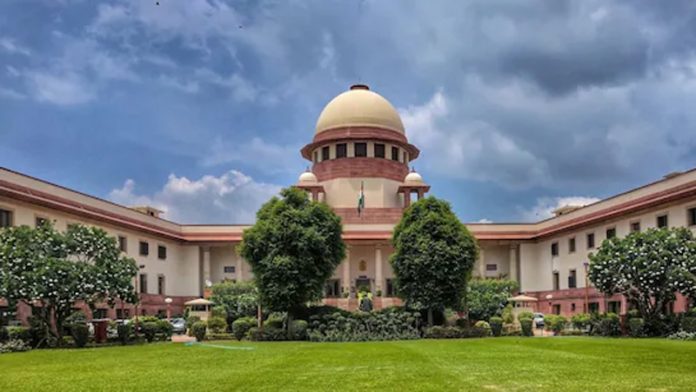
Srinagar, May 4: The Supreme Court has directed that the seniority of the Rehbar-e-Taleem (ReT) in Jammu and Kashmir shall be fixed on the basis of Teachers Eligibility Test (TET) held within three years from their appointment.
Follow the Daily Excelsior channel on WhatsApp
Modifying the judgment of division bench of High Court of J&K to some extent and upholding the closure of ReT scheme, the apex court clarified that the Closure Order of ReT Scheme dated 16.11.2018 for cancellation and withdrawal shall not retrospectively impair the right of the candidates found placed in the select panel.
The High Court in 2023 had upheld the decision of the Government with regard to closure of the ReT Scheme with certain riders. The judgment was challenged by the various parties including the Government of J&K with private parties challenging the closure of the Scheme and the Government the two directions of the High Court.
The first direction by the High Court was that the impugned Government order will not override or effect the judgments passed or to be passed by this Court holding a candidate/candidates entitled to engagement in the selection process which was/is under challenge before the Court and the second direction was that where the select panels are approved and the aggrieved party approached the Court before it could be acted upon, shall also be not affected by the impugned Government order, in that, but for litigation in the Court, the approved panel/panels could have been acted upon and formal letters of engagement in favour of the selected candidates issued prior to the issuance of the impugned Government order.
The Supreme Court while modifying the High Court judgment to some extent directed that the candidates placed in respective select panels shall be issued engagement and appointment orders as per their position in the select panel having regard to the available vacancies. “The State shall issue the formal engagement orders to the candidates of the select panel within a period of eight weeks”, The division bench of the Supreme Court comprising Justice J.K. Maheshwari and Justice Atul S. Chandurkar said.
The bench added that candidates appointed as per above from the select panel under the ReT Scheme are directed to acquire minimum qualification prescribed under NCTE Regulations and Notifications, including to qualify the TET, within 3 years and 3 attempts from date of their engagement/ appointment.
“In this regard, the State is directed to organize the TET annually. After successfully acquiring the minimum qualification and passing TET within prescribed time limit, the services of such appointees shall be, accordingly, regularized on completion of two years of service thereafter”, reads the judgment.
The direction with regard to TET shall be applicable to the other similarly situated candidates who have already been appointed from the select panels under the ReT Scheme after 23.08.2010. However, those appointees shall acquire prescribed qualification within three years.
“It is obligatory upon this Court to direct that once the candidates/appointees under the ReT Scheme have acquired the prescribed qualifications and qualified the TET, the seniority of all such candidates/ appointees shall be redrawn and determined by the competent authority of the State, maintaining their respective positions in the select panels uninfluenced by the date of appointment, joining or regularization. The inter se seniority shall also be determined accordingly”, reads the judgment.
The SC has made it clear that if the candidates or appointees including those already appointed and regularized who do not acquire and possess the requisite qualifications in terms of the NCTE notifications and fail to qualify the TET within the period prescribed then the State is at liberty to dispense with their services as the mandate of Article 21-A of the Constitution of India cannot be left at altar even while rendering complete justice invoking Article 142 of the Constitution of India. “It is further clarified that those candidates/appointees would not have any claim with respect to seniority or regularization as said above.
“All these directions shall apply to all the candidates who are litigating in any Court and such cases have been filed prior to the date of this judgement. It is further clarified that candidates who have not already filed cases in any Court shall neither acquire any fresh cause of action by virtue of these directions nor be entitled to seek any further directions from any Court in that regard”, the bench further added.
Sham Lal lays foundation for Rs 2.55 cr drainage project in Patoli Brahmana
Excelsior Correspondent
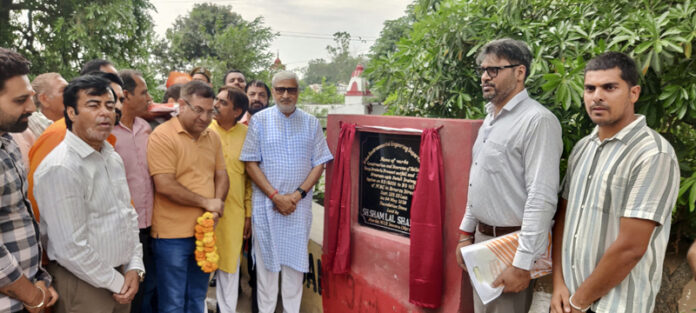
JAMMU, May 4: In a significant step towards strengthening urban infrastructure and addressing long-standing sanitation challenges, the foundation stone for the construction and diversion of a drainage system in Ward No. 65, Patoli Brahmana, under Jammu North Assembly constituency, was laid by MLA Jammu North, Sham Lal Sharma.
The project, to be executed by the Urban Environmental Engineering Department (UEED), involves an estimated investment of Rs 2.55 crore. It fulfills a long-pending demand of local residents who have been facing persistent issues of water logging, inefficient drainage, and sanitation concerns.
Designed as a sustainable and long-term solution, the project includes the development of a comprehensive drainage network along with the strategic diversion of wastewater. A key component of this initiative is to prevent the direct flow of the drainage nala into the Ranbir Canal, ensuring that untreated discharge does not enter the canal.
By diverting the drainage flow, the project aims to protect water quality, safeguard agricultural usage, and prevent environmental contamination.
Speaking on the occasion, MLA Sham Lal Sharma notably, said six such drainage and sanitation projects have been sanctioned for the Jammu North Assembly constituency, of which this is the first to be initiated, marking the beginning of a broader infrastructure upgrade in the area reaffirmed his commitment to resolving core civic issues and strengthening essential infrastructure across Jammu North. He emphasized that efficient drainage and sanitation systems are vital for public health, environmental protection, and planned urban development.
He added that the project will significantly reduce water logging, improve hygiene standards, and create a cleaner and more livable environment for residents.
He further highlighted that with sustained and liberal funding support from the Central Government for flood restoration and new infrastructure projects, Jammu & Kashmir is witnessing accelerated development. This support is enabling the timely execution of critical initiatives such as this drainage and sanitation project.
The initiative was widely welcomed by local residents and community representatives, who appreciated the fulfillment of this long-awaited demand.
The event was attended by officials of the Urban Environmental Engineering Department (UEED), members of BJP Mandal Muthi Paloura, along with local residents and prominent citizens.
Mughal road closed for traffic, 180 vehicles trapped in snow cleared
Rain, hailstorm hit Pir Panjal; other areas
Gopal Sharma/Fayaz Bukhari
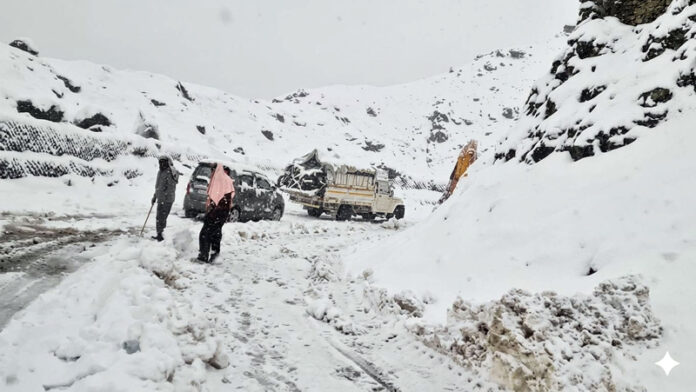
JAMMU/ SRINAGAR, May 4: Heavy rain and hail-storm hit Pir Panjal region including Rajouri and Poonch besides some other parts of the J&K UT while historical Mughal road was today closed for traffic movement after fresh snowfall at Pir Ki Gali where over 180 vehicles were stuck and later cleared by the administration in the evening.
Follow the Daily Excelsior channel on WhatsApp
Official sources said that scores of vehicles were stranded for many hours after fresh snow fall at Pir Ki Gali and its adjoining area on Mughal road, near about one and half feet snow was accumulated after which stranded commuters urged the administration to rescue them. Later, the snow clearance operation was started and passengers were rescued.
Sub Divisional Magistrate Surankote, Farooq Khan Nazki said that the snow clearance operation was started by the Border Roads Organizations (BRO), snow was cleared on Mughal road and the stranded vehicles were rescued and moved to their respective destinations. He said further, movement on Mughal road is subjected to the fair weather conditions.
A senior Traffic Police official said that following fresh snowfall in the upper reaches of Pir Panjal, the movement of vehicles has been temporarily stalled on the Mughal Road as a precautionary measure via Pir Ki Gali, ensuring the safety of commuters.
He said the strategic Mughal Road, which connects Shopian with the twin districts of Rajouri and Poonch, witnessed sudden snowfall, leading to slippery conditions and reduced visibility. As a result, vehicular movement was halted to prevent any untoward incidents.
The Traffic official further said that about 180 vehicles were stranded and trapped near Pir Ki Gali due to snowfall the inclement weather conditions. A coordinated rescue operation was launched by the BRO, local police and traffic police officials and the stranded passengers were rescued. He said the commuters are advised to avoid traveling on the Mughal Road till the weather conditions improve.
Reports said heavy rain amidst thunder and hail-storm, was experienced in Poonch, Mandi, Surankote, Mendhar, Rajouri, Thannamandi, Kotranka. Manjakote, Nowshera, Kalakote and some hilly areas of Reasi district. The rain started in Pir Panjal belt around 11 AM and continued till evening. Hail-storm was also witnessed in many areas of these two districts and it caused damage to the fruit trees.
The MeT office said that Poonch recorded a rainfall of 50.5 mm while Rajouri 45.0 mm during last 12 hours. Baramulla recorded a rainfall of 13.8 mm, Srinagar 12.0 mm, Anantnag 11. 0 mm, Badgam 8.0 mm and Reasi 6.2 mm rainfall.
A sharp drop in temperatures at various places in the region has also been experienced with the rain at scattered places and snowfall on the higher reaches.
A MeT official has predicted brief spell of light rain/ thundershowers at scattered places towards afternoon on May 5. He further said that from May 6 to 9 the weather will generally remain dry.
Meanwhile, Jammu recorded a day temperature of 30.4 deg C, about 6 degrees below normal; Katra 25.6 deg C, hill resort of Bhaderwah 18.5 deg C, Batote 19.0 deg while Banihal town registered 22.2 deg C temperature on Monday.
Gulmarg in Kashmir recorded the day temperature of 11.0 deg C , Pahalgam 16.8 deg while Srinagar 20.5 deg C today. The night temperatures, at Gulmarg and Pahalgam tourist resorts, however, remained 2.0 and 6.0 deg C, respectively.
Reports said light rain lashed parts of Kashmir today, while the upper reaches received moderate to heavy rainfall, as weatherman forecast a continued wet spell across Jammu and Kashmir over the next 24 hours. Meteorological Department (MeT) said that J&K is expected to witness cool and wet weather amid erratic weather conditions.
“Widespread parts of Jammu and Kashmir are expected to receive above-normal rainfall during the month of May, with continuous cloud cover and precipitation,” the Meteorological Department said.
“This will effectively end the region’s 24 per cent rainfall deficit, which stood at 54 per cent in February before coming down to 34 per cent in March and April. Both day and night temperatures are likely to remain on the lower side amid fluctuating weather conditions.”
The intermittent rain and hailstorms, along with gusty winds and thunderstorms, have hit several parts of south and north Kashmir since late Friday evening. The hailstorms caused widespread damage to orchards, while water-logging was reported in low-lying areas of Srinagar.
“Light to moderate intermittent rainfall will continue in several areas, with a few places likely to receive short spells of heavy thundershowers over the next two days,” an official said.
“There is a possibility of thunder/lightning /hailstorm/gusty winds (40-50 KMPH) at few places across J&K,” he added.
Jammu Film Festival 5th edition to be held on Sept 28, 29
Excelsior Correspondent
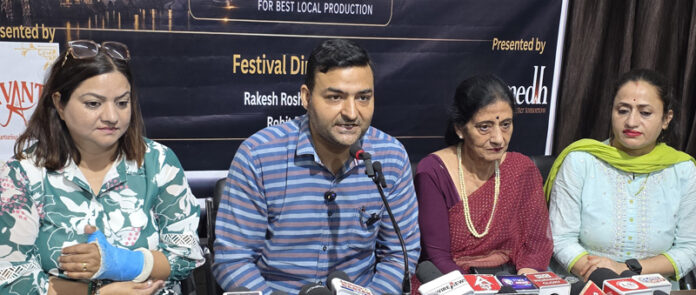
JAMMU, May 4: The 5th Edition of the Jammu Film Festival (JFF) was formally announced today at a press conference in Press Club, here, marking a significant milestone in the region’s cultural and cinematic journey.
Rohit Bhat Festival Director said said the Film Festival is actually the brain child of another Festival Director, Rakesh Roshan Bhat.
He said a special highlight of this edition will be the Rs one lakh Award for Best Local Production, reinforcing the festival’s commitment to nurturing regional talent while maintaining its international outlook. Rohit Bhat further revealed “With the 5th edition, we are taking a significant step towards encouraging regional storytelling by instituting Rs one lakh Award for Best Local Production. Our aim is to empower filmmakers from Jammu & Kashmir and provide them a strong platform to showcase their work.”
Festival Advisor, Dr. Amit Wanchoo said “Jammu Film Festival has matured into a credible platform that nurtures meaningful cinema. Its consistent growth reflects the dedication of the organizers and the increasing interest in quality storytelling.”
The festival is presented by Vomedh in association with The Avanti Foundation. Speaking on behalf of the co-presenter, Sanjeev Kak said “We are delighted to be associated with International Film Festivals like JFF and TIFFS in Jammu & Kashmir through Vomedh.
He said the 5th Edition of Jammu Film Festival will be held on 28th and 29th September 2026 in Jammu.
Advisor to Vomedh, Bhavna Pandita emphasized, “Vomedh remains committed to the promotion of art and culture. Through initiatives like JFF, we aim to create meaningful cultural engagement and opportunities for artists and filmmakers.”
Senior actor and emcee Kusum Tikoo, who has been part of the journey since its inception said, “It is truly satisfying to see how these platforms have grown over the years.
The festival will feature screenings, interactions, and curated cinematic experiences, with participation expected from filmmakers across India and internationally. Submissions for the festival will open from May 6 and can be made online through Film Freeway.
The press conference was attended by prominent members of the cultural and media fraternity which also included Bindhya Raina, Bharti Kaul (vice president, Vomedh), King C Bharti (Editor-in-Chief, Vitasta Herald), Kamaksha Dogra, Suman Bhat, Gulfam Barjee and Sanjeev Kak (The Avanti Foundation).
Conflict Cripples Jammu Industries
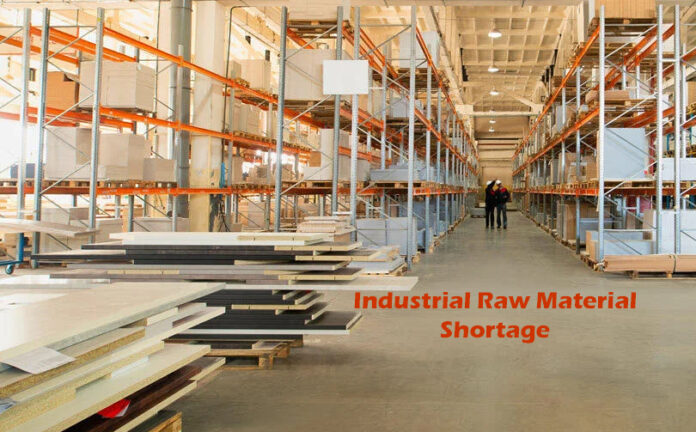
The West Asia conflict has reached far beyond its theatre of war, and the working industrial units of Jammu are now bearing its weight. Wars are rarely contained to the territories where they are fought. Their tremors travel through shipping lanes, supply chains and commodity markets, and they eventually reach places that no geopolitical analyst ever thought to mention. One such place is the industrial corridor of Jammu and Kashmir, where over 350 small and medium enterprises – producing everything from bitumen-based road materials to plastic goods and processed food – are today gasping for breath, their survival contingent on a ceasefire they have no power to negotiate. When the Iran-US/Israel conflict escalated, and the Strait of Hormuz effectively closed to commercial traffic, the immediate global conversation centred on oil prices and great-power posturing. What went largely unnoticed was the devastation quietly being visited upon micro, small, and medium enterprises thousands of miles away. Nobody truly foresaw the scale of disruption that lay ahead. Most business owners, industrialists and policymakers expected a short, contained confrontation – a few weeks of volatility followed by a return to normalcy. That assumption has proven catastrophically wrong.
The crisis has spiralled far beyond what anyone anticipated. Gulf nations had, over decades, invested billions of petrodollars into manufacturing infrastructure – mega-factories producing petrochemical raw materials such as plastic granules, resins, bitumen and industrial chemicals. A single prolonged war has rendered many of these facilities inoperable. Rebuilding them will take not months but years. In the meantime, the world faces a structural absence of raw material from what was once its most dependable source, and J&K’s MSME sector – utterly dependent on that supply chain – is bearing the full brunt of this vacuum.
For units not hampered by raw material shortages, a different but equally punishing set of problems has emerged. Finished goods that have been manufactured are piling up in warehouses because export routes remain disrupted. What has been sold is not being paid for, with delayed remittances and blocked fund flows adding a liquidity crisis to what was already a production crisis. LPG supplies – the lifeblood of dozens of units at Bari Brahmana, Samba and Kathua – have been throttled to half their required quota. Bitumen-dependent units have nearly ground to a halt, threatening road construction projects across the region and the livelihoods of thousands of workers employed in allied trades.
This is the crux of the matter: unlike large industrial conglomerates with deep reserves, diverse portfolios and access to institutional credit, MSME units possess none of these buffers. A two-month disruption is enough to push them to the brink of closure. And when these units shut, they do not merely affect their owners. Thousands of workers – daily-wage earners, skilled tradesmen, and transport workers – find themselves sitting idle, their wages evaporating along with production. The threat to livelihoods here is not abstract. It is immediate and real.
The Government’s decision to initiate a survey through MSME development and facilitation offices is a necessary first step, but it cannot be the last. Surveys document suffering; they do not alleviate it. What this moment demands is decisive, coordinated action across all stakeholders. Larger industrial houses operating in the same sectors must come forward to share intelligence on alternative raw material sources – be it South-East Asia, Central Asia or domestic suppliers who can step into the breach. The Federation of Industries and sector associations must act as honest brokers in connecting small units with these alternatives.
On the financial front, the request by industry associations for an enhancement of working capital limits and a moratorium on loan repayments deserves urgent and sympathetic consideration from both the Reserve Bank of India and commercial lenders. An immediate deferment of existing loan instalments, coupled with modest fresh credit at concessional rates, would provide the breathing room these units desperately need while the external situation stabilises. The waiver of interest on term loans until the end of 2026 is not an unreasonable ask given the extraordinary nature of this disruption. The workers and entrepreneurs of J&K’s industrial estates did not sign up for this conflict. They deserve an immediate workable plan to survive and revive.
ACB charge sheets 11 including 4 SMC employees

Excelsior Correspondent
Srinagar, May 4: The J&K Anti-Corruption Bureau (ACB) today filed a charge-sheet against 11 accused persons, including four officials of the Srinagar Municipal Corporation (SMC) and seven private beneficiaries, in an alleged illegal construction case dating back to 2020.
Follow the Daily Excelsior channel on WhatsApp
The charge-sheet was presented before the Court of Additional Special Judge, Anti-Corruption, Srinagar, in connection with FIR No. 24/2020 registered at Police Station ACB Srinagar under sections 5(1)(d) read with 5(2) of the J&K Prevention of Corruption Act, Samvat 2006, and Section 120-B of the Ranbir Penal Code.
According to the ACB, the case pertains to the construction of six illegal structures at Jawahar Nagar, Gonikhan, Hari Singh High Street and Wazir Bagh areas of Srinagar without obtaining valid building permissions from the competent authority.
The constructions were allegedly carried out in connivance with officials of the SMC.
The Bureau said that its investigation, based on oral and documentary evidence, substantiated the charges against the accused public servants and private beneficiaries.
It added that the conspiracy between the Government officials and the beneficiaries was established during the probe. Click here to watch video
Following the completion of investigation and after securing the required sanction for prosecution of the public servants from the Government, the ACB filed the charge-sheet before the court for judicial determination.
The next hearing in the case has been scheduled for June 16, 2026.
Jodhamal Youth Conclave concludes
Excelsior Correspondent
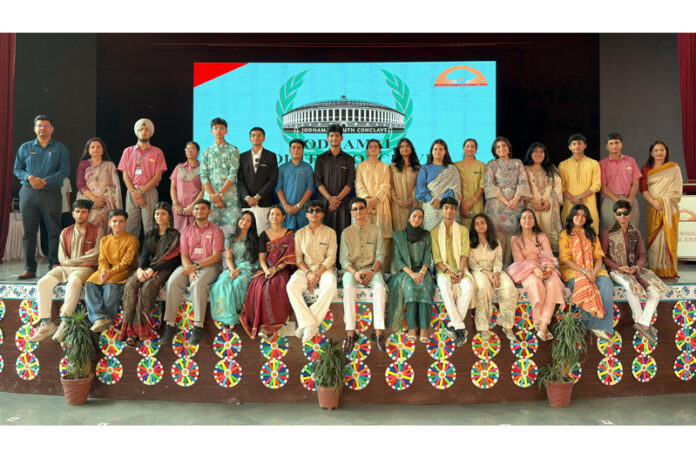
JAMMU, May 4: The 9th edition of the Jodhamal Youth Conclave (JYC) was organised at Jodhamal Public School, marking another milestone in student-led intellectual engagement and leadership development. The three-day conference commenced with an inaugural ceremony in the school’s Multipurpose Hall, bringing together over 300 delegates, observers, and guests from various reputed schools of Jammu and Kashmir.
The conclave simulated United Nations proceedings, offering students a platform to deliberate on pressing global and national issues. The event was inaugurated by Prof Alka Sharma, Dean Business Studies and Director, SIIEDC, University of Jammu, who urged students to remain rooted in values and contribute to the development of the nation. The valedictory function was graced by Abysu Sharma.
Guided by the motto “Verba Facient Exitus,” the conclave featured six committees—UNHRC, UN Women (UNW), Lok Sabha, UNOCT, UNSC, and the International Press Corps—discussing key contemporary issues. The event was organised under the leadership of the Directorate of JYC 2026, including Amaay Gupta, Adhivik Mahajan, Tara Basotra, Naureen Liaqat, Amaira Malhotra, Siddhant Sawhney, Akaisha Manga, Sara Naseer, Advaita Arya, Naisha Gupta, Ameerah Khan, Jigisha Thusoo, Aarav Handoo and Pavitt Singh.
The event was guided by CCA Coordinator Namrata Sharma, Assistant CCA Coordinator Sidhant Jain, Conference Director Raghunandan Singh and MUN Incharge Bhawna Madaan. Cultural performances, including Kathak, added vibrancy to the event. The best delegation trophy was awarded to K C Public School, Jammu.
Dr Deep Khare, Director, and Principal Amita Arora highlighted the importance of such platforms in fostering leadership, diplomacy and critical thinking among students.
Amit reviews Census 2027 preparedness with PCOs
Excelsior Correspondent
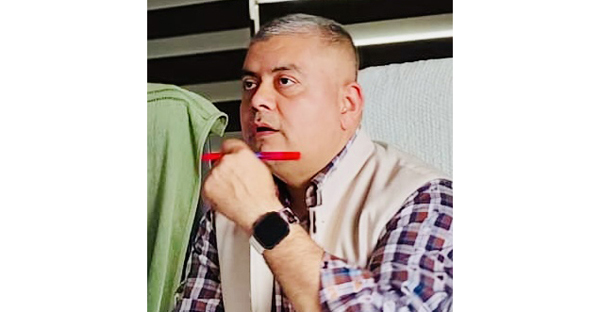
JAMMU, May 4: Chief Principal Census Officer (CPCO) and Director Census Operations (DCO), Jammu & Kashmir and Ladakh, Amit Sharma today chaired a meeting of all Principal Census Officers (PCOs), including Deputy Commissioners of districts and Commissioners of Jammu and Srinagar Municipal Corporations, to assess preparations for Census 2027 across J&K.
During the meeting, Amit Sharma reviewed key agenda points such as appointment and registration of Enumerators and Supervisors, training of field staff, formation of House Listing Blocks (HLBs), publicity measures, self-enumeration plans and overall administrative preparedness.
Officials informed the meeting that appointment of Enumerators and Supervisors has been completed in all districts and their details uploaded on the Census Management and Monitoring System (CMMS). Amit Sharma directed concerned officers to immediately remove any pending discrepancies in registrations to ensure smooth monitoring of field operations.
The status of training programmes was also reviewed. Amit Sharma stressed that subsequent training of Enumerators and Supervisors must be conducted in a structured and uniform manner, with emphasis on concepts, field protocols and use of digital applications.
Publicity measures for Census 2027 were discussed in detail. Amit Sharma directed district administrations to further intensify outreach programmes to ensure maximum public participation.
The meeting also reviewed progress on formation of House Listing Blocks. Districts were asked to ensure timely and accurate finalisation of HLBs, with proper demarcation and no duplication or gaps in coverage. Status of fund devolution and expenditure was also reviewed.
The meeting concluded with Amit Sharma instructing officers to strictly adhere to timelines and maintain close coordination for smooth conduct of Census 2027.
Ravi Canal recharged after 40 yrs with Shahpur-Kandi waters
Excelsior Correspondent
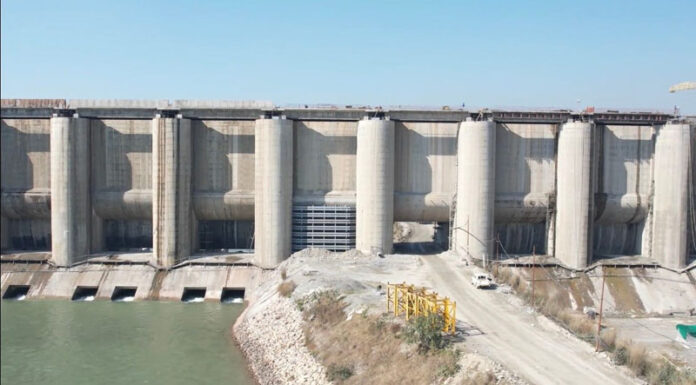
JAMMU, May 4: In a landmark breakthrough for irrigation in the Jammu region, the Main Ravi Canal has been recharged with water from the Shahpur-Kandi dam after more than four decades, ushering in a new era of gravity-based irrigation and ending the long dependence on power-intensive lift irrigation systems.
Follow the Daily Excelsior channel on WhatsApp
For the first time, the canal is being operated using dam waters, marking a transformative shift in irrigation infrastructure. The move eliminates reliance on the Basantpur and Lakhanpur Lift Irrigation Schemes, bringing an estimated saving of around Rs 75 lakh per month in electricity costs, besides cutting recurring maintenance expenditure on electromechanical systems, an official handout of the Jal Shakti Department said.
The breakthrough follows emergency water releases in September 2025, necessitated by unprecedented floods in the Ravi River that damaged key infrastructure, including supply channels and the Madhopur Barrage. These disruptions had severely impacted irrigation across the region.
Despite its designed capacity of 1,150 cusecs, the canal had been operating at just 200 cusecs due to its deteriorated condition and delays in the completion of the Shahpur-Kandi project.
Recognizing the urgency, the Jal Shakti (RTIC) Department undertook extensive strengthening works at 25 vulnerable points between Basantpur and Ujh Barrage under the UT Capex programme.
The canal has now been recharged with an initial discharge of 200 cusecs, which will be gradually increased in phases. This is expected to ensure steady water supply to the Ujh Barrage and significantly boost irrigation across key agricultural belts including Rajbagh, Marheen, Hiranagar, Ghagwal, Samba, Vijaypur and Ramgarh.
The development is particularly crucial during non-monsoon months when low flows in the Ujh River often lead to water stress. With assured irrigation now in sight, farmers can plan the upcoming Kharif season with greater confidence.
A Detailed Project Report for further strengthening the canal network is currently under consideration with the Central Water Commission. The Government aims to enable the canal to operate at its full capacity, ensuring long-term water security, enhanced farm productivity, and improved livelihoods.
This milestone has been achieved through the concerted efforts of the Jal Shakti Department under the guidance of Minister Javed Ahmed Rana and Financial Commissioner Shaleen Kabra, marking a major step forward in modernizing irrigation infrastructure in Jammu.