

Prof. D. Mukherjee
mukhopadhyay.dinabandhu@gmail.com
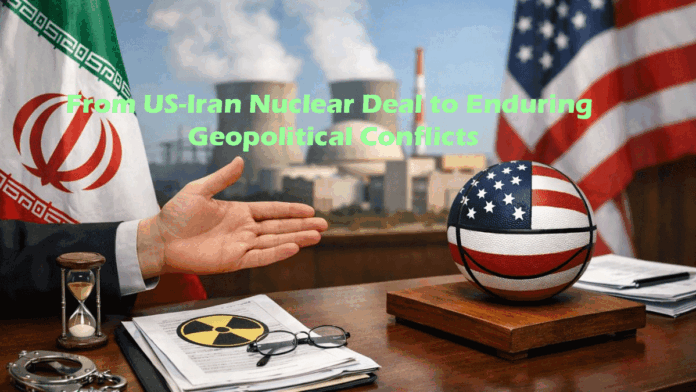
Tensions over Iran’s nuclear ambitions arise from decades of geopolitical mistrust, technological development, and competing regional visions. Initiated in the 1950s with U.S. backing, the programme became contentious after the Iranian Revolution, which reshaped Iran’s political identity. Since then, uncertainty over whether its activities are civilian or military has defined its relations with major powers. The 2002 exposure of undeclared facilities prompted scrutiny by the International Atomic Energy Agency, leading to prolonged tensions. The Joint Comprehensive Plan of Action briefly eased the crisis, but the U.S. withdrawal in 2018 renewed sanctions and uncertainty. At its core, the dispute reflects broader issues of strategic autonomy, deterrence, and ideological rivalry. Iran asserts its rights under the United Nations, while its rivals fear weaponisation, sustaining a cycle of negotiation and escalation.
Iran’s nuclear programme is closely linked to its pursuit of regional dominance. Surrounded by U.S.-aligned rivals, it views nuclear capability as a deterrent enhancing geopolitical leverage, particularly against adversaries like Israel and Gulf states. Its enrichment capacity has grown significantly, reaching up to 60% purity-well beyond civilian needs. According to the International Atomic Energy Agency, Iran holds enough enriched material that, if further refined, could potentially produce multiple warheads. While Tehran insists its programme is peaceful, its proximity to a “breakout” threshold raises concern. Beyond deterrence, nuclear progress strengthens Iran’s regional influence through ties in Iraq, Syria, and Lebanon. However, this has prompted counterbalancing coalitions, setting the stage for U.S.-Israel efforts to restrain Iran’s ambitions.
The United States-Israel alliance remains the principal counterweight to Iran’s nuclear and regional ambitions. Grounded in shared security concerns, it has developed into a coordinated strategy to contain and weaken Iran’s capabilities. Viewing a nuclear-armed Iran as an existential threat, Israel has employed pre-emptive and covert measures. A notable example is Stuxnet, which targeted Natanz and disrupted centrifuges, signalling a shift to cyber warfare. Alleged assassinations of nuclear scientists and explosions at key sites have also been linked to Israeli operations, often with tacit U.S. support. The United States complements this through sanctions, diplomatic isolation, and a sustained regional military presence, reinforced by Gulf partnerships and defence cooperation. Yet such pressure has not halted Iran’s programme and may have accelerated it, fuelling retaliation and complicating diplomatic resolution while intensifying economic strain under sanctions.
Iran’s economic trajectory has been shaped by the 1979 revolution. Under the Shah, it experienced rapid modernisation driven by oil wealth and integration with Western markets, becoming one of the fastest-growing developing economies by the late 1970s. After the revolution, however, recurring U.S.-led sanctions targeted banking, oil exports, and access to global systems such as SWIFT. At their peak, these sanctions cut oil exports from over 2.5 million barrels per day in 2011 to under 500,000 in 2019, severely eclipsing revenues. In response, Iran adopted a “resistance economy,” emphasising self-reliance and diversification, with manufacturing and agriculture gaining importance. Yet high inflation and currency decline have weakened living standards. While pre-revolution growth relied on openness, the post-revolution economy reflects resilience under isolation, though at significant social and economic cost.
The roots of U.S.-Iran tensions lie in Washington’s priorities in the Middle East-energy security, regional stability, and containing hostile ideologies. A key turning point was the 1953 Iranian coup d’état, backed by the U.S. and Britain, which fostered lasting Iranian distrust. During the Cold War, Iran under the Shah was a vital U.S. ally, ensuring oil supplies and countering Soviet influence. This alignment collapsed after the Iranian Revolution, followed by the Iran hostage crisis, which deepened hostility and severed ties. Since then, U.S. goals have remained consistent: protecting oil routes, supporting allies such as Israel, and preventing nuclear proliferation. Iran frames its stance as resistance to external control, sustaining cycles of confrontation and negotiation across military and non-military domains.
The U.S.-Iran conflict operates across military, economic, cyber, and diplomatic spheres without escalating into full-scale war. This “grey zone” rivalry relies on calibrated actions that signal strength while avoiding direct confrontation. A major flashpoint is the Strait of Hormuz, through which roughly 20% of global oil flows. Iran has periodically threatened to disrupt shipping in response to sanctions or military pressure. Incidents such as tanker seizures, drone attacks, and naval clashes have intensified tensions, with the 2019 downing of a U.S. drone showing how quickly escalation can occur. Alongside military activity, cyber operations and sanctions remain central tools. The U.S. targets Iran’s oil sector, while Iran develops cyber responses. These confrontations affect global energy markets and maritime security, highlighting the wider economic impact of regional instability.
U.S.-Iran strategic tensions extend far beyond the Middle East, shaping global energy markets, security frameworks, and diplomatic alignments. Oil price volatility is an immediate impact, as even minor Gulf escalations can trigger sharp fluctuations, placing inflationary pressure on import-dependent economies. The conflict also undermines nuclear non-proliferation efforts, as the weakening of the Joint Comprehensive Plan of Action has reduced trust in diplomatic mechanisms limiting nuclear expansion. Rising security risks have increased shipping and insurance costs, with maritime operators factoring instability into transit routes. Diplomatically, evolving ties between China, Russia, and Iran complicate Western isolation efforts, reflecting a shift towards a multipolar order. These impacts are central to the conflict and intersect with Iran’s proxy strategies, further internationalising tensions.
Iran’s strategic assets centre on asymmetric warfare, using proxy networks to expand influence while preserving plausible deniability. Groups such as Hezbollah and militias in Iraq and Yemen enable Tehran to challenge U.S. and Israeli interests without direct confrontation. In Lebanon, Hezbollah has become a major political and military force with a large rocket arsenal. In Yemen, support for Houthi forces allows pressure on Saudi Arabia, while in Iraq, Iran-backed militias continue targeting U.S. bases. This networked approach blurs the boundary between war and peace, sustaining low-intensity conflict and complicating response strategies. Countering it requires military, intelligence, and diplomatic coordination, yet such indirect warfare risks escalation as local conflicts can draw in wider powers, underscoring broader geopolitical stakes.
Iran’s nuclear trajectory has immediate and long-term geopolitical impacts. Rising enrichment levels increase the risk of pre-emptive strikes, with Israel signalling readiness to act if threatened. Over time, a nuclear-capable Iran could trigger a regional arms race, as Saudi Arabia and others consider similar paths, challenging non-proliferation efforts. At a broader level, Iran’s closer ties with China and Russia indicate shifting global alliances and a move towards multipolarity. This reduces the effectiveness of unilateral sanctions and complicates diplomacy. Overall, these developments heighten tensions while reshaping the global balance of power. Resolving the U.S.-Iran conflict requires renewed diplomacy supported by realistic concessions. Reviving a framework like the Joint Comprehensive Plan of Action, with stronger verification, could be a starting point. Confidence-building measures, including phased sanctions relief for compliance, are essential. Broader regional dialogue, especially involving Gulf states, can reduce mistrust, while multilateral efforts under the United Nations may support negotiations. De-escalation also depends on limiting proxy conflicts and cyber activity, alongside establishing reliable communication channels to avoid miscalculation. Economic engagement through trade and investment can further encourage stability. Though challenging, these steps are achievable with political will, but success ultimately depends on credible mediators capable of facilitating sustained dialogue.
Mediation in U.S.-Iran’s decades-old and ongoing kinetic and non-kinetic warfare depends on credible intermediaries. Pakistan has occasionally acted as a facilitator, but domestic and geopolitical constraints raise doubts about its neutrality. Effective mediation requires trust and the ability to offer neutrality . Neutral states such as Oman and Switzerland have been more successful due to balanced diplomacy; Oman notably helped enable talks leading to the Joint Comprehensive Plan of Action. Neutral actors reduce great-power pressure and create space for dialogue. Broader multilateral frameworks may offer a stronger path forward, but meaningful mediation must foster genuine compromise and bridge deep-rooted divisions. It is worth mentioning that dramatic entrusting Pakistan in the role of the mediator to restoring peace by bringing the warring nations to the table of negotiation in the current scenario raises eyebrows of many nations across the globe about US’ intents for ending the conflicts with Iran and its proxies immediately.
The U.S.-Iran military and economic war though centred on disrupting nuclear ambitions of Iran, extends far beyond them and remains a defining geopolitical challenge. It reflects a convergence of history, ideology, security concerns, and shifting global power structures. Regional rivalry, proxy warfare, sanctions, and energy dynamics sustain ongoing tensions among the warring nations . Rather than a single cause, the conflict stems from interconnected forces that resist simple solutions. Its persistence exposes the limits of unilateral strategies while underscoring the importance of diplomacy. Progress depends on recognising shared vulnerabilities alongside competing interests. Middle East stability is closely tied to global stability, making resolution essential for regional security, economic balance, and the credibility of non-proliferation efforts.
(The author is Bangalore based management scientist, independent geopolitics analysist and researcher.)
From US-Iran Nuclear Deal to Enduring Geopolitical Conflicts
The emergence of Indian Knowledge Systems
Prof K S Chandrasekar
vc@clujammu.ac.in
Indian Knowledge System is just not about merely knowing about some ancestral knowledge. It must be our endeavour to protect received wisdom, economic security, and national pride. There is a need for documenting traditional knowledge and to provide evidence of prior knowledge to the world. The traditional knowledge stems from spiritual expressions, agricultural, medicinal and environmental knowledge. Traditional knowledge is obtained through recognition of prior skills in music, handicrafts, dance, stories and poetry. This traditional knowledge is always evolving and most of the time, as were transferred from generations sometimes through oral renditions to the next generation, we tend to lose the essence of it. Sometimes when the next generation pursues different avocation, the very element of the traditional knowledge is lost.
The four Vedas, Rig Veda, Yajur Veda, Sama Veda, Atharva Veda has given us great lessons, and each Veda is divided into four parts viz., Mantras, Brahmanas, Aranyakas, and Upanishads. Aranyakas and Upanishads are the philosophical portions of the Vedas. Veda is derived from the root word vid which means “to know”. Aranya means “forest” and Aranyaka means “forest writing”. Upanishad is a combination of three Sanskrit words: upa, ni, shad whose translation approximates: “near”, “below” and “sit”. Documentation becomes important which many of our generations missed. Infact, a US company was awarded a patent for neem as a pesticide which we have been using for generations. However, CSIR successfully forced the USPTO to revoke a patent it granted on use of powdered turmeric (Curcuma longa) for wound healing.
IKS can be further divided into literary and non-literary. In the case of literary, it encompasses Sanatan Dharma, other Dharmic traditions and Wealth of religious and other literature in all major Indian Languages. In the case of non-literary, it is oral traditions. India was the first to introduce Zinc to the rest of the world between 600 and 200 BCE. Further all the golden ornaments worn by the kings and queens are the testament to the early presence of Gold, Silver etc., Geometry is an ancient Science in India. Mathematics was at the high just with a pole anchored on the ground and a thread attached to it, Indians were able to generate complex geometrical shapes.
India’s contributions in the field of astronomy are very well known and well documented. The earliest references to astronomy are found in the Rig Veda, which are dated 2000 BC. During next 2500 years ancient Indian astronomy has emerged as an important part of Indian studies and its effect is also seen in several treatises of that period. In some instances, astronomical principles were borrowed to explain matters, pertaining to astrology, like casting of a horoscope mainly. Aryabhata added to the heliocentric theory, proposing the idea that the moon reflects the light of the sun, a theory also proposed by some Greeks but not widely adopted. He also proposed that the earth rotates rather than the skies, although this theory lay undiscovered until the European Renaissance and the finding of the Copernicus. Varamihira and Brahmagupta later worked on the same. Varahamihira’s Brhatsamhita (5th century CE), Chapter 77, titled Gandha-yukti, addresses the issue of preparation of perfumes in 37 verses.
Only those disruptions that has a possibility for long term survival alone can test the waters otherwise they will have an early exit. Few would recognize quantum science and the future of medicine in this ancient phrase thundered forth by the Chandogya Upanishad almost 1,500 years ago. Tat tvam asi indicates the equivalence of Tat, the ultimate reality, and Tvam, you and I as individuals. Great Adi Sankara from Kerala in 8th Century quoted that the meaning of Shiva linga is the symbol of nothingness, the universe is the cosmic manifestation of the nothingness and the ancient Indian sages symbolised nothingness or Shiva as the form of universe. The reason why Lord Shiva is worshipped in the form of linga is a great example which indicates there are scientific reasons behind the same even though he has a life form.
Several modern thinkers have commented on the Vedas, finding parallels with scientific discoveries. Werner Heisenberg noted that ideas from Quantum Physics made more sense after discussing Indian philosophy. Albert Einstein credited Indians for teaching the world how to count, which was essential for scientific discovery. Wheeler Wilcox described the Vedas as containing not only religious ideas but also facts science has proven, mentioning electricity, radium, electronics, and airships as being known to the seers.
India needs to focus on the research and development to ensure that they are on top in innovation and the same needs to align with the United Nation’s Sustainable Development Goals by resurrecting Indian Knowledge systems. There is a need to increase both public and private spending on research and development. Existing industrial technology needs to be developed with a focus on green and clean energy solutions. There is a need to support domestic technology development and industrial diversification in developing nations. Over a period, some of the S & T practices still in use have been branded as rural, tribal, and folk practices. Indian society relied substantially on an oral tradition for the preservation, and dissemination of knowledge across generations.
Large parts of India were subjected to foreign rule for over 700 years since the beginning of 13th century CE. There was large-scale burning of over six million manuscripts kept in Nalanda University by the invaders. The priorities of what needs to be encouraged and in what manner were left entirely to the ruling class. Waning away of indigenous skills, practices, and know-how continuously happened. Example being that of mining ban and production taxes for metal working by the British Raj. The modern governance and social systems introduced by the British Raj ensured that many skills and practices went off the mainstream swiftly, thereby making these structures weaker and perhaps irrelevant. It is time that India understands its own glory of Indian Knowledge Systems and usher in the new era which created the golden period for India. With this understanding, Cluster University of Jammu has embarked on setting up a Department of Vedic Studies which will focus on Sanantan Dharma and Indian Knowledge systems.
(The author is Vice Chancellor, Cluster University of Jammu)
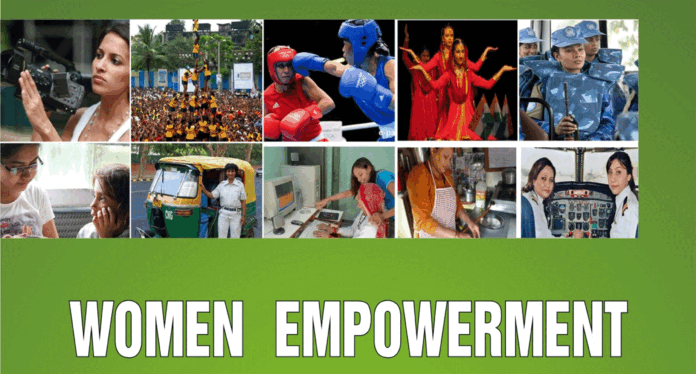
Much ado about women empowerment
Prof M K Bhat
drmkb1963@ gmail.com
The much ado about women empowerment has come to a halt with the failing of the bill in the parliament and both protagonists and antagonists have got silent but the question whether reservation of a few hundred women in legislatures is enough for empowering half of the population of the country still remains as it was? The antagonists in their own expressions termed it as an election stunt while as protagonists held it as a sincere attempt to include women in the law formation activity of the country. The antagonists blamed the government for attaching it with delimitation while as Protagonists challenged the oppositions demand of reservation for Muslim women. In brief both parties want women upliftment after taking their own cost benefit in due consideration. In last seventy-five years of our independence, we had women Prime Minister, president, chief- ministers but still the plight of an average women has not changed. There is no gainsaying in the fact that the plight of woman in states with women chief ministers had not been anyway different from states with male chief ministers. It means that the problems is much more than what was discussed in parliament. A few hundred women entering legislature will not solve the problem in actual sense. If the political parties are really serious about empowerment of women, they shall allow their more participation in handling party matters, give more tickets to them in elections instead of making women reservation a pole plank to get votes. In the past we have seen instances where women got elected but power was being exercised by her spouse.
It is no doubt that the present government has taken various steps to uplift the women from their present level mention can be made of : Mission Shakti for safety, Beti Bachao Beti Padhao for education, showed enough courage in banning Triple Talaq by passing the Muslim Women (Protection of Rights on Marriage) Act, 2019 which renders all forms of instant , irrevocable divorce (talaq -e -biddat) by Muslim husbands as void and illegal to secure women’s rights, Strengthened the criminal law (Amendment) Act 2018 for stricter punishments against sexual offenders which increased minimum rape penalties, introduced death penalty for raping girls under 12 years and accelerated trial time lines to two months. In order to ensure gender equity in officer and soldier ranks in army, women were graduated from supporting roles to permanent commission, command positions and combat roles. Approx. 68 percent Mudra Loans were given to women for entrepreneurship. The latest initiative in this direction was Nari Shakti Vandan Adhiniyam to ensure their political representation. Thus, women’s bill can’t be held as a sudden idea with BJP to win the elections rather it remains an integral part of BJP philosophy. This was eloquently revealed by Prime Minister Modi in his tour to Banaras just after Bengal elections. He upheld his resolve for women’s bill and termed women empowerment as the pivot of Viksit Bharat.
All these steps by government have led to escalation in Worker Population Ratio (WPR) for women (aged 15+), increased from 22.0% in 2017-18 to over 40% in 2023-24. The female Labour Force Participation Rate (LFPR) improved from 23.3% in 2017-18 to 41.7% in 2023-24, with some fluctuations in 2025 and early 2026, hovering around 35-40%., primarily driven by rural women, engaged in informal agriculture-linked work. While rural participation has surged, urban participation remains significantly lower, and over 90% of working women are in the informal sector.
There is a dire need of holistic approach for women empowerment otherwise the piecemeal approach will lead to nowhere rather it may add to already existing women empowerment paradox of India. This is quite clear from the fact that nearly 50% of over 2.12 lakh DPIIT-registered startups in India have at least one-woman director as of early 2026, totalling over 1.02 lakh startups. Yet only 10% of unicorns have women founders. The female graduate employability has improved to 47.53% but their participation in 18th Lok Sabha is just 13.6 %. 89.2% of women hold now bank accounts yet only 13% are recognised as land owners despite making majority of the agriculture labour force. Women own approximately 20% of MSME in India when PM Mudhara yojana has contributed 68% of total loans to women led business. On an average Indian women spend 305 minutes a day on unpaid domestic activities compared to just 67 minutes for men.
The status of women at present is not so low that she can’t raise her voice against any discrimination. Women have been in India’s main stream because of their talent not reservation from times immemorial. Indian culture never obstructs the way of a woman rather keeps her in the highest esteem. The need of the hour is not reservation but the creation of an environment in which a woman can flourish easily. The irony is that we talk of women empowerment from western perspective, apply their solutions in our soil and the result is chaos.
The problem of our women is dowry, child marriage, poor nutrition especially in rural areas, share in ancestral property and in urban areas it gets the shape of harassment. Eradicating these practices necessitates comprehensive societal efforts, including educational programs, legal reforms, and community engagement. The things ought to have been dealt in last seventy-five years but the short cut approach without taking their problems into consideration has led Indian women nowhere. India grapples with the pervasive issue of violence against women, encompassing domestic violence, sexual assault, and harassment. While legal frameworks exist, the challenge lies in their effective implementation. Creating awareness, fostering a culture of respect, and ensuring swift justice are imperative steps. Support systems, such as helplines and counselling services, need strengthening to aid victims and survivors.
The reservation has given rise to certain pertinent questions like: Will the reservation solve the problem of women or only help the elite class in them? Will it come to the rescue of the poor and illiterate women from rural areas? Does it carry any weight in the upliftment of the social status of the women in India? It has every potential to divide women force into beneficiaries and non -beneficiaries of reservation
It will be prudent to develop awareness about the capabilities of our women folk by making them aware about the potential of women in the past and their contribution in different spheres of life. It is an irony that women warriors, rulers, players, scientists, bureaucrats are least talked about in our school curriculums. This can go a long way to instill confidence in the women folk of the country and soothe the males. Unless the mindset changes the reservation in legislature will be of little use. The students from a tender age shall know that fair sex is no way weak. Although India strides in education yet gender-based disparities persist. Access to quality education remains a challenge for many girls due to deeply entrenched societal norms, economic constraints, and a lack of infrastructure in certain regions. Besides education women empowerment needs skill development and opportunities in business.
India is the only large country where more girls die than boys. The solution can be through Indian value system rather than reservation for a few.
(The author is Professor Emeritus (M.A.I.T) Guru Gobind Singh Indraprastha University, Delhi)
CM inaugurates multi-purpose sports complex, PHC block at Tangmarg, Gulmarg
Excelsior Correspondent
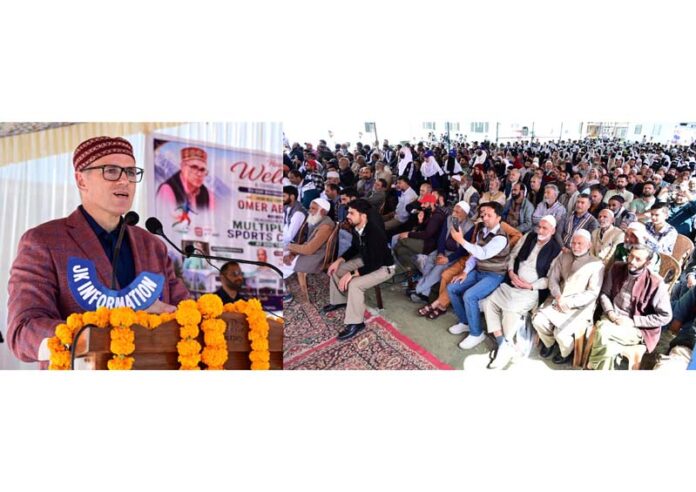
TANGMARG/GULMARG, May 6: Chief Minister Omar Abdullah today inaugurated a state-of-the-art multi-purpose indoor sports complex at Government Degree College (GDC) Tangmarg, developed at a cost of Rs 2.75 crore under the CAPEX budget, reaffirming the Government’s commitment to strengthening sports infrastructure and youth engagement across Jammu and Kashmir.
The newly established facility, located within the college premises, is equipped with modern indoor sports infrastructure, including arenas for badminton, table tennis, carrom, and billiards. The complex aims to promote a vibrant sports culture and encourage greater participation of youth in physical activities, particularly during harsh weather conditions in the region.
Minister for Education Sakina Itoo, Advisor to the Chief Minister Nasir Aslam Wani, MLA Gulmarg Pirzada Farooq Ahmed Shah, MLA Zadibal Tanvir Sadiq, Commissioner Secretary Ram Niwas, Director Colleges, Principal GDC Tangmarg, and other senior officers were present on the occasion.
Following the inauguration, the Chief Minister toured the complex and interacted with students. In a lively engagement, he also participated in indoor games including billiards, table tennis, and badminton alongside students and colleagues, drawing enthusiastic applause and appreciation from the gathering.
Earlier, the Chief Minister launched the Nasha Mukt Bharat Abhiyan signature campaign from the college premises, urging students to actively contribute towards building a drug-free society.
Addressing the gathering, the Chief Minister emphasized the pivotal role of youth in shaping the future of Jammu and Kashmir.
“Our children are our future. We are making every possible effort to secure a brighter tomorrow for them, but it is equally important to prepare them for the responsibilities ahead. The development of Jammu and Kashmir in the coming years will largely depend on the role played by our youth,” he said.
Highlighting the challenges faced by students in accessing quality higher education within the region, Omar Abdullah noted that the lack of private universities had compelled many families to send their children outside Jammu and Kashmir, resulting in significant financial burden.
“We estimate that every year, nearly Rs 1,000 to Rs 1,200 crore is spent on tuition fees alone by students studying outside J&K, excluding travel and living expenses. This places immense pressure on families,” he said.
He said that the Government has taken a landmark decision to allow the establishment of private universities in Jammu and Kashmir, with the necessary legislation already passed and rules being finalized.
The Chief Minister further highlighted key initiatives undertaken by the Government for youth empowerment, including free bus travel for women in Government buses, large-scale Government recruitment, and self-employment support through the Mission Yuva programme.
“We aim to provide 20,000 to 25,000 Government jobs this year. At the same time, we are enabling young entrepreneurs by facilitating easy access to loans without the need for guarantees, with the government acting as a guarantor,” he said.
Later, the Chief Minister inaugurated a new block of the Primary Health Centre (PHC) at Gulmarg, constructed at a cost of Rs 203.80 lakh under CAPEX.
He inspected various sections of the facility, including the OPD, Emergency Room, pharmacy, X-ray unit, and wards, and reviewed the healthcare services being provided to locals and tourists.
Meanwhile, Chief Minister chaired the meeting of the Board of Directors of Jammu & Kashmir Cable Car Corporation at the Convention Center, Gulmarg.
The Board deliberated on the upgradation of the Gulmarg Gondola Project aimed at enhancing its carrying capacity, operational efficiency and safety standards through modernization of critical infrastructure.
The Chief Minister emphasized timely execution of projects, adoption of modern technology and adherence to high safety standards to meet the growing tourist inflow. He underlined the importance of strengthening tourism infrastructure to further boost the local economy.
The meeting was attended by Advisor to the Chief Minister, Nasir Aslam Wani; Chief Secretary, Atal Dulloo; Additional Chief Secretary to Chief Minister, Dheeraj Gupta; Additional Chief Secretary, Tourism, Ashish Chandra Verma; Managing Director, J&K Tourism Development Corporation, Shreya Singhal; Director Tourism Kashmir/Managing Director, J&K Cable Car Corporation, Syed Sajad Qamar; Director Tourism Jammu, Vikas Gupta; Director General, Budget; Chief Executive Officer, Gulmarg Development Authority, and other concerned officers.
Punjab Kings pay for poor fielding as SRH ‘OutKlaas’ them to top points table

HYDERABAD, May 6:
A profligate Punjab Kings put down catches at the drop of a hat as Sunrisers Hyderabad buried them under a huge total, winning their IPL contest by 33 runs to move to the top of the points table here on Wednesday.
Heinrich Klaasen continued his manic consistency with a 43-ball-69 while Ishan Kishan struck 32-ball-55 in Sunrisers’ more than healthy total of 235 for 4.
On a placid track, SRH skipper Pat Cummins (2/34 in 4 overs) and their best bowler of the season Eshan Malinga (1/34 in 4 overs) not only provided breakthroughs but also bowled 21 dot balls to restrict the visitors to 202 for 7.
Cooper Connolly’s (107 not out off 59 balls) century was the only saving grace for PBKS who were never in the contest after a disappointing powerplay show.
PBKS thus lost their ninth consecutive IPL game in Hyderabad.
The seventh win took SRH to 14 points and on top of the 10-team table. One more victory in remaining three games will take them to magic figure of 16 points which will be good enough to ensure a play-off spot.
Once skipper Cummins exposed the faulty technique of Priyansh Arya, whose game is devoid of any tangible footwork, there was no looking back for SRH. Prabhsimran Singh followed and even Shreyas Iyer was dismissed cheaply.
The fate of the match was decided in two Powerplays. While Abhishek Sharma and Travis Head’s pyrotechnics took SRH to 79 for 1 in their six overs, PBKS managed only 57 for 3.
However, Punjab Kings, who are going through a mini slump with third defeat in a row, would blame their deplorable fielding that contributed heavily towards their defeat.
Kishan-Klaasen duo were dropped thrice all sitters and the vice-captain was also lucky to survive a regulation stumping chance bungled by Prabhsimran, whose glovework hasn’t been upto the mark.
It was a luckless Yuzvendra Chahal, who was left high and dry by his ‘butter-fingered’ colleagues as Klaasen and Kishan lived a charmed lives to guide Sunrisers to a winning total.
After Abhishek (35 off 13 balls) and Head (38 off 19 balls) blasted Arshdeep Singh and Marco Jansen for another half-century partnership, Klaasen and Kishan cashed in on missed opportunities to score half-centuries that ensured a healthy defendable total for their bowling unit.
Nitish Reddy, whose all-round game has improved remarkably this season, played a nice little cameo (29 not out off 13 balls) to beef up the total.
There was nothing in the track for the bowlers and Chahal’s 1 for 32 is worth its weight in gold considering that Shashank Singh dropped a sitter and Prabhsimran couldn’t effect a regular stumping leaving him angry and distraught at the same time.
Punjab, whose outfielding through the tourney has been atrocious to say the least, dropped three catches which is unpardonable when the pitch resembles a shirtfront.
In all, SRH batters smashed 17 sixes with Abhishek opening the floodgates with four maximums. Head hit three while Kishan and the peerless Klaasen, in the midst of his best ever IPL season, struck four sixes each.
Jansen (0/61) and Arshdeep (1/43) gave away 100 runs collectively in their eight overs.
Kishan’s fifty was a scratchy one but very useful and he showed glimpses of his original self with three consecutive sixes off Vijaykumar Vyshak.
At the outset, Abhishek got one in the arc from Jansen and sent it soaring over long-off and another clean bat swing got him a maximum over long on. The second one was a knuckle ball which he read from the hand as change of pace didn’t work.
Having executed the swivel pull off Lockie Ferguson behind square to bring up the team’s 50, Abhishek went for a fifth six but this time the ball ballooned for Shreyas Iyer to complete the catch at short mid-off.
Once Abhishek was gone, it was Head who took charge and two flat sixes over mid-wicket were class acts before he failed to score his third consecutive fifty going for one shot too many. But by then, he had set the platform.
Brief Scores
Sunrisers Hyderabad: 235 for 4 in 20 overs (Heinrich Klaasen 69, Ishan Kishan 55; Yuzvendra Chahal 1/32). Punjab Kings: 202 for 7 in 20 overs (Cooper Connolly 107 not out; Pat Cummins 2/34, Shivang Kumar 2/45). SRH won by 33 runs.
(PTI)
Vietnam important part of India’s ‘Act East’ policy: Murmu
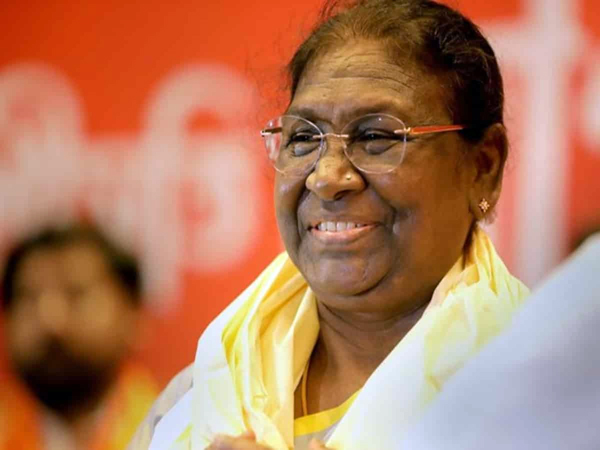
NEW DELHI, May 6 : President Droupadi Murmu on Wednesday said Vietnam is an important part of India’s ‘Act East’ policy and that New Delhi is keen to further expand trade with it in a mutually beneficial manner.
Murmu also said defence and security are important pillars of the India-Vietnam bilateral relations.
She underlined India’s commitment to working together with Vietnam to address shared challenges and promote regional peace and stability.
Welcoming President of the Socialist Republic of Vietnam To Lam at the Rashtrapati Bhavan here on his first State visit to India, Murmu said that both countries share a deep friendship rooted in historical, civilisational, and cultural ties. She also hosted a banquet in his honour.
The president said that over the past decade, bilateral trade between the two countries has grown significantly, and India is keen to further expand it in a balanced and mutually beneficial manner.
“Within the framework of our comprehensive strategic partnership with ASEAN (the Association of Southeast Asian Nations), our relations with Vietnam are an important part of our ‘Act East’ policy and Indo-Pacific vision,” Murmu said, and appreciated Vietnam’s participation in the Indo-Pacific Oceans Initiative.
The President said that in recent years, India-Vietnam bilateral relations have expanded across high-level exchanges, defence and security cooperation, development partnership, and sectors such as trade, health, science and technology, and tourism.
She was happy to note that during this visit, agreements and announcements had been made in important areas such as rare earth minerals, digital and financial technology, culture, and education, according to a statement issued by the Rashtrapati Bhavan.
The two leaders agreed that close cooperation between India and Vietnam can bring immense benefits to the people of both countries, it said.
Murmu expressed confidence that under the leadership of President To Lam, the India–Vietnam relations will grow even stronger.
India and Vietnam on Wednesday elevated their ties to an enhanced comprehensive strategic partnership and set a USD 25 billion annual trade target by 2030.
Prime Minister Narendra Modi and the Vietnamese president held talks earlier in the day, focusing on expanding bilateral ties in areas of trade, defence, and critical minerals in the face of increasing geopolitical upheavals. (PTI)
India-Suriname ties rooted in ‘family’ bond: Jaishankar
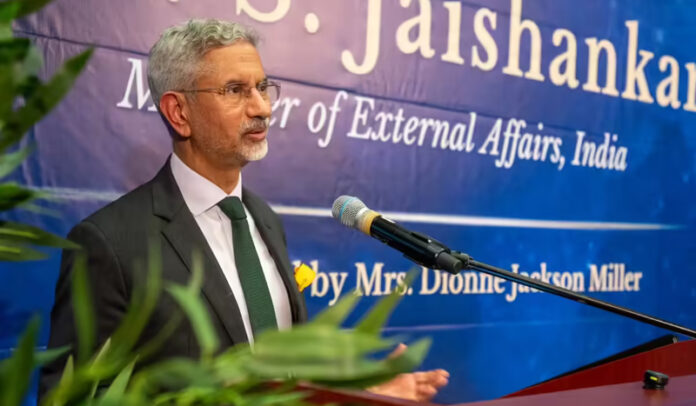
PARAMARIBO, May 6 : External Affairs Minister S Jaishankar has said India sees Suriname “not as a distant partner” but as “family”, as the two countries mark 50 years of diplomatic relations.
Writing in the Times of Suriname newspaper ahead of his visit to the country on Wednesday, Jaishankar said ties had expanded into a “robust, multifaceted engagement” covering infrastructure, trade, training and cultural links.
He said India and Suriname had strengthened cooperation through high-level exchanges, including a visit by former Surinamese President Chandrikapersad Santokhi to India in 2023 for a gathering of the Indian diaspora, followed by a visit to Suriname by Indian President Droupadi Murmu later that year.
Jaishankar said several projects in Suriname were completed through Indian Lines of Credit, including a 161 KV electrical transmission line from the industrial port city of Paranam to capital city Paramaribo, water pumping stations, construction machinery, power infrastructure upgrades and the supply and maintenance of three Chetak helicopters.
India has also supplied 425 metric tonnes of food items worth USD 10 million to Suriname last year to help with its food security, he wrote.
The minister said India-backed grant projects in Suriname included flood warning systems, a stadium and community initiatives linked to education, sport and technical training.
Jaishankar also said he would attend the commissioning of a passion fruit processing and packaging unit funded by an Indian grant. “This will empower local farmers and build Suriname’s self-reliance through value-added industry,” he wrote.
At the international level, Jaishankar said India and Suriname shared similar positions on issues including reform of the United Nations Security Council.
He also highlighted Suriname’s participation in India-backed initiatives such as the International Solar Alliance and the International Big Cat Alliance.
Despite the geographical distance between the two countries, Jaishankar said they remained connected through a shared history dating back to the arrival of Indians aboard the ship Lalla Rookh in 1873.
He said the community has become an integral part of Suriname’s society while preserving cultural traditions including Sarnami Hindustani language, Baithak music and festivals such as Diwali and Phagwa.
“Suriname has also played an important role in promoting Hindi language globally,” he wrote, noting that the country hosted the World Hindi Conference in Paramaribo in 2003.
“In Suriname, India does not see a distant partner; India sees family,” Jaishankar wrote. (PTI)
On Op Sindoor anniversary, Joint Commanders Conference begins today; Rajnath to attend
Security challenges before country to come up for review
Major focus on indigenization and Aatmanirbharta
Sanjeev Pargal
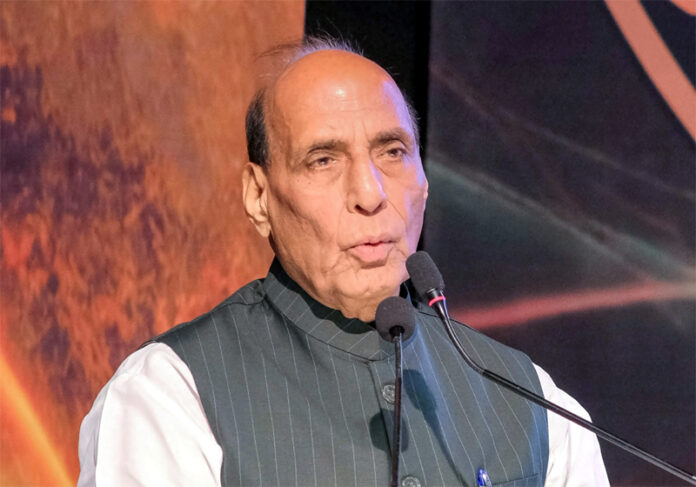
JAMMU, May 6: On first anniversary of Operation Sindoor, second edition of two-day Joint Commanders’ Conference is being held in Jaipur on May 7 and 8 in which Defence Minister Rajnath Singh will reviews security challenges of the country with top brass of the tri-services.
Follow the Daily Excelsior channel on WhatsApp
It was on May 7, 2025 that to take revenge of April 22 Pahalgam terror attack in which 26 civilians including 25 tourists and a local guide were killed, the Indian Armed Forces carried out Operation Sindoor targeting terror camps and military installations deep inside Pakistan and PoJK in which number of terrorists and their commanders were eliminated. The Operation Sindoor was carried out from May 7-10.
The Joint Commanders Conference is being held on first anniversary of Operation Sindoor and will be attended by Defence Minister Rajnath Singh, Chief of Defence Staff Gen Anil Chauhan, tri-service chiefs and their top commanders.
Excelsior had earlier reported that the Joint Commanders Conference is being planned in Jaipur on the anniversary of Operation Sindoor.
The Defence Ministry described it as a landmark tri-services mission that stands testament to India’s “unflinching political will and military resolve characterized by surgical precision”. Rajnath and the top military brass are expected to review various aspects of the country’s military preparedness in view of the evolving regional security scenario.
An official statement issued ahead of the Joint Commanders Conference said the modern warfare is transitioning into a more complex and tech-driven paradigm with transformative impact of AI, development of unmanned systems and emerging threats that extend beyond traditional battlefields and target invisible frontiers.
The conference will provide a pivotal forum to evaluate the challenges in emerging domains of cyber, space and cognitive warfare and chart a roadmap for capability development for resilient and future ready force with a decisive edge, the statement said, adding that central to the agenda will be to accelerate indigenization and Aatmanirbharta in defence production by fostering a domestic ecosystem of innovation and civil-military fusion.
PTI adds from New Delhi: Operation Sindoor, launched weeks after the dastardly Pahalgam terror attack last year, marked a paradigm shift in India’s national security calculus through the extensive use of drones, networking and the integration of artificial intelligence in target analysis and acquisition.
The operation, billed as the Indian military’s most expansive multi-domain combat mission in half a century to punish Pakistan for its relentless support to cross-border terrorism, redefined India’s overarching security and strategic goals.
India’s action was largely seen as a statement of its “political will” to inflict a blow to Pakistan for supporting terrorism, with Prime Minister Narendra Modi asserting that India will not tolerate any nuclear blackmail by Islamabad.
In the course of the last one year after the operation, India’s three services have drawn up extensive plans, strategy and policy initiatives to bolster their combat readiness by acquiring new platforms, missiles and a variety of long and short-range drones, and boosting the overall air defence apparatus.
In response to the Pahalgam terror attack on April 22 in which 26 people, mostly tourists, were killed, India launched Operation Sindoor on May 7 last year, carrying out airstrikes on nine terror infrastructures in Pakistan and Pakistan-occupied Jammu Kashmir eliminating at least 100 terrorists.
The strikes at the terror camps included the Jaish-e-Mohammed (JeM) headquarters at Bahawalpur, the Lashkar-e-Toiba’s base at Muridke and terrorist infrastructure in Mehmoona Joya in Sialkot, Sawai Nala and Syed Na Bilal in Muzaffarabad, Gulpur and Abbas in Kotli, Barnala in Bhimber, and Sarjal.
The action triggered a rapid escalation in tensions with Pakistan launching retaliatory strikes, though most of them were thwarted by the Indian military. The hostilities ended with an understanding on halting the military actions on May 10 following talks over the hotline between army officials of the two sides, but the episode brought into focus the need to enhance India’s military might.
While India delivered a befitting response to Pakistan, the three services analyzed the hostilities to refine operational strategies and integrate advanced technologies and platforms.
The three services have been specifically focusing on procurement of unmanned platforms and infusion of high-end technologies, including artificial intelligence for target acquisitions and surveillance.
India has added significant military might in the last one year, and the credit goes to a whole-of-government approach to bolster military prowess.
Definitely, lessons learned from Operation Sindoor are being implemented, said a senior military official.
The months following the conflict saw the government green lighting several mega procurement projects in line with the national security strategy and priorities.
The procurement proposals cleared to further crank up the military’s overall strike capabilities included a green signal to acquire a fresh batch of five S-400 missile systems from Russia and the purchase of 60 medium transport aircraft.
In March alone, the government greenlighted the acquisition of military hardware worth Rs 2.38 lakh crore.
In February, the government cleared another long-pending proposal to procure 114 Rafale fighter jets under a government-to-government framework with France, nearly two decades after the plan was originally rolled out to boost the Indian Air Force’s combat prowess.
The Defence Ministry also approved buying six US-made Boeing P8-I surveillance aircraft for the Indian Navy to enhance the force’s surveillance and anti-submarine warfare capabilities.
India, Vietnam elevate ties to enhanced comprehensive strategic partnership; call for freedom of navigation in South China Sea
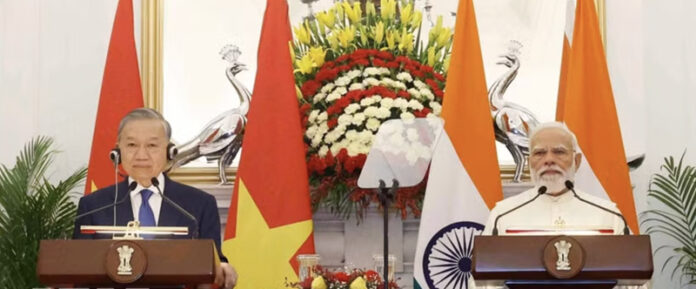
NEW DELHI, May 6 : India and Vietnam on Wednesday elevated their ties to an enhanced comprehensive strategic partnership and set a USD 25 billion annual trade target by 2030 as Prime Minister Narendra Modi and Vietnamese President To Lam held talks focusing on expanding bilateral ties in areas of trade, defence and critical minerals in the face of increasing geopolitical upheavals.
Amid China’s rising muscle-flexing in the region, Modi and Lam underlined the importance of maintaining peace, security, and freedom of navigation and overflight in the South China Sea while specifically calling for a peaceful resolution to disputes without “threat or use of force”.
Following the talks between the two leaders, India and Vietnam signed as many as 13 agreements which will provide for deeper two ways engagements in a range of areas including digital payments, rare earth minerals, pharmaceuticals, education, banking and culture.
A major focus of the deliberations was to boost bilateral defence ties and in that context Vietnam expressed interest in procuring BrahMos missiles from India, officials said.
Elected as president earlier this month, Lam began his first state visit to India on Tuesday, leading a high-level delegation for a three-day trip.
“A decade ago, Vietnam became India’s first comprehensive strategic partner in ASEAN (Association of Southeast Asian Nations) . Since then, our relations have made rapid and comprehensive progress,” Modi said in his media statement.
“Building on this strong foundation, today we are elevating our relations to the level of Enhanced Comprehensive Strategic Partnership. We will now advance our partnership to even higher goals,” he said.
“Our cooperation will reach new levels in every area ‘” culture, connectivity, and capacity building, as well as security, sustainability, and supply chain resilience,” Modi added.
He noted that the bilateral trade between India and Vietnam has doubled in the last decade to reach USD 16 billion and that the target now is to increase it to USD 25 billion by 2030.
A joint statement, referring to the situation in South China Sea, said Modi and Lam pitched for pursuing peaceful resolution of disputes in accordance with international law, particularly the 1982 United Nations Convention on the Law of the Sea (UNCLOS), without resorting to threat or use of force.
There have been growing concerns over China’s sweeping claims of sovereignty over all of the South China Sea, a huge source of hydrocarbons.
Several countries in the region including Vietnam, the Philippines and Brunei, have counterclaims.
“The leaders underscored the importance of non-militarisation and self-restraint in the conduct of all activities by claimants and all other states, and avoidance of actions that could further complicate the situation or escalate disputes affecting peace and stability,” it said.
Modi and Lam underlined that UNCLOS is the comprehensive legal framework governing all activities in the oceans and seas.
The two leaders further called for the full and effective implementation of the Declaration on the Conduct of Parties in the South China Sea (DOC) in its entirety and the early conclusion of negotiations towards a substantive and effective Code of Conduct in the South China Sea (COC) that does not prejudice the legitimate rights and interests of all nations, the joint statement said.
At a media briefing, P Kumaran, Secretary (East) in the Ministry of External Affairs, confirmed discussions on Brahmos missile.
“We do talk about number of platforms. Brahmos is one of them,” he said.
In another move, the Indian side proposed to Vietnam that it can provide maintenance services to Vietnam’s Sukhoi fighter jet fleet.
The joint statement said the two leaders expressed satisfaction on the implementation of the bilateral defence pacts including the mutual logistics support agreement, memorandum of agreement on submarine search and rescue support and signing of letter of intent on strengthening defence industrial cooperation.
Modi also cited a plethora of agreements signed between the two countries to emphasis that the economic engagement is expected to witness a significant upswing going forward.
“The MoU between our drug authorities will now increase access to Indian medicines in Vietnam. Exports of Indian agricultural, fisheries, and animal products to Vietnam are also set to become easier. Very soon, Vietnam will taste India’s grapes and pomegranates,” he said.
The two sides also agreed to update the India-ASEAN trade agreement by the end of this year.
“This will provide a new impetus to trade and investment between India and all ASEAN countries. New initiatives in critical minerals, rare earths, and energy cooperation will ensure the economic security and supply chain resilience of both countries,” Modi said.
“To boost financial connectivity, we have today decided to enhance cooperation between our central banks. India’s UPI and Vietnam’s fast payment systems will soon be linked. Furthermore, we are strengthening state-to-state and city-to-city cooperation between the two countries,” he noted.
Modi said India is grateful to Vietnam for its strong condemnation of the Pahalgam terrorist attack and standing with India in its fight against terrorism.
“In this era of global turmoil and economic challenges, thanks to their talent, good governance, and economic reforms, India and Vietnam are emerging as the world’s fastest-growing economies,” he said.
“Now, through our enhanced strategic partnership, we will support each other’s rapid growth. As the Buddha’s teachings say, ‘If you light a lamp for someone else, it also illuminates your own path’,” Modi said.
He also described Vietnam a a key pillar of India’s Act East Policy and Vision Ocean.
“In the Indo-Pacific region as well, we share a common outlook. Through our strengthening defence and security cooperation, we will continue to contribute to the rule-of-law, peace, stability, and prosperity,” he said.
The prime minister said India will broaden its relations with ASEAN with Vietnam’s cooperation.
In his remarks, Lam said both sides agreed to deepen political trust and elevate security cooperation.
“Ties elevated on the basis of shared vision, strategic convergence and substantive cooperation. The two sides agreed to deepen political trust, step up high level engagement and increase effectiveness of existing cooperation mechanisms,” he said.
“India has been soaring ahead as a centre of growth and innovation in the world,” he said, adding “we would link together our strategic visions and development strategies to better address the turmoil in the situation of the world today.” “We will elevate defence and security cooperation to become a strategic pillar to contribute to strengthening an environment of peace and stability,” he said.
India invited Vietnam to attend the BRICS Summit in September and the Southeast Asian country accepted the invitation, officials said. (PTI)
Bangladesh hopes no ‘pushback’ after BJP’s win in elections
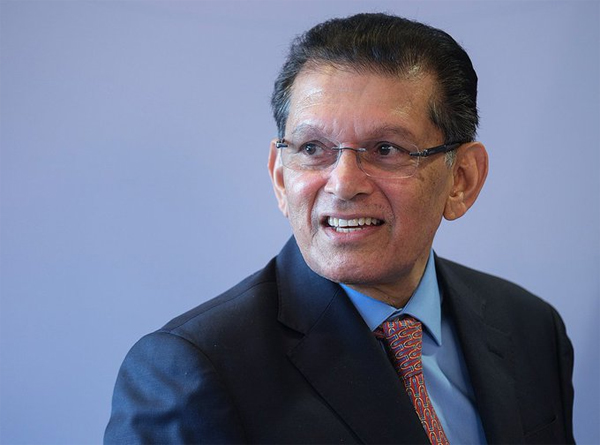
DHAKA, May 6: Bangladesh Home Minister Salahuddin Ahmed on Wednesday expressed hope that people will not be pushed in his country after the BJP’s victory in the recent assembly polls in bordering states.
“I hope no such incident (push backs) will happen,” Ahmed told reporters when asked if he feared an increase in cases of people suspected of being illegal immigrants being pushed from India.
Ahmed, however, said that the Border Guard Bangladesh (BGB) have been asked to “remain alert” along the frontiers.
Ahmed’s comments came a day after Foreign Minister Khalilur Rahman was quoted in the ruling Bangladesh Nationalist Party’s official Facebook page saying that Bangladesh will take action if “push-in” incidents occur amid the change of power in the bordering state of West Bengal.
On Monday, assembly election results were announced in West Bengal, where the BJP won with a sweeping majority. In its election campaign, the BJP often accused the Mamata Banerjee-led government of allowing an influx of Bangladeshi people to West Bengal – an allegation that the latter has dismissed.
The party also retained power in the bordering state of Assam for a third term.
The term “pushback” is typically used to describe the action of forcefully sending people, believed to be illegal migrants, across borders. Countries where they are sent often use the term “push in”.
In recent years, such cases between India and Bangladesh have largely centred on border areas in some northeastern states. (PTI)