

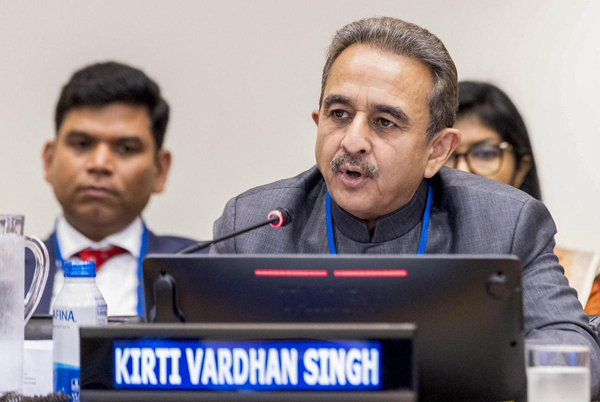
UNITED NATIONS, May 6: India’s approach to migration remains people-centric and grounded in dignity, Minister of State for External Affairs Kirti Vardhan Singh said, underlining that mobility will remain an integral feature of a dynamic global economy.
“India’s approach to migration governance is holistic and pragmatic. It is driven by coordinated institutional efforts and broad societal engagement,” Singh said here Tuesday.
He emphasised that “welfare and protection of our people” remains central to India’s approach.
“We have strengthened mechanisms to support migrants, particularly those in vulnerable situations, through initiatives such as the Indian Community Welfare Fund and the MADAD portal,” he said.
“Our responsive consular services also provide timely assistance, legal, financial, and insurance coverage to our nationals overseas,” he said.
Singh, who arrived here Sunday, is leading the Indian delegation for the Second International Migration Review Forum (IMRF), being held under the auspices of the UN General Assembly from May 4-8.
He addressed a round table at the UN headquarters on the Global Compact for Safe, Orderly and Regular Migration.
In a post on X, Singh said that at the round table, he outlined measures taken by India to facilitate safe and regular migration through leveraging Digital Public Infrastructure, strengthening consular services, concluding migration and mobility agreements, while upskilling, training and providing pre-departure training of the country’s skilled labour.
“Highlighted that our approach to migration remains people-centric – grounded in dignity, inclusion, and respect for rights,” he said.
India’s experience underscores the importance of leveraging technology, strengthening partnerships, and adopting a holistic lifecycle approach to migration governance, Singh said in his remarks.
“We are also aware that challenges remain, especially when it comes to strengthening social protection, addressing vulnerabilities, and improving data systems,” he said.
Singh stressed that India recognises that mobility will remain an integral feature of an increasingly interconnected and dynamic global economy. India’s policies remain closely aligned with the objectives and principles envisaged in the Global Compact, while evolving in response to emerging global dynamics.
“With the objective that migration should be a choice, supported by opportunity and dignity, we have invested in inclusive growth, livelihood and financial inclusion,” he said.
With a view to enhancing safe and regular pathways, India has concluded 27 migration and mobility arrangements with 23 countries, facilitating structured and skills-based mobility, with a strong emphasis on worker welfare, social protection, and fair recruitment practices.
“We believe such partnerships must continue to be strengthened and expanded for safeguarding the rights of our citizens abroad,” he said.
“Equally, it is important that these pathways are fair, transparent and accessible for ethical recruitment and decent work,” Singh said.
He pointed out that India’s Digital Public Infrastructure has played a transformative role in this regard. Platforms such as the eMigrate system, the National Career Service portal, and the Skill India Digital Hub have helped improve governance, enhance transparency, and better protect migrant workers from exploitation.
“These efforts are further complemented with pre-departure orientation programmes, ensuring that migrants are well-informed and better prepared for their employment abroad,” Singh said.
India also sees skilling as a cornerstone of its migration governance, with Skill India International Centres and digital platforms aligning the Indian workforce with global standards.
“We are working with partner countries to advance mutual recognition of skills,” Singh said, adding that ultimately, the collective effort of the international community must be to ensure that migration is safe, orderly, and genuinely beneficial for everyone.
On the margins of the forum, Singh met Ecuador’s Deputy Minister of Human Mobility, Saul Pacurucu and discussed “strengthening cooperation on safe, orderly and regular migration, mobility partnerships, and bilateral issues of mutual interest.” (PTI)
India’s approach to migration grounded in dignity, respect for rights: MoS Kirti Vardhan Singh
Govt’s foodgrain stocks hit 604 lakh tonnes, nearly three times buffer requirement
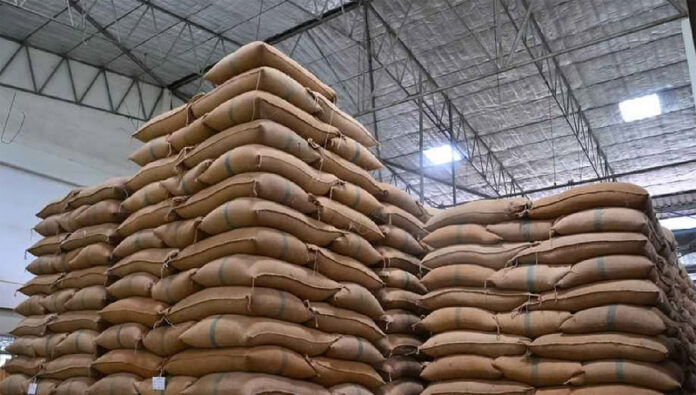
NEW DELHI, May 6: The government’s wheat and rice reserves held in Food Corporation of India (FCI) godowns rose to 604.02 lakh tonnes as of April 1, nearly three times the mandatory buffer requirement of 210.40 lakh tonnes, official data showed.
Rice stocks stood at 386.10 lakh tonnes, well above the buffer norm of 135.80 lakh tonnes, while wheat reserves were at 217.92 lakh tonnes against the required 74.60 lakh tonnes.
Buffer norms are revised quarterly – the current figures apply from April 1, with the next revision due on July 1.
The government maintains buffer stocks of wheat and rice to ensure adequate supply for beneficiaries of the Public Distribution System (PDS) and other food welfare schemes.
Procurement of wheat and rice from the 2026 rabi season is currently underway. About 97 per cent of the wheat sown area of 334.17 lakh hectare has been harvested, along with the completion of pulse harvesting.
Paddy harvesting stands at 59.32 per cent, concentrated in Tamil Nadu, Kerala, Tripura, Andhra Pradesh and Telangana.
Wholesale prices of most rabi commodities are trading below the minimum support price (MSP), official data showed.
“All the commodities are currently going below MSP during the week ending May 1,” an official said.
Wheat was trading at Rs 2,530 per quintal, 2.13 per cent below the MSP of Rs 2,585 per quintal. Paddy prices fell 3.17 per cent to Rs 2,294 per quintal from a year earlier. Maize prices declined 23.71 per cent to Rs 1,831 per quintal, against the MSP of Rs 2,400.
Wholesale prices of arhar, moong, bajra and sunflower were also trading below the support prices. (PTI)
DC Udhampur convenes public outreach camp at Chenani
Excelsior Correspondent
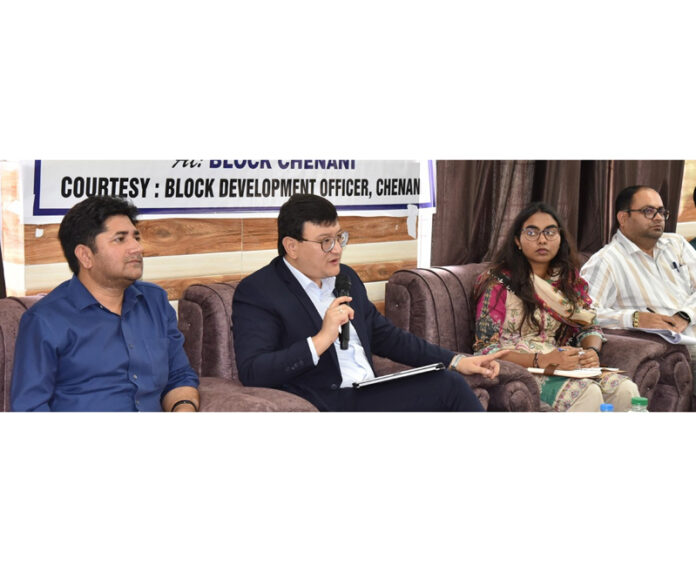
UDHAMPUR, May 6: Deputy Commissioner Udhampur Minga Sherpa, today presided over a public outreach-cum-grievance redressal camp at Community Facilitation Centre Chenani.
The programme witnessed the presence of IAS Probationer Shagun Singh, Sub Divisional Magistrate Dr. Ranjeet Singh Kotwal, district and sectoral officers, former PRI members and a large number of people from adjoining panchayats.
During the interaction, former PRI members including locals highlighted several demands, seeking renovation of the PMGSY road from Nagulta to Razar and other link roads, development of parking facilities, maintenance of Mall road Kud, issuance of separate ration cards, addressing the problem of drinking water shortage and speedy completion of JJM schemes.
Other concerns raised included shortage of staff in government schools and health institutions, requirement of an ambulance at Sarar, construction of a flyover, spreading awareness about commercial floriculture, operationalization of the International Yoga Centre at Mantalai, installation of a mobile tower in Bupp area, land compensation under PMGSY and skill development opportunities for youth under Mission YUVA.
Responding to the demands, the Deputy Commissioner issued on-the-spot directions to the concerned departments to initiate measures to address the problems projected by the people. He assured that all genuine demands would be addressed on priority.
Highlighting the importance of public awareness, he sensitized the public to the upcoming Census 2027 and urged their active participation in the enumeration process. He also highlighted flagship schemes, including Mission YUVA, PM Surya Ghar Muft Bijli Yojana, HADP and the Nasha Mukt Bharat Abhiyan, emphasizing their role in boosting livelihoods and socio-economic development.
Later, the Deputy Commissioner inspected the progress of work on the local Government Degree College building.
India, EU pitch for joint initiative to strengthen EV battery recycling
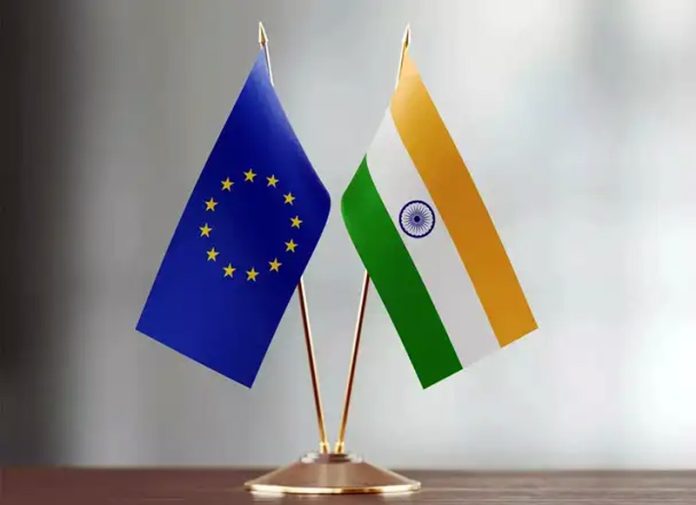
NEW DELHI, May 6 : India and the European Union on Wednesday launched a third coordinated call for proposals to recycle electric vehicle batteries as part of the India-EU Trade and Technology Council’s working group 2, which focuses on green and clean energy technologies.
The call for proposals aims to secure critical raw materials, accelerate the global transition to a circular economy, and strengthen bilateral relations between India and the European Union (EU).
“With a combined funding pool of 15.2 million euro (about Rs 169 crore), the initiative will be funded through the EU’s Horizon Europe programme, while the Ministry of Heavy Industries (MHI) will support the Indian component,” said an official.
The programme will focus on developing advanced recycling technologies, including high-efficiency material recovery, safe and digitalised collection systems, and pilot-scale demonstration of innovative processes.
It will also support the establishment of a joint India-EU pilot line in India to enable real-world validation and industrial deployment, bringing together leading researchers, industries, and startups.
In a statement, Ajay Kumar Sood, principal scientific adviser to the Indian government, said, “This launch is a pivotal moment in the India-EU strategic partnership. As India’s EV market continues its rapid expansion, creating a robust domestic recycling ecosystem is essential for our resource security and environmental commitments”.
The deadline for submitting the proposals is September 15. (PTI)
Indian professionals more alert to job scams but risk persists under pressure: Report

MUMBAI, May 6: Indian professionals are becoming increasingly wary of job scams, with more than 82 per cent now cautious about a role’s authenticity before applying, a report said on Wednesday.
LinkedIn’s Job Search Safety Pulse report revealed that more than half (53 per cent) are more likely to question whether a job is a scam than they were a year ago, it stated.
“Job scams are increasingly becoming a common part of the online job search experience. Our research shows that awareness among professionals is growing, but in a fast-moving and competitive market, consistently acting on that awareness can be challenging, particularly early in careers.
” Building a safer job ecosystem, therefore, requires strong safeguards, trusted signals, and shared accountability across platforms, employers and job seekers,” LinkedIn India Head – Legal and Public Policy, Aditi Jha said.
LinkedIn’s Job Search Safety Pulse report is based on inputs from 8,512 professionals (working full or part-time) across the UK, USA, India, Germany, and Brazil during March 16-30, 2026.
The report further revealed that while awareness continues to rise, the pressure to secure opportunities can sometimes override caution – especially in the early stages of a career.
It said that early-career job seekers are more vulnerable in specific moments, as more than half (54 per cent) of Gen Z job-seekers admit they have overlooked warning signs when opportunities felt too important to pass up.
Nearly half (49 per cent) of Indian Gen Z professionals said they have come close to falling for a job scam, compared to 36 per cent of Gen X, pointing to higher exposure to scam-related situations among younger job-seekers, it stated.
The moments when professionals report feeling most concerned about scams are while browsing roles (20 per cent) or during initial outreach from a recruiter or company (18 per cent), when details are limited and trust has not yet been established, it said.
LinkedIn data showed that scammers frequently exploit these early moments by attempting to move conversations off trusted platforms.
About 90 per cent of reported scam attempts redirect members to personal messaging apps, where accounts are harder to verify and conversations feel more informal, the report added. (PTI)
Serbia’s Vucic hands Russian Ambassador letter congratulating Putin on Victory Day
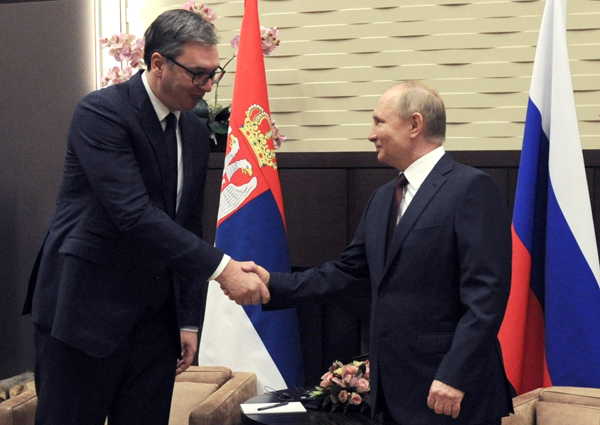
BELGRADE, May 6 : Serbian President Aleksandar Vucic said on Wednesday that he had handed Russian Ambassador Alexander Botsan-Kharchenko a letter congratulating Russian President Vladimir Putin on the May 9 Victory Day.
“I gave the ambassador a letter for Russian President Vladimir Putin, whom I congratulated on Victory Day, one of the brightest holidays in human history, with the message that May 9 remains an eternal symbol of the defiance and heroism of our peoples,” Vucic wrote on social media.
The Serbian president added that the memory of all the those who gave their lives for justice and truth should be preserved, and that Serbia would not allow attempts to rewrite history. (UNI)
UAE Break From Opec Reshapes Gulf Oil Politics
By K Raveendran
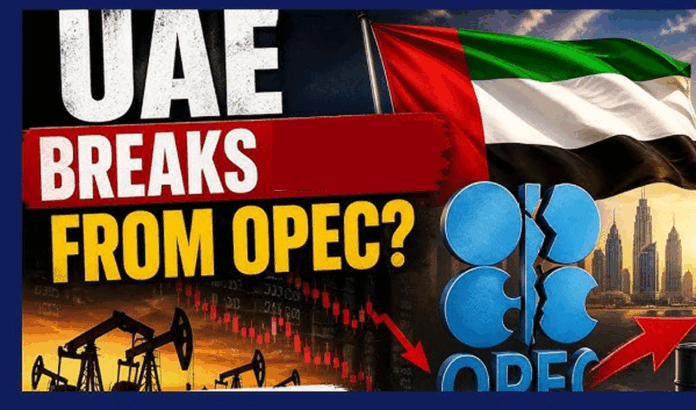
Abu Dhabi’s decision to walk away from OPEC marks more than a dispute over barrels. It signals a recalibration of Gulf power, energy strategy and security alignments at a moment when the Iran war has exposed the limits of regional consensus. For decades, the UAE operated inside a cartel system dominated by Saudi Arabia’s ability to balance supply, defend prices and impose discipline on producers with divergent fiscal needs. Its exit now suggests that the cost of that discipline has begun to outweigh the benefits for a state that sees itself as a global energy, finance and security actor rather than a subordinate member of an oil bloc.
The immediate market reaction should not be overstated. Brent crude hovering around $100 per barrel is primarily a function of war risk, disrupted shipping, sanctions pressure, insurance costs, military uncertainty and fears around the Strait of Hormuz. The price level cannot be attributed directly to the UAE’s announcement, especially when actual export flows from the Gulf remain shaped by conflict conditions rather than by ordinary production decisions. Traders are still pricing geopolitical risk first and producer politics second. Yet that distinction may not hold over time. Once the war premium fades or shipping normalises, the UAE’s freedom from OPEC curbs could become a meaningful bearish factor for crude.
The deeper importance of the decision lies in Abu Dhabi’s longstanding frustration with production limits. The UAE has invested heavily in raising capacity and has never been comfortable with a quota system that restricts monetisation of those investments. A country that spends billions expanding upstream capability does not want to leave barrels underground because a cartel formula says it must. This tension has surfaced before in disputes over baseline calculations, where the UAE argued that its quota failed to reflect its actual capacity and capital spending. The exit removes that constraint and gives Abu Dhabi the right to produce according to national priorities rather than collective targets.
That freedom matters because the UAE’s oil policy is tied to a broader economic vision. Abu Dhabi is trying to maximise hydrocarbon value while global demand remains resilient, even as it also invests in renewables, nuclear power, hydrogen, petrochemicals and low-carbon technology. Its leadership knows the energy transition will be uneven, but it also knows that the strongest producers will be those able to capture market share before long-term demand growth slows. Remaining locked into a quota system designed to defend prices may not suit a producer with spare capacity, low extraction costs and a sovereign strategy built around expansion.
Saudi Arabia, by contrast, has usually treated OPEC discipline as a strategic asset. Riyadh has been willing to cut output to support prices, absorbing the political burden of managing the group because it benefits from being seen as the central banker of oil. The UAE’s exit weakens that model. Even if OPEC survives institutionally, the departure of a sophisticated Gulf producer reduces the credibility of future production agreements. Cartels rely not only on formal membership but also on the expectation that major players will not defect when conditions become inconvenient. Once one capable producer leaves, others may be tempted to test the boundaries.
The Iran war adds a sharper geopolitical dimension. Gulf states have not viewed the conflict through identical lenses. The UAE’s proximity to Iran, its commercial exposure, its ties with Washington, and its security calculations have shaped a more assertive posture. Saudi Arabia has had to balance deterrence, oil stability, regional leadership and domestic transformation under Vision 2030. These priorities overlap but do not always align. If Abu Dhabi concluded that OPEC constraints were limiting its room for manoeuvre at a time of regional danger, the decision becomes not merely economic but strategic.
The possibility of an understanding with the United States cannot be dismissed, though it should be treated carefully until more details emerge. Washington has long viewed OPEC through the prism of consumer prices, inflation and geopolitical leverage. A UAE outside the cartel could serve American interests by weakening coordinated supply restraint and creating a Gulf partner more willing to respond flexibly to market needs. Abu Dhabi, for its part, may see closer alignment with the United States as useful insurance during a period of heightened threat from Iran and uncertainty over regional security guarantees. Even without a formal bargain, the incentives point in the same direction.
For consumers, the long-term implication is potentially favourable. More UAE production would add supply pressure, especially if demand growth slows in China, Europe or other major consuming regions. It could also complicate any future attempt by OPEC+ to cut output sharply to defend prices. Russia, Saudi Arabia and other producers may still coordinate, but the market would have to account for an important Gulf supplier operating outside the system. That does not guarantee a price collapse, because oil markets are shaped by demand, inventories, refining margins, sanctions and war risks. But it does reduce the cartel’s ability to act as a unified price-support mechanism.
For Abu Dhabi, the move carries risks. Leaving OPEC may invite diplomatic friction with Riyadh at a time when Gulf unity is already strained. It may also expose the UAE to accusations of undermining producer solidarity during a regional emergency. If prices fall sharply later, the UAE could face pressure from fellow exporters whose budgets require higher crude revenues. More production does not always mean more income if additional barrels accelerate a price decline. Abu Dhabi is betting that volume, flexibility and strategic autonomy will compensate for the loss of cartel protection.
The decision also raises questions about the future of OPEC+ itself. The expanded framework brought together OPEC members and outside producers, most notably Russia, to manage supply after the shale boom and the pandemic shock reshaped oil markets. Its strength lay in breadth. Its weakness has always been enforcement. Producers accept restraint when the benefits are clear, but discipline frays when national priorities diverge. The UAE’s exit is a reminder that OPEC+ is not a treaty alliance; it is a negotiation among states that will defect if the bargain no longer serves them.
Abu Dhabi’s move therefore should be read as part of a wider fragmentation of Gulf energy politics. The old assumption that Saudi Arabia and the UAE would move in tandem on oil, security and regional diplomacy no longer fully holds. Both remain partners in many arenas, but they are also competitors for capital, influence, logistics, technology, tourism, finance and strategic relevance. Oil policy is now another field where that competition is visible.
The timing makes the message sharper. During war, producer groups usually emphasise unity and stability. The UAE has chosen instead to assert independence. That does not mean it wants disorder in oil markets; Abu Dhabi benefits from predictability as much as any exporter. But it wants predictability on terms that recognise its capacity, ambitions and security relationships. The exit from OPEC is, at its core, an attempt to convert national capability into strategic freedom. Its full impact will be measured not in the first movement of Brent crude, but in how much oil Abu Dhabi chooses to bring to market once the guns fall silent and the cartel tries again to impose discipline. (IPA Service)
Iran seeks ‘fair’ peace deal with US, says Iranian FM Araghchi
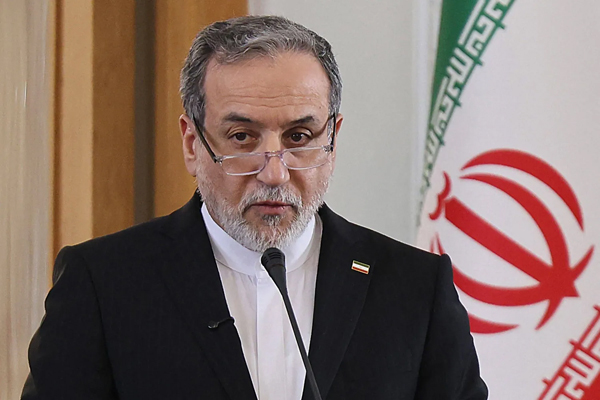
BEIJING, May 6: Iranian Foreign Minister Abbas Araghchi held talks with his Chinese counterpart Wang Yi on Wednesday,emphasizing that Iran will accept a peace agreement only if it is “fair and comprehensive.” The discussions come as tensions persist over the Strait of Hormuz and regional hostilities.
Araghchi’s statement comes after US President Donald Trump’s pause of “Project Freedom”, a naval mission aimed at reopening the Strait of Hormuz.
Trump cited “great progress” in negotiations with Iran as the reason for the temporary halt, without providing further details.
“We will only accept a fair and comprehensive agreement,” Araghchi said, according to ISNA. He also praised China for its stance, particularly in condemning the actions of the United States and Israel, describing China as a “close friend of Iran.”
Araghchi added that under the current circumstances, cooperation between the two countries will only grow stronger.
“The war launched against us is a blatant act of aggression and a clear violation of international law. We will do our utmost to protect our legitimate rights and interests in the negotiations,” he said.
The one-on-one meeting between Iran’s top diplomat Abbas Araghchi and Chinese Foreign Minister Wang Yi carries heightened significance as it comes ahead of US President Donald Trump’s scheduled visit to China on May 15. Araghchi’s stop in Beijing is the latest leg of his diplomatic tour aimed at garnering support for Iran and seeking a resolution to the ongoing conflict with the United States.
China has played a key but largely indirect role in the crisis. As Iran’s largest oil importer, it has provided a crucial financial lifeline to Tehran while simultaneously working behind the scenes to mediate the conflict. Trump has even suggested that Beijing helped bring Iran to the negotiating table, highlighting China’s strategic leverage in the region.
Trump’s “Project Freedom”, announced on Sunday, had failed to bring about any significant resumption of traffic through the waterway, while provoking a new wave of Iranian strikes on ships in the strait and on targets in neighbouring countries.
In the latest incident, a French shipping company reported on Wednesday that one of its container ships had been struck in the strait the previous day, and that injured crew had been evacuated.
Trump wrote on social media, “We have mutually agreed that, while the Blockade will remain in full force and effect, Project Freedom (The Movement of Ships through the Strait of Hormuz) will be paused for a short period of time to see whether or not the Agreement can be finalized and signed.”
Chinese Foreign Minister Wang Yi underscored the urgency of establishing a complete ceasefire in the region. “We are ready to continue our efforts to reduce tensions. Establishing a complete ceasefire is necessary and inevitable,” he said, adding that direct meetings between the parties are essential, as the region is experiencing a crucial turning point.
The talks in Beijing are part of what Araghchi described on Telegram as Tehran’s “ongoing diplomatic consultations” with global partners to discuss the ongoing crisis in West Asia.
A spokesperson for the Chinese Ministry of Foreign Affairs confirmed that the leaders discussed the escalating crisis in West Asia and the broader geopolitical climate.
Beyond strategic alignment with major powers, Araghchi’s diplomatic efforts have focused on regional security issues, including maritime stability. In Muscat, he held discussions on the Strait of Hormuz, emphasizing that as coastal states, Iran and Oman must consult to ensure safe passage through this vital waterway.
In his remarks following the Beijing meeting, Araghchi highlighted the strengthening cooperation between Iran and China, noting that their relationship will continue to build on the 25-year strategic partnership agreement signed in 2021.
Meanwhile, the Trump administration is reportedly increasing pressure on Beijing to leverage its influence with Iran to bring about a resolution, including reopening the Strait of Hormuz. Araghchi’s visit may be aimed at clarifying whether China would continue supporting Iran diplomatically, including at the United Nations, if Iran agrees to open the strait.
The Chinese Foreign Ministry reiterated that Beijing views a complete cessation of hostilities between Iran and the US as “of utmost urgency” and expressed hope that both sides will respond soon to international calls for safe passage through the Strait of Hormuz. The ministry affirmed China’s role as a reliable strategic partner of Tehran.
(UNI )
US to close consulate in Peshawar citing safety of diplomatic personnel
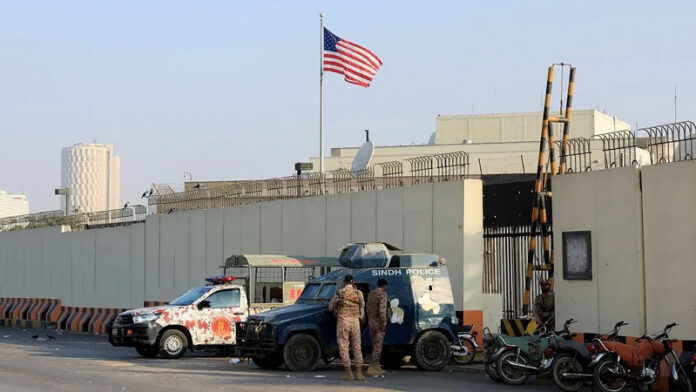
WASHINGTON, May 6 : The US has announced the phased closure of its consulate in Peshawar, citing a commitment to the safety of its diplomatic personnel.
“The US Department of State is announcing the phased closure of the US Consulate General in Peshawar. Responsibility for diplomatic engagement with Khyber Pakhtunkhwa will transfer to the US Embassy in Islamabad,” a US State Department spokesperson said in a statement here on Tuesday.
“This decision reflects our commitment to the safety of our diplomatic personnel and efficient resource management,” the statement said, adding that the US administration’s policy priorities in Pakistan remain steadfast despite the change in physical presence in Peshawar.
The State Department spokesperson said the US will continue to engage meaningfully with the people and officials of Khyber Pakhtunkhwa to foster economic ties, promote regional security, and advance the interests of the American people.
“The Department, through the US Mission to Pakistan, remains dedicated to advancing the US-Pakistan relationship through our remaining diplomatic posts in Islamabad, Karachi, and Lahore,” the spokesperson said. (PTI)
Exclusion of CJI from EC selection panel: Parliament has the prerogative to make law: SC
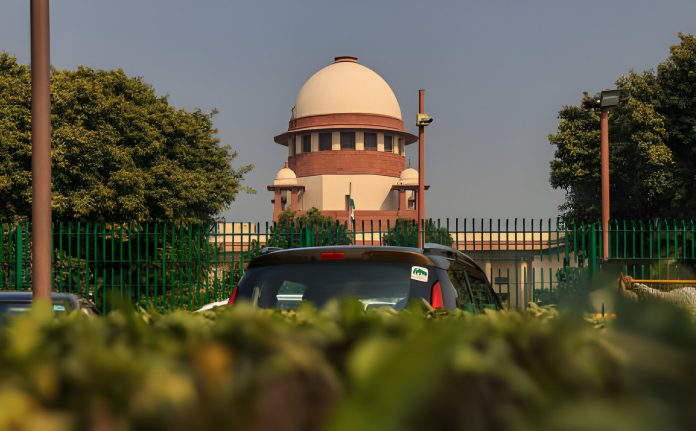
NEW DELHI, May 6: The Supreme Court on Wednesday observed that it is for Parliament to make a law governing the appointment of the Chief Election Commissioner and other Election Commissioners, and courts cannot direct the legislature on what kind of law it should enact.
It further observed that the inclusion of the Chief Justice of India in the selection panel, along with the Prime Minister and the Leader of Opposition, by the March 2, 2023 judgment was only an arrangement made in the absence of a law.
The observations by a bench comprising Justices Dipankar Datta and Satish Chandra Sharma came during the hearing of petitions challenging the constitutional validity of the Chief Election Commissioner and Other Election Commissioners (Appointment, Conditions of Service and Term of Office) Act, 2023, which excluded the Chief Justice of India from the panel for the selection of the CEC and Election Commissioners.
Questioning whether the court could direct Parliament to enact a law for including the Chief Justice of India in the selection panel for the appointment of the CEC and ECs, the court observed, “It is a prerogative of Parliament to make the law. Courts cannot direct the Parliament to make a law.”
Senior advocate Vijay Hansaria, appearing for one of the petitioners, argued that the norms laid down by the Constitution Bench flowed from constitutional principles requiring independence in the appointment process and preventing exclusive executive control. He submitted that the law enacted by Parliament could still be tested on the touchstone of Article 14.
The hearing also saw the court declining Solicitor General Tushar Mehta’s request for adjournment on the ground of his engagement before the nine-judge Bench hearing the Sabarimala reference. As the Solicitor General sought an adjournment for a week, stating that he wanted to be present during the hearing, the court observed that all matters are important, but the matter before it was more important than any other case, and the date for hearing it had been fixed well in advance.
Referring to the Constituent Assembly debates, senior advocate Hansaria argued that constitution makers had envisaged an independent process for the selection of the Election Commissioners, including the CEC, free from the control of the government. He contended that the present procedure for the selection of the CEC and ECs is tilted in favour of the government.
Senior advocate Gopal Sankaranarayanan, appearing for another petitioner, contended that Parliament cannot enact a law which effectively gives exclusivity to the executive in the appointment of Election Commissioners. He argued that the Constitution Bench, in its 2023 judgment, had ruled that such exclusivity would be inconsistent with the constitutional scheme and that any departure from that principle would require a constitutional amendment.
The hearing will continue on Thursday.
The Supreme Court is hearing a batch of petitions challenging the constitutional validity of the Chief Election Commissioner and Other Election Commissioners (Appointment, Conditions of Service and Term of Office) Act, 2023, which excluded the Chief Justice of India from the panel for the selection of the CEC and Election Commissioners.
Challenging the exclusion of the CJI from the selection panel, the petitions by ADR, Jaya Thakur (General Secretary of Madhya Pradesh Mahila Congress), and others, including Sanjay Narayanrao Meshram and advocate Gopal Singh, have questioned the constitutional validity of Sections 7 and 8 of the Chief Election Commissioner and Other Election Commissioners (Appointment, Conditions of Service and Term of Office) Act, 2023.
Section 7 of the law, under challenge, states that the Chief Election Commissioner and other Election Commissioners shall be appointed by the President on the recommendation of a Selection Committee consisting of the Prime Minister as Chairperson, the Leader of Opposition in the Lok Sabha, and a union Cabinet Minister nominated by the Prime Minister.
Section 8 of the Act states that the Selection Committee shall regulate its own procedure in a transparent manner for selecting the Chief Election Commissioner or other Election Commissioners.
The petitioners have contended that the removal of the Chief Justice of India from the selection panel and his replacement with a union Cabinet Minister nominated by the Prime Minister tilts the balance in favour of the government and renders the appointment process vulnerable to partisan influence.
The petitioners have cited the March 2, 2023, Constitution Bench ruling, wherein the Supreme Court had directed that, until Parliament enacted a law, appointments of the CEC and ECs should be made on the advice of a committee comprising the Prime Minister, the Leader of Opposition, and the Chief Justice of India to ensure independence, impartiality, and constitutional compliance.
The new law, enacted in 2023, overrides that arrangement and, according to the petitioners, dilutes the spirit and intent of the 2023 Supreme Court’s judgment.
(UNI)