

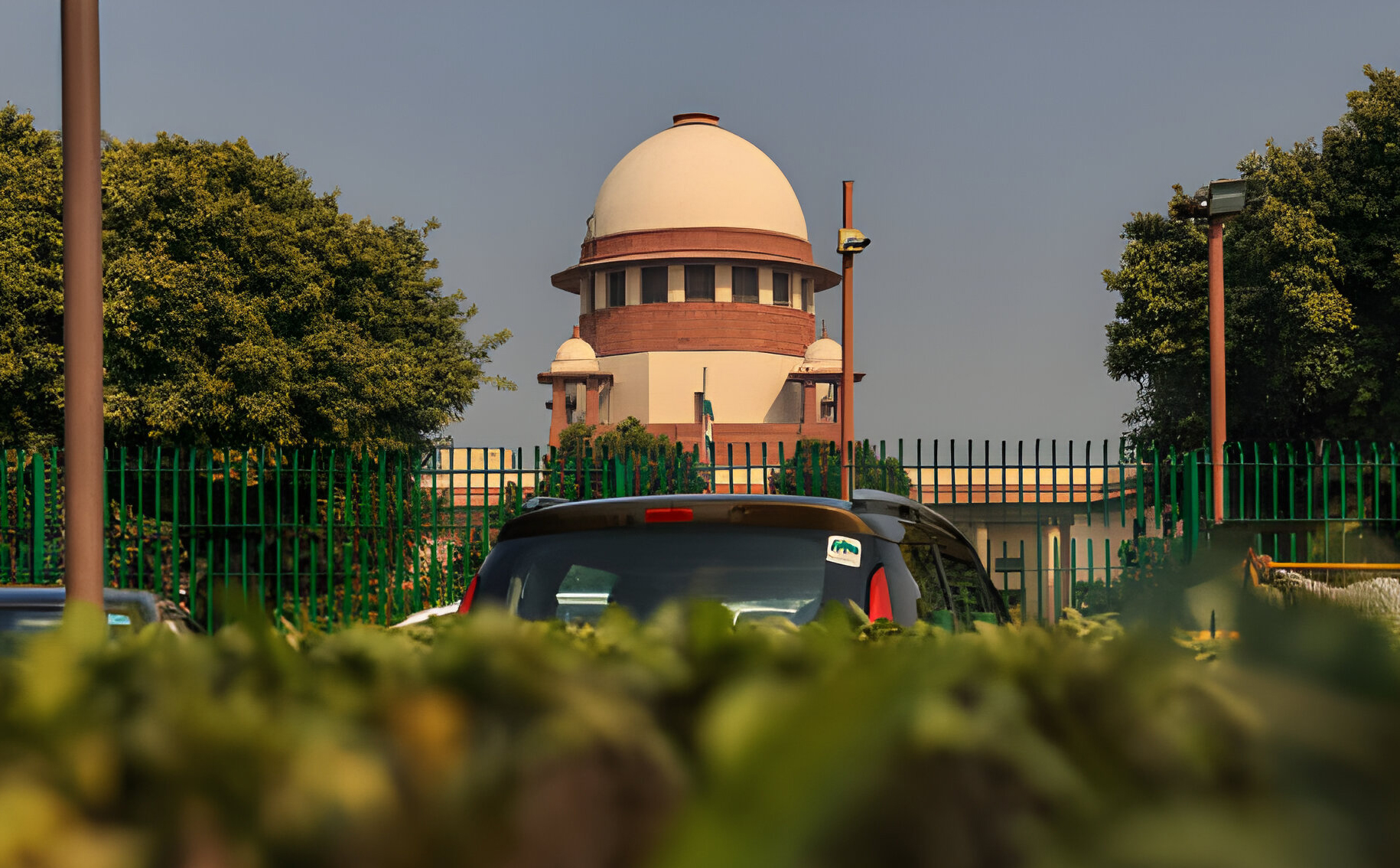
NEW DELHI, May 6: The Supreme Court on Wednesday observed that it is for Parliament to make a law governing the appointment of the Chief Election Commissioner and other Election Commissioners, and courts cannot direct the legislature on what kind of law it should enact.
It further observed that the inclusion of the Chief Justice of India in the selection panel, along with the Prime Minister and the Leader of Opposition, by the March 2, 2023 judgment was only an arrangement made in the absence of a law.
The observations by a bench comprising Justices Dipankar Datta and Satish Chandra Sharma came during the hearing of petitions challenging the constitutional validity of the Chief Election Commissioner and Other Election Commissioners (Appointment, Conditions of Service and Term of Office) Act, 2023, which excluded the Chief Justice of India from the panel for the selection of the CEC and Election Commissioners.
Questioning whether the court could direct Parliament to enact a law for including the Chief Justice of India in the selection panel for the appointment of the CEC and ECs, the court observed, “It is a prerogative of Parliament to make the law. Courts cannot direct the Parliament to make a law.”
Senior advocate Vijay Hansaria, appearing for one of the petitioners, argued that the norms laid down by the Constitution Bench flowed from constitutional principles requiring independence in the appointment process and preventing exclusive executive control. He submitted that the law enacted by Parliament could still be tested on the touchstone of Article 14.
The hearing also saw the court declining Solicitor General Tushar Mehta’s request for adjournment on the ground of his engagement before the nine-judge Bench hearing the Sabarimala reference. As the Solicitor General sought an adjournment for a week, stating that he wanted to be present during the hearing, the court observed that all matters are important, but the matter before it was more important than any other case, and the date for hearing it had been fixed well in advance.
Referring to the Constituent Assembly debates, senior advocate Hansaria argued that constitution makers had envisaged an independent process for the selection of the Election Commissioners, including the CEC, free from the control of the government. He contended that the present procedure for the selection of the CEC and ECs is tilted in favour of the government.
Senior advocate Gopal Sankaranarayanan, appearing for another petitioner, contended that Parliament cannot enact a law which effectively gives exclusivity to the executive in the appointment of Election Commissioners. He argued that the Constitution Bench, in its 2023 judgment, had ruled that such exclusivity would be inconsistent with the constitutional scheme and that any departure from that principle would require a constitutional amendment.
The hearing will continue on Thursday.
The Supreme Court is hearing a batch of petitions challenging the constitutional validity of the Chief Election Commissioner and Other Election Commissioners (Appointment, Conditions of Service and Term of Office) Act, 2023, which excluded the Chief Justice of India from the panel for the selection of the CEC and Election Commissioners.
Challenging the exclusion of the CJI from the selection panel, the petitions by ADR, Jaya Thakur (General Secretary of Madhya Pradesh Mahila Congress), and others, including Sanjay Narayanrao Meshram and advocate Gopal Singh, have questioned the constitutional validity of Sections 7 and 8 of the Chief Election Commissioner and Other Election Commissioners (Appointment, Conditions of Service and Term of Office) Act, 2023.
Section 7 of the law, under challenge, states that the Chief Election Commissioner and other Election Commissioners shall be appointed by the President on the recommendation of a Selection Committee consisting of the Prime Minister as Chairperson, the Leader of Opposition in the Lok Sabha, and a union Cabinet Minister nominated by the Prime Minister.
Section 8 of the Act states that the Selection Committee shall regulate its own procedure in a transparent manner for selecting the Chief Election Commissioner or other Election Commissioners.
The petitioners have contended that the removal of the Chief Justice of India from the selection panel and his replacement with a union Cabinet Minister nominated by the Prime Minister tilts the balance in favour of the government and renders the appointment process vulnerable to partisan influence.
The petitioners have cited the March 2, 2023, Constitution Bench ruling, wherein the Supreme Court had directed that, until Parliament enacted a law, appointments of the CEC and ECs should be made on the advice of a committee comprising the Prime Minister, the Leader of Opposition, and the Chief Justice of India to ensure independence, impartiality, and constitutional compliance.
The new law, enacted in 2023, overrides that arrangement and, according to the petitioners, dilutes the spirit and intent of the 2023 Supreme Court’s judgment.
(UNI)
 Follow our WhatsApp channel
