MUMBAI, May 6: Indian professionals are becoming increasingly wary of job scams, with more than 82 per cent now cautious about a role’s authenticity before applying, a report said on Wednesday.
LinkedIn’s Job Search Safety Pulse report revealed that more than half (53 per cent) are more likely to question whether a job is a scam than they were a year ago, it stated.
“Job scams are increasingly becoming a common part of the online job search experience. Our research shows that awareness among professionals is growing, but in a fast-moving and competitive market, consistently acting on that awareness can be challenging, particularly early in careers.
” Building a safer job ecosystem, therefore, requires strong safeguards, trusted signals, and shared accountability across platforms, employers and job seekers,” LinkedIn India Head – Legal and Public Policy, Aditi Jha said.
LinkedIn’s Job Search Safety Pulse report is based on inputs from 8,512 professionals (working full or part-time) across the UK, USA, India, Germany, and Brazil during March 16-30, 2026.
The report further revealed that while awareness continues to rise, the pressure to secure opportunities can sometimes override caution – especially in the early stages of a career.
It said that early-career job seekers are more vulnerable in specific moments, as more than half (54 per cent) of Gen Z job-seekers admit they have overlooked warning signs when opportunities felt too important to pass up.
Nearly half (49 per cent) of Indian Gen Z professionals said they have come close to falling for a job scam, compared to 36 per cent of Gen X, pointing to higher exposure to scam-related situations among younger job-seekers, it stated.
The moments when professionals report feeling most concerned about scams are while browsing roles (20 per cent) or during initial outreach from a recruiter or company (18 per cent), when details are limited and trust has not yet been established, it said.
LinkedIn data showed that scammers frequently exploit these early moments by attempting to move conversations off trusted platforms.
About 90 per cent of reported scam attempts redirect members to personal messaging apps, where accounts are harder to verify and conversations feel more informal, the report added. (PTI)
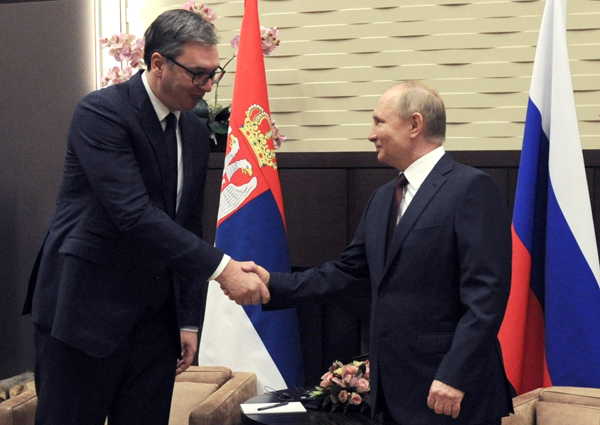
BELGRADE, May 6 : Serbian President Aleksandar Vucic said on Wednesday that he had handed Russian Ambassador Alexander Botsan-Kharchenko a letter congratulating Russian President Vladimir Putin on the May 9 Victory Day.
“I gave the ambassador a letter for Russian President Vladimir Putin, whom I congratulated on Victory Day, one of the brightest holidays in human history, with the message that May 9 remains an eternal symbol of the defiance and heroism of our peoples,” Vucic wrote on social media.
The Serbian president added that the memory of all the those who gave their lives for justice and truth should be preserved, and that Serbia would not allow attempts to rewrite history. (UNI)
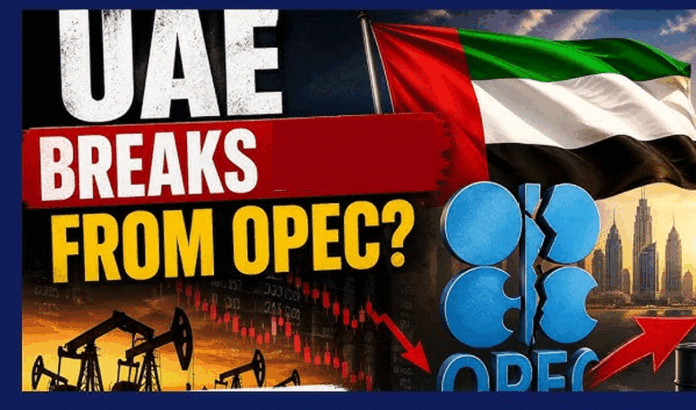
Abu Dhabi’s decision to walk away from OPEC marks more than a dispute over barrels. It signals a recalibration of Gulf power, energy strategy and security alignments at a moment when the Iran war has exposed the limits of regional consensus. For decades, the UAE operated inside a cartel system dominated by Saudi Arabia’s ability to balance supply, defend prices and impose discipline on producers with divergent fiscal needs. Its exit now suggests that the cost of that discipline has begun to outweigh the benefits for a state that sees itself as a global energy, finance and security actor rather than a subordinate member of an oil bloc.
The immediate market reaction should not be overstated. Brent crude hovering around $100 per barrel is primarily a function of war risk, disrupted shipping, sanctions pressure, insurance costs, military uncertainty and fears around the Strait of Hormuz. The price level cannot be attributed directly to the UAE’s announcement, especially when actual export flows from the Gulf remain shaped by conflict conditions rather than by ordinary production decisions. Traders are still pricing geopolitical risk first and producer politics second. Yet that distinction may not hold over time. Once the war premium fades or shipping normalises, the UAE’s freedom from OPEC curbs could become a meaningful bearish factor for crude.
The deeper importance of the decision lies in Abu Dhabi’s longstanding frustration with production limits. The UAE has invested heavily in raising capacity and has never been comfortable with a quota system that restricts monetisation of those investments. A country that spends billions expanding upstream capability does not want to leave barrels underground because a cartel formula says it must. This tension has surfaced before in disputes over baseline calculations, where the UAE argued that its quota failed to reflect its actual capacity and capital spending. The exit removes that constraint and gives Abu Dhabi the right to produce according to national priorities rather than collective targets.
That freedom matters because the UAE’s oil policy is tied to a broader economic vision. Abu Dhabi is trying to maximise hydrocarbon value while global demand remains resilient, even as it also invests in renewables, nuclear power, hydrogen, petrochemicals and low-carbon technology. Its leadership knows the energy transition will be uneven, but it also knows that the strongest producers will be those able to capture market share before long-term demand growth slows. Remaining locked into a quota system designed to defend prices may not suit a producer with spare capacity, low extraction costs and a sovereign strategy built around expansion.
Saudi Arabia, by contrast, has usually treated OPEC discipline as a strategic asset. Riyadh has been willing to cut output to support prices, absorbing the political burden of managing the group because it benefits from being seen as the central banker of oil. The UAE’s exit weakens that model. Even if OPEC survives institutionally, the departure of a sophisticated Gulf producer reduces the credibility of future production agreements. Cartels rely not only on formal membership but also on the expectation that major players will not defect when conditions become inconvenient. Once one capable producer leaves, others may be tempted to test the boundaries.
The Iran war adds a sharper geopolitical dimension. Gulf states have not viewed the conflict through identical lenses. The UAE’s proximity to Iran, its commercial exposure, its ties with Washington, and its security calculations have shaped a more assertive posture. Saudi Arabia has had to balance deterrence, oil stability, regional leadership and domestic transformation under Vision 2030. These priorities overlap but do not always align. If Abu Dhabi concluded that OPEC constraints were limiting its room for manoeuvre at a time of regional danger, the decision becomes not merely economic but strategic.
The possibility of an understanding with the United States cannot be dismissed, though it should be treated carefully until more details emerge. Washington has long viewed OPEC through the prism of consumer prices, inflation and geopolitical leverage. A UAE outside the cartel could serve American interests by weakening coordinated supply restraint and creating a Gulf partner more willing to respond flexibly to market needs. Abu Dhabi, for its part, may see closer alignment with the United States as useful insurance during a period of heightened threat from Iran and uncertainty over regional security guarantees. Even without a formal bargain, the incentives point in the same direction.
For consumers, the long-term implication is potentially favourable. More UAE production would add supply pressure, especially if demand growth slows in China, Europe or other major consuming regions. It could also complicate any future attempt by OPEC+ to cut output sharply to defend prices. Russia, Saudi Arabia and other producers may still coordinate, but the market would have to account for an important Gulf supplier operating outside the system. That does not guarantee a price collapse, because oil markets are shaped by demand, inventories, refining margins, sanctions and war risks. But it does reduce the cartel’s ability to act as a unified price-support mechanism.
For Abu Dhabi, the move carries risks. Leaving OPEC may invite diplomatic friction with Riyadh at a time when Gulf unity is already strained. It may also expose the UAE to accusations of undermining producer solidarity during a regional emergency. If prices fall sharply later, the UAE could face pressure from fellow exporters whose budgets require higher crude revenues. More production does not always mean more income if additional barrels accelerate a price decline. Abu Dhabi is betting that volume, flexibility and strategic autonomy will compensate for the loss of cartel protection.
The decision also raises questions about the future of OPEC+ itself. The expanded framework brought together OPEC members and outside producers, most notably Russia, to manage supply after the shale boom and the pandemic shock reshaped oil markets. Its strength lay in breadth. Its weakness has always been enforcement. Producers accept restraint when the benefits are clear, but discipline frays when national priorities diverge. The UAE’s exit is a reminder that OPEC+ is not a treaty alliance; it is a negotiation among states that will defect if the bargain no longer serves them.
Abu Dhabi’s move therefore should be read as part of a wider fragmentation of Gulf energy politics. The old assumption that Saudi Arabia and the UAE would move in tandem on oil, security and regional diplomacy no longer fully holds. Both remain partners in many arenas, but they are also competitors for capital, influence, logistics, technology, tourism, finance and strategic relevance. Oil policy is now another field where that competition is visible.
The timing makes the message sharper. During war, producer groups usually emphasise unity and stability. The UAE has chosen instead to assert independence. That does not mean it wants disorder in oil markets; Abu Dhabi benefits from predictability as much as any exporter. But it wants predictability on terms that recognise its capacity, ambitions and security relationships. The exit from OPEC is, at its core, an attempt to convert national capability into strategic freedom. Its full impact will be measured not in the first movement of Brent crude, but in how much oil Abu Dhabi chooses to bring to market once the guns fall silent and the cartel tries again to impose discipline. (IPA Service)
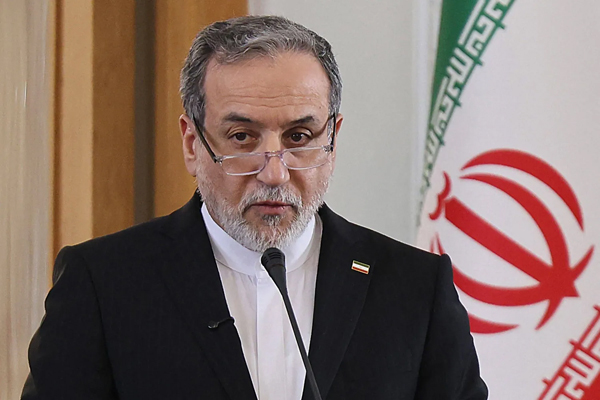
BEIJING, May 6: Iranian Foreign Minister Abbas Araghchi held talks with his Chinese counterpart Wang Yi on Wednesday,emphasizing that Iran will accept a peace agreement only if it is “fair and comprehensive.” The discussions come as tensions persist over the Strait of Hormuz and regional hostilities.
Araghchi’s statement comes after US President Donald Trump’s pause of “Project Freedom”, a naval mission aimed at reopening the Strait of Hormuz.
Trump cited “great progress” in negotiations with Iran as the reason for the temporary halt, without providing further details.
“We will only accept a fair and comprehensive agreement,” Araghchi said, according to ISNA. He also praised China for its stance, particularly in condemning the actions of the United States and Israel, describing China as a “close friend of Iran.”
Araghchi added that under the current circumstances, cooperation between the two countries will only grow stronger.
“The war launched against us is a blatant act of aggression and a clear violation of international law. We will do our utmost to protect our legitimate rights and interests in the negotiations,” he said.
The one-on-one meeting between Iran’s top diplomat Abbas Araghchi and Chinese Foreign Minister Wang Yi carries heightened significance as it comes ahead of US President Donald Trump’s scheduled visit to China on May 15. Araghchi’s stop in Beijing is the latest leg of his diplomatic tour aimed at garnering support for Iran and seeking a resolution to the ongoing conflict with the United States.
China has played a key but largely indirect role in the crisis. As Iran’s largest oil importer, it has provided a crucial financial lifeline to Tehran while simultaneously working behind the scenes to mediate the conflict. Trump has even suggested that Beijing helped bring Iran to the negotiating table, highlighting China’s strategic leverage in the region.
Trump’s “Project Freedom”, announced on Sunday, had failed to bring about any significant resumption of traffic through the waterway, while provoking a new wave of Iranian strikes on ships in the strait and on targets in neighbouring countries.
In the latest incident, a French shipping company reported on Wednesday that one of its container ships had been struck in the strait the previous day, and that injured crew had been evacuated.
Trump wrote on social media, “We have mutually agreed that, while the Blockade will remain in full force and effect, Project Freedom (The Movement of Ships through the Strait of Hormuz) will be paused for a short period of time to see whether or not the Agreement can be finalized and signed.”
Chinese Foreign Minister Wang Yi underscored the urgency of establishing a complete ceasefire in the region. “We are ready to continue our efforts to reduce tensions. Establishing a complete ceasefire is necessary and inevitable,” he said, adding that direct meetings between the parties are essential, as the region is experiencing a crucial turning point.
The talks in Beijing are part of what Araghchi described on Telegram as Tehran’s “ongoing diplomatic consultations” with global partners to discuss the ongoing crisis in West Asia.
A spokesperson for the Chinese Ministry of Foreign Affairs confirmed that the leaders discussed the escalating crisis in West Asia and the broader geopolitical climate.
Beyond strategic alignment with major powers, Araghchi’s diplomatic efforts have focused on regional security issues, including maritime stability. In Muscat, he held discussions on the Strait of Hormuz, emphasizing that as coastal states, Iran and Oman must consult to ensure safe passage through this vital waterway.
In his remarks following the Beijing meeting, Araghchi highlighted the strengthening cooperation between Iran and China, noting that their relationship will continue to build on the 25-year strategic partnership agreement signed in 2021.
Meanwhile, the Trump administration is reportedly increasing pressure on Beijing to leverage its influence with Iran to bring about a resolution, including reopening the Strait of Hormuz. Araghchi’s visit may be aimed at clarifying whether China would continue supporting Iran diplomatically, including at the United Nations, if Iran agrees to open the strait.
The Chinese Foreign Ministry reiterated that Beijing views a complete cessation of hostilities between Iran and the US as “of utmost urgency” and expressed hope that both sides will respond soon to international calls for safe passage through the Strait of Hormuz. The ministry affirmed China’s role as a reliable strategic partner of Tehran.
(UNI )
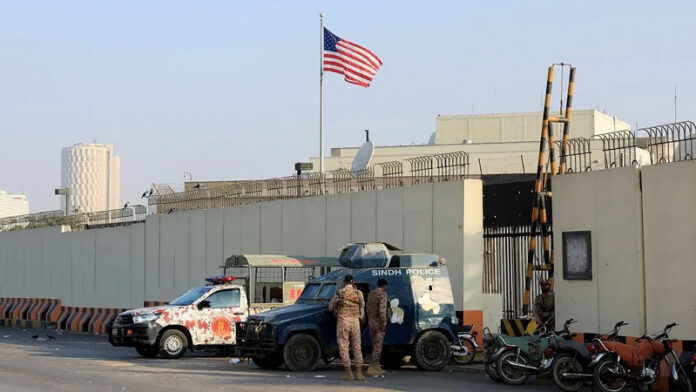
WASHINGTON, May 6 : The US has announced the phased closure of its consulate in Peshawar, citing a commitment to the safety of its diplomatic personnel.
“The US Department of State is announcing the phased closure of the US Consulate General in Peshawar. Responsibility for diplomatic engagement with Khyber Pakhtunkhwa will transfer to the US Embassy in Islamabad,” a US State Department spokesperson said in a statement here on Tuesday.
“This decision reflects our commitment to the safety of our diplomatic personnel and efficient resource management,” the statement said, adding that the US administration’s policy priorities in Pakistan remain steadfast despite the change in physical presence in Peshawar.
The State Department spokesperson said the US will continue to engage meaningfully with the people and officials of Khyber Pakhtunkhwa to foster economic ties, promote regional security, and advance the interests of the American people.
“The Department, through the US Mission to Pakistan, remains dedicated to advancing the US-Pakistan relationship through our remaining diplomatic posts in Islamabad, Karachi, and Lahore,” the spokesperson said. (PTI)
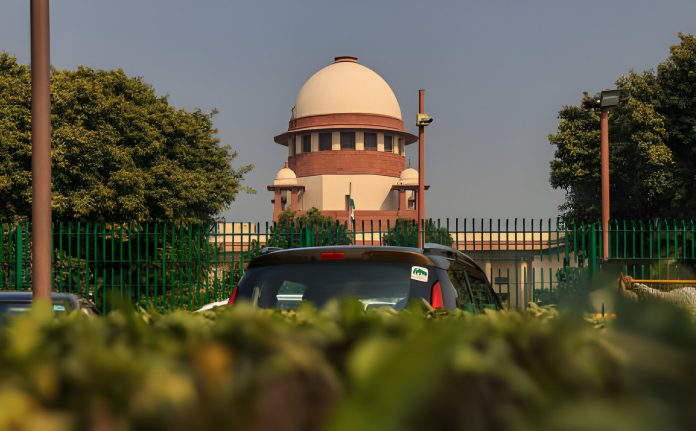
NEW DELHI, May 6: The Supreme Court on Wednesday observed that it is for Parliament to make a law governing the appointment of the Chief Election Commissioner and other Election Commissioners, and courts cannot direct the legislature on what kind of law it should enact.
It further observed that the inclusion of the Chief Justice of India in the selection panel, along with the Prime Minister and the Leader of Opposition, by the March 2, 2023 judgment was only an arrangement made in the absence of a law.
The observations by a bench comprising Justices Dipankar Datta and Satish Chandra Sharma came during the hearing of petitions challenging the constitutional validity of the Chief Election Commissioner and Other Election Commissioners (Appointment, Conditions of Service and Term of Office) Act, 2023, which excluded the Chief Justice of India from the panel for the selection of the CEC and Election Commissioners.
Questioning whether the court could direct Parliament to enact a law for including the Chief Justice of India in the selection panel for the appointment of the CEC and ECs, the court observed, “It is a prerogative of Parliament to make the law. Courts cannot direct the Parliament to make a law.”
Senior advocate Vijay Hansaria, appearing for one of the petitioners, argued that the norms laid down by the Constitution Bench flowed from constitutional principles requiring independence in the appointment process and preventing exclusive executive control. He submitted that the law enacted by Parliament could still be tested on the touchstone of Article 14.
The hearing also saw the court declining Solicitor General Tushar Mehta’s request for adjournment on the ground of his engagement before the nine-judge Bench hearing the Sabarimala reference. As the Solicitor General sought an adjournment for a week, stating that he wanted to be present during the hearing, the court observed that all matters are important, but the matter before it was more important than any other case, and the date for hearing it had been fixed well in advance.
Referring to the Constituent Assembly debates, senior advocate Hansaria argued that constitution makers had envisaged an independent process for the selection of the Election Commissioners, including the CEC, free from the control of the government. He contended that the present procedure for the selection of the CEC and ECs is tilted in favour of the government.
Senior advocate Gopal Sankaranarayanan, appearing for another petitioner, contended that Parliament cannot enact a law which effectively gives exclusivity to the executive in the appointment of Election Commissioners. He argued that the Constitution Bench, in its 2023 judgment, had ruled that such exclusivity would be inconsistent with the constitutional scheme and that any departure from that principle would require a constitutional amendment.
The hearing will continue on Thursday.
The Supreme Court is hearing a batch of petitions challenging the constitutional validity of the Chief Election Commissioner and Other Election Commissioners (Appointment, Conditions of Service and Term of Office) Act, 2023, which excluded the Chief Justice of India from the panel for the selection of the CEC and Election Commissioners.
Challenging the exclusion of the CJI from the selection panel, the petitions by ADR, Jaya Thakur (General Secretary of Madhya Pradesh Mahila Congress), and others, including Sanjay Narayanrao Meshram and advocate Gopal Singh, have questioned the constitutional validity of Sections 7 and 8 of the Chief Election Commissioner and Other Election Commissioners (Appointment, Conditions of Service and Term of Office) Act, 2023.
Section 7 of the law, under challenge, states that the Chief Election Commissioner and other Election Commissioners shall be appointed by the President on the recommendation of a Selection Committee consisting of the Prime Minister as Chairperson, the Leader of Opposition in the Lok Sabha, and a union Cabinet Minister nominated by the Prime Minister.
Section 8 of the Act states that the Selection Committee shall regulate its own procedure in a transparent manner for selecting the Chief Election Commissioner or other Election Commissioners.
The petitioners have contended that the removal of the Chief Justice of India from the selection panel and his replacement with a union Cabinet Minister nominated by the Prime Minister tilts the balance in favour of the government and renders the appointment process vulnerable to partisan influence.
The petitioners have cited the March 2, 2023, Constitution Bench ruling, wherein the Supreme Court had directed that, until Parliament enacted a law, appointments of the CEC and ECs should be made on the advice of a committee comprising the Prime Minister, the Leader of Opposition, and the Chief Justice of India to ensure independence, impartiality, and constitutional compliance.
The new law, enacted in 2023, overrides that arrangement and, according to the petitioners, dilutes the spirit and intent of the 2023 Supreme Court’s judgment.
(UNI)
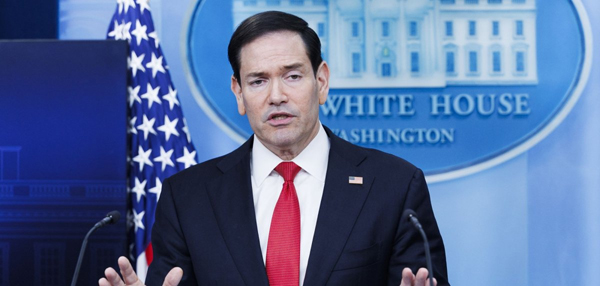
WASHINGTON, May 6 : Secretary of State Marco Rubio strongly defended the United States’ military operation in the Strait of Hormuz, emphasising that it is a purely defensive mission designed to rescue nearly 23,000 stranded civilians from 87 countries trapped in the Persian Gulf by Iran’s blockade.
Rubio underscored the humanitarian imperative, the strategic necessity of keeping global shipping lanes open, and issued a firm warning to Tehran that any attempts to test US resolve will be met decisively.
“These are innocent bystanders,” Rubio said during a briefing. “They’re isolated, they’re starving, they’re vulnerable, and at least ten sailors have already died as a result of this.”
Dubbed Project Freedom, the operation highlights the US’s commitment to protecting innocent lives and maintaining international norms in one of the world’s most critical maritime chokepoints.
Rubio said the operation, named Project Freedom, was launched at the direct order of President Trump after multiple nations, some publicly, many privately, appealed to Washington for help.
“President Trump, as he always does, stepped up and answered the calls for help,” Rubio said, adding that the U.S. was acting because “we’re the only ones who can.”
As a proof of concept, two US-flagged merchant ships have already successfully transited the Strait. The military assets deployed include guided missile destroyers, over a hundred land and sea-based aircraft, unmanned platforms, and 15,000 service members.
Rubio was emphatic that the operation is not offensive in nature. “There’s no shooting unless we’re shot at first,” he said.
“We are only responding if attacked first. This is a defensive operation.” He confirmed that seven Iranian fast boats had already been destroyed after failing to heed warnings. “Seven of them now sit at the bottom of the sea,” he said, “along with the rest of Iran’s navy.”
On the economic front, Rubio said Operation Economic Fury continues to run in parallel. Iran is losing as much as “$500 million a day in lost revenue,” he said, with 90 percent of Iranian trade halted, inflation at 70 percent, and the currency in “total and complete freefall.”
He warned that any foreign financial institution helping Iran evade sanctions would face secondary sanctions and lose access to the U.S. financial system.
Rubio also pushed back firmly against lawmakers from both parties who have labelled the blockade an act of war. “You know what is an act of war Putting mines in the water,” he said. “Mining in the water is illegal, period, under any circumstances, and they’ve done it.”
He framed the broader stakes in stark terms, warning that allowing Iran to normalise control of the straits would set a dangerous global precedent. “I can identify six or seven vital shipping lanes around the world that some countries can decide, if Iran was able to do it, we’re going to do it too,” he said. “That is a normal that we will never be able to accept.”
“They really shouldn’t test the will of the United States, at least not under President Donald Trump. He has proven time and again that he will back up what he says. And if they test him, ultimately they will lose – the hard way, the easy way, the long way, or the short way.”
(UNI )
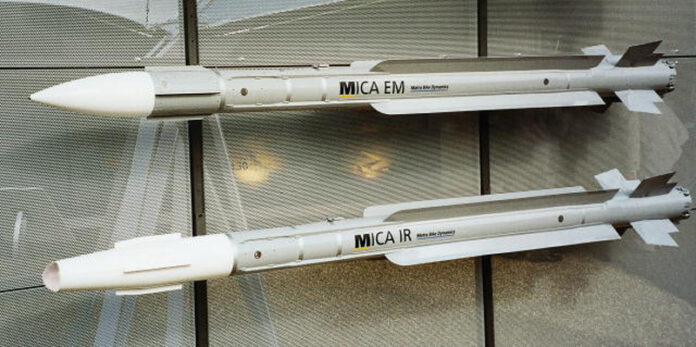
NEW DELHI, May 6: European missile maker MBDA on Wednesday said it has signed an agreement with the Indian Air Force for the development of local capability for the maintenance, repair and midlife overhaul (MRO) of MICA missiles.
The MRO facility will be set up, operated and maintained by the Indian Air Force, with MBDA supplying the industrial machinery and tools required, data packages, as well as training and technical support.
MBDA’s Meteor beyond visual range air-to-air missile and Scalp cruise missile are the mainstay of the weapons package of the Rafale jets.
“Developing these facilities locally will foster long-term capability building, secure technical expertise for years to come, and develop India’s strategic autonomy, reflecting the core principles of Atmanirbhar Bharat, the ambitious campaign launched by Prime Minister Narendra Modi in 2020,” the MBDA said in a statement.
It said the facility will help India’s domestic defence sustainment effort, improving turnaround times, with capacity to support MICA missiles and significantly enhancing the operational capability and readiness of the Indian armed forces.
India and MBDA share a long history of partnership in equipping the Indian Air Force going back to the early days of air-to-air missiles.
The Indian Air Force has relied on MBDA’s missile systems to provide the latest air combat performance across a number of different aircraft types, the company said.
“The MBDA today has two focuses: providing the highest performing missile technologies to the Indian Armed Forces, and secondly supporting Atmanirbhar Bharat as part of MBDA’s longstanding partnership strategy with India,” it said.
“With a strong reputation as a reliable partner that has supported the Indian Air Force for over 50 years, European missile firm MBDA understands the importance of operational capability and sovereignty to the IAF.
“The company has strongly committed to Make in India, to deliver both industrial sovereignty and the best military equipment to India,” it said. (PTI)
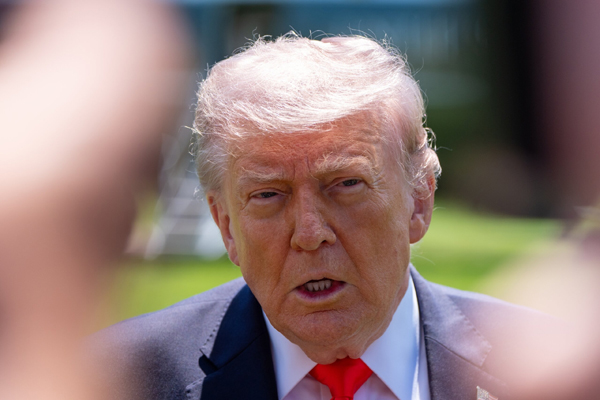
WASHINGTON, May 6 : US President Donald Trump threatened Iran with more bombing Wednesday if it doesn’t reopen the Strait of Hormuz after a report that an agreement is emerging to end war.
Trump posted on social media that the war with Iran could soon end and oil and natural gas shipments could restart. But that all depends on Iran accepting a reported agreement that the US president did not detail.
“If they don’t agree, the bombing starts, and it will be, sadly, at a much higher level and intensity than it was before,” Trump said.
Trump said it was “perhaps a big assumption” that Iran would agree to the terms being offered by the United States. (AP)
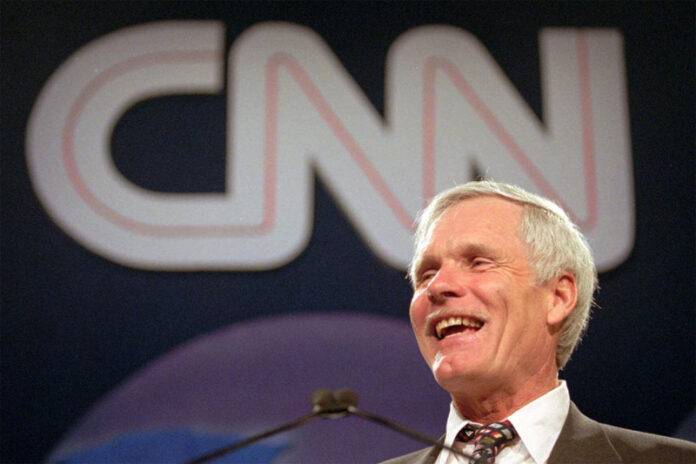
NEW YORK, May 6 : Ted Turner, a brash and outspoken television pioneer who raced yachts, owned huge chunks of the American West and transformed the news business by launching CNN in 1980, has died at age 87.
CNN reported that he died Wednesday, citing a Turner Enterprises news release.
Turner owned professional sports teams in Atlanta, defended the America’s Cup in yachting in 1977 and donated a stunning USD 1 billion to United Nations charities. He married three women – most famously actress Jane Fonda – and earned the nicknames “Captain Outrageous” and “The Mouth of the South.”
He once bragged: “If only I had a little humility, I’d be perfect.”
He was slowed in later years by Lewy Body Dementia. Long since out of the television business, he concentrated on philanthropy and his more than two million acres of property, including the nation’s largest bison herd.
His garrulous personality sometimes overshadowed a driven, risk-taking business acumen. By the time he sold his Turner Broadcasting System to Time Warner Inc. in a 1996 media megadeal, Turner had turned his late father’s billboard company into a global conglomerate that included seven major cable networks, three professional sports teams and a pair of hit movie studios.
Turner’s signature achievement was creating CNN, the first 24-hour, all-news television network in 1980. At a time news is instantly available at anyone’s fingertips, it’s hard to recall that the idea of letting consumers decide when they choose to learn what’s going on in the world was once revolutionary.
In part, Turner’s own frustration with television news was the instigator. He often worked past 8 pm, after the ABC, CBS and NBC nightly newscasts had already gone off the air, and was in bed by the time his local stations did their own newscasts at 11 pm.
He took a chance by starting the operation sometimes derided as the “chicken noodle network” in the early days of cable television, living in an apartment above its Atlanta office.
“I was going to have to hit hard and move incredibly fast and that’s what we did – move so fast that the (broadcast) networks wouldn’t have the time to respond, because they should have done this, not me,” Turner recalled in a 2016 interview with the Academy of Achievement. “But they didn’t have the imagination.”
CNN’s breakthrough moment came during the Gulf War with Iraq in 1991. Most television journalists had fled Baghdad, warned of an imminent American attack. CNN stayed, capturing arresting images of a war’s outbreak, with anti-aircraft tracers streaking across the sky and correspondents flinching from the concussion of bombs.
Turner was promised a continued role in CNN after his company’s sale to Time Warner for USD 7.3 billion in stock, but was gradually pushed out, much to his regret.
“I made a mistake,” he later said. “The mistake I made was losing control of the company.”
That same year – 1996 – saw the birth of Fox News Channel and arrival of a new dominant mogul in cable news, Rupert Murdoch. Political opinion became the stock in trade of networks like Fox News and MSNBC. Even though CNN built a worldwide news organizations particularly strong online, it struggles to this day with a diminished desire for straighter TV newscasts.(AP)