Saturday, May 9, 2026
E-Paper
Home Blog Page 48

Cabinet expansion delay exposes rift: Purnima

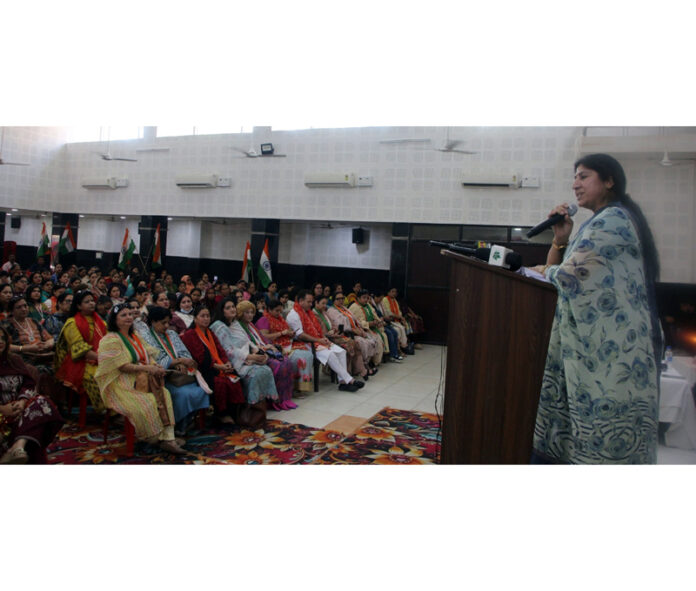
BJP spokesperson Purnima Sharma addressing a meeting at Jammu on Wednesday.

‘NC on ventilator’

Excelsior Correspondent
JAMMU, May 6,: BJP spokesperson J&K and former Deputy Mayor, Purnima Sharma launched a scathing attack on the Government led by Omar Abdullah, accusing it of administrative failure, excessive centralisation of power, and lack of accountability even after nearly two years in office.
Taking a sharp dig, she alleged that the real reason behind the delay in Cabinet expansion is internal discord within Jammu and Kashmir National Conference (NC). “The National Conference is on ventilator. The leadership knows that the day Cabinet is expanded, internal contradictions will surface and the party will scatter like a house of cards,” she remarked.
She further claimed that there is growing resentment among party leaders over denial of ministerial berths and alleged prevalence of “transfer industry” and favouritism. “Leaders within the party are feeling sidelined due to `Parivaarvaad’ and selective decision-making. This internal rift has the potential to divide the party into factions,” she added.
Purnima Sharma also alleged that the Omar Abdullah-led Government has reduced governance to a “one-man show,” with key portfolios being retained by the Chief Minister, instead of being distributed among ministers. She claimed that crucial departments such as Finance, Revenue, General Administration, and several unallocated portfolios continue to remain concentrated at the top, severely impacting governance and delaying decision-making.
She further stated that as per the existing administrative structure, all unallocated departments remain directly under the Chief Minister, increasing the burden on a single office and weakening accountability. “Even important sectors like Tourism, Housing, and Urban Development are being handled in a centralised manner, reflecting lack of delegation”, she added.
Purnima Sharma criticised the delay in Cabinet expansion, stating that even after a prolonged period in office, the Government has failed to induct adequate ministers. “Jammu & Kashmir cannot be run through over-centralisation and control from a single office. This is not governance, this is administrative bottleneck and mismanagement,” she said.
Sethi reviews development initiatives in Ambphalla, Bajalta Mandals

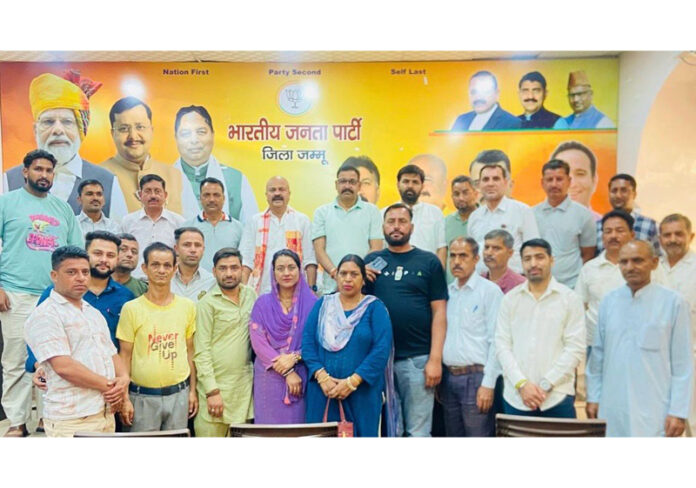
BJP MLA, Jammu East, Yudhvir Sethi during a meeting at Ambphalla on Wednesday.

Excelsior Correspondent
JAMMU, May 6: Senior BJP leader and MLA Jammu East, Yudhvir Sethi, on Wednesday chaired separate organizational meetings of BJP workers from Amphalla and Bajalta Mandals to review ongoing developmental initiatives in the constituency and discuss future plans aimed at strengthening public outreach and accelerating civic works in the area.
The meetings witnessed the participation of Kuldeep Kandhari, vice president, Ajay Sharma, Ampahlla Mandal president, Swati Sharma, Bajalta Mandal, Shiv Kumar Sharma, general secretary, Karan Sharma, Sunny Sharma, Bhishan Singh, Pooja, senior party functionaries, booth-level workers, youth activists, and local representatives who shared feedback regarding developmental needs, public grievances, and organizational activities in their respective mandals.
The discussions mainly focused on infrastructure development, road connectivity, sanitation, water supply, power improvements, and expansion of welfare schemes in Jammu East constituency.
Addressing the gatherings, Yudhvir Sethi appreciated the dedication and commitment of party workers in taking Government schemes and party policies to the grassroots level.
He said that BJP workers have always acted as a bridge between the people and the administration and have played a crucial role in ensuring that developmental benefits reach every household.
“Development and public welfare remain our top priorities. Prime Minister, Narendra Modi led Central Government has initiated several people-centric projects in Jammu East, and we are committed to accelerating the pace of development in both urban and rural areas. The active involvement of party workers is essential in identifying local issues and ensuring their timely redressal,” Sethi said.
The MLA emphasized that several developmental projects are currently underway in the constituency, including improvement of roads, drainage systems, and beautification initiatives. He said that the coming months would witness further expansion of infrastructure and civic amenities in Jammu East constituency with special focus on neglected and far-flung areas.

A year after Op Sindoor, Uri residents struggle to rebuild homes

Excelsior Correspondent
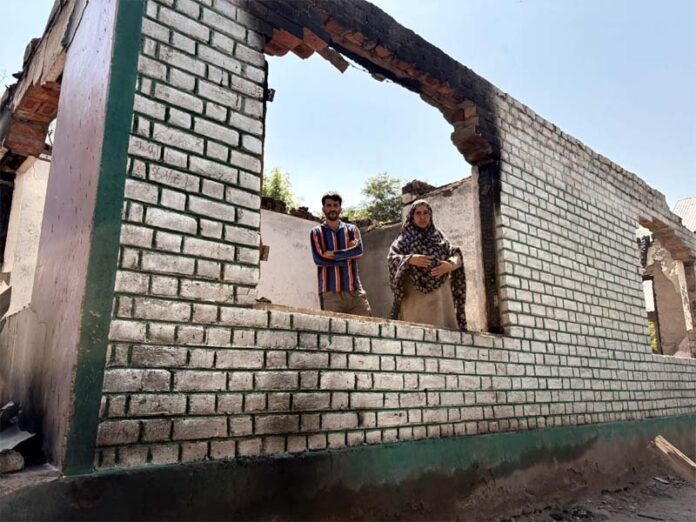
SRINAGAR, May 6: A year after Operation Sindoor, residents of Salamabad village in the Uri sector of north Kashmir are still struggling to rebuild homes damaged in cross-border shelling, with many families saying Government aid has fallen far short of their needs.
On the anniversary of the operation, residents in Salamabad, in Baramulla district near the Line of Control, described a slow and difficult recovery marked by financial hardship, inadequate infrastructure and lingering fear from last year’s violence.
Residents said they received between 2- 3 Lakh rupees in Government assistance to reconstruct their homes, but argued the amount is insufficient given high construction costs and logistical challenges in the hilly border area. “We are labourers earning just 500 rupees a day. It is already difficult to arrange food and medicines. How can we rebuild a house with such a small amount?” said Talib Hussain, a resident of Salamabad.
Many villagers said they are still living in temporary shelters or partially damaged homes, with no access to protective bunkers despite the area’s vulnerability to sporadic cross-border firing. The lack of road connectivity has compounded their difficulties, forcing families to carry construction materials manually over long distances. “We have to carry building material on our heads, which makes the process even more difficult and expensive,” another resident said.
Women in the village described ongoing psychological distress and a sense of abandonment. Zeenat, a resident, said she received relief only once and has seen little follow-up support since. “They knew everything. No one came to me again,” she said.
Residents also said that no bank loans or additional rehabilitation schemes have reached them, leaving families with limited means to rebuild. Many depend on daily wage labor, making it difficult to save for construction while meeting basic needs.
Hussain said his family continues to struggle to support their children’s education. “We work day and night just to feed our children,” he said. “My eldest son is in college, but we don’t have money to support him,” he added.
Others recounted the trauma of the shelling and its lasting impact. Samiya, another resident, said her home was completely destroyed and her family continues to live in uncertainty. “We have suffered a lot. Our house is gone. Even today, if we hear a loud noise, we get scared,” she said. She added, “It has been a year, but we are still struggling. We want the government to give us a house, a roof over our heads.”
Villagers have appealed to authorities to increase compensation, improve road access and provide bunkers and additional support to ensure their safety and rehabilitation.

State Cancer Institute marks ‘World Hand Hygiene Day’ with awareness events

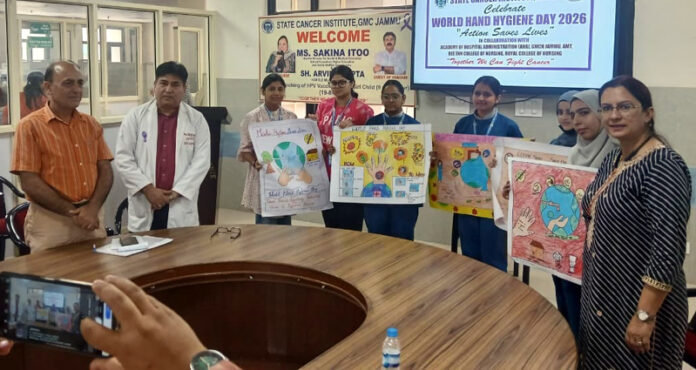
MS SCI Jammu, Dr Deepak Kumar and others during an awareness event in campus of the institute.

Excelsior Correspondent
JAMMU, May 6: Government State Cancer Institute (SCI) Jammu today organized ‘World Hand Hygiene Day’ in its campus in collaboration with Government Medical College Jammu, Academy of Hospital Administration (AHA) Jammu Chapter, Bee Enn College of Nursing, AMT School and Royal College of Nursing.
The programme featured a series of awareness and training activities aimed at promoting proper hand hygiene practices and strengthening capacity building among healthcare professionals and students. The event was organized under the initiative of Dr Deepak Kumar, Medical Superintendent (MS), SCI Jammu.
As part of the programme, students from different institutions participated in a poster-making competition based on key messages related to hand hygiene. A skit depicting proper hand hygiene practices along with their merits and demerits was also presented. Students also demonstrated correct hand-washing skills during practical sessions.
The poster-making competition and skit were presented by students of Bee Enn College of Nursing, Kot Bhalwal, while hand hygiene washing skills were demonstrated by students of AMT School, Bakshi Nagar, Jammu.
A technical session was delivered by Dr Beena Jad, Assistant Professor, Microbiology, Shri Mata Vaishno Devi Institute of Medical Excellence (SMVDIME), Kakrayal, Katra, who is also a national expert in Infection Prevention and Control and member of AHA.
An awareness and Behaviour Change Communication (BCC) session on hand hygiene was conducted by Sadiq Khan, National Trainer and programme coordinator.
In his address, Dr Deepak Kumar stressed that capacity building, awareness generation and behaviour change communication are among the most important tools for quality patient healthcare and prevention of diseases through community outreach and institutional training programmes.
The event was attended by Abhilasha Sharma, Tutor/ Warden of AMT School Bakshi Nagar GMC Jammu, Radhika Sharma, Associate Professor, Bee Enn College of Nursing Kot Bhalwal, besides staff of SCI Jammu.

Barrierless tolling system – an explainer

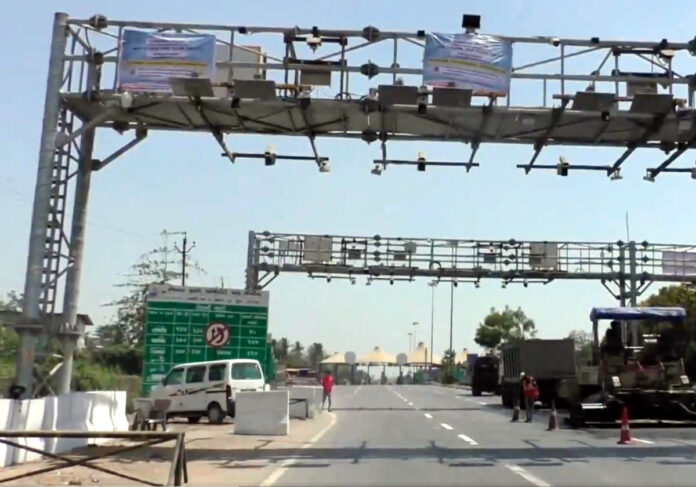
NEW DELHI, May 6 : The road transport and highways ministry has launched India’s first multi-lane free flow (MLFF) barrierless tolling system at the Choryasi Toll Plaza on the Surat-Bharuch section of NH-48 in Gujarat, marking a big shift in highway tolling.

The state-of-the-art system enables seamless toll collection without requiring vehicles to stop, using advanced technologies such as Automatic Number Plate Recognition (ANPR) and FASTag.

India’s electronic toll collection (ETC) infrastructure was started in 2014. Currently, vehicles need to stop at each fee plaza for payment of the highway usage charge.

Choryasi ranks among the top 10 toll plazas in the country in user fee collection. Indian Highways Management Company Limited (IHMCL), a company promoted by the National Highway Authority of India (NHAI), has signed an agreement with ICICI Bank to implement the country’s first comprehensive MLFF tolling system at Choryasi Fee Plaza.

State-owned NHAI is planning to roll out MLFF tolling at around 25 national highway fee plazas during the current financial year.

There are a dozen of toll plazas, including the Mundka toll plaza on the newly opened greenfield Urban Extension Road-II, where the multi-lane free flow tolling system is under testing.


BENEFITS OF MLFF

———————


Uninterrupted traffic flow: Vehicles no longer need to stop or slow down at toll plazas, leading to smoother traffic movement and reduced congestion.


Operational efficiency and cost savings: Reduced reliance on toll booth infrastructure and manpower results in lower operating costs over time.


Environmental benefits: Smoother traffic flow reduces vehicular idling, cutting down emissions and contributing to cleaner air near tolling points.


HOW DOES MLFF WORK?

————————–


High-performance RFID readers detect FASTag affixed on vehicles at high speeds. At the same time, ANPR cameras capture licence plate data, while RADAR and LiDAR systems accurately detect and classify vehicles.  MLFF equipment creates a toll transaction through reading of the FASTag and/or vehicle number plate, and deducts the fee from the FASTag. With the ‘One Vehicle, One Tag’ policy in place, the FASTag is linked to the vehicle number. It also captures evidence of vehicles where payment fails.


CONVENTIONAL TOLLING VS MLFF TOLLING

————————————————


Conventional fee plazas rely on physical booths, gates, and lane infrastructure. MLFF replaces this with smart overhead gantries – minimising ground infrastructure while maximising efficiency. Where traditional systems cause delays and frustration, MLFF delivers a fast, transparent, and high-integrity revenue process.


ELECTRONIC NOTICE

———————–


MLFF also introduces a robust e-notice and grievance redressal mechanism. If a vehicle fails to pay the applicable user fee while crossing an MLFF plaza, an electronic notice, or e-notice shall be issued for recovery of the unpaid fee, as per Rule 14 of the National Highway Fee Rules 2008.

E-notice will be sent via SMS to the registered mobile number of the vehicle owner as per the VAHAN database, and also to the mobile number linked to the FASTag of the vehicle as per the issuer bank’s records.

E-notice amount shall be twice the applicable user fee. However, if payment is made within 72 hours of issuance, a 50 per cent discount shall apply, and the amount payable shall be limited to the user fee applicable to the vehicle only.

After 72 hours, the road user shall be required to pay the full e-notice amount. (PTI)

Jawa 42 Bobber Wins ‘Style Icon of the Year’, Rewriting Individuality on the Road

MUMBAI, May 6: The design-led performance classic from Jawa Yezdi Motorcycles recognised for its bold silhouette, cultural resonance, and unmistakable presence Mumbai, Maharashtra, India (NewsVoir)

The head-turning, single-seater Jawa 42 Bobber has won the ‘Viewer’s Choice Style Icon of the Year’ at the prestigious Times Drive Auto Summit and Awards. The motorcycle has reset design expectations in India’s mid-sized segment with its distinctive visual identity and strong cultural relevance.

Since its launch in September 2022, the Jawa 42 Bobber has stood apart with a design that is unapologetically singular. Low-slung and built around a floating single seat, the motorcycle introduced a silhouette that felt closer to a custom build than a production machine. Its long wheelbase, wide rear tyre, and sculpted stance have made it one of the most recognisable motorcycles on Indian roads today.

The award acknowledges not just the Bobber’s design, but the thinking behind it. Built on a design-first engineering approach, the motorcycle reimagines the classic bobber form with modern precision. From its premium chrome finishes in variants such as Chrome Red and Black Mirror to details like diamond-cut alloy wheels and minimalist bodywork, every element contributes to a cohesive visual identity that is both contemporary and rooted.

Anupam Thareja, Co-founder, Classic Legends, said, “This recognition reaffirms our belief that design, when led with intent, can shape culture. Honest and intentional design creates an unmistakable presence and becomes a way for people to express who they are. The 42 Bobber was built to challenge conventions in how motorcycles look and feel. It was never designed to do everything, but what it has to say about individuality is unforgettable. That is what resonates with our riders. It invites them to breathe, wander, and take the longer road.”

Beyond design, the Jawa 42 Bobber has built a strong cultural presence. It has been embraced by riders who value individuality and expression, including cricketers MS Dhoni and Ruturaj Gaikwad, reinforcing its position as a cross-generational style marker. A darling of content creators, a fixture on lifestyle platforms, and a natural on city streets, the 42 Bobber has long outgrown its identity as a motorcycle to become an iconic cultural statement.

Powered by a 334cc liquid-cooled engine delivering 29.9 PS and 30 Nm of torque, paired with a six-speed gearbox and assist and slipper clutch, the Jawa 42 Bobber blends performance with ease of ride. Modern features such as a digital console, full LED lighting, USB charging, and dual-channel ABS ensure that the motorcycle’s contemporary appeal extends beyond design.

From its debut to the introduction of new variants like Chrome Red, the Jawa 42 Bobber has consistently expanded its visual vocabulary while staying true to its core identity of a bold, minimal, and expressive machine.

The recognition from Times Drive’s audience as ‘Style Icon of the Year’ reinforces the Jawa 42 Bobber’s position as a cultural marker for riders who choose individuality over convention.

The motorcycle is backed by the company’s segment-first Customer Assurance Programme, designed to support long-term ownership with reliability and peace of mind, including:

  • 4-year/50,000-km standard warranty
  • Extended warranty options up to 6 years
  • One year of roadside assistance
  • Support across 400+ sales and service touchpoints nationwide.

About Classic Legends Pvt. Ltd.

Classic Legends Pvt. Ltd. was founded with a vision to reintroduce iconic motorcycle brands in India & international markets. The company currently boasts an elaborate portfolio constituting Jawa, Yezdi & BSA marquee brands. It aims to bring consumers a quintessential motorcycling lifestyle experience by co-creating exciting product and service offerings within its motorcycling ecosystem and bringing back renewed fervour into the performance-classic motorcycle market.

(Disclaimer: The above press release comes to you under an arrangement with Newsvoir and PTI takes no editorial responsibility for the same.). (PTI)

India’s approach to migration grounded in dignity, respect for rights: MoS Kirti Vardhan Singh

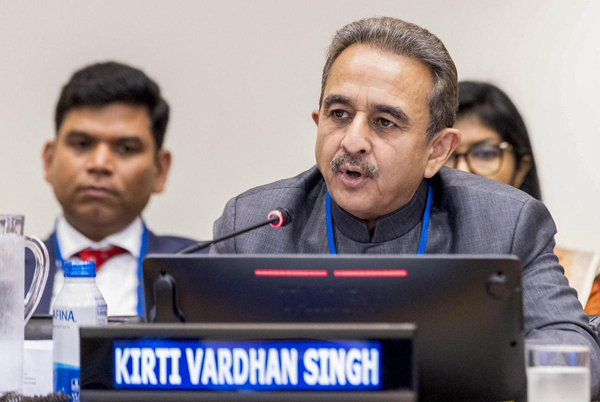
UNITED NATIONS, May 6: India’s approach to migration remains people-centric and grounded in dignity, Minister of State for External Affairs Kirti Vardhan Singh said, underlining that mobility will remain an integral feature of a dynamic global economy.
“India’s approach to migration governance is holistic and pragmatic. It is driven by coordinated institutional efforts and broad societal engagement,” Singh said here Tuesday.
He emphasised that “welfare and protection of our people” remains central to India’s approach.
“We have strengthened mechanisms to support migrants, particularly those in vulnerable situations, through initiatives such as the Indian Community Welfare Fund and the MADAD portal,” he said.
“Our responsive consular services also provide timely assistance, legal, financial, and insurance coverage to our nationals overseas,” he said.
Singh, who arrived here Sunday, is leading the Indian delegation for the Second International Migration Review Forum (IMRF), being held under the auspices of the UN General Assembly from May 4-8.
He addressed a round table at the UN headquarters on the Global Compact for Safe, Orderly and Regular Migration.
In a post on X, Singh said that at the round table, he outlined measures taken by India to facilitate safe and regular migration through leveraging Digital Public Infrastructure, strengthening consular services, concluding migration and mobility agreements, while upskilling, training and providing pre-departure training of the country’s skilled labour.
“Highlighted that our approach to migration remains people-centric – grounded in dignity, inclusion, and respect for rights,” he said.
India’s experience underscores the importance of leveraging technology, strengthening partnerships, and adopting a holistic lifecycle approach to migration governance, Singh said in his remarks.
“We are also aware that challenges remain, especially when it comes to strengthening social protection, addressing vulnerabilities, and improving data systems,” he said.
Singh stressed that India recognises that mobility will remain an integral feature of an increasingly interconnected and dynamic global economy. India’s policies remain closely aligned with the objectives and principles envisaged in the Global Compact, while evolving in response to emerging global dynamics.
“With the objective that migration should be a choice, supported by opportunity and dignity, we have invested in inclusive growth, livelihood and financial inclusion,” he said.
With a view to enhancing safe and regular pathways, India has concluded 27 migration and mobility arrangements with 23 countries, facilitating structured and skills-based mobility, with a strong emphasis on worker welfare, social protection, and fair recruitment practices.
“We believe such partnerships must continue to be strengthened and expanded for safeguarding the rights of our citizens abroad,” he said.
“Equally, it is important that these pathways are fair, transparent and accessible for ethical recruitment and decent work,” Singh said.
He pointed out that India’s Digital Public Infrastructure has played a transformative role in this regard. Platforms such as the eMigrate system, the National Career Service portal, and the Skill India Digital Hub have helped improve governance, enhance transparency, and better protect migrant workers from exploitation.
“These efforts are further complemented with pre-departure orientation programmes, ensuring that migrants are well-informed and better prepared for their employment abroad,” Singh said.
India also sees skilling as a cornerstone of its migration governance, with Skill India International Centres and digital platforms aligning the Indian workforce with global standards.
“We are working with partner countries to advance mutual recognition of skills,” Singh said, adding that ultimately, the collective effort of the international community must be to ensure that migration is safe, orderly, and genuinely beneficial for everyone.
On the margins of the forum, Singh met Ecuador’s Deputy Minister of Human Mobility, Saul Pacurucu and discussed “strengthening cooperation on safe, orderly and regular migration, mobility partnerships, and bilateral issues of mutual interest.” (PTI)

Govt’s foodgrain stocks hit 604 lakh tonnes, nearly three times buffer requirement

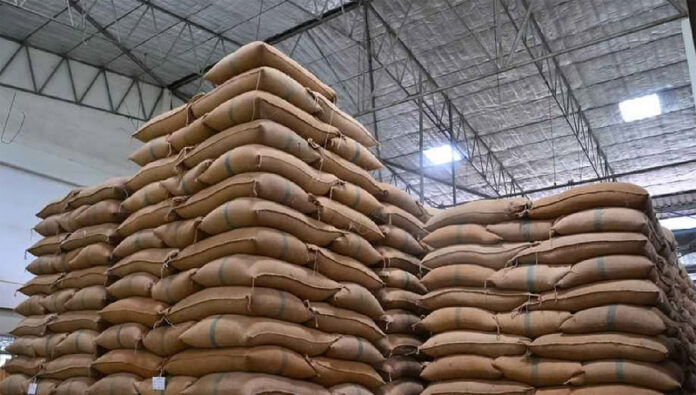
NEW DELHI, May 6: The government’s wheat and rice reserves held in Food Corporation of India (FCI) godowns rose to 604.02 lakh tonnes as of April 1, nearly three times the mandatory buffer requirement of 210.40 lakh tonnes, official data showed.

Rice stocks stood at 386.10 lakh tonnes, well above the buffer norm of 135.80 lakh tonnes, while wheat reserves were at 217.92 lakh tonnes against the required 74.60 lakh tonnes.

Buffer norms are revised quarterly – the current figures apply from April 1, with the next revision due on July 1.

The government maintains buffer stocks of wheat and rice to ensure adequate supply for beneficiaries of the Public Distribution System (PDS) and other food welfare schemes.

Procurement of wheat and rice from the 2026 rabi season is currently underway. About 97 per cent of the wheat sown area of 334.17 lakh hectare has been harvested, along with the completion of pulse harvesting.

Paddy harvesting stands at 59.32 per cent, concentrated in Tamil Nadu, Kerala, Tripura, Andhra Pradesh and Telangana.

Wholesale prices of most rabi commodities are trading below the minimum support price (MSP), official data showed.

“All the commodities are currently going below MSP during the week ending May 1,” an official said.

Wheat was trading at Rs 2,530 per quintal, 2.13 per cent below the MSP of Rs 2,585 per quintal. Paddy prices fell 3.17 per cent to Rs 2,294 per quintal from a year earlier. Maize prices declined 23.71 per cent to Rs 1,831 per quintal, against the MSP of Rs 2,400.

Wholesale prices of arhar, moong, bajra and sunflower were also trading below the support prices. (PTI)

DC Udhampur convenes public outreach camp at Chenani

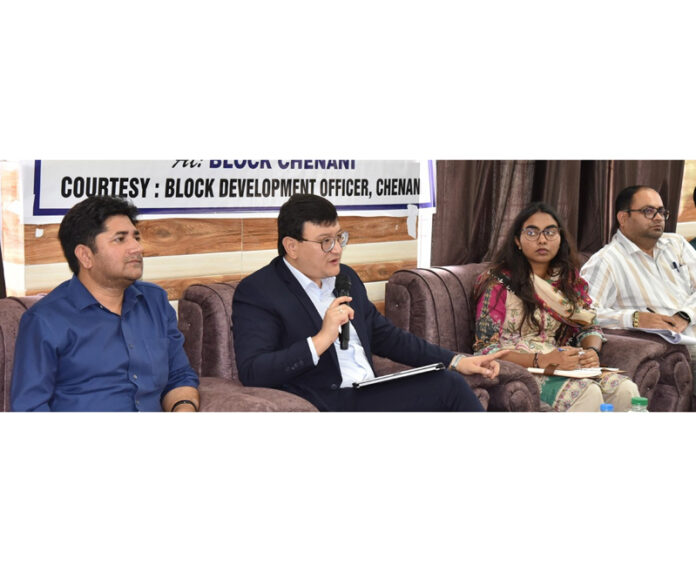
DC Udhampur chairing public outreach camp at Chenani on Wednesday.

Excelsior Correspondent
UDHAMPUR, May 6: Deputy Commissioner Udhampur Minga Sherpa, today presided over a public outreach-cum-grievance redressal camp at Community Facilitation Centre Chenani.
The programme witnessed the presence of IAS Probationer Shagun Singh, Sub Divisional Magistrate Dr. Ranjeet Singh Kotwal, district and sectoral officers, former PRI members and a large number of people from adjoining panchayats.
During the interaction, former PRI members including locals highlighted several demands, seeking renovation of the PMGSY road from Nagulta to Razar and other link roads, development of parking facilities, maintenance of Mall road Kud, issuance of separate ration cards, addressing the problem of drinking water shortage and speedy completion of JJM schemes.
Other concerns raised included shortage of staff in government schools and health institutions, requirement of an ambulance at Sarar, construction of a flyover, spreading awareness about commercial floriculture, operationalization of the International Yoga Centre at Mantalai, installation of a mobile tower in Bupp area, land compensation under PMGSY and skill development opportunities for youth under Mission YUVA.
Responding to the demands, the Deputy Commissioner issued on-the-spot directions to the concerned departments to initiate measures to address the problems projected by the people. He assured that all genuine demands would be addressed on priority.
Highlighting the importance of public awareness, he sensitized the public to the upcoming Census 2027 and urged their active participation in the enumeration process. He also highlighted flagship schemes, including Mission YUVA, PM Surya Ghar Muft Bijli Yojana, HADP and the Nasha Mukt Bharat Abhiyan, emphasizing their role in boosting livelihoods and socio-economic development.
Later, the Deputy Commissioner inspected the progress of work on the local Government Degree College building.

India, EU pitch for joint initiative to strengthen EV battery recycling

NEW DELHI, May 6 : India and the European Union on Wednesday launched a third coordinated call for proposals to recycle electric vehicle batteries as part of the India-EU Trade and Technology Council’s working group 2, which focuses on green and clean energy technologies.

The call for proposals aims to secure critical raw materials, accelerate the global transition to a circular economy, and strengthen bilateral relations between India and the European Union (EU).

“With a combined funding pool of 15.2 million euro (about Rs 169 crore), the initiative will be funded through the EU’s Horizon Europe programme, while the Ministry of Heavy Industries (MHI) will support the Indian component,” said an official.

The programme will focus on developing advanced recycling technologies, including high-efficiency material recovery, safe and digitalised collection systems, and pilot-scale demonstration of innovative processes.

It will also support the establishment of a joint India-EU pilot line in India to enable real-world validation and industrial deployment, bringing together leading researchers, industries, and startups.

In a statement, Ajay Kumar Sood, principal scientific adviser to the Indian government, said, “This launch is a pivotal moment in the India-EU strategic partnership. As India’s EV market continues its rapid expansion, creating a robust domestic recycling ecosystem is essential for our resource security and environmental commitments”.

The deadline for submitting the proposals is September 15. (PTI)