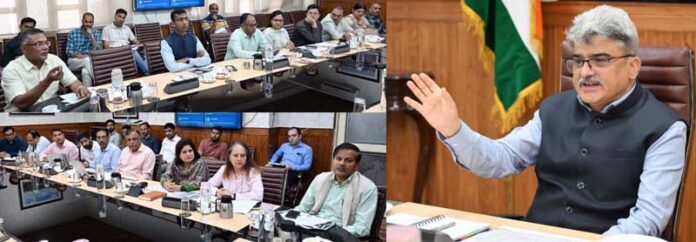
Chief Secretary chairing a meeting at Srinagar on Thursday.
Excelsior Correspondent
SRINAGAR, June 4: Chief Secretary, Atal Dulloo, today chaired a high-level meeting of all the concerned Government stakeholders to review the progress of large-scale solarization initiatives being undertaken in Jammu and Kashmir and to resolve the bottlenecks identified by the Science & Technology Department in advancing these efforts across the Union Territory.
The meeting was attended by Additional Chief Secretary, Power Development Department; Additional Chief Secretary, Finance; Commissioner Secretary, Forest, Ecology & Environment Department; Divisional Commissioner, Jammu/Kashmir; Commissioner Secretary, Science & Technology Department; Managing Director, JPDCL/KPDCL, besides representatives of several other concerned departments.
During the meeting, the Chief Secretary stressed the need for sustained and result-oriented follow-up by the Science & Technology Department on the issues deliberated upon, observing that a clear roadmap for addressing the challenges had emerged through collective consultations with all stakeholders.
He underscored that the department should fully leverage the support being extended by the Finance Department and other agencies to achieve the solarization targets within defined timelines.
Emphasizing the immense potential of renewable energy in Jammu and Kashmir, the Chief Secretary advised the department to undertake a comprehensive review of the land parcels identified on the PM Gati Shakti Portal and assess their suitability for establishment of mega solar parks under Government of India-supported programmes.
He called for a focused and mission-mode approach, directing the department to set measurable targets for the next six months, one year and two years, and ensure visible progress on the ground at each stage.
The meeting held detailed deliberations on a range of issues critical to the successful implementation of solar projects, including land acquisition and transfer, obtaining statutory clearances from various departments, execution of Power Purchase Agreements (PPAs) with distribution companies for evacuation of power generated from solarized buildings, and measures required to maintain grid stability for optimal utilization of solar energy assets.
Discussions also centred on the installation of Virtual Net Metering systems in Government buildings, adoption of a Unified Billing System for departments in place of separate billing for individual buildings, and provision of fresh power connections wherever required to facilitate seamless implementation of solar projects.
The stakeholders further deliberated upon the need for rationalization and levelization of rates for projects being implemented under the Renewable Energy Service Company (RESCO) model to ensure greater efficiency of solar energy solutions across departments.
The meeting also reviewed the long-term roadmap for development of mega-scale solar power infrastructure in Jammu and Kashmir.
BEIRUT, Jun 4 : Hezbollah on Thursday rejected the latest ceasefire agreement reached between Israel and the Lebanese government, demanding a complete Israeli withdrawal. The announcement came as Israeli strikes killed at least four people, according to local authorities, and a UN peacekeeper was killed in the crossfire.
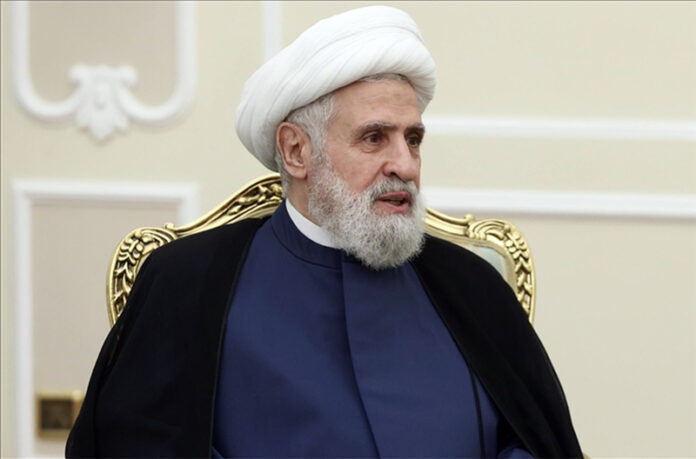
Hezbollah leader Naim Kassem, in a written statement read on TV, said the agreement’s demand that Hezbollah fighters leave southern Lebanon under fire would mean “surrender, defeat and achieving the enemy’s goals.”
“What we are concerned about is an end to the aggression, ceasefire and Israel’s withdrawal,” he said. “We did not make any commitment to any party to stop resisting as long as there is occupation,” he added.
The ongoing fighting in Lebanon, where Israeli forces have seized large swaths of the south, threatens efforts to end the Iran war and reopen the Strait of Hormuz, a key transit point for oil and gas whose closure has jolted the world economy.
Iran has demanded that any lasting truce extend to Lebanon. Israeli Prime Minister Benjamin Netanyahu, who faces elections later this year, wants to press ahead with Israel’s offensive until Hezbollah no longer poses a threat. Israeli troops have seized around a fifth of Lebanon since Hezbollah began launching rocket and drone attacks in solidarity with Iran days into the wider war.
US President Donald Trump, who faced a rare rebuke from Congress on Wednesday, has sought to downplay the diplomatic deadlock and the failure of declared ceasefires to end the fighting, telling reporters that in the Middle East, “a ceasefire is when you’re shooting in a more moderate manner.”
Peacekeeper killed in crossfire
———————————-
A Serbian peacekeeper was killed, and two other peacekeepers were wounded, when a mortar struck their location near Marjayoun, a Christian-majority town that has seen intense fighting, according to the UN mission, known as UNIFIL, and Serbia’s Defence Ministry.
Neither said whether the mortar fire came from Israel or Hezbollah.
Lebanon’s state-run National News Agency said a drone strike killed a motorcyclist and wounded four people in the village of Maaroub. It said airstrikes on the village of Sohmor in the Bekaa Valley, in eastern Lebanon, killed three people and wounded others. It also reported airstrikes in other areas of the south.
There was no immediate comment from the Israeli military, which has warned people not to go into parts of southern Lebanon where it says it is striking Hezbollah facilities.
Fighting has raged despite declared ceasefires
—————————————————-
Hezbollah resumed its rocket fire days after Israel and the United States launched their surprise attack on Iran on February 28. Before then, Israel had regularly carried out strikes in Lebanon against what it said were militant targets, often killing civilians, despite an earlier truce reached in 2024.
In the southern city of Sidon, many residents reacted to the ceasefire announcement with scepticism, saying previous agreements had failed to stop the violence.
“Every few days a ceasefire is announced, but people keep getting killed,” said Mayada Hijazi.
“It’s all talk and no action,” said Salah Nassab. “We keep going back to our homes and then we get displaced again, back and forth. We’re very tired.”
In the latest fighting, Israeli troops have pushed further into southern Lebanon than at any time since the end of Israel’s 1982-2000 occupation. It now occupies around a fifth of the country.
More than 3,500 people have been killed in Lebanon and over 1.2 million have been displaced. The fighting has killed 27 Israeli soldiers and three civilians.
The ceasefire came from ongoing Israeli-Lebanese talks
————————————————————–
The latest declared ceasefire came about through US brokered talks held between Israel and Lebanon’s government, which accuses Hezbollah of dragging the country into war and had made efforts to disarm it before the latest hostilities.
The ceasefire does not officially include Hezbollah and calls for Lebanon’s armed forces to take control of security zones in Lebanon from which the militants would be banned.
Hezbollah has previously said it will only adhere to a ceasefire if Israel halts its attacks and begins withdrawing from the country.
Lebanese President Joseph Aoun on Thursday called the new agreement “the last chance to enter a final and comprehensive ceasefire.” He said Lebanon was ready to implement Wednesday’s deal once he receives responses from relevant factions in Lebanon, including Hezbollah. The United States – and Trump himself – would determine how and when the deal is implemented, he told journalists on Thursday.
The agreement states that Hezbollah “is not just an enemy of Israel and an enemy of America, but that it is an enemy of Lebanon” and calls for dismantling it. The government has promised to do so in the past but does not have the capabilities to disarm Hezbollah by force.
The latest agreement did not say when Israel would withdraw from southern Lebanon but said the US would support the Lebanese army as it works to assert control in areas where Hezbollah has long wielded power.
Iran has demanded a durable Lebanon ceasefire
—————————————————–
A top Iranian general on Thursday reiterated Tehran’s demand for a full ceasefire in Lebanon and called for Israel to pull troops back to where they were when the wider war began. At that time, Israel held five strategic points along the border.
“Supporting the resistance in Lebanon is the duty of all of us, and eliminating Israel from the region is an achievable goal for Muslims,” Esmail Qaani, the head of the Revolutionary Guard’s elite Quds Force, was quoted as saying by the semiofficial Fars and Tasnim news agencies.
As diplomatic efforts have repeatedly faltered, Iran and the US have traded fire in and around the Strait of Hormuz, which remains effectively closed. Before the war, around a fifth of the world’s oil and gas, as well as large shipments of fertiliser and other goods, passed through the narrow waterway.
The US has targeted what it says are Iranian threats to commercial shipping and its own forces, while Iran has launched missile and drone attacks on Gulf states hosting US troops.
A strike Wednesday on a commercial airport in Kuwait that is also used by American forces for logistics and refuelling killed an Indian national and wounded more than 60 people, including passengers and workers. Iran denied carrying out the strike. (AP)
Excelsior Correspondent
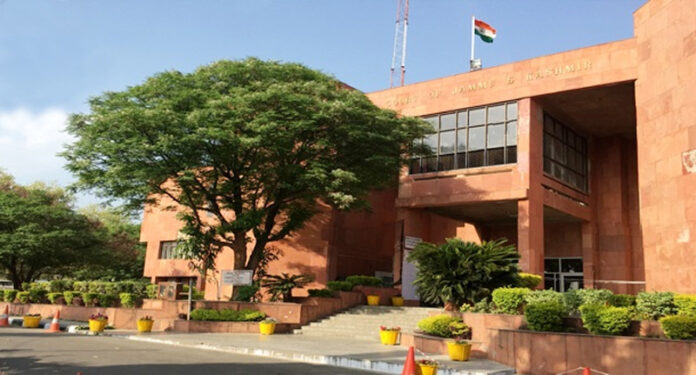
JAMMU, June 4: The High Court of Jammu & Kashmir and Ladakh has notified its summer vacation schedule for 2026, announcing that the court will remain on vacation from June 8 to June 27, with a designated roster of Vacation Judges to hear urgent matters during the break.
According to an order issued by Registrar General M K Sharma, the period from June 8 to June 13 has been declared a “no work period” for the High Court.
However, urgent cases will continue to be taken up during the vacation by judges specially nominated by the Chief Justice under Rule 12 of the Jammu and Kashmir High Court Rules, 1999.
For the Jammu Wing, Justice Rajesh Sekhri has been designated as Vacation Judge from June 15 to June 20, while Justice Sanjay Parihar will hear urgent matters from June 22 to June 27.
Similarly, for the Srinagar Wing, Justice Shahzad Azeem has been assigned vacation duty from June 15 to June 20, while Justice Mohammad Yousuf Wani will function as Vacation Judge from June 22 to June 27.
NC MP Sajjad Kichloo and MLA Surankote Choudhary Muhammad Akram meeting with Dr Farooq Abdullah at party headquarters in Srinagar.
Excelsior Correspondent
SRINAGAR, June 4: The Jammu and Kashmir National Conference President Dr Farooq Abdullah today emphasized the need for greater unity, justice and equality among Muslims saying that collective solidarity and adherence to these fundamental principles are essential to effectively address the challenges confronting Muslims across the world, particularly in West Asia.
Addressing a gathering at Eidgah, Srinagar, Dr Farooq said that the Muslim world is passing through a critical phase marked by political instability, humanitarian crises and growing uncertainty in several regions. He stressed that the strength of Muslims lies in unity and its unwavering commitment to the values of justice, equality, compassion and mutual respect.
“Discord and divisions only weaken societies and make them vulnerable to external and internal challenges. It is imperative for Muslims across the globe to stand together, uphold the principles of justice and work collectively for peace, dignity and progress,” he said.
Expressing concern over the prevailing situation in West Asia, Dr Farooq said that the continued conflicts and loss of innocent lives are a matter of grave concern for the entire Muslim world. He urged the world community to prioritize dialogue, reconciliation and humanitarian values in order to foster lasting peace and stability in the region.
Dr Farooq also highlighted the importance of social harmony, brotherhood, and inclusiveness, asserting that these values form the bedrock of a strong and resilient society. He called upon people to rise above differences and work towards the collective welfare and prosperity of humanity.
Earlier, Dr Farooq visited the residence of Faisal Ahmad Shah at Dangerpora to offer his condolences on the demise of his wife. A large number of people attended the gathering and interacted with Dr Farooq on various issues concerning society and the community.
Meanwhile, NC MPs Chowdry Muhammad Ramzan, Sajjad Kichloo and MLA Surankote Choudhary Muhammad Akram called on Dr Farooq at the party headquarters Nawa-e-Subha, Srinagar. They apprised the party president about the ongoing party activities and other issues of public importance in the areas and Jammu and Kashmir in general.
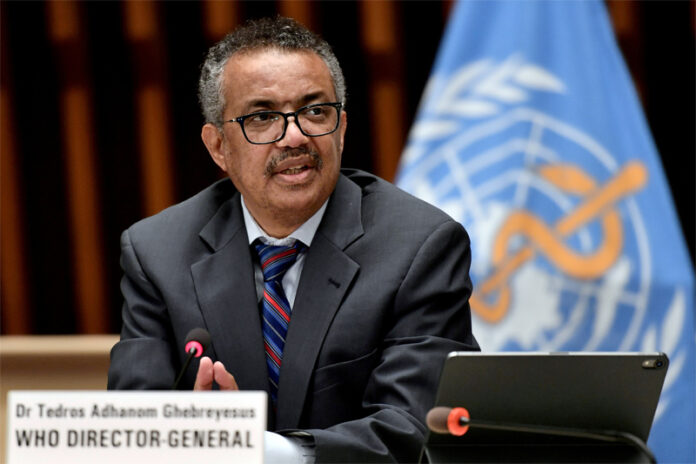
MOSCOW, June 4 : World Health Organisation (WHO) Director-General Tedros Adhanom Ghebreyesus urged countries to lift travel restrictions imposed due to the Ebola epidemic in the Democratic Republic of the Congo (DRC), as they are hindering aid delivery.
On May 27, the Ugandan Health Ministry said that the government had decided to close the border with the Democratic Republic of the Congo amid the unfavourable epidemiological situation there.
The New York Times newspaper reported on the same day that the United States intends to send Americans infected with Ebola to Kenya for treatment. However, on May 29, the Kenyan High Court temporarily banned entry into the country for people infected with the virus.
“Blanket travel restrictions imposed by some countries are disrupting supply chains and hindering the response. WHO recommends exit screening at airports, ports and border crossings to prevent the exportation of cases and contacts. We ask countries that have imposed blanket travel restrictions to lift them,” Ghebreyesus said at a press conference in Geneva on Wednesday.
On May 15, the WHO declared the Ebola outbreak in the DRC and Uganda a public health emergency of international concern.
Ebola is an often fatal disease transmitted from wild animals such as bats and primates to humans. People can get infected from another person by direct contact with the blood and other bodily fluids or with contaminated objects. The UN assesses the disease’s average fatality rate to be at 50%, but it has reached up to 90% in previous outbreaks.
(UNI)
Defence Minister Rajnath Singh on Thursday approved a two-fold increase in financial powers for field commanders to strengthen operational efficiency and ensure faster conclusion of contracts as well as execution of projects.
Special financial powers delegated to the commanders of Indian Army, Air Force and Indian Navy have been increased significantly along with a 100 per cent increase in the total ceiling provided to meet urgent operational requirements, the Defence Ministry said.
In addition to the enhancement in financial powers, new provisions have been included to promote joint service procurement by the lead service with higher delegation than the normal procurement, it said.
“Many new Competent Financial Authorities have been introduced to decentralise the procurement of goods and services,” it said.
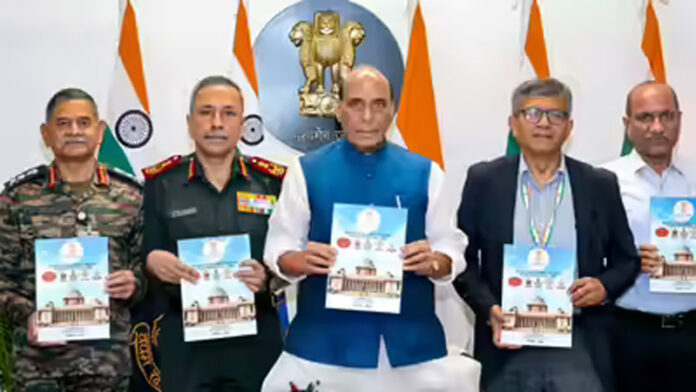
Defence Minister Singh released a revised manual for ‘Delegation of Financial Powers for the Defence Services’ at an event in New Delhi.
“The enhancement in the financial powers has been made up to 100 per cent, and even more than double in some cases. This would further strengthen the operational efficiency of field commanders, and lead to faster conclusion of contracts and execution of projects,” the Ministry said.
It said the financial powers delegated for indigenisation and research and development within the military ecosystem have been doubled to boost ‘Aatmanirbharta’ (self-reliance) in defence by minimising the dependency on foreign original equipment manufacturers.
The revised delegation of financial powers will facilitate procurement of more than Rs 1.25 lakh crore through the revenue route, as per current year budgetary allocations, the Ministry said.
Financial powers were last notified in 2021. The revision was necessitated due to the expansion in force level and to cater to the increased expenditure on operations and sustenance vis-a-vis the increase in budgetary allocation, the Ministry said.
This revised delegation in financial powers, along with the revised Defence Procurement Manual, will give a fillip to defence procurement with expeditious decision making, it noted.
This will lead to timely availability of resources as per the needs of the defence forces, the ministry said in a statement.
Chief of Defence Staff Gen N S Raja Subramani, Army Chief Gen Upendra Dwivedi, Navy Chief Admiral Krishna Swaminathan and Defence Secretary Rajesh Kumar Singh were present at the event. (PTI)
CHENNAI, Jun 4 : Hyundai Motor India Ltd on Thursday said it will roll out two new models from the Chennai manufacturing facility, including its first mass-market EV, within this year, and said it is committed to making Tamil Nadu its ‘Flagship EV Hub for India’.
The company said it is well-positioned to further expand coverage across all major cities and highways over the next 2-3 years backed by a strategically distributed network of high-capacity chargers across key urban and transit corridors, in line with its plans to broaden affordable EV offerings in India.
The Tamil Nadu government and Hyundai Motor India Ltd (HMIL) also jointly announced a skill development collaboration to enhance the global employability of the state’s youth. The initiative will kick off operations in December 2027.
Tarun Garg, MD & CEO, Hyundai Motor India Ltd, said, “We will roll out two new models from the Chennai facility, including our first mass-market dedicated EV within this year, marking a significant step towards accelerating EV adoption and building a strong EV ecosystem.
“Alongside advancing EV localisation, we are equally focused on developing a future-ready skilled workforce, enabling talent to support future automotive technologies”.
HMIL has so far exported over 3.9 million vehicles made in Tamil Nadu to more than 150 countries.
The company has established Tamil Nadu’s first battery sub-assembly plant for EV powertrains and is localising power electronics and other key components.( PTI)
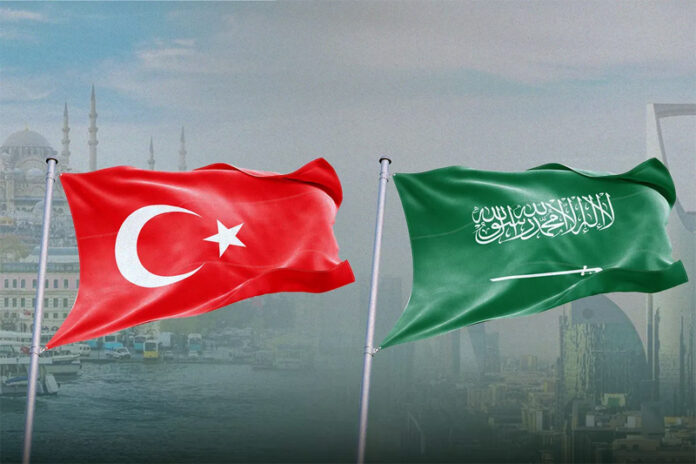
ISTANBUL, Jun 4 : The Turkish authorities are in talks with Saudi Arabia over the route of a railroad largely following the Hejaz Railway, with plans for the new line potentially to extend to Oman and serve as an alternative to the Strait of Hormuz, Turkish Minister of Transport and Infrastructure Abdulkadir Uraloglu said.
“At the first stage, it is necessary to build a road from the Turkish border to Aleppo in Syria. There is already a built section from there to Damascus … There is no railway on the section from the border of Jordan and Saudi Arabia; we are currently discussing the route with the Saudi side – whether the road will turn to Riyadh or bring it to Hijaz, as a result, the final goal – build a road to Oman. In fact, we are talking about bypassing the Strait of Hormuz,” Uraloglu told the Anadolu news agency.
The Hijaz region in western Saudi Arabia already has a high speed line between Mecca and Medina.
In March, Uraloglu said Ankara was discussing with Damascus the restoration of the Hejaz Railway section that once connected the countries.
(UNI)
In a breakthrough against cross-border terror networks, State Special Operations Cell (SSOC) SAS Nagar (Mohali) thwarted a terror conspiracy by arresting two associates of a foreign-based terror operative and recovering one fully assembled RDX-based Improvised Explosive Device (IED) from their possession, officials said on Thursday.
Those arrested are Mani Singh (32), a resident of Gujjarpura in Amritsar and Abhishek Kumar (28), a resident of Gillwali Gate in Amritsar. The Director General of Police, Gaurav Yadav, said the recovered IED, weighing approximately 2.5 kilograms, was fully assembled and ready for use.
The operation foiled a nefarious plot aimed at targeting critical public infrastructure in SAS Nagar and averted a potentially catastrophic threat to public safety and security, he said in a post on X.
The DGP said further investigations are underway to uncover the entire terror network, including handlers, associates, and linkages involved in the conspiracy.
Sharing operational details, Inspector General of Police (IGP) Counter Intelligence, Ashish Choudhary said acting on intelligence inputs, police teams apprehended both suspects near a park opposite YPS Chowk, Mohali; they had travelled from Amritsar to Mohali by bus along with the explosive device.
Officials immediately summoned the bomb disposal squad, which successfully neutralised and dismantled the IED while following all prescribed safety protocols.
The IGP said the preliminary investigation revealed that the accused, Mani Singh, recently contacted a foreign-based handler via a social media platform and introduced his brother-in-law Abhishek Kumar to him.
During their interactions, a foreign-based handler offered financial assistance in return for carrying out certain tasks, and both agreed to work for him due to their financial difficulties, he said.
An FIR has been registered under the relevant provisions of the BNS and the Explosive Substances Act at Police Station SSOC, SAS Nagar. (PTI)
*Restores 20 yr old mutation, sets aside FCR order
Excelsior Correspondent
JAMMU, June 4: Holding that the exercise of revisional jurisdiction after an inordinate lapse of time defeats the principles of reasonableness, finality and legal certainty, the High Court of Jammu & Kashmir and Ladakh has quashed the Financial Commissioner Revenue’s order setting aside a mutation that had attained finality in 2004 and remained unchallenged until 2021.
Justice Wasim Sadiq Nargal passed the ruling while allowing a writ petition filed by Ghulam Rasool Rather and others against an order dated May 25, 2023 through which the Financial Commissioner (Revenue) had set aside Mutation No. 4813 of Estate KP Bagh, Srinagar, attested on December 9, 2004, in exercise of powers under Section 15 of the Land Revenue Act.
The High Court restored the mutation, holding that the revisional authority had entertained a challenge after nearly two decades without recording any satisfaction regarding the delay or assigning compelling reasons for reopening a concluded matter.
The mutation had been attested on December 9, 2004 and remained unassailed for a considerable period. The revision petition seeking interference with the mutation was instituted before the Financial Commissioner only on February 24, 2021, reflecting a lapse of nearly twenty years from the date of attestation.
The petitioners argued that although no specific limitation period is prescribed for exercise of revisional jurisdiction, such powers are nevertheless required to be exercised within a reasonable period. It was further submitted that during the intervening period, the property had changed several hands and valuable third-party rights had accrued, aspects which were ignored by the revisional authority.
Examining Section 15 of the Land Revenue Act, the High Court observed that the absence of a prescribed limitation period does not confer unfettered or indefinite authority upon a revenue forum to reopen concluded matters at its own discretion. “The law is well settled that such powers are required to be exercised within a reasonable period, and the concept of reasonableness acts as an inbuilt limitation on the exercise of such jurisdiction”, the High Court added.
The High Court found that the impugned order neither disclosed compelling circumstances justifying exercise of jurisdiction after such a prolonged period nor reflected any consideration of the effect of passage of time.
Relying upon the Supreme Court judgment in H Guruswamy Versus A Krishnaiah, the High Court emphasized that limitation is not merely a technical consideration but is founded on principles of sound public policy and equity. Stating that no litigant can be kept under perpetual uncertainty, the High Court referred to the Supreme Court’s observation that no court should keep the “Sword of Damocles” hanging over the head of a litigant for an indefinite period of time.
Justice Nargal held that by entertaining a revision after an extraordinary lapse of time, the settled position flowing from the mutation had been rendered uncertain and exposed to perpetual challenge.
Such an approach, the High Court said, undermines the doctrine of finality and runs contrary to the principles of public policy and equity underlying the law of limitation.
Third-party rights cannot be trampled Referring to Supreme Court rulings, the High Court observed that intervening delay often results in creation of third-party rights, which cannot be trampled by a belated exercise of discretionary powers when no cogent explanation for the delay is available.
The High Court found that the mutation had remained operative for a long period during which rights flowing from it stood recognized in revenue records and were acted upon. It also recorded that substantial rights had accrued and third-party interests had come into existence during the intervening period, yet the revisional authority failed to consider these crucial aspects before interfering with the mutation.
Justice Nargal observed that the plea of fraud raised by the respondent had not been substantiated by any cogent material on record. “A mere bald allegation of fraud, without specific particulars and supporting evidence, cannot be made the basis for unsettling a long-standing mutation,” the judgment stated.
Rejecting the argument that the Financial Commissioner had merely passed a remand order directing de novo consideration, the High Court held that such a direction effectively amounted to indirectly reviving a time-barred claim and this defeated the principle of finality and encouraged avoidable litigation.
The High Court further held that the revisional authority failed to consider the doctrine of laches and acquiescence, under which a person who remains indolent for an extended period despite having an opportunity to assert rights cannot later revive stale claims to the prejudice of others.
Concluding that the impugned order suffered from legal as well as procedural improprieties, the High Court quashed the Financial Commissioner’s order dated May 25, 2023 and directed that Mutation No. 4813 dated December 9, 2004 shall stand restored.
The High Court observed that any attempt to exercise revisional jurisdiction after an inordinate and unexplained lapse of time, particularly beyond the ordinarily accepted period of three to five years, cannot be sustained in law and that principles of reasonableness, finality and legal certainty must prevail.