A business needs to focus on all types of management aspects to ensure streamlined and successful operations.From staff recruitment to parking management systems, there are many systems, processes and policies that businesses need to implement. Strong and effective systems can help your business to be more successful, while ignoring or mishandling certain areas can have detrimental results.
In order to boost your business’ efficiency and productivity, you must pay special attention to not just the most obvious areas, but the often-overlooked ones too. Sure, each business tries to keep up with the latest technology trends to survive their competition. However, there are certain areas that can have a devastating impact on your company if neglected, and can even contribute to business failure.
In this post, we will walk you through 7 commonly-overlooked areas that can make or break the success of any business.
1.Automated Business Operations
Gone are the days when all management activities needed manual maintenance. Today, you can automate a plethora of management and marketing activities with the help of high-quality ERP software solutions. Automated software apps do wonders when it comes to administrative tasks. With effective software in place, your employees do not need to spend time on repetitive and hectic manual activities, making everything more efficient.
For instance, HR software can streamline the entire recruiting process. The human resource department of your company doesn’t have to sift through a large volume of applications. You can use the built-in HR modules to recruit the qualified and deserving candidate for any vacancy.
2.Data Management
Any kind of business deals with a great deal of data and it is important to organize it properly. Misplaced files and lost data can result in delayed projects. You don’t want your employees to spend hours searching for particular customers’ information from a large bundle of files.
It is important to implement effective and efficient data management solutions, such as cloud storage. The best option is an automated software solution that can store a large volume of data in a centralized system.
3.Regular Feedback to Employees
Another overlooked area that businesses can improve is how they give feedback to their team members. Employees lose interest when their work is not appreciated. For instance, a salesman will not even try to exceed your expectations if they feel like their work isn’t valued.
Typically, employee performance is reviewed annually. If you want to boost employees’ productivity, you should give them regular feedback on their performance through more frequent formal reviews (say once every three months) and casual feedback in between. Whether you want to appreciate their work or suggest chances, it is important to do this frequently. Employees are most likely to work harder and achieve their objectives sooner if you appreciate and value their efforts.
4.ExcessiveMeetings
Staff and managers typically spend hours on conference calls and in meetings. While regular meetings are important, they don’t necessarily to go for hours. Even if you need to organize meetings every day, you can opt for smart solutions to keep them short. For instance, emails and slack can be used for most communication, allowing you to keep meetings to a minimum and spend more time on focused work.
5.Customer Retention
Ask any entrepreneur or manager and they will tell you one of their biggest difficulties they face isbringing in new customers. Of course, that doesn’t mean you should stop looking for new customers, but don’t overlook the value ofpayingattention to your existing customers. Retaining your existing clients is easier than getting new customers to do business with you. You can improve your customer retention processes by offering loyalty programs to your customers, awarding them with reward points, offering discounts and promo offers, and similar initiatives.
6.Personalized Service
If you still rely on a one-size-fits-all approach, you are probably losing a large number of your prospects to your competitors. To attract your audience, you need personalized and effective solutions. You don’t have to shell thousands of dollars out for personalized services, but rather invest in a smart software solution that could track your customers’ browsing history. Based on these insights, you canrecommend the best products to your customers.
7.New Employees Onboarding
Many companies take the employee onboarding process lightly and too often overlook the importance of this process. In fact, many employers think that employees can understand the rules and get familiar with the new work environment on the fly.
However, neglecting the employee onboarding process is one of the main reasons for a high employee turnover rate. New hires won’t stick around if they fail to understand their roles. Onboarding new employees can be time-consuming and costly, but it brings long-term benefits, helping companies achieve employee retention, which will save them greatly on new hiring and training in the long term.
A mutual fund collects the money from investors. This capital is then invested in the financial markets for investors by the fund manager. The great advantage of a fund is that it spreads the risk. He not only invests in a share (equity fund) or in a bond (bond fund) , i.e. what investors should absolutely avoid, but in many. With an equity fund, investors can benefit from the appreciation of the shares and dividend payments.
How can I invest safely? Could a fund be the solution?
Investing money is in the vast majority of cases associated with a risk. Ultimately, this also applies to the savings account. Rule of thumb: the higher the risk, the higher the interest. The risk can be mitigated by, for example, investing in multiple stocks. The principle: losses from one investment can be offset by gains from another. A fund that invests in a variety of investments can thus help invest more safely.
What if the fund company goes bankrupt? Is the savings gone then?
The money that investors put into a fund is what is known as a special fund. If the fund company goes bankrupt, it is protected.This has encouraged more investors to come on-board in recent years, while increasing the appeal of the fund on a far wider scale.
What does a fund cost?
There is nothing for free, not even with the fund investment. The service that fund companies offer has its price. There is a one-time sales charge, sometimes a withdrawal fee, and administration costs. Sounds dramatic, but it’s not like that. There are often discounts on the front-end load. Withdrawal fees are very rare. The management fees are incurred annually for the management of the fund.
Improve your pension with a fund – does that make sense?
For investors who do not want to invest directly in stocks and bonds, investment funds are an excellent instrument for building up a private pension, in addition to the state pension and / or a company pension. With investment funds, investors can invest for the long term, with a one-off payment or step by step (fund savings or Riester funds savings) and can then benefit from increases in value or dividend payments. Investment funds are strictly monitored (regulated) by the state. The money invested is a separate asset and protected in the event of the fund company’s bankruptcy.
What is fund saving?
Fund saving is basically nothing different than normal saving. In this case, the savings amount goes to an investment fund – and not to the savings account. The saver invests step by step in the stock market, for example. The advantage: The saver invests in a disciplined manner, i.e. always and not only when everyone is buying and the prices are particularly high. Over the years, the regular purchases usually result in an attractive average price, which can lead to a higher final return.
How do stocks work? Does a fund investor have to know?
Fund investors do not need to know in detail how a share works. He should know that there are stocks and that these offer interesting long-term potential returns. The fund manager takes care of the rest – choosing, buying, monitoring, selling.
What is the best way to invest money? Is a mixed fund the solution?
Mixed funds that are allowed to invest in stocks, bonds, currencies, commodities and real estate (at the same time) are a very flexible investment product. The investor receives an all-round service and is invested with his savings in a wide variety of markets. This ensures a broad diversification of risk and the opportunity to participate in the investment opportunities in a wide variety of markets.
Real estate as part of retirement provision. Yes but how?
Real estate can be a very useful building block for retirement provision. However, a purchase, especially commercial property, often exceeds the financial resources of a private investor. The solution could be a real estate fund. This invests primarily in commercial real estate (less often in residential real estate). In this way, private investors can benefit from the performance and rental income of the real estate in accordance with their share in the fund.
How do ETFs work and what is the difference to active funds?
An exchange traded fund, or ETF for short, is an exchange-traded index fund. With this type of fund, the fund manager simply tracks an index, for example the German leading index Dax, one-to-one. The fund will develop plus-minus like the Dax. The simplicity of construction makes ETFs very cost effective. But an ETF can never develop (significantly) better than its base index in the long term. In contrast, the fund manager of an active fund analyzes the markets and looks for the best opportunities and can buy or sell accordingly. If he expects a price decline, he could, for example, increase the cash on hand (cash ratio) in the fund.
Is a fund something like a share?
A fund share is the smallest part of the fund or the smallest unit of fund assets. The investor purchases units in the fund. The investor participates in the fund’s performance in accordance with these shares. In this respect, a fund share is comparable to a share. Difference: With a fund share, he is involved in a large number of stocks, not in a single one.
What should I invest in? A question that fund investors also ask.
Unfortunately, fund investors also have to ask themselves this question. At the very least, investors should be roughly aware of whether they are investing in stocks (risky but also more promising) or bonds (more conservative) or, for example, high-dividend stocks (especially), in real estate (more long-term) or raw materials (very risky) want. In general, it is not an either / or decision anyway, but rather both and. In a balanced portfolio stocks, bonds, real estate and commodities have their place. The weighting then depends on the personal risk appetite. If you want to make it easy for yourself, you can invest in a mixed fund whose weightings best suit your needs.
More than 90% land cannot be sold to outsiders 11 Land Laws repealed, Regressive & outdated provisions removed
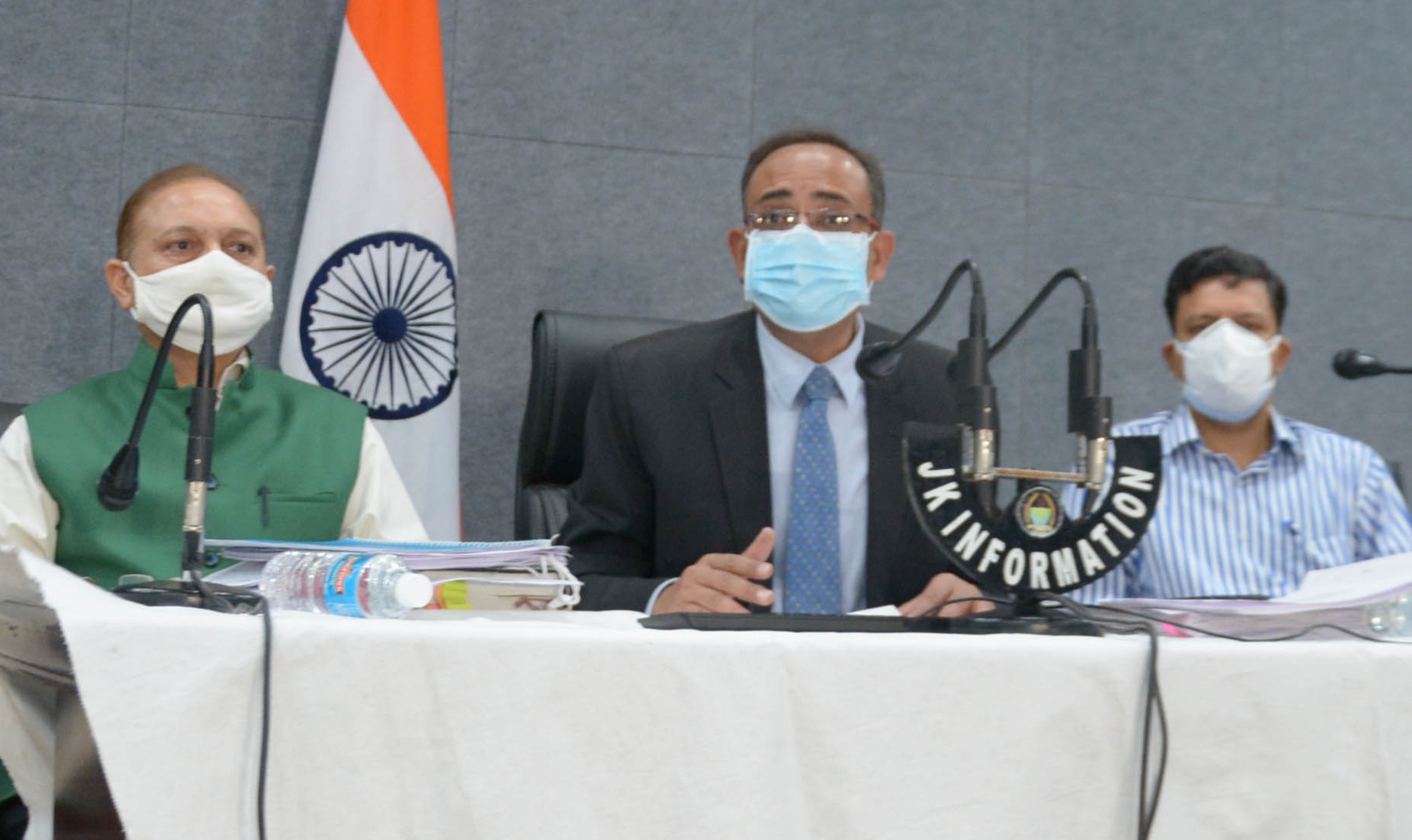
JAMMU: Government has repealed 11 Land Laws that existed in the erstwhile state of Jammu and Kashmir replacing the old, regressive, intrinsically contradictory and outdated laws with a set of modern, progressive and people friendly provisions. The new land laws will not only afford protection to over 90% of the land in J&K from being alienated to outsiders but will also help revamp the agriculture sector foster, rapid industrialization, aid economic growth and create jobs in J&K.
This was stated by the Principal Secretary, Information and government spokesman, Rohit Kansal at a press conference in Jammu today. Kansal made these comments while interacting with the media on a host of issues related to the UT of Jammu and Kashmir Reorganisation (Adaptation of State Laws) Fifth Order, 2020.
Elaborating, Kansal remarked that the repealed laws were made to serve the old agrarian based economy and were required to be modified for modern economic needs. Besides, they were beset with ambiguities, contradictions and redundancies and in many cases, were clearly regressive. For instance, A number of Laws had contradictions leading to scope for discretionary interpretation and rent seeking e.g. ‘Family’ was defined differently in different laws, provision of alienation and conversion of land were different in different Laws and the ceiling of 182 kanals fixed in Big Landed Estates Abolition Act was superseded by 100 standard kanals in the Agrarian Reforms act, 1976, yet both provisions continued to coexist creating contradiction and confusion.
The Prohibition of Conversion of Land and Alienation of Orchards Act, 1975 not only prohibited alienation of orchard lands; it surprisingly restricted creation of new orchards too. Similarly, the old Agrarian Reforms Act prohibited the selling of land distributed to tillers even after 44 years. The Right of Prior Purchase Act severely constrained an owner’s right to dispose off his own property.
The new Land Laws are modern and progressive even while affording adequate protection against alienation of land to outsiders. A number of protections have been built into the new land laws on similar lines as has been enacted in other states such as Himachal Pradesh and Uttarakhand. To begin with, no agricultural land can be transferred to any person from outside the UT of J&K but can only be sold to an agriculturist from within J&K. No land used for agricultural purpose can be used for any non-agricultural purpose. The terms agricultural land and agriculturist have been unambiguously defined to include not just agriculture but horticulture and allied agro-activities as well. Agriculturist has been defined as “.. a person who cultivates land personally in the UT of J&K..”. The safeguard on agricultural land alone would ensure that more than 90 percent of land in the UT which is an agricultural land remains protected and with the people of J&K.
The new provisions not only address the infirmities in the old set of laws but also provide for modern and enabling provisions to aid in the agricultural and industrial growth of the UT of J&K. While progressive provisions of the repealed laws have been retained by including them in the modified Land Revenue Act, new provisions have been added to modernize existing laws. There are now provisions for setting up of a Board of Revenue, Regional planning for regulating use of land, alienation and conversion, land lease, consolidation and Contract Farming. The Board of Revenue comprising senior officers will not only be the Developing Authority for preparing regional plans but can notify a scheme of consolidation of land holdings and also a scheme for restricting and regulating the fragmentation of agricultural land holdings to make agriculture viable.
FREQUENTLY ASKED QUESTIONS
Land Laws
UT of Jammu and Kashmir Reorganisation (Adaptation of State Laws) Fifth Order, 2020- a number of changes have been made in the existing laws, particularly, laws related to land management
11 old laws have been repealed and 4 major laws modified
Variety of reactions from political parties and others- “ J&K on sale”..” no protection in J&K like in other states”
Lot of misinformation or perhaps lack of clarity
What are the changes…Which Acts or laws repealed and why … what are the modifications… What are the safeguards?
First we need to understand the many of the Old/existing laws were actually a product of their times- were made to serve the old agrarian based economy.
They were outdated and suffered from ambiguities and contradictions
In many casesthese laws were clearly regressive.
There was lot of scope for discretionary interpretation and corruption
Some examples
➢ Ceiling of 182 kanals fixed in Big Landed Estates Abolition Act was superseded by 100 standard kanals in the Agrarian Reforms Act, 1976, yet both provisions continued to coexist creating contradiction and confusion.
➢ Similarly, the old Agrarian Reforms Act prohibited the selling of land distributed to tillers even after 44 years- this was leading to benami transactions and restricting next generations
➢ Tenancy ended under Agrarian Reforms Act, 1976 but Tenancy Stay of Ejectment Proceedings Act, 1966 continues
➢ The Prohibition of Conversion of Land and Alienation of Orchards Act, 1975 not only prohibited alienation of orchard lands; it surprisingly restricted creation of new orchards too
To plant a new orchard govt permission was needed
➢ The Right of Prior Purchase Act severely constrained an owner’s right to dispose of his own property- neighbors and other had rights to restrict- both in urban and rural properties
➢ ‘Family’ was defined differently in different laws,
➢ Provision of alienation and conversion of land were different in different Laws
➢ Need to make Land Laws simpler to avoid litigation, corruption and contradictions
SALIENT FEATURES OF AMENDMENTS
Which are the Laws repealed and why?
➢ 11 Laws repealed
They were either redundant or obsolete
However, progressive or relevant clauses of each of these Acts saved in the New Land Revenue Act. e.g. Sec 20 B of BLEA Act saved as 133 BB of Land Revenue Act- fuel or fodder lands
Relevant provisions of Consolidation of Holding Act 1962, Land Improvement Scheme 1972, Prevention of Fragmentation of Agricultural Holdings Act 1960- all saved as Section 23 of LR Act
Alienation of Land Act- all relevant provisions save under 133 A-H of Land Revenue Act
Definition of agriculture vastlyexpanded to include horticulture and allied agriculture activities
List of Repealed Laws
1.Common Lands (Regulation) Act 1956 A.D
2.Consolidation Of Holding Act, 1962 A.D.
3.Land Improvement Scheme Act 1972 A.D.
4.Prevention Of Fragmentation Of Agricultural Holdings Act 1960 A.D.
5.Alienation Of Land Act, 1995
6.Right Of Prior Purchase. Act, Svt. 1993 (1936 A.D)
7.The J&K Flood Plain Zones (Regulation And Development) Act, 2005 A.D.
8.The Jammu And Kashmir Underground Public Utilities (Acquisition Of Rights Of User In Land) Act, 2014
Tenancy (Stay Of Ejectment Proceedings) Act 1966 A.D
10.The Jammu And Kashmir Utilization Of Lands Act
11.Big Landed Estates Abolition Act 1950
Prohibition of Conversion of Land and Alienation of Orchards Act 1975 A.D.
Which Laws have been modified and what are the major changes
Agrarian Reforms Act, 1976
Land Revenue Act, Svt 1996 (1939 AD)
Lands Grants Act, 1960 AD
4.Jammu & Kashmir Development Act 1970
CONCERNS AND APPREHENSIONS
➢ Apprehension about Land Reforms are unfounded
The Agrarian Reforms Actstays very much in place- all that has been done is to abolish the Big Landed Estates Abolition Act which in any case had been superseded by a clearer and more precise Agrarian reform Act
The Agrarian reform Act not only stays- it has been made more progressive by simplifying complexprovisions which were only confusing issues leading to corruption and litigation.
➢ Disallows new resumption applications by landlords
➢ Permits sale by tillers after 15 years of ownership
➢ Time bound disposal of all pending/residual matters
➢ Agricultural land can be sold only to ‘Agriculturists’.
LAND REVENUE ACT 1996
Being developed as Land Code to avoid multiplicity of laws.
Contradictory provisions with Development Act removed.
Provisions made for setting up of Revenue Board; Regional Planning for regulating use of land; alienation and conversions.
Progressive provisions of repealed Acts incorporated.
Provides restrictions/procedure for sale and purchase of agricultural and non agricultural land.
Under new Land Laws Agricultural land can only be sold to agriculturists from within J&K
More than 90% land cannot be sold to outsiders
PROTECTIONS AND SAFEGUARDS
Sections 133 A-L
A number of protections have been built into the new land laws on similar lines as has been enacted in other states such as Himachal
Pradesh and Uttarakhand.
No agricultural land can be transferred to any person from outside the UT of J&K
Agricultural land but can only be sold to an agriculturist from within J&K.- even non agriculturists from within J&K barred
The terms agricultural land and agriculturist have been unambiguously defined to include not just agriculture but horticulture and allied agro-activities as well.
Most expansive definition, includes not just horticulture but poultry, Animal Husbandry, fallow land etc also
Agriculturist has been defined as “.. a person who cultivates land personally in the UT of J&K..”.
The safeguard on agricultural land alone would ensure that more than 90 percent of land in the UT which is an agricultural land remains protected and with the people of J&K.
➢ Board of Revenue headed by ACS Rank Officer to be main controlling body under the Act which will perform functions under the overall directions of Government.
➢ The Board of Revenue will not only be the Developing Authority for preparing regional plans but can notify a scheme of consolidation of land holdings and also a scheme for restricting and regulating the fragmentation of agricultural land holdings to make agriculture viable.
➢ Such Boards of Revenue exist in other states like Rajasthan, Bihar, Madhya Pradesh, Uttar Pradesh etc.
Jammu & Kashmir Development Act 1970
Passed in 1970; modified 5 times
Latest modifications- Provide for Master and Zonal development plans for identified local areas
Provision for Industrial Development through statutorily setting up Industrial development Corporation
Section 3
Strategic Areas
What does this mean?
Will Army have land wherever it wants and build wherever
and whatever it desires?
Section 3 has nothing to do with the transfer of any land to the Armed Forces. The transfer, both acquisition or requisitions, will continue to be governed by the existing law and the norms on the subject.
What does this section do?
It merely exempts the Armed forces from operation of such aspects of this Act so that the responsibility of ensuring that the construction activities are undertaken as per the Developmental Control Regulation of the Master Plan and all environmental safeguards are observed, has been delegated to the Armed Forces themselves.
Here too there are sufficient safeguards
Only applicable on own/legally acquired lands
Only on request from officer not below Corps Commander (Lt. Gen) Only for operational and training purposes
On the discretion of and after satisfaction of the Government- and on such conditions as may be required by the government
The main objective of the changes in the Laws
To provide to the people of J&K
a modernized land management system
which is people friendly and
shall bring in greater transparency in land management
The laws need to be seen in totality
As a major step towards the development and progress of J&K
SRINAGAR: The Deputy Mayor of Srinagar Municipal Corporation Parvaiz Qadri survived no confidence motion moved against him as the house was adjourned due to lack of quorum.
Two councilors Nasir Ahmad Naikoo and Danish Bhat, both from Zadibal area, had moved the No-Confidence motion against Parvaiz Qadri, who is also holding the chair of acting Mayor, since Junaid Matto, the former Mayor was ousted through a similar move.
The voting on the No-Confidence motion was be held today but due to lack of quorum it was not held.
There were only 40 Corporators present in the house, which was 13 short of required figure of 53, needed to hold procedings of the house.
Sheikh Imran was absent from the house and extended support to Parvez Qadri. Out of 40 Corporators, 17 from Congress and 23 others (PC, Ind, NC rebel etc) were present on the occasion.
Commissioner SMC adjourned the house due to lack of quorum.
The former Mayor Junaid Mattoo who was said to be behind the move was present in the house.
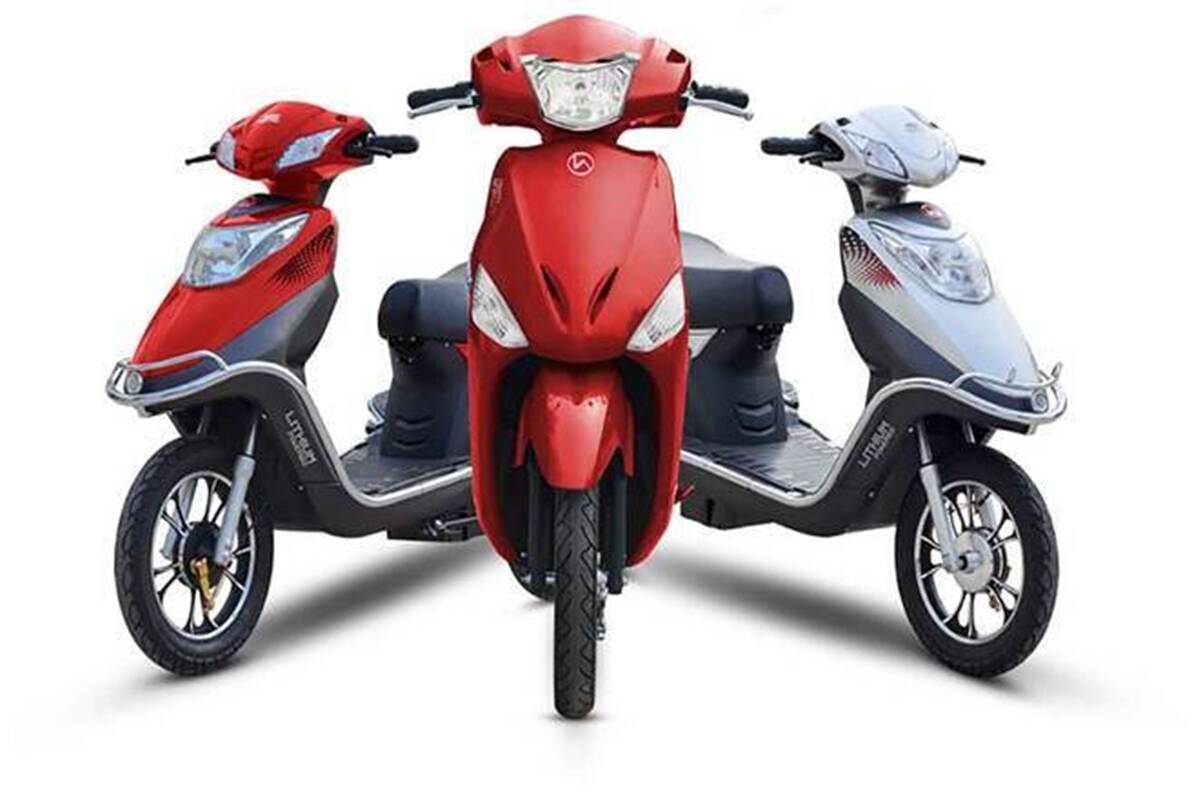
Mumbai: Hero Electric on Monday rolled out various benefits, including a cash discount of up to Rs 5,000, across its range of e-scooters under a limited period festive offer.
In addition, the customer can also choose from additional discounts of up to Rs 5,000 on exchange of any two-wheeler or avail interest-free finance at select locations, the company said in a release.
The festive offer, which is applicable on both lithium-ion and lead-acid range of e-scooters, can be availed till November 14 through any of the company’s over 500 dealerships across the country, Hero Electric said.
As part of this limited period festive offer, customers can now avail a flat cash discount of Rs 3,000 on purchase of lead-acid models and Rs 5,000 on select models, it said.
Besides, customers who buy under Hero Electric’s ongoing referral scheme avail an additional Rs 1, 000 worth of benefits, totalling Rs 6,000, said the release.
However, the newly launched Optima HX City Speed and Nyx HX City Speed, which have a limited time launch price of Rs 57,560 and Rs 63,990 respectively, are excluded from the offer, it said.
Hero Electric Chief Executive Officer Sohinder Gill said, “With a bouquet of festive offers for all our consumers, we are making it easier to own an electric vehicle at the very affordable prices.”
He added that this festive season, once again, the company wants to add to the joy of its customers by giving them an opportunity to buy their favourite e-scooter from the entire range of Hero Electric vehicles, including the five new bike variants at attractive prices.
The electric vehicles maker said it is offering a three-day return policy on all its e-bikes along with a cashback of up to Rs 2,000 on reference of other consumers. (AGENCIES)
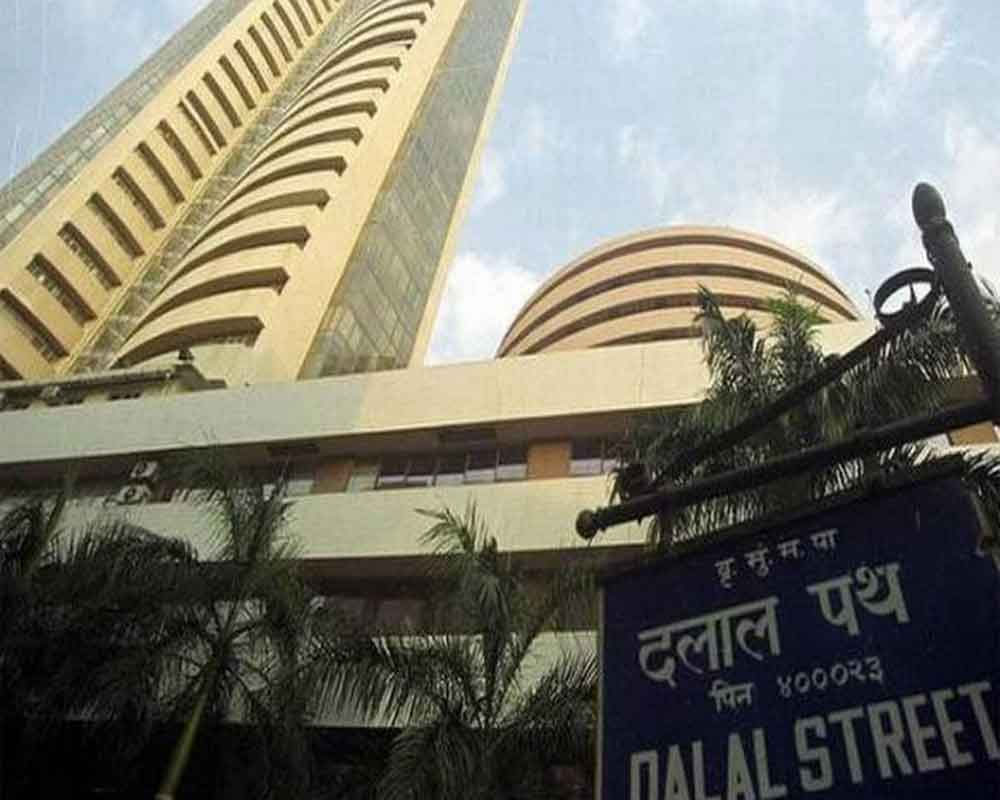
Mumbai: Equity benchmark Sensex ended 144 points higher on Monday, tracking strong buying sentiment in financial stocks amid positive cues from global markets.
After gyrating 633.11 points in a choppy session, the 30-share BSE index settled 143.51 points or 0.36 per cent higher at 39,757.58.
Similarly, the broader NSE Nifty advanced 26.75 points or 0.23 per cent to 11,669.15.
IndusInd Bank was the top gainer in the Sensex pack, rallying around 7 per cent, followed by ICICI Bank, Axis Bank, HDFC, Bharti Airtel, SBI, Bajaj Finance and HDFC Bank.
On the other hand, Reliance Industries (RIL) was the top laggard, crashing over 8 per cent. HCL Tech, TCS, Tata Steel, Asian Paints, Bajaj Auto, Maruti and UltraTech Cement also ended in the red.
According to experts, better-than-estimated Q2 performance from banks and strong auto sales numbers offered support to the market.
On the global front, bourses in Shanghai, Hong Kong, Seoul and Tokyo ended on a positive note.
Stock exchanges in Europe were also trading with significant gains in early deals.
Meanwhile, international oil benchmark Brent crude was trading 2.06 per cent lower at USD 37.16 per barrel.
In the forex market, the rupee depreciated 32 paise to end at 74.42 against the US dollar. (AGENCIES)
Mumbai: Nissan India on Monday announced the commencement of production of its B-segment SUV, Magnite, with the first vehicle rolling out from Chennai-based alliance plant Renault Nissan Automotive India Pvt Ltd (RNAIPL).
Unveiled on October 21, Nissan Magnite, which will be available in four trim models, is expected to be launched this month.
“RNAIPL is thrilled to commemorate the start of production of the all-new Nissan Magnite. We are also exploring opportunities to export this SUV,” said RNAIPL Managing Director and Chief Executive Officer Biju Balendran.
The model, which is powered by one-litre petrol engine, would compete with the likes of Kia Sonet, Maruti Vitara Brezza, Hyundai Venue, Tata Nexon and Mahindra XUV300.
Built on the philosophy of ‘Make in India, Make for the World’, Magnite marks the beginning of a new chapter in the Nissan NEXT strategy for the Indian and global markets, the company said in a release.
Nissan Motor India Managing Director Rakesh Srivastava said, “The start of production of the all-new Nissan Magnite is a proud moment for all of us. With an array of first-in-class and best-in-segment features, each grade walk has been curated to meet the aspirations of the discerning Indian customer.”
In line with Nissan’s philosophy of continuous innovation to deliver enriching experiences, Nissan’s renowned technologies are provided at every grade, including the X-TRONIC CVT, cruise control, 360-degree round view monitor, and Nissan Connect, he said.
Tested at the Japanese car maker’s world-class facility at Tochigi Proving Ground, the new SUV has been designed in Japan keeping in mind the requirements of the Indian customers.
The compact SUV would come with various features like 60-40 split folding rear seats, 336 litre luggage space, around view monitor, tyre pressure monitoring system, eight-inch infotainment display and over 50 connected features.
The new SUV would come with manual and automatic transmissions and various safety features like vehicle dynamic control (VDC) and traction control system.
The company, in the release, claimed Magnite to be one of the most fuel-efficient SUVs in the market at present. (AGENCIES)
NEW DELHI: Italian superbike maker Ducati on Monday said it has launched an all-new version of Multistrada 950 S in India priced at Rs 15.49 lakh (ex-showroom India).
The new Ducati Multistrada 950, which comes with a 937-cc engine, takes things to the next level with a series of improvements, designed to make it safer and even more enjoyable, the company said in a statement.
“The Multistrada family has gained immense popularity in India considering the growing popularity of long-distance touring and our idea behind the new Multistrada 950 S is to make Sports touring more accessible, allowing riders to explore the beautiful terrain that India has to offer,” Ducati India Managing Director Bipul Chandra said.
The electronics package in the model now includes cornering ABS, traction control, vehicle hold control (VHC) and the iconic semi-active skyhook suspension, which continuously adjusts fork and shock absorber, the company said. (AGENCIES)
New Delhi: Digital financial services firm Paytm on Monday said it has acquired around 70 lakh Postpaid micro-credit service users and aims to close the current financial year with 1.5 crore customers.
The company is offering Paytm Postpaid service in partnership with two non-banking financial services companies (NBFCs) with an instant credit line for various payments to Paytm app users.
“The company has achieved 7 million users for the Postpaid service and is on its way to registering a total of 15 million users by the end of the current financial year,” Paytm said in a statement.
The financial technology firm said that it is now expanding its partnership with the developer’s community in the company’s new Android mini-app store.
“This will potentially benefit businesses as a consumer will have an additional option to opt for buy now and pay later service. In preparation for the upcoming festive season, Paytm Postpaid is also in the process of integration with over 2 lakh Paytm’s Android POS devices powering shoppers to buy on credit and benefitting the retailers across the country,” the statement said.
Paytm said that the Postpaid service is already available for recharges and bill payments on Paytm, online payments on internet apps and also for buying home essentials from kirana stores.
“We aim to expand our services to as many businesses that enable consumers to benefit from the convenience of buying now and pay later,” Paytm Lending CEO Bhavesh Gupta said.
The company offers credit limits in three slabs ranging between Rs 20,000 to Rs 1 lakh per month. (AGENCIES)
New Delhi: German luxury carmaker BMW on Monday said it has launched mid-sized sports activity vehicle (SAV) X3 M in India priced at Rs 99.9 lakh (ex-showroom).
The model is designed to offer standout performance characteristics, personified with squarely geared features to meet the functional requirements of a high-performance car, the automaker said in a statement.
The BMW X3 M comes as a completely built-up unit (CBU), it added.
“The introduction of a high-performance mid-size SAV will further strengthen our presence in the segment & entice new driving experiences,” BMW Group India President Vikram Pawah said.
Uniqueness of the first-ever BMW X3 M lies in a newly developed powerful engine and sophisticated chassis technology, he added.
“This vehicle, to the very last detail, offers a unique combination of luxury and sporting dynamics, providing an exciting, safe and novel driving experience to our customers. The new SAV is equipped with world-class features, evidently distinguishing it from others in the segment,” Pawah noted.
The model comes with a six-cylinder petrol engine which generates maximum output of 480 hp and goes from 0-100 km/h in 4.2 seconds, with a top speed of 250 km/h, the company said. (agencies)