

Ashwani Mahajan
Goods and Services Tax (GST) was introduced in India from the month of July 2017, subsuming almost all indirect taxes of Centre and States. Significantly, total revenue from this tax is shared between the Centre and States equally. Over and above this, half of GST revenue going to states, based on the recommendations of the Finance Commission, States get a share in all taxes of the Union. Currently this share is 42 percent. Thus we can say that 71 percent of the total GST receipts go to the states. At the time of implementation of the GST system, there were apprehensions among the States that their revenue could fall in the new system; hence many states were opposed to the implementation of the GST system. In such a situation, the then Union Finance Minister Arun Jaitley suggested a formula, according to which the States were not only assured of the revenue received from their taxes subsumed under GST, but they were also guaranteed a 14 percent increase every year. Such an arrangement was to last for 5 years.
The Central Government had expected that GST being a goods tax reform, will not only increase efficiency in tax collection, but will also prevent tax evasion. GST being a value added tax will also eliminate the cascading effect on taxes. This means that on the one hand the tax revenue will increase, on the other hand consumers will also benefit from this system, because it will also reduce the prices. Though, GST took some time to settle down, and in the meanwhile, the total receipts from GST kept on fluctuating. While the Government had expected the total receipts from GST to be at least Rs 1 lakh crore every month, GST receipts could reach 1 lakh crore or more in only 9 months in the 30 months of GST up to December 2019. One of the main reasons for this was lower than expected GDP growth in the country, during that period and teething troubles of GST. Naturally due to this, the burden on the Central Government as per their promise to compensate the States kept increasing. Significantly, the Center decided to make up for the loss of the states, by imposing a ‘Compensation Cess’ on GST. This compensation was Rs 41146 crore in the year 2017-18 and Rs 69275 crore in 2018-19. Although the average receipts of GST stood at around Rs 1 lakh crore in the year 2019-20, the amount of compensation by the States was more than that of last year.
While balance of the previous year was still pending, that from the very first month of the new financial year 2020-21, the GST receipts dipped down due to the lockdown caused by COVID-19 pandemic; and we see that the total receipts of GST during COVID-19 period were extremely low Rs. 32172 crore, Rs 62152 crores, Rs 90917 crores, Rs 87422, Rs 86449 crores and Rs 95480 crores in the months of April, May, June, July, August, and September respectively. Though GST revenue is returning back to track, as the process of unlock proceeds, however, despite the loss of revenue, the liability of Centre continues to pile up due to centre’s pledge to make up for any loss of revenue, with 14 percent guaranteed growth. In the current scenario, since the centre’s revenue has also shrunk, the Central Government is also finding itself unable to fulfil this liability.
Under these circumstances, a meeting of the GST Council was held on October 12, 2020, but a consensus could not be reached on the issue. Significantly, there will be a shortfall of revenue of Rs. 2.35 lakh crore in the current financial year. The Central Government has suggested to the States that they can start borrowing, to meet this shortfall; but no consensus could be reached in GST Council in this matter.
The Central Government has given two options to the State Governments. First option is that, the State Governments will borrow Rs 1.1 lakh crore to compensate for the loss of this revenue and both its principal and interest will be repaid from future ‘Compensation Cess’ levied on luxury goods and sin goods like cigarettes etc. The other option is that the State Governments will borrow the entire shortfall of Rs 2.35 lakh crore, but in that case only the principal will be paid fully from the cess, but states will have to bear a significant part of the interest liabilities themselves.
Finance Minister Nirmala Sitharaman, who is also the ex-officio chairperson of the GST Council, has said that most states are ready to start borrowing. So although no consensus could be reached, the Central Government says that if a State Government wants to start the process of borrowing; neither the Central Government nor the GST Council can stop it. The indications coming from GST Council show that 21 States, where the Bharatiya Janata Party or their coalition is in the Government, are ready to move forward by accepting the loan option of Rs 1.1 lakh crore, while the remaining 10 States have rejected the option. The argument of Finance Ministers of the opposition Governments is that this type of borrowings option is illegal as it will push the revenue sharing arrangements beyond 5 years, which would be against the GST Act. Finance Ministers of the opposition parties’ Governments also say that such decisions should be made in the GST Council and the same would be appropriate for cooperative federalism too.
Significantly, 21 states which are ready to borrow, have also agreed to only the first option. But the finance ministers of opposition parties’ Governments are not ready for that either. It has to be understood that in the present era, when revenue of the Central Government has reached the minimum level, then it is not practical to expect from the Central Government that the revenue of the States could be compensated immediately. As such, in the past also, the compensation of States’ share of GST had been done through ‘Compensation Cess’. In such a situation, since both the interest and the principal of the loans taken to compensate the revenue of the States are to be repaid from the same cess, the states will not suffer any loss ultimately.
Amid growing disagreement between the Center and the States, the Central Government has made an announcement, according to which a 50-year interest free loan of Rs 12 thousand crore has been provided to the States, which they can use to increase capital expenditure in the States. The situation arising due to the lockdown due to COVID-19 and adverse effects on the economy will have to be faced by all together. The Central Government has given a good option to the states to compensate the revenue, which has also been accepted by many states. It may be hoped that a solution, acceptable to all, maybe reached in days to come.
(The author is Associate Professor, Department of Economics)
feedbackexcelsior@gmail.com
GST discord

The gallant fight against COVID-19
Ashwani Kumar Chrungoo
India has come a long way since March 2020, when the first Lockdown was announced due to COVID- 19 global pendamic. The statistics show a great and remarkable achievement in the month of October 2020, seven months after the initial lockdown.
As per the latest official statistics released a few days ago, India’s COVID-19 caseload rose to 73,70,468 with 63,371 new infections being reported in a day, while the number of people who have recuperated from the disease crossed 64 lakh pushing the recovery rate to 88 per cent, according to the Health Ministry data update. The coronavirus death toll climbed to 1,12,161 with the virus claiming 895 lives in a span of 24 hours, the data updated showed (latest figures).
For eight days in a row, the active cases of COVID-19 remained below 9 lakh. There are 8,04,528 active cases of coronavirus infection in the country which comprise 10 per cent of the total caseload, while the recoveries have surged to 64,53,779, the data stated. The COVID-19 case fatality rate due COVID-19 was recorded at 1.52 per cent.
India continues to have one of the lowest COVID-19 deaths per million population globally, currently pegged at 83 which was also confirmed by the PM, Narendra Modi in his latest broadcast to the nation on 20th Oct. 2019. India’s COVID-19 tally had crossed the 20-lakh mark on August 7, 30 lakh on August 23 and 40 lakh on September 5. It went past 50 lakh on September 16, 60 lakh on September 28 and crossed 70 lakh on October 11.
According to the ICMR, a cumulative total of 9,22,54,927 samples have been tested up to October 15, with 10,28,622 samples being tested on Thursday. While the total infections including all kinds of patients throughout India touched the figure of 74 lakhs, the recovery rate is beyond imagination, 65 lakhs approx, which is almost 88% of the total patients so far. The mortality rate is a static 1.5% and the rest, the active patients as on date constitute around 10% of the total patient population (which is well below 10 lakhs).
These figures are indeed encouraging. The Indian Council of Medical Research, Ministry of Health, Government of India and the Governments of States and UTs also deserve kudos for bringing the situation under control. Barring three to four states like Maharashtra, Tamil Nadu, West Bengal and Kerala, the overall situation has been brought to the managerial levels. Thanks also to the CoronaWarriors who extended all sort of help to the health workers, doctors and the medical mechanism to fight the dreaded pendemic.
Though the situation seems to have been brought under control yet the guidelines regarding washing of hands, use of sanitizers & facemasks and physical distancing need to be adhered to strictly without any fail.
There are opportunities and probabilities to have a couple of Indian vaccines ready by the first quarter of the next year. The foreign options particularly pertaining to Russia, UK, Italy and America are also in the run. However, the worrying factor remains the changing mutation of the virus and the winter season ahead.
Therefore, the issue of building and strengthening body immune system remains relevant in addition to using hot and warm water during the winter season. The Ayush Ministry-GoI guidelines for leading a healthy life are very helpful indeed. It includes use of lemon, tulsi, turmeric, ginger and amla on a routine basis besides doing the regular exercise, walk and yoga.
There is undoubtedly a worry or a concern about the future in the minds of the people and also about the consequences of a complete Unlock in due course. The reality is that the world is learning the new ways and means to move ahead in this situation of extreme uncertainty, so is India. There is but a positive sign that has played it’s part regarding India, viz the high level of immunity among the large population of India.
The unlock process is an important obligation of the Government to move towards an economic surge leading to “back to the business” national agenda. With some more necessary precautions in mind, the schools and colleges are also being thought of regularised. The travel and tour may gain momentum in a couple of months provided there is no further surge in infections beyond managerial levels.
The good news is that the Ayushman Bharat and the JK Health Scheme besides guaranteeing the health insurance to an individual and family will also pump in a lot of money in the health sector at an all India level. The insurance sector will also get a great investment and encouragement to be a part of the universal health scheme in which the premium will be paid solely by the Government. Coverage of COVID-19 in the scheme is the most pragmatic measure that should receive appreciation.
Age, Blood pressure, diabetes, asthma, kidney problems and heart issues are the major concerns while fighting the dreaded pendamic. The fraternity of doctors and medical professionals has been the other worrying factor which has become the easiest target of the disease. Their gallant fight and service will not go down in the history of medical science unsung. They deserve the well-deserved appreciation and recognition.
The teaching faculty has also done remarkably well keeping in mind the career and future of students. It is astonishing to note that the whole nation is feeling at home as on date regarding the virtual class-rooms and providing facilities of examinations online. This all was achieved without any such particular education and training. This speaks highly positive about the teaching faculty and the administration of education, indeed.
There are other great issues that need mention so far as the struggle and achievements during the tumultuous period of the last seven months are concerned. It was a novel experience to live a life of trials and turbulence that has literally no end.
The mankind has definitely withstood the test of time, though the catastrophe was human built. India, as a nation in general, and the UT of Jammu and Kashmir in particular did what they could with limited health resources. An immediate need that beckons the Governments to rise to the occasion is the upliftment of the health infrastructure to the level of the world health standards and meaning for the common citizens. That is the litmus test of a truly welfare and benevolent state.
(Feedback: ashwanikc2012@gmail.com)
People’s responsibility to save environment
Anuj Kumar Verma
I was, today, just going through the past history of India to study origin of the famous “Chipko – Save Trees Movement” in India. I was swayed away with a strong wave of emotions when I came to know about supreme sacrifice made by Amrita Devi and her three daughters alongwith 359 Bishnoi caste people at village Khejadi in Jodhpur on September 10, 1730 A.D. to save cutting of green Khejri (Prosopis Cineraria) trees by the royal forces of Maharaja Abhay Singh, ruler of Marwar (Jodhpur) state. Amrita Devi gave this slogan – “If a tree is saved even at the cost of one’s head, it’s worth it”. How sensitive, these great people were about environment and its protection. Even in Jammu and Kashmir, we find saints like Baba Nund Reshi, Lal Ded who dedicated their lives for cause of nature and humanity. We had a golden past when water springs in Kashmir valley and many parts of Jammu province were called “Nag” and revered by believers of all religions. Water bodies like water bowlis and rivers were thought to be very sacred.
But, where do we stand today? In J&K State, now a Union Territory, during last three decades of insurgency, we witnessed looting of forests often with criminal connivance of moles in the State administration. Timber smuggling needs to be stopped, at any cost. Already, much losses have been made to our environment by timber smugglers, taking benefit of unrest in this part of the country. People and the environment groups need to keep a close watch on cutting of trees during construction of roads, flyovers and highway widening projects. Unnecessary felling of trees should be resisted and bought into knowledge of the Government. People need to change their mindsets and raise their voice against encroachments made on forest or State lands. Unauthorised constructions and illegal encroachments have pushed lakes such as the Dal, the Anchar, the Nigeen, and the Wular to the brink of extinction. Even bunds of Jehlum river are not spared by those moneyed and keeping influence in power corridors, a number of multi storey buildings have come into existence during last two decades on banks of river Jehlum, surprisingly, showing thumbs to enforcement agencies. Flood channels are either encroached or narrowed down. We haven’t learnt lessons from floods in Kashmir valley during year 2014, when more than half of the Kashmir valley remained submerged under flood water. Same is the situation in Jammu, where unauthorised colonies have emerged on banks of Surya putri river Tawi. Parts of forest and UT land areas in Belicharana, Sunjwah, Bhatindi, Sidhra, Bantalab, Nagrota, Marh, Janipur also, reportedly, stand encroached by people with help of few political leaders (law makers) and enforcement agencies. Reports have been coming of sewage nullahs falling in river Jehlum, Tawi, Devak, Basanter and Dal Lake. All household wastes and garbage from nearby colonies is thrown in such water bodies during night hours. A number of Tourist houseboats in Dal lake and families living on houseboats in river Jehlum are also badly polluting Dal Lake as well as river Jehlum.
We have failed to make much improvement in the situation because of lack of perspective approach and half hearted efforts put in by the responsible agencies and an apathetic approach adopted by people, themselves, at large. Construction of big bunglows, resorts and hotels was allowed, violating all environment norms, on hilltops in Baramulla, Anantnag and even Srinagar district, during last one and half decades. Reportedly, a number of unauthorised brick kilns operate in brazen violation of over 12 environmental and other laws of the land in Budgam districts. These kilns wreaked havoc with the land and local water bodies, causing major ruin of agriculture and horticulture. Our age old water harvesting ponds are either converted into plain areas with construction of parks or buildings or not in use because of surface water leakage and silting problems. Though efforts are being made by the Government agencies since last four five years to mark and free encroached ponds, but much efforts and public cooperation is imperative in this grave issue.
During last two decades, we all witnessed a big number of hazardous industries manufacturing chemical pesticides, fertilizers, weedicides, herbicides, calcium carbonate, mosquito repellent coils etc especially in Samba district. Sale of many of these chemical products is banned in our neighbouring states of Punjab and Haryana. These, not only, cause air pollution but also pollute our water bodies. Reports are coming that manufacturing of flavoured drinks and packaged water by big F&B industries are depleting levels of ground water, especially in Samba district, which is already suffering from scarcity of water supply to many of its dry land areas. Many cement plants of big business houses are operating close to hilly areas. Industrialization is necessary for economic growth of a region and a country; But, this is high time we think, implement and promote only green and non polluting industry. We have a habit to blame Government for every such folly, but we also need to share responsibility and spare some time to deliberate upon such serious issues causing threat to nature as well as human existence.
When most among us start thinking like the brave Amrita Devi & her daughters, Baba Nund Reshi and Lal Ded, the Government agencies shall also be under pressure in implementing all environment laws and policies, in full letter and spirit. We all have to realise this fact that all government functionaries are from amongst us only, many of them our family members, our friends & relatives. When we all make up our mind to think & adopt green policies only; to work for restoration of degraded environment, to remain vigilful in our vicnity areas against environmental destruction; Much change shall be visible shortly in our environment.
feedbackexcelsior@gmail.com
Increase Import Taxes to Create Demand
Bharat Jhunjhunwala
Many institutions had assessed in June that our economy will suffer a contraction of five percent. Now the same institutions are saying that the economy will suffer a contraction of ten percent. This contraction is likely to get worse in the coming months because the Corona Pandemic is showing no signs of abating. We may face a second wave in the winter months if the experience of resurgence of the Pandemic in Europe is any guide. In this gloomy scenario, the Government is mighty pleased that a huge 75 percent increase in sales of tractors, about 18 percent increase in the sales of cars and 12 percent increase in the sales of motorcycles has taken place in September 2020 as compared to the same month in the previous year. Question is this: how come the purchase of tractors and cars is increasing when the GDP is contracting? My assessment is that farmers are making “distress” purchases of tractors due to the shortage of labour which has been caused by the failure of the Government to encourage migrant workers to their host states. Similarly, the unavailability of public transport like bus, metro and local trains have pushed commuters to make distress purchases of cars and motorcycles. These purchases should not be misconstrued as indicators of revival of the economy.
The Government, however, is aware of the contraction of GDP. It has encouraged banks to give loans to consumers and businesspersons aggressively to generate demand in the market. There is a basic difference in the loans taken by businesspersons and consumers. Loans taken by investors are used for setting up factories, establishing shops or buying trucks. The businessperson and the nation generate additional income from these investments; and she could pay the interest and repay the principal amount from that additional income. Say, a businessperson took a loan of Rs 10 lakh, earned an additional income of Rs 3 lakhs and used this to repay the interest of Rs 1 lakh, principal of Rs 1 lakh and she may still have left Rs 1 lakh for making new investment in the next year. Her total expenditure will increase from 10 lakh this year to 11 lakhs in the next year. The situation of a consumer stands on an entirely different footing because she is not likely to obtain any additional income from buying, say, a fridge. Say, she took a loan of Rs 10 lakh. She would have to pay interest of Rs 1 lakh, and principal of Rs 1 lakh and will have left lesser Rs 2 lakh for making new purchases in the next year. Her expenditure will decrease from 10 lakh this year to Rs 8 lakhs next year. The income of the common person is already under stress. They should not invite further decrease in the same by taking a consumption loan. The economy may show some immediate benefits from disbursals of such loans just as steroids help increase the milk yield in cows immediately but this will only lead to greater problems later.
The second method of increasing demand in the market is for the Government to borrow and transfer some amount directly in the bank accounts of the people who can use this windfall to buy goods from the market. However, the Government will have to repay the loan and for this purpose it will have to impose additional taxes or print notes. The imposition of these additional taxes will lead to reduction in income in hands of the people and to lower demand in the next year. Printing of notes will lead to an increase in the prices and again lead to reduced demand in the next year. These are, therefore, band-aid type of temporary fixes that will only push the economy deeper into the pit.
The third method of raising money for making the direct transfers is for the Government to increase import duties. The share of import taxes in the revenues of the Government has declined from 18 percent about six years ago to 12 percent today. The Government has actively promoted imports by reducing import duties. Note that we have committed in the World Trade Organization (WTO) that we will not increase the average import duties beyond 48 percent. The actual rate today is less than 20 percent. Therefore, we face no roadblock from the WTO in doubling the import duties. The Government can increase the import duties, say, from present average 20 to 40 percent. The Government was obtaining revenue of 170 lakh crores from import duties in a year till recently. Doubling of the import duties would lead to a reduction in the imports hence the revenue raised will be less than double. I reckon the additional revenue generated will be about 150 lakh crores. This money can be used to transfer Rs 1100 per year in the bank accounts of the 135 crore citizens or Rs 5,500 families per year. People can buy goods in the market from this money. Such a payment will not lead to additional burden of interest in the ensuing years. It will also not lead to increase supply of printed notes and inflation. Indeed, there will be price rise in the imported goods. But even this may be short lived until domestic production picks up to supply cheaper-than-imported goods. The great benefit of this approach will be that imported goods will become expensive, domestic goods will become cheaper in comparison, domestic industries will revive and employment will be generated. The income earned by workers will establish a fortuitous cycle of demand generation and income.
A caveat is necessary here. We had high rates of import duties before the economic reforms were unleashed in 1991. That had not led to increase in domestic production before 1991. One may ask how, then, will the imposition of high import duties lead to increase in domestic production now? The difference today is that our businesspersons have since been exposed to the international market and have acquired the capacity to produce goods of international standards.
The Corona Pandemic is here to stay for some time. Short term fixes like disbursals of loans will not help in this situation. But the Government’s hands are tied. The only solution is to make a huge increase in import taxes and simultaneously implement policies that encourage businesspersons to adopt advanced technologies and make good quality goods at low cost.
(The author is formerly Professor of Economics at IIM Bengaluru)
feedbackexcelsior@gmail.com
Sanjiv Nandan Sahai, Secretary (Power), GoI, inaugurating a renovated unit of Salal Power Station.
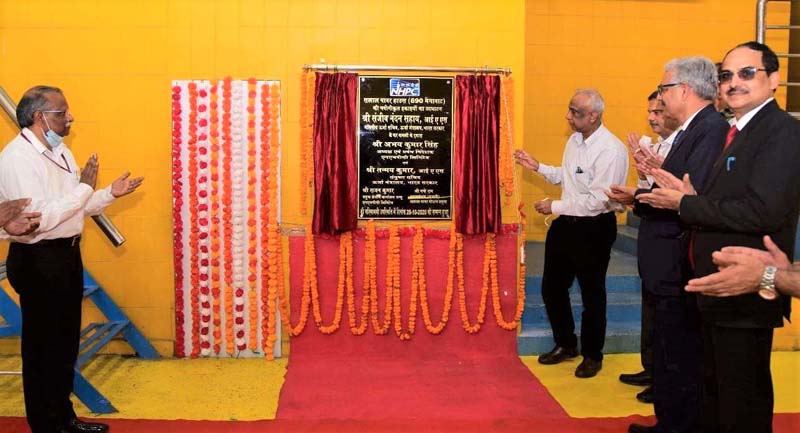
Sanjiv Nandan Sahai, Secretary (Power), GoI, inaugurating a renovated unit of Salal Power Station.
Ill-fated vehicle after accident in Kana Batti area of district Ramban. -Excelsior/Pervaiz
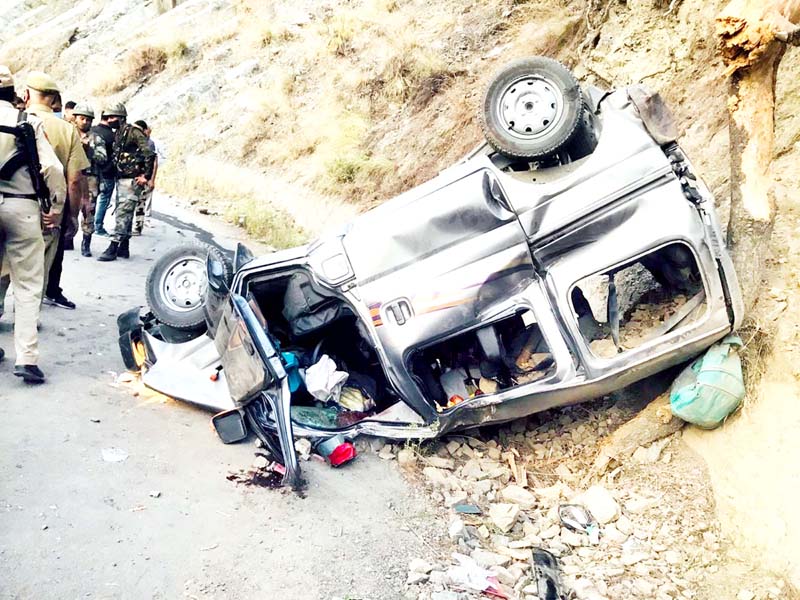
Ill-fated vehicle after accident in Kana Batti area of district Ramban. -Excelsior/Pervaiz
Employees Joint Action Committee members staging protest in Jammu on Thursday. -Excelsior/Rakesh
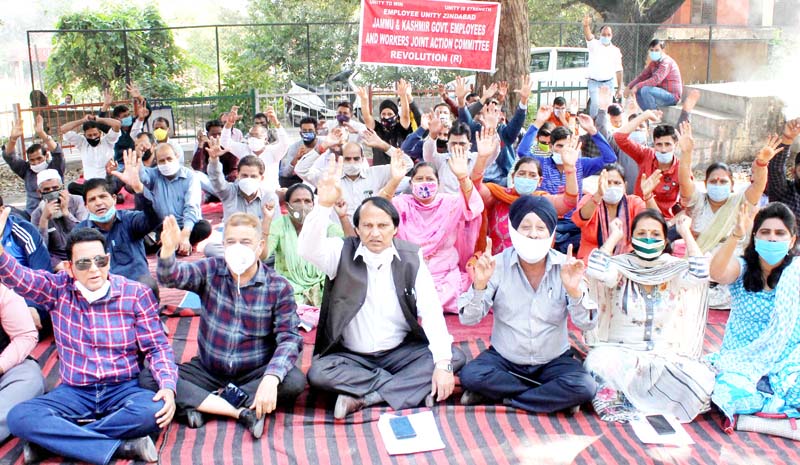
Employees Joint Action Committee members staging protest in Jammu on Thursday. -Excelsior/Rakesh
Former Minister Chander Parkash Ganga inaugurating LG showroom at Bari-Brahmana.-Excelsior/Rakesh
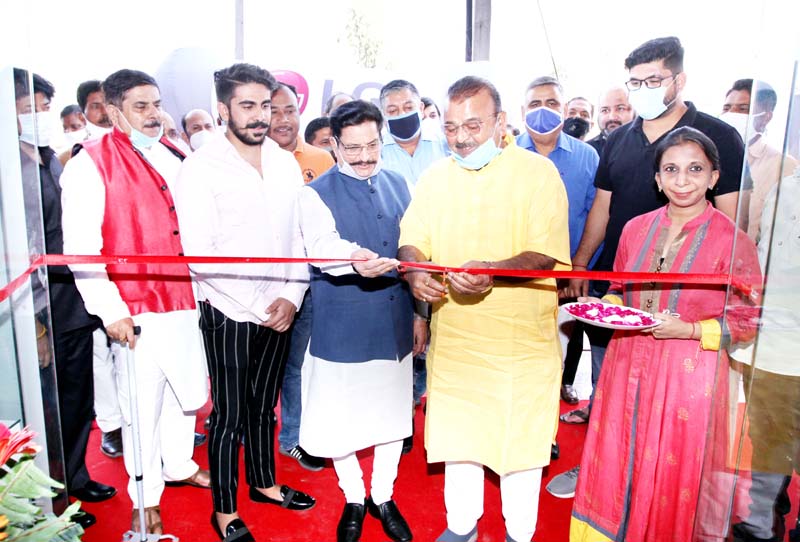
Former Minister Chander Parkash Ganga inaugurating LG showroom at Bari-Brahmana.-Excelsior/Rakesh
NZIEA Srinagar Division members during a meeting at Jammu on Thursday.
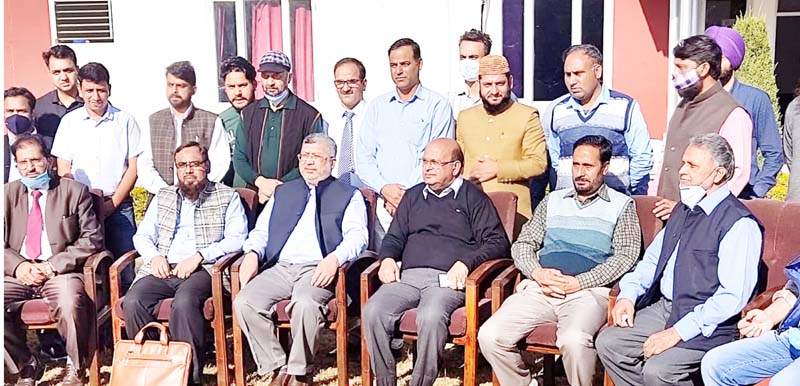
NZIEA Srinagar Division members during a meeting at Jammu on Thursday.
Police restricting Apni Party leaders and activists from taking out a rally towards Dogra Chowk in Jammu.
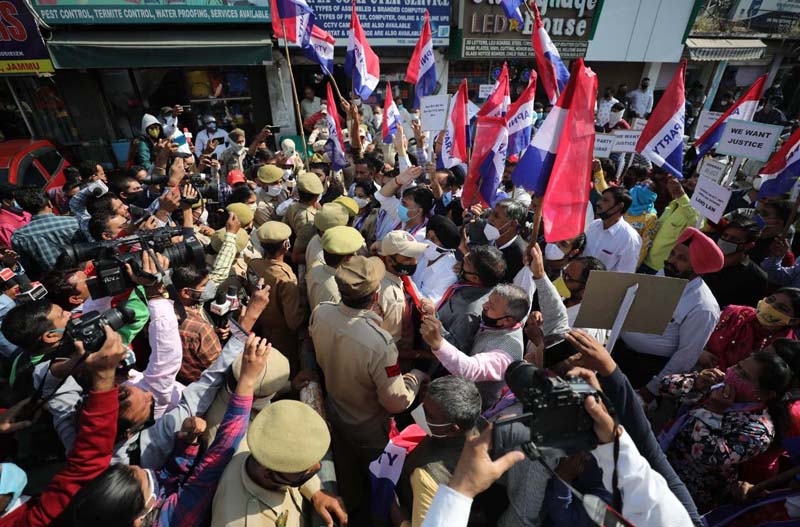
Police restricting Apni Party leaders and activists from taking out a rally towards Dogra Chowk in Jammu.