Monday, May 4, 2026
E-Paper
Home Blog Page 31

Ukraine is hitting oil facilities deep inside Russia. Soaring fuel prices could blunt impact

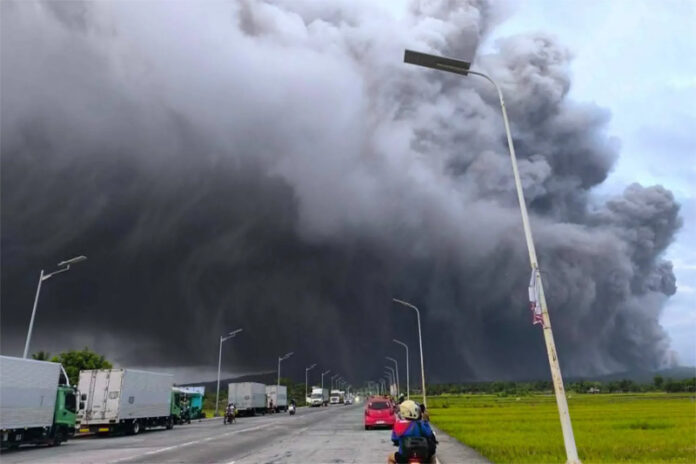
MOSCOW, May 2: Ukrainian drones are flying deep into Russia to strike oil facilities, sending up plumes of smoke that can be seen from space and bringing toxic rain to tourist destinations on the Black Sea.

The attacks are aimed at slashing Moscow’s oil exports, a key source of funding for its grinding invasion of Ukraine. But the economic impact is so far unclear, as the rise in oil prices from the Iran war, and a related easing of US sanctions, have helped replenish the Kremlin’s coffers.

Still, the range of the attacks and their environmental impact is bringing the war home to ordinary Russians far from the front lines.


Oil is spilling onto the street

———————————–

Ukrainian drones have hit the oil refinery and export terminal in the Black Sea town of Tuapse on four occasions in just over two weeks, sparking fires that prompted local evacuations and sent up massive plumes of smoke. The town is roughly 450 kilometres (280 miles) from the front lines.

In a video posted by local Gov. Veniamin Kondratyev after the third attack on April 18, an emergency official said boiling oil products had spilt onto the street, damaging cars.

Ukraine said Thursday that it hit an oil pumping station in Russia’s Perm region, more than 1,500 kilometres (900 miles) from Ukraine, two days in a row. Russian media reported the attacks, though Perm Gov. Dmitry Makhonin said only that drones had hit industrial facilities.

Ust-Luga on the Baltic Sea, one of Russia’s largest oil and gas export terminals, was hit three times in the space of a week in late March. It is more than 800 kilometres (500 miles) away from Ukraine.

In a broadcast several weeks later, regional Gov. Alexander Drozdenko declared that the area around St. Petersburg, Russia’s second largest city, was a “front-line region” due to aerial threats.


Ukraine says the attacks have cost Russia billions

———————————————————-

Ukraine’s President Volodymyr Zelenskyy has compared such strikes to the international sanctions on Russia. They are seen as even more crucial now that Moscow is collecting windfall profits from the global energy crisis linked to Iran’s closure of the Strait of Hormuz.

Zelenskyy said Friday that Russia has lost at least USD 7 billion since the start of the year as a direct result of attacks on its oil sector. Earlier in the week, he said Ukrainian intelligence indicates a drop in exports from key oil ports such as Ust-Luga and Primorsk.

Drone strikes have also disrupted Russia’s oil refining capacities, while sanctions make it difficult to acquire replacement parts, experts say.

But the full economic impact remains unclear as Russia benefits from the Mideast crisis.

Russian crude and oil product exports rose by 320,000 barrels per day month-on-month to hit 7.1 million in March, the International Energy Agency said. Rising prices meant that oil export revenues almost doubled, from USD 9.7 billion to USD 19 billion. It is unclear whether April’s strikes will disrupt that trend.

“US action against Iran has saved both the Russian oil sector and the federal budget from a crisis that was clearly developing in late February,” said Chris Weafer, CEO of Macro-Advisory Ltd. Consultancy.

The damage to Russia’s oil infrastructure has meanwhile been far less significant than the massive explosions would suggest, he said.

“If you hit an oil tank, particularly an oil tank that’s not full, the vapours ignite, and you get the flames. So it looks very spectacular.” But that only delays deliveries by a couple of days, he said.

“It’s much less damaging than hitting the pump stations or the compressors or the loading infrastructure. And that appears to be well protected. The tanks are not.”


Long-range drones stretch Russia’s defences

—————————————————-

The ability to strike key infrastructure deep inside Russia has highlighted Ukraine’s growing military capabilities and put pressure on Moscow’s overstretched air defences. It has also forced more Russians to confront the consequences of a war their government claims to be winning.

Ukraine’s Defence Ministry says its forces have more than doubled the range of their deep-strike capabilities since Russia’s full-scale invasion in February 2022. The increased range also allows drones to attack locations from different directions, complicating countermeasures.

“Drone attacks have so far been a very successful case of leveraging simple technologies and domestically assembled technology to attack Russia in places that, at the start of the war, they just would have never expected to be attacked,” said Marcel Plichta, a PhD candidate in the School of International Relations at the University of St Andrews.

“This capability just didn’t exist” four years ago, he said.


There could be long-term consequences

———————————————–

Russian officials are usually reluctant to comment on deep strikes.

But the Tuapse attacks and the images that followed gained traction in Russian media. Russian President Vladimir Putin warned of “serious environmental consequences” while insisting things were under control.

Officials warned that high levels of benzene, a carcinogen found in oil products, had been recorded in the air while fires burned and urged residents to limit time outdoors.

Residents also widely reported “black rain,” oily droplets falling on their skin and clothes. Local news outlets posted images of stray dogs and cats with their coats stained grey. Oil spills along the coastline have coated birds and fish, and Russian media recently circulated images of beached dolphins.

Those images are shocking to Russians accustomed to vacationing on the Black Sea coast.

Vladimir Slivyak, co-chairman of the Russian environmental group Ecodefense, said there could be long-term consequences for human health and the region’s ecosystem.

“There is a lot of oil in the sea,” he said. “In the next few years, every storm will bring more oil pollution onto the coast.”

There has not yet been a public backlash to the strikes, as authorities wage a crackdown on dissent. But that could change as the damage spreads.

“I think a lot of people understand that there is a very big difference between what Putin says and what regional authorities are saying, and what’s really going on,” Slivyak said. (AP)

India’s digitalisation reforms improved productivity in MSMEs: IMF paper

WASHINGTON, May 2: India’s digitalisation reforms in public administration have improved productivity in micro, small and medium enterprises (MSMEs) in states that have embraced such changes, the International Monetary Fund (IMF) said in a working paper.

The authors compared the productivity of unincorporated manufacturing firms in states that have undertaken more digitalisation reforms with those having fewer such changes in public administration.

“We find that states that undertake more public administration digitalisation experience higher productivity growth and lower productivity dispersion among firms,” economists Somnath Sharma and Kenichi Ueda.

MSMEs contribute around 35 per cent of manufacturing output in India, employ around 110 million workers and contribute about 45 per cent of the overall exports from India.

Most MSMEs are not formally registered as companies under India’s Companies Act of 1956 and only a few studies have been done on the impact of the business environment reforms on these unincorporated enterprises.

The working paper said that the business environment reforms undertaken in India between 2010-11 and 2014-15 were mainly through digitalisation of business-related public administration.

It observed that the cost of dealing with bureaucratic hurdles is likely negligible for big firms, but may be sizeable for small firms.

“Thus, these reforms can be considered to help improve the productivities of firms, in particular, small-and micro-manufacturing enterprises,” the economists said.

However, the working paper also found that microenterprises were unlikely to move or expand their businesses to other states that underwent more reforms.

“We can, thus, assume no direct spillover effects across different states, except for potential arbitrageurs if prices vary due to reforms,” it said.

The reforms were part of a broader effort to improve the business climate.

In 2014, states agreed to a “98-point action plan” aimed at simplifying regulations and expanding digital systems.

The paper lists reforms into six areas: tax systems, construction permits, environment and labour compliance, inspections, commercial disputes and single-window clearances.

States that implemented more of these reforms recorded higher total factor productivity. Digital tools reduced administrative burdens, especially for small firms.

“Digitalisation of administrative processes can significantly reduce compliance costs,” the economists said.

The working paper says digitised systems – including online tax filing and automated approvals – improve transparency and cut delays. They also reduce informal costs and limit discretionary decision-making.

“By automating and making processes more transparent, digitalisation levels the playing field for all businesses,” the working paper said. (PTI)

IIFT launches alumni chapters in Canada, UAE

NEW DELHI, May 2: The commerce ministry’s Indian Institute of Foreign Trade on Saturday said it has launched alumni chapters in Canada and the UAE to support student placements, mentorship and stronger industry engagement.

It has also taken new initiatives in internationalisation of higher education and real-life case studies supporting India’s participation in free trade agreements.

The institute’s alumni network during recent years witnessed much deeper alumni engagement and rapid international expansion. The launch of the Canada Alumni Chapter has strengthened the US-Canada region as IIFT’s largest overseas alumni hub, supporting international placements, mentorship and student outreach,” it said.

It added that the institute recently set up the Foreign Trade Case Research Centre, and launched ‘Pitch Perfect: Australia-India Case Study Compendium’ in collaboration with Newland Global Group (NGG), Australia. (PTI(

Finance Ministry notifies 100 pc FDI in insurance sector, amends FEMA Rules

NEW DELHI, May 2 : The Finance Ministry on Saturday notified 100 per cent foreign direct investment (FDI) in the insurance sector under the automatic route.

While 100 per cent foreign investment will be allowed in insurance companies and intermediaries, including brokers, under the automatic route, the cap is 20 per cent for Life Insurance Corporation (LIC), said the Foreign Exchange Management (Non-debt Instruments) (Second Amendment) Rules, 2026.

The Parliament had passed the Sabka Bima Sabki Raksha (amendment of insurance laws) Bill, 2025, in December, 2025, paving the way for hiking the FDI cap in the insurance sector to 100 per cent under the automatic route, from 74 per cent earlier.

Subsequently, after the President’s assent, the Bill became law.

Thereafter in February, 2026, the Department for Promotion of Industry and Internal Trade (DPIIT) under the Commerce and Industry Ministry had notified 100 per cent FDI in the insurance sector. (PTI)

Zubeen Garg’s drowning in Singapore highlights vessel operators’ responsibility: legal experts

SINGAPORE, May 2 : The drowning of Indian singer-composer Zubeen Garg has brought the spotlight on rules and regulations that concern responsibilities of vessel operators when dealing with intoxicated passengers, according to a media report that cited legal experts.

A cultural icon in India’s northeastern region, 52-year-old Garg travelled to Singapore in September 2025 to perform at a live event. A day before his performance, he went on a yacht trip with a group of people. He drowned while swimming in the sea near Lazarus Island, which is a popular diving spot.

His death shook his home state Assam, where millions came out on the streets mourning. Later, police cases were registered against the organiser of the event, his manager and some others.

Nico Lee, managing director of the Triangle Legal law firm, told The Straits Times that Singapore has Maritime and Port Authority of Singapore (Port) Regulations under which there are provisions to debar drunk passengers.

The owner, agent or captain of the vessel must not allow persons under the influence of alcohol or drugs onboard if they are intoxicated to a point where they endanger safety of the vessel, its crew or any person in it.

“In terms of civil liability, it could be argued that a yacht captain is negligent, as he owes a prima facie duty of care to guests on board under general negligence principles,” Lee was quoted as saying by the newspaper.

The singer and his entourage of about 15 individuals were partying on a chartered vessel, which they had boarded at Marina at Keppel Bay.

A death certificate issued by the Singapore General Hospital listed his cause of death as drowning.

An autopsy report suggested that Garg had 333 mg of alcohol per 100 ml of blood in his system, which was four times the legal limit for driving in Singapore and is likely to have impacted his coordination.

Citing Garg’s case, Lee said the circumstances were serious, as the controller of the vessel knew that the guest was intoxicated. Also, he may not have understood or processed a safety briefing for all passengers.

“That combination makes reliance on an ordinary briefing inadequate. If intoxication reaches a level that endangers the safety of the vessel or persons on board, the person in charge should not permit boarding at all,” he said.

According to Lee, the vessel’s operators could also have assigned a crew member to directly supervise him or ensure that he received a one-to-one explanation when he was capable of understanding.

Part of the responsibility could be attributed to the guest if he chose to enter the water and ignore instructions or behave dangerously despite the yacht owner or charterer’s best efforts, Lee said.

Vanessa Sandhu from Clifford Law LLP told The Straits Times that a key question is whether the yacht captain or operator owed a “duty of care” to the passenger and, if so, whether a breach of that duty caused the death.

“A yacht captain and operator generally owe passengers a duty to take reasonable care for their safety while on board, including swimming or water activities. This may include providing safety equipment and issuing appropriate safety instructions,” the daily quoted Sandhu as saying.

“However, the standard of care is an objective one, based on what a reasonable captain or operator would have done in the circumstances. It is not an absolute obligation to prevent all harm,” she said.

During the coroner’s inquiry, the operators of the vessel had said that no one had forced the singer to consume alcohol or enter the water, and that the entire entourage was informed on the yacht about the necessity of wearing life jackets before going for a swim.

A coroner’s inquiry on March 25 ruled Garg’s death as accidental drowning. On April 1, the police said that investigations into the singer’s death had concluded, with no evidence of foul play.

However, in Assam, where seven persons were arrested in connection with Garg’s case, and some of them charged with murder, the matter is being heard in the court. All the suspects have denied any wrongdoing. (PTI)

Madame Tussauds launches ‘Icons of India’ celebration in London

LONDON, May 2: Madame Tussauds launched a new “Icons of India” celebration at its London headquarters this week, uniting the wax models of celebrities from the world of cinema and cricket.

The limited-time experience includes 13 figures of leading Indian actors and cricketers within the leading British tourist attraction’s special Awards Party zone. For the month of May and June, the area has been transformed into a vibrant space inspired by Indian culture for visitors to get up close with some of the most its iconic wax figures including Amitabh Bachchan and Sachin Tendulkar.

“Bollywood’s global appeal is huge, and London’s love for Indian cinema and cricket grows stronger every year,” said Steve Blackburn, General Manager at Madame Tussauds London.

“With ‘Icons of India’, we are bringing fans closer than ever to the stars they love. We are thrilled to invite guests to step into this world of magic, capture unforgettable moments, and celebrate the icons who have shaped global entertainment and sport,” he said.

Describing it as a “truly global celebration”, some of the wax figures have made their journey to London on loan from other Madame Tussauds attractions, including Virat Kohli from Bangkok and Aishwarya Rai from New York.

The ‘Icons of India’ exhibit has been created to allow fans to strike a pose with their favourities, from Deepika Padukone and Ranveer Singh to Priyanka Chopra Jonas, Hrithik Roshan, Katrina Kaif and Madhuri Dixit.

The models of Ranbir Kapoor and Telugu cinema star Kajal Aggarwal have travelled from Madame Tussauds in New York and Singapore.

The High Commission of India in London backed the exhibition as a “vibrant celebration of the shared cultural affinity between our two nations”.

“Showcasing the global appeal of Indian cinema and cricket, this initiative brings the spirit of India to the heart of London while strengthening people-to-people ties, which stand as a testament to the enduring cultural bridge between India and the United Kingdom,” it stated.

Madame Tussauds in London dates back nearly 200 years and has since expanded to 24 locations around the world, including New York, Shanghai, Amsterdam and Sydney. It employs a combination of historic artistic methods, immersive sets and modern technology to create several lifelike figures from the worlds of royalty, cinema, sports, politics and more. (PTI)

Mobile phones go abuzz with launch of cell broadcast alert system to warn about emergency, natural disasters

NEW DELHI, May 2 : Mobile phones across the country went abuzz after Union Telecom Minister Jyotiraditya Scindia launched the cell broadcast alert system on Saturday that will warn citizens about emergency and natural disasters in their area.

The Department of Telecom had already alerted citizens about the trial run of the service on April 29 to avoid panic, with an appeal to ignore any alerts they receive.

The test message read: “Extremely Severe Alert. India launched Cell Broadcast using indigenous technology, for instant disaster alerting service for its citizens. Alert citizens, safe nation. No action is required by the public upon receipt of this message. This is a test message- Government of India”.

The alert system was sent across the network of all telecom operators across the country, except in poll-bound states.

“Union Minister for Communications and Development of North Eastern Region, Jyotiraditya Scindia, today launched the Cell Broadcast Alert System, developed indigenously by C-DOT in collaboration with the National Disaster Management Authority (NDMA), under the guidance of Home Minister Amit Shah,” an official statement said.

Through this system, critical information related to disasters, emergencies, and public safety will be transmitted directly and instantly to citizens’ mobile phones, the statement said.

The system is based on the Common Alerting Protocol (CAP) as recommended by the UN body International Telecommunication Union. It is currently operational across all 36 States and Union Territories of India and delivers disaster and emergency-related alerts via SMS to mobile users within geo-targeted areas.

Cell Broadcast (CB) technology has been introduced alongside SMS, enabling alerts to be transmitted to all mobile devices within a defined geographic area simultaneously, ensuring near-real-time delivery. (PTI)

Govt Appoints R Balasubramaniam, Joram Aniya As Full-Time Members Of NITI Aayog

NEW DELHI, May 2: The Centre on Saturday appointed academician Joram Aniya and scholar-author R Balasubramaniam as full-time members of the Niti Aayog, taking the total number of such members in the government think tank to seven, along with a vice-chairman.
Prime Minister Narendra Modi is the chairman of the Niti Aayog.
“In continuation of the Cabinet Secretariat’s notification dated 24.04.2026, the prime minister has approved the appointment of the following persons as full-time members of the NITI Aayog with effect from the date of assumption of charge and until further orders, on the same terms and conditions as are applicable to full-time members: (i) Dr R Balasubramaniam; (ii) Dr Joram Aniya,” a notification issued by the Cabinet Secretariat said.
On April 24, while reconstituting the Niti Aayog, the government appointed Ashok Kumar Lahiri as its vice-chairman and economist K V Raju, AIIMS Director M Srinivas, Secretary in the Department of Science and Technology, Abhay Karandikar, scientist Gobardhan Das and former Cabinet secretary Rajiv Gauba as full-time members.
Sources said Aniya’s inclusion in the government think tank marked a historic moment, bringing an eminent intellectual voice from Arunachal Pradesh to the highest level of national policymaking.
An accomplished academician, associate professor, and member of the Arunachal Pradesh Private Educational Regulatory Commission, Aniya has more than 18 years of experience in teaching, research, and public policy engagement.
Notably, she is the first woman from the Nyishi community to earn a PhD, and the first in Hindi language in the state, with significant contributions to literature, culture and indigenous knowledge systems.
She has authored and edited many books on Nyishi literature and culture, along with numerous research publications. Scholar-author Balasubramaniam is a public policy expert and development activist.
A qualified physician, he is the founder of the Swami Vivekananda Youth Movement (SVYM) and the Grassroots Research and Advocacy Movement (GRAAM).
Balasubramaniam has a master’s degree in public administration from the Harvard Kennedy School, Harvard University. (Agencies)

Jammu-Srinagar Direct Vande Bharat Express Begins Commercial Operation Amid Fanfare

Vande Bharat Express en route to Srinagar from Jammu as it commences regular service for the general public, at Bajalta, in Jammu

JAMMU, May 2: Amid much fanfare, the commercial operation of the first direct Vande Bharat Express between Jammu and Srinagar commenced on Saturday, two days after its inauguration by Railway Minister Ashwini Vaishnaw.
The train with 20 coaches will operate six days a week barring Tuesdays, and reduce the travel time between the two destinations to less than five hours, officials said.
The train previously operated from Srinagar to Shri Mata Vaishno Devi Katra, and now it will go up to Jammu Tawi.
Decorated with flowers, the train chuged off for Srinagar from platform No. 7 at the Jammu railway station, marking a major milestone in enhancing rail connectivity in the region, Uchit Singhal, senior manager, Jammu Division, said.
“Today marks the dawn of a new era with the commencement of the Vande Bharat train service from Jammu to Srinagar — a monumental triumph for modern rail travel and the ‘Make in India’ initiative,” Singhal said.
The semi-high-speed train will cover a distance of around 272 km between Jammu Tawi and Srinagar in 4 hours and 50 minutes, a distance that took 12 to 24 hours to cover by road, depending on road conditions, officials said.
Two pairs of trains will operate daily on the route, offering travel options to the passengers, including tourists and pilgrims from across the country, they said.
According to the schedule, the first train will depart from Jammu Tawi at 6:20 am and reach Srinagar at 11:10 am, with halts at Shri Mata Vaishno Devi Katra,
Reasi and Banihal. On its return journey, the train will leave Srinagar at 2 pm and reach Jammu Tawi at 6:50 pm.
The inaugural train completed its maiden commercial run from Jammu to Srinagar with around 940 passengers on board, while the second train had 995 passengers on board, the officials said.
On the return leg from Srinagar to Jammu, the trains carried over 1,990 passengers, who thoroughly enjoyed their journey, they said.
In Jammu, excited passengers taking the inaugural train termed the service a “dream come true” and a “game-changer” for the region.
A passenger from Banihal said the train will not only save time, but also eliminate the uncertainties associated with highway travel.
“The journey is jam-free, comfortable and affordable at around Rs 600, making it highly beneficial, especially for tourism,” he said.
Sunita Sharma from Jammu termed the initiative a major achievement for both regions.
“It is like a dream come true for Kashmiris, and a big milestone for Jammu. It will strengthen connectivity between the two regions,” she said.
Murtaza Sharief from Akhnoor highlighted the convenience of same-day travel. “We never imagined that one could travel in the morning and return by evening. This will benefit all sections of people,” he said.
Kathua resident Shishir Rajan said the service has improved accessibility, as the highways often remain closed.
“Now travel is faster, smoother and more comfortable,” he said. Arvind Singh, a tourist from Amritsar, said the train service intsils a sense of safety. He also credited the government for strengthening rail connectivity in Kashmir, calling it a reflection of “changing India”.
The pilot of the inaugural train said it is equipped with the latest and most advanced technology available in India.
The launch followed decades of engineering challenges in constructing the Udhampur-Baramulla rail link.
Officials said while the project faced numerous hurdles during its execution, the service is now set to run smoothly, marking a new era in rail connectivity for Jammu and Kashmir. (Agencies)

Doctors Transferred Across Anantnag Health Institutions; DHSK Issues Fresh Posting Orders

Srinagar, May 2: The Directorate of Health Services Kashmir (DHSK) has ordered the transfer and posting of several doctors across healthcare institutions in Anantnag district in the interest of administration and patient care.
As per Order No. 476/Gaz of 2026 dated May 2, Dr. Mohammad Akhter Naikoo, Consultant Paediatrics at SDH Bijbehara, has been transferred to SDH Achabal, while Dr. Imtiyaz Hussain has been shifted from Achabal to SDH Bijbehara.
Dr. Nisar Ahmad Khanday, In-charge Consultant Surgery at SDH Bijbehara, has been transferred to SDH Pahalgam, replacing Dr. Sajad Ahmad Dangroo, who has been moved to SDH Kokernag for further duties.
Meanwhile, Dr. Afreen Abdullah, Medical Officer at SDH Bijbehara, has been posted to PHC Saller, while Dr. Qurat-ul-Ain has been transferred from Saller to SDH Bijbehara.
In another adjustment, Dr. Farooq Ahmad Beigh, In-charge Consultant Surgery at SDH Seer Hamdan, has been transferred and posted to SDH Bijbehara against an available vacancy.
The order states that all the concerned doctors shall be deemed relieved from their present postings and must join their new assignments immediately. The Chief Medical Officer Anantnag has been directed to submit a compliance report within two days.
The order has been issued by Director Health Services Kashmir, Dr. Jehangir Bakshi.(KNC)