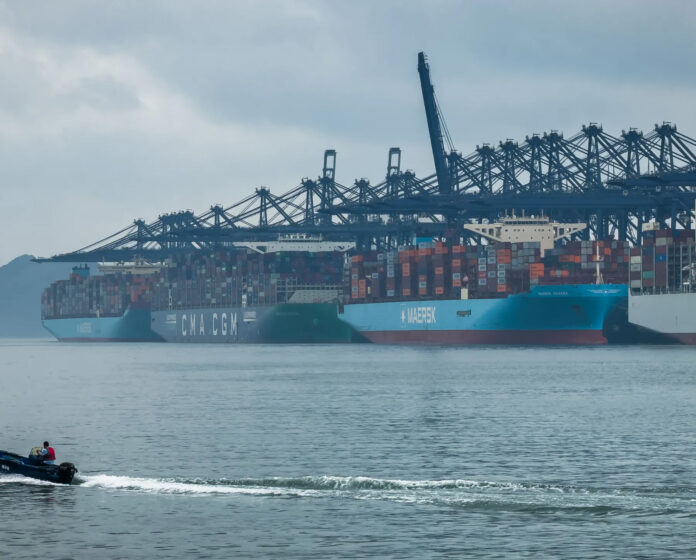
NEW DELHI, Apr 21: ICICI Prudential Asset Management Company (AMC) and two other entities have settled a case with Sebi, concerning regulatory violations pertaining to delays in winding up a venture capital scheme and distributing proceeds to investors, after paying Rs 14.35 lakh.
Apart from ICICI Prudential AMC, ICICI Prudential Venture Capital Fund, and ICICI Prudential Trust filed suo-motu settlement applications with Sebi, proposing to settle the alleged violations by “neither admitting nor denying the findings of facts and conclusions of law”.
The case relates to ICICI Prudential Venture Capital Fund launching a scheme –ICICI Prudential Venture Capital Fund- Real Estate Scheme- I. The Scheme was constituted with an initial tenure of four years commencing on September 26, 2013, with a provision for two extensions of one year each, Sebi noted in its order dated April 16.
Subsequently, the term was extended for two years until September 2019. The scheme’s tenure was then further expanded by two extensions of two-year, lasting until September 25, 2023, when the scheme finally expired. The liquidation and exit of all investments completed on December 25, 2023.
Accordingly, the winding-up process was delayed by approximately four years before the proceeds could be distributed to the investors, Sebi said.
The applicants filed the present applications to settle proceedings that may be initiated against them for the alleged violations. Following receipt of the settlement applications, Sebi’s committee recommended that the applicants jointly and severally pay Rs 14.35 lakh. Accordingly, the applicants remitted the amount.
“…it is hereby ordered that any proceedings that may be initiated for the violations … are settled in respect of the applicants,” Sebi said. (PTI)
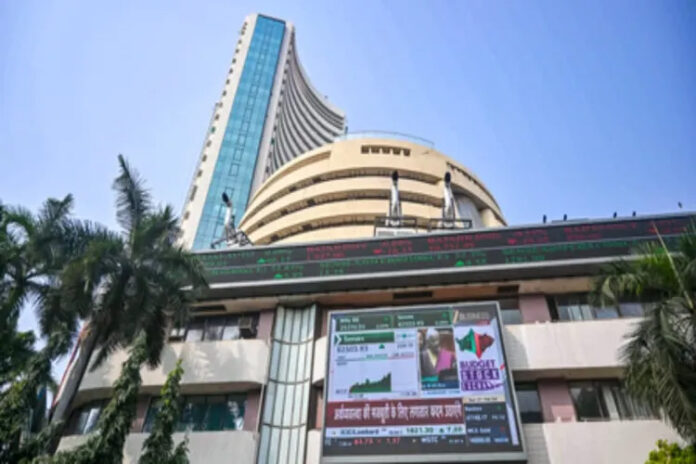
MUMBAI, Apr 21: Stock markets advanced for the third consecutive day on Tuesday, with Sensex jumping by 753 points and broader Nifty closing above 24,550 following a drop in crude oil prices and hopes for progress on peace talks between Iran and the US.
The 30-share BSE Sensex jumped 753.03 points or 0.96 per cent to settle at 79,273.33. During the day, it surged 846.78 points or 1.07 per cent to 79,367.08.
The 50-share NSE Nifty climbed 211.75 points or 0.87 per cent to end at 24,576.60.
From the 30-Sensex firms, Trent, Hindustan Unilever, ICICI Bank, Bajaj Finance, HDFC Bank and Axis Bank were among the major winners.
Bharat Electronics, Titan, Reliance Industries and NTPC were among the laggards.
Brent crude, the global oil benchmark, traded 0.75 per cent lower at USD 94.76 per barrel.
“Indian equity markets traded on a positive note, as investors positioned for a potential near-term de-escalation in the Middle East. Energy markets remained in a consolidation phase, as traders balanced hopes of a near-term resolution and a potential reopening of the Strait of Hormuz against ongoing uncertainty around ceasefire negotiations,” Ponmudi R, CEO of Enrich Money, an online trading and wealth tech firm, said.
In Asian markets, South Korea’s benchmark Kospi, Japan’s Nikkei 225 index, Shanghai’s SSE Composite index and Hong Kong’s Hang Seng index ended higher.
Markets in Europe were trading in positive territory.
US markets ended marginally lower on Monday.
“The bullish momentum was largely driven by a combination of macro and market-specific triggers. Easing geopolitical concerns, particularly around the US–Iran situation, played a central role in improving risk appetite.
“This was further supported by a cooling in crude oil prices, which helped ease inflation concerns for an oil-import-dependent economy like India and improved margin visibility across sectors,” Hariprasad K, Research Analyst and Founder, Livelong Wealth, said.
Foreign Institutional Investors (FIIs) offloaded equities worth Rs 1,059.93 crore on Monday, according to exchange data.
“Amid hopes for progress in Iran–US peace talks and supportive global cues, India’s equity markets rebounded strongly,” Vinod Nair, Head of Research, Geojit Investments Limited, said.
On Monday, the Sensex closed marginally up 26.76 points or 0.03 per cent at 78,520.30. The Nifty edged up 11.30 points or 0.05 per cent to settle at 24,364.85. (PTI)
NEW DELHI, Apr 21 : The popularity of Prime Minister’s Awards for Excellence has risen sharply across over 750 districts, and the competitive participation has shown a corresponding rise with entries increasing from 1,216 in 2023 to 1,588 in 2024 and 2,035 in 2025. The iGOTKarmayogi platform has boarded more than 88 lakh officials who have accessed over 2,000 courses. Grievance redressal through CPGRAMS has expanded from around 2 lakh complaints annually in 2014 to 25–30 lakh at present, with over 95% of cases disposed of and average resolution time reduced from 60 days to about 12 days. In pension reforms, over 40 lakh pensioners used face recognition-based digital life certificates in 2024 alone, while cumulative usage across systems has reached significant scale.
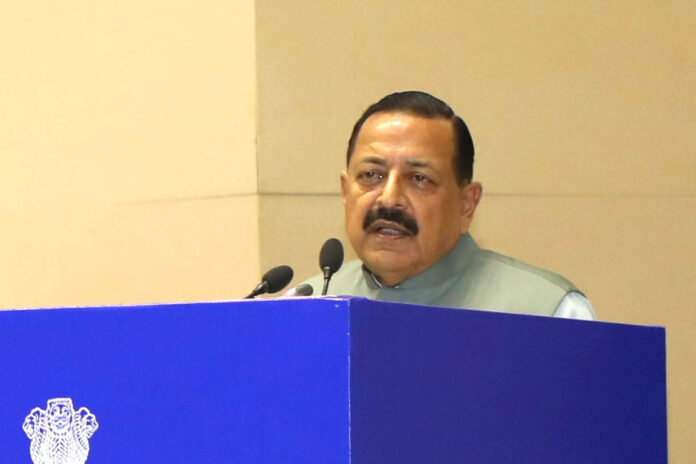
These interesting figures were cited by Union Minister Incharge DoPT, Personnel, Public Grievances and Pensions, Dr. Jitendra Singh while addressing the 18 Civil Services Day here, as he highlighted a shift towards “citizen-centric, institutionalised governance”, underlined reforms in service delivery and announced continued expansion of capacity-building initiatives such as Mission Karmayogi and its newer components, alongside a reoriented framework for evaluating administrative performance through competitive, programme-based benchmarks rather than individual profiling.
The Minister emphasised structural shifts in governance, including a move “from individual delivery to institutionalised delivery” and from “rule-based” to “role-based” administration. He pointed to the removal of nearly 2,000 obsolete rules, abolition of interviews for certain recruitment processes, and the redesign of Civil Services Day into a more knowledge-driven platform. The evaluation framework for excellence awards has been restructured to focus on flagship programme outcomes rather than individual officer profiles. Institutional innovations such as the Assistant Secretary programme, digital governance systems covering nearly 90% of government operations, and international collaborations, including hosting global administrative forums, were also highlighted.
Looking ahead, Dr. Jitendra Singh indicated expansion of training and governance reforms through initiatives like Mission Karmayogi and “Karmayogi Prarambh,” with a focus on preparing civil servants for emerging governance challenges. He also pointed to increasing global interest in Indian administrative models, with countries such as Maldives, Mauritius, Bangladesh and South Africa studying systems like CPGRAMS. The broader push, he said, aligns with the theme of “Viksit Bharat: Citizen-Centric Governance and Development at the Last Mile,” aimed at equipping the next generation of civil servants for India’s centenary of independence in 2047.
“The shift is from administration-centric governance to citizen-centric governance,” Dr. Jitendra Singh said, adding that reforms are intended to ensure “maximum transparency, maximum accountability and timeline discipline.” He also noted that increased grievance filings reflect improved trust in redressal systems rather than rising dissatisfaction.
The developments underscore an ongoing transition in India’s administrative framework towards data-driven evaluation, digital governance, and large-scale capacity building as central pillars of public service reform.
Vice President Shri C. P. Radhakrishnan presided over the function as the Chief Guest. The function was attended by senior members of the government’s top administrative leadership. Also present on the dais were Principal Secretary to the Prime Minister P. K. Mishra, Principal Secretary to the Prime Minister Shaktikanta Das, Cabinet Secretary T. V. Somanathan, and Secretary, DARPG Ms. Nivedita Shukla Verma reflecting the high-level institutional presence at the annual civil services gathering.
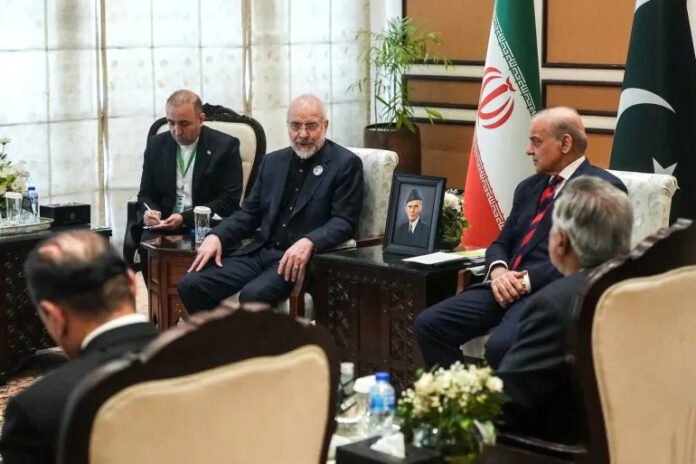
WASHINGTON, Apr 21: Senior US officials, including Vice President JD Vance, are expected to travel to Pakistan on Tuesday ahead of a potential second round of negotiations aimed at addressing the war with Iran, US media quoted sources as saying.
As the uncertainty surrounds the US-Iran talks, the Iranian Revolutionary Guard Corps (IRGC)-affiliated Fars news agency has posted a quote on Telegram from a commander at Iran’s top military headquarters.
Writing in Persian, Major General Abdullahi says that the IRGC has driven Israel and the US “to despair and exhaustion, forcing them to desperately request a ceasefire”, according to Fars.
He says the armed forces would not allow the “lying and delusional US president” to “create false narratives of the situation on the ground”, especially on the subject of the Strait of Hormuz.
It remains unclear whether an Iranian delegation will head to Islamabad for a second round of peace talks with the US.
The proposed talks are expected to take place in Islamabad on Wednesday, although officials say the schedule remains uncertain due to continuing tensions and public exchanges between Washington and Tehran.
If the meeting goes ahead, the US delegation is expected to include JD Vance, who has recently been involved in ceasefire-related efforts involving Iran, as well as Israel and Lebanon.
Iranian representatives have reportedly shown a preference for engaging with JD Vance compared to other US officials. The delegation may also include Steve Witkoff, a real estate developer and long-time associate of President Donald Trump who has previously taken part in diplomatic discussions related to Gaza and Ukraine, as well as Jared Kushner, former senior Middle East adviser in the Trump administration.
The discussions are expected to focus on several major sticking points that remain unresolved between the two sides. These include the future of Iran’s enriched uranium stockpiles, with the US reportedly suggesting they be transferred abroad in exchange for sanctions relief, an idea Iran has rejected.
Another key issue is the duration of any restrictions on Iran’s uranium enrichment program, with Washington proposing a long-term pause while Tehran has countered with a much shorter suspension period.
Sanctions relief and access to frozen Iranian assets are also central to the talks, with Iran reportedly seeking over $20 billion in unfrozen funds and broader economic relief. In addition, tensions surrounding the Strait of Hormuz continue, despite Iran’s recent announcement to reopen the strategic shipping route, as reports of disruptions and attacks on vessels have persisted.
The differences between the two sides remain significant and the trust deficit between the US and Iran. The situation carries risks of further escalation if diplomacy fails, with limited confidence that a comprehensive agreement can be reached in the near term.
(UNI)
NEW DELHI, Apr 21: On the eve of the first anniversary of the Pahalgam terror attack, the Indian Army on Tuesday reaffirmed its resolve to fight against terrorism, and said, “When boundaries of humanity are crossed, the response is decisive”.
On April 22 last year, terrorists killed 26 people, mostly tourists, at Pahalgam in south Kashmir.
In retaliation, India launched a military operation early on May 7 and decimated multiple terror infrastructure in Pakistan and Pakistan-occupied Jammu-Kashmir (PoJK).
Ahead of the anniversary of the dastardly act that shook the nation and drew condemnation from governments and leaders across the world, the Army in a post on X, said, “When boundaries of humanity are crossed, the response is decisive. Justice is Served. India Stands United. #SindoorAnniversary #JusticeEndures #NationFirst”.
The post, heavily symbolic, also carried a digital poster bearing a silhouetted image of the map of India with the caption “SOME BOUNDARIES SHOULD NEVER BE CROSSED”.
The ‘O’ in the word ‘CROSSED’ was depicted by a bowl carrying a dash of ‘sindoor’ (vermilion), and a tagline at the bottom printed in crimson hue, read, “INDIA DOES NOT FORGET” with a red line drawn at the bottom.
After launching the decisive military operation, the Indian Army in a post on X at 1:51 am on May 7 had said, “#PahalgamTerrorAttack Justice is Served. Jai Hind!” along with a digital poster that carried the name ‘OPERATION SINDOOR’. One of the Os in ‘SINDOOR’ was portrayed as a bowl carrying a dash of ‘sindoor’.
Pakistan later also launched offensives against India, and all subsequent counter-offensives by India were also carried out under Operation Sindoor. The military conflict between the two nuclear-armed neighbours, lasting nearly 88 hours, halted after they reached an understanding on the evening of May 10.
Top Indian military leaders in the past year have asserted multiple times that Operation Sindoor “still continues”, and the country’s military preparedness must remain at a “very high” level, round-the-clock and throughout the year. (Agencies)
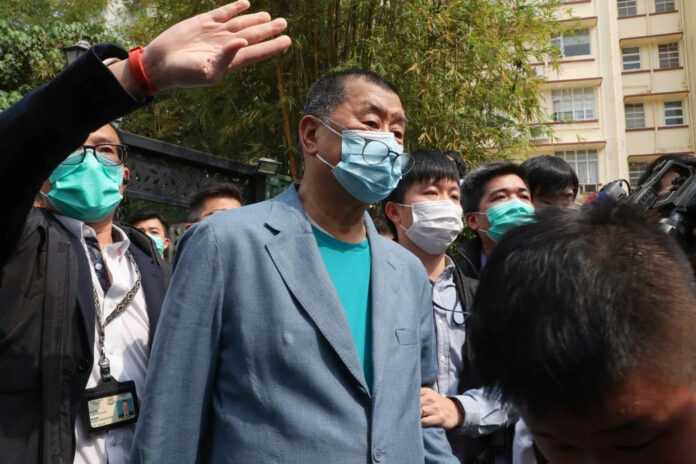
HONG KONG, Apr 21: The Hong Kong Government is seeking to confiscate millions of dollars in funds and corporate shares it says are linked to crimes committed by jailed former media tycoon Jimmy Lai, according to a court document seen by The Associated Press on Tuesday.
The filing does not explain how the property, which it estimates to be worth over 127 million Hong Kong dollars (USD 16 million), is linked to Lai’s crimes. The government previously announced that it was seeking asset forfeitures in the case but did not disclose the amount.
Lai, an outspoken critic of China’s ruling Communist Party who founded the now-defunct newspaper Apple Daily, was convicted in December of conspiracy to collude with foreign forces and conspiring with others to publish seditious articles.
He was sentenced to 20 years in prison in February, the toughest sentence given so far under a Beijing-imposed national security law.
Critics say his conviction reflected the decline of press and other freedoms in the city, a former British colony that returned to Chinese rule in 1997. The government insists the case has nothing to do with a free press, saying the defendants used news reporting as a pretext for years to commit acts that harmed China and Hong Kong.
According to a document sent to the city’s court system earlier this month, the Department of Justice is seeking an order for Lai to forfeit to the government money held in 15 bank accounts under his name, money held in bank accounts under various companies, as well as shares in various companies held by him or others.
The money the government is seeking to seize also includes bail money deposited in the court system and a fine of 2 million Hong Kong dollars (USD 255,440) imposed on Lai for fraud convictions in 2022, which could be refunded to him after the convictions were quashed in February.
The government said it had applied to seize the properties linked to Lai’s crimes on April 2 in a statement. At that time, the government cited the security law, saying that the funds and tools used or intended to be used in committing an offense shall be confiscated, as well as proceeds obtained in the commission of an offense.
The government said an order made for the purpose of safeguarding national security can prevent convicts, their accomplices or agents from continuing to use their offense-related properties to engage in acts and activities endangering security.
BEIJING, Apr 21: China on Tuesday denied any links to the Iranian cargo ship seized by the US in the Gulf allegedly containing chemical materials to manufacture missiles.
“To my knowledge, this is a foreign-flagged container ship. China opposes any malicious linking and hype,” Chinese Foreign Ministry spokesperson Guo Jiakun told a press briefing here reacting to allegations by former US envoy to the UN Nikki Haley.
In a post on X, Haley claimed that the ship seized by the US was headed from China to Iran and is linked to chemical shipments for missiles.
“It refused repeated orders to stop. Another reminder that China is helping prop up Iran’s regime – a reality that can’t be ignored,” Haley said.
A US naval ship enforcing the blockade of ships going to Iranian ports fired at the cargo ship when it reportedly failed to heed calls to stop.
The US Marines later boarded the ship and seized it.
The Iranian military warned that it would respond to the US’ action against the container ship.
“The ‘aggressor United States,’ by violating the ceasefire and engaging in maritime highway robbery, attacked an Iranian commercial vessel in the waters of the Sea of Oman,” CNN quoted Iran’s military as saying.
The Iranian military said that the US had destroyed the ship’s navigational equipment and deployed troops on the deck, “effectively carrying out an act of aggression against it.”
Following the incident, Iran also declined to confirm its participation in the second round of peace talks with the US in Pakistan this week.
Last week, China denied aiding Iran’s military with defence and satellite support.
US President Donald Trump also threatened to impose heavy tariffs against China if it supplied weapons to Iran.
Responding to allegations, Guo last week said that China always acts prudently and responsibly on the export of military products, and exercises strict control in accordance with China’s laws and regulations on export control and due international obligations.
On the tariff threat, he said, “If the US goes ahead with the tariff hikes on China on the basis of these accusations, China will respond with countermeasures.”
China, a major importer of Iranian oil, shares strategic and defence ties with Iran.Â
Also, a CNN report earlier this month said US intelligence indicates that China is preparing to deliver new air defence systems to Iran, including shoulder-fired anti-air missile systems known as MANPADs. (PTI)
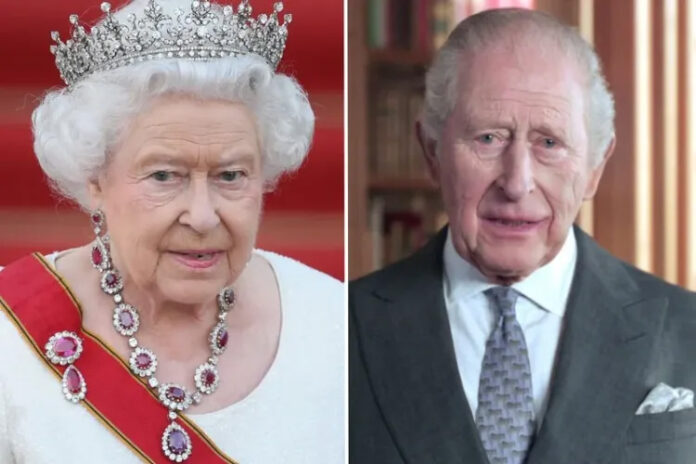
LONDON, Apr 21: In a moving tribute to mark what would have been Queen Elizabeth II’s 100th birthday on Tuesday, Britain’s King Charles III said his “darling mama” would be affected by the troubled times but also believed that goodness will prevail.
The broadcast message was recorded earlier this month in the library of Balmoral Castle, the royal residence in Scotland, where the late Queen passed away on September 8, 2022, aged 96.
Her son and heir’s message came at the start of a day of events to commemorate the birth centenary, which will conclude with a special reception hosted by the King at Buckingham Palace in London.
“Much about the times we now live in I suspect may have troubled her deeply, but I take heart from her belief that goodness will always prevail and that a brighter dawn is never far from the horizon,” said Charles.
“For as a young Princess Elizabeth put it in her first ever public broadcast, aged just 14, we can each play our part ‘to make the world of tomorrow a better and happier place’. It is a belief which I share with all my heart.
“So young or old, and whatever our differences, let us therefore seek to follow this example as we make today not the marking of a milestone felt by absence but the celebration of a life well-lived, and a legacy of hope, as we strive together towards a ‘better, happier tomorrow’ – one rooted in peace, justice, prosperity and security.
“In this, I renew my own solemn pledge of duty and service to you all. God bless you, darling mama; you remain forever in our hearts and prayers,” he said.
The 77-year-old monarch opened the address by noting that the birth anniversary was an opportunity to reflect on the “life and loss of a sovereign” and to celebrate the many blessings of the memory of Britain’s longest-serving Queen.
“Queen Elizabeth’s ‘promise with destiny kept’ shaped the world around her and touched the lives of countless people across our nation, the Commonwealth and beyond. Her near-century was one of remarkable change and yet, through each passing decade, through every transformation, she remained constant, steadfast and wholly devoted to the people she served,” he said.
“Millions will remember her for moments of national significance; many others for a fleeting personal encounter, a smile, a kind word that lifted spirits… or for that marvellous twinkle of the eye when sharing a marmalade sandwich with Paddington Bear in the final months of her life,” he added, alluding to Queen Elizabeth’s famous televised sketch with the popular children’s literature character marking the platinum jubilee of her reign in June 2022.
The birth centenary events included the formal unveiling of the design recommendations for a permanent Queen Elizabeth Memorial, which will be made up of a bronze statue to be sculpted by Martin Jennings showing the late Queen in her younger years in ceremonial robes.
The 9.84-foot-tall sculpture overlooking the Mall near Buckingham Palace is inspired by a 1955 painting of Queen Elizabeth II by Pietro Annigoni.
“As our longest serving monarch, Queen Elizabeth II devoted her life to public service. The nation will commemorate her extraordinary reign with a memorial that offers a place of reflection for generations to come,” said Prime Minister Keir Starmer.
The physical memorial will be accompanied by a Queen Elizabeth Digital Memorial, made up of digitised court records and archival material to map the key events from her reign and allow people from across the world to contribute their own memories.
Lord Robin Janvrin, Chair of the Queen Elizabeth Memorial Committee, noted: “We hope the physical memorial will enhance a most beautiful space in the heart of our capital for people to meet, relax and reflect, whilst the new Queen Elizabeth Trust aims to benefit local communities in every part of the United Kingdom.
“The Digital Memorial will allow people across the country, the Commonwealth and beyond to share their memories of the late Queen to build a living archive of her reign for future generations.”
Princess Royal Anne, Queen Elizabeth’s daughter, also officially opened the Queen Elizabeth II Garden in London’s Regent’s Park. A new charity named Queen Elizabeth Trust to promote community cohesion was unveiled earlier. (PTI)
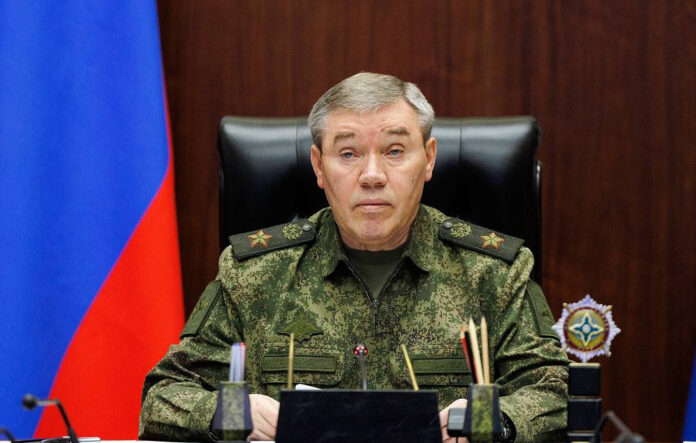
MOSCOW, Apr 21: Russian Chief of General Staff Valery Gerasimov on Tuesday announced the complete liberation of the Lugansk (Luhansk) People’s Republic (LPR) by Russian troops.
“The liberation of the Lugansk People’s Republic is fully completed. Currently, the offensive of the formations and military units of the Joint Group of Forces is underway on all fronts,” Gerasimov said.
The Ukrainian command, attempting to cover up their failures in February and March, is conducting an information campaign, claiming to have recaptured 480 square kilometers (185 square miles) of territory, Gerasimov added.
Earlier in the day, Gerasimov inspected the progress of combat missions in Russia’s Yug (South) battlegroup’s zone of operations and listened to reports from unit commanders on the results of combat missions. He previously stated that in February and March, in an attempt to halt the Russian forces’ advance, Ukraine carried out over 170 unsuccessful counterattacks and lost over 3,000 personnel. (UNI)
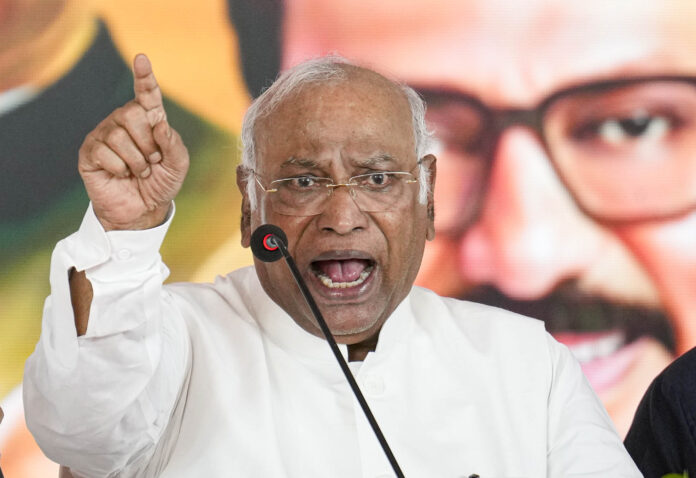
CHENNAI, Apr 21: Congress President Mallikarjun Kharge on Tuesday stepped up his attack on Prime Minister Narendra Modi, accusing him of “terrorising” political parties and people by misusing government machinery and central agencies to stifle the opposition.
Addressing a press conference in Chennai alongside AICC General Secretary (Organisation) KC Venugopal, Kharge initially referred to the Prime Minister as a “terrorist” while criticising the AIADMK’s alliance with the BJP.
However, when pressed by reporters to clarify the context of the remark, the Congress chief stated he meant the Prime Minister was “terrorising” the democratic fabric of the country.
“He is terrorising people and political parties. I never said he is a terrorist (in the literal sense). Terrorising this… he is misusing his power and government machinery and abusing, malingering opposition parties,” Kharge said.
The Congress chief alleged that the Election Commission has become an “extension of the BJP office” and accused the Prime Minister of violating the Model Code of Conduct in the final stages of the election campaign. He further claimed that central agencies like the CBI, ED, and Income Tax department were being deployed as tools of intimidation against political workers.
Kharge also hit out at the Centre over the Constitution Amendment Bill that sought to facilitate women’s reservation by expanding the Lok Sabha and linking delimitation with it. He accused the Prime Minister of misleading the public by claiming the opposition defeated the Women’s Reservation Bill, noting that it was passed in 2023 with unanimous support.
“If he truly intends to implement it, he can provide 33 per cent reservation to women within the existing 543 Lok Sabha seats. Why is he not giving it?” Kharge argued.
He warned that the government’s plan for delimitation would “punish” progressive states, particularly in South India, for their success in population control. “They intended to deny the democratic rights of South Indian states, North Eastern states, and progressive states. Modi and Shah want to punish these states for their progress,” he said.
Reaffirming the strength of the DMK-Congress alliance, both Kharge and Venugopal dismissed reports of a rift between Rahul Gandhi and Tamil Nadu CM MK Stalin, describing them as “like brothers.” Kharge reiterated the alliance’s “key commitments” for the state, including Rs 2,000 monthly assistance for women and senior citizens, Rs 2,500 monthly for families for food security, and a promise to fill all government vacancies within 300 days.
He also criticised the Election Commission, alleging it was acting “like an extension of the BJP office” by failing to take note of what he termed the Prime Minister’s “violation of the model code of conduct”. (Agencies)